How to Select a High-Efficiency Dissolved Air Flotation (DAF) Unit
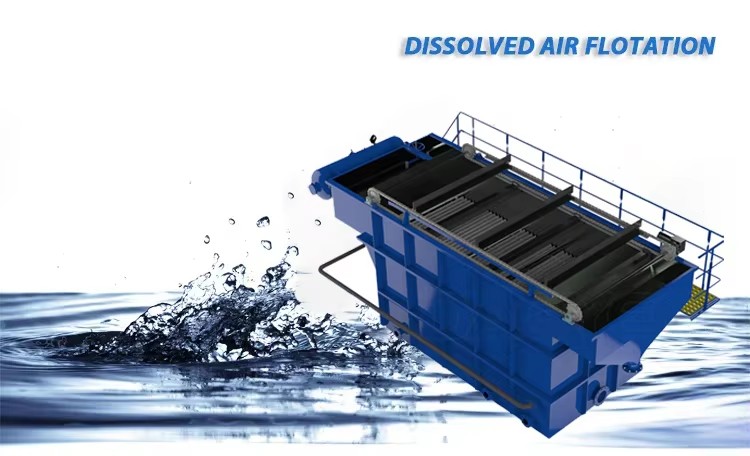
Introduction to Dissolved air flotation (DAF)
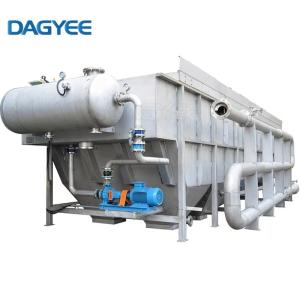
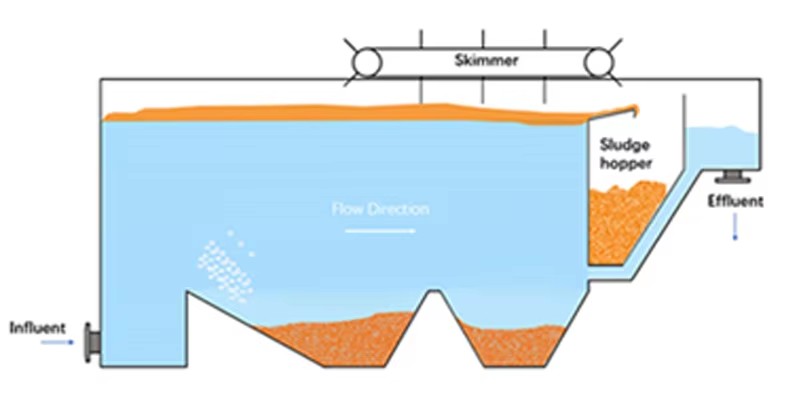
Dissolved air flotation (DAF) is a proven and highly effective water and wastewater treatment process used to clarify waters by removing suspended solids, oils, greases, and other low-density contaminants. The key mechanism involves dissolving air in water under pressure and then releasing the pressure at the atmospheric level in the flotation tank. This rapid pressure release creates billions of microscopic air bubbles (typically 10−100 μm in diameter) that attach to or become trapped within the suspended particles, increasing their buoyancy and causing them to float to the surface, where they are skimmed off as sludge.
Selecting the appropriate DAF system is a critical engineering decision that significantly impacts the overall treatment plant efficiency, operational costs, and compliance with discharge regulations. A "high-efficiency" DAF system is one that achieves superior clarification (>90% removal efficiency for TSS and FOG), minimizes chemical consumption, requires less energy, and maintains stable performance under variable hydraulic and contaminant loading conditions.
This guide details the core dimensions and critical parameters that must be considered when selecting a high-efficiency DAF unit.
I. Core Selection Dimension 1: Wastewater/Water Characterization and Treatability Testing
The most crucial step in DAF selection is a complete understanding of the influent water quality, as the characteristics of the contaminants dictate the DAF system's design and operational requirements.
A. Comprehensive Water Analysis
- The initial selection process must be based on a detailed analysis of the water or wastewater to be treated. Key parameters include:
- Total Suspended Solids (TSS): This is the primary parameter for DAF design, influencing the required flotation area and skimming mechanism. High TSS loads (e.g., >1000 mg/L) may necessitate a pre-treatment step (e.g., screening, primary sedimentation).
- Fats, Oils, and Grease (FOG): DAF is exceptionally effective for FOG removal. The concentration and type of FOG (free vs. emulsified) affect chemical conditioning requirements.
- Biochemical Oxygen Demand (BOD 5 ) and Chemical Oxygen Demand (COD): While DAF primarily removes particulate matter, it can significantly reduce BOD 5 and COD by removing the solids and FOG associated with them. This is critical if a stringent discharge limit applies.
- pH and Alkalinity: These factors are crucial for chemical conditioning (coagulation/flocculation). Optimal pH for polymer or coagulant performance must be known, as it determines the need for pH adjustment systems.
- Particle Size Distribution: Smaller, lighter, or highly stable particles (e.g., colloidal) require more intensive chemical pre-treatment and a longer contact time, influencing the DAF tank dimensions and the recycle system design.
- Flow Rate (Minimum, Average, and Peak): The system must be sized for the peak instantaneous flow rate to prevent hydraulic overloading. The variability of the flow rate dictates the need for an equalization tank to ensure consistent DAF performance.
B. Jar Testing and Bench-Scale Treatability Studies
- Theoretical design is insufficient; practical testing is mandatory for high-efficiency selection.
- Jar Testing: This standard laboratory test determines the optimal type, dosage, and sequence of chemical addition (coagulants like Aluminum Sulfate, Ferric Chloride; flocculants like anionic or cationic polymers).
- Goal: Determine the minimum effective chemical dosage to achieve the target effluent quality. Over-dosing chemicals significantly increases operating costs and sludge volume.
- Bench-Scale DAF Testing: Specialized equipment that simulates the DAF process on a small scale is used to confirm the jar test results under pressure release conditions.
- Goal: Determine the optimal Recycle Ratio (R) and Air-to-Solids (A/S) ratio required for effective flotation.
II. Core Selection Dimension 2: Hydraulic and Mechanical Sizing
The physical dimensions and hydraulic capacity of the DAF unit are determined by the flow rate and the required surface loading rate.A. Surface Area and Loading Rate
The heart of DAF sizing is the Hydraulic Surface Loading Rate (HSR), which represents the volume of water treated per unit of surface area per unit time. This is often expressed in m 3 /(m 2⋅h) or gpm/ft 2
Selection Criterion: A lower HSR means a larger DAF tank for a given flow, allowing for a longer solids retention time and higher removal efficiency, especially for hard-to-float solids or high solids concentration.
Typical Ranges:
- Industrial Wastewater (High Solids/FOG): 1.5−4.0 m 3 /(m 2 ⋅h)
- Potable Water Treatment (Low Solids): 8.0−15.0 m 3/(m 2⋅h)
- High-Efficiency Selection: For critical or highly variable industrial applications, select a system sized for a low HSR (e.g., the lower end of the typical range or even below) to provide an ample safety factor for peak loads and future expansion.
The efficiency of bubble generation is the single most important factor for high-performance DAF.
- Pressure: Standard saturation pressure is typically 4−6 bar (60−90 psi). Higher pressure dissolves more air, leading to a higher A/S ratio and smaller bubbles. High-efficiency systems often operate at the upper end of this range (e.g., 6 bar) to maximize dissolved air.
- Retention Time: The tank must provide sufficient contact time for the air to fully dissolve. A retention time of 1.5−3.0 minutes is standard.
- Air Injector: The air intake mechanism (e.g., Venturi injector or mechanical mixer) must ensure fine air dispersion and prevent large bubbles from entering the tank, which would reduce efficiency.
This ratio is the mass of air released per mass of solids entering the DAF unit. The target A/S ratio is determined by treatability tests (Section I.B).
Where: A/S is in mg air/mg solids, R is the Recycle Ratio (%), P is the saturation pressure (atm), C in is the influent solids concentration (mg/L), and T is the temperature ( ∘C).
Selection Criterion: The DAF unit must be capable of generating the required maximum A/S ratio determined by the bench tests. A high-efficiency system provides flexibility to adjust the recycle flow and pressure to achieve a stable A/S ratio across varying inlet solids concentrations.
III. Core Selection Dimension 3:
Operational Flexibility and Total Cost of Ownership (TCO)
A high-efficiency DAF is not just about
removal rates; it's about minimizing the long-term cost of operation and
maintenance.
A. Automation and Control
- Flow Meters:For influent and recycle flow.
- Pressure Sensors:On the saturation tank.
- Turbidity/TSS Meters:On the effluent line for real-time performance tracking and automated chemical or recycle rate adjustments.
Automate pH adjustment and chemical dosing based on flow or effluent quality.
Implement PID (Proportional-Integral-Derivative) control for the recycle pump VFD to maintain a stable A/S ratio.
Provide alarms for high/low pH, pressure, and power failures.
B. Energy Consumption (Pumping and Compression)
Energy cost is the single largest operational expense for DAF.- Recycle Pump Efficiency: Select a high-efficiency pump with a motor designed for continuous, high-pressure duty. VFD control is critical to match pump output to flow and pressure requirements, saving significant energy during periods of low load.
- Air Compressor: Ensure the compressor is appropriately sized for the maximum air flow requirement and is an energy-efficient model. Over-sizing the compressor leads to inefficient operation.
- Material of Construction (MOC): The tank and internal components must be compatible with the wastewater characteristics.
- Standard: Stainless steel (SS304 or SS316) is preferred for industrial wastewater, especially when pH is low or high, or if chlorides are present. FRP (Fiber-Reinforced Plastic) or carbon steel with a high-quality protective epoxy coating may be used for less aggressive streams.
- Focus on SS316: High-efficiency systems often mandate SS316 for the saturation tank and air release manifold due to the high pressure and corrosive nature of dissolved air/water mixtures.
- Accessibility: All mechanical components (pumps, skimmers, gearbox, nozzles) must be easily accessible for routine maintenance, cleaning, and inspection. Systems with an external air release manifold are often easier to maintain than fully submerged designs.
IV. Core Selection Dimension 4: Vendor Support and Track Record
The choice of supplier is as critical as the technology itself, especially for complex systems like DAF.
A. Experience and Reference Installations
- Industry-Specific Experience:Select a supplier with a proven track record of successful DAF installations in your specific industry (e.g., food & beverage, refining, pulp & paper). DAF performance in a rendering plant is vastly different from a municipal water treatment plant.
- Reference Checks:Request site visits or detailed operational data (effluent quality, chemical usage, power consumption) from existing reference plants with similar influent characteristics and flow rates.
B. Guarantee and After-Sales Support
- Performance Guarantee:A reputable supplier must provide a contractual guarantee for effluent quality (e.g., TSS $<30\ \text{mg/L}$) and, ideally, a guarantee on sludge consistency and chemical consumption, based on the pilot test results.
- Spares and Service:Ensure local or regional availability of spare parts (especially air release nozzles, pump seals, and skimmer parts) and prompt technical support and troubleshooting services.
Conclusion and Summary of Selection Criteria
Choosing a high-efficiency DAF system involves a holistic review that extends beyond simple flow capacity. The optimal system is a balance between hydraulic sizing, optimal chemical pre-treatment, advanced bubble generation, and low operational cost.
| Selection Dimension | Key Criterion for High Efficiency | |
| I. Water Characterization | Thorough pre-treatment and A/S ratio optimization based on testing. |
|
| II. Hydraulic/Mechanical | Low Hydraulic Surface Loading Rate (HSR); High-quality, fine bubble generation. |
HSR at lower end of range; Saturation Pressure ≥ 5 bar; VFD on Recycle Pump; Proprietary Air Release Nozzles. |
|
III. Operations/TCO |
Automation for chemical and flow control; Energy-efficient components; Durable materials. |
|
|
IV. Vendor Support |
Proven track record in your specific industry; Strong performance guarantee. |
Industry-Specific References; Guaranteed Effluent TSS/FOG Limits. |
By meticulously evaluating these four core dimensions, a robust, energy-efficient, and high-performing DAF system can be selected, ensuring long-term environmental compliance and cost-effective operation.
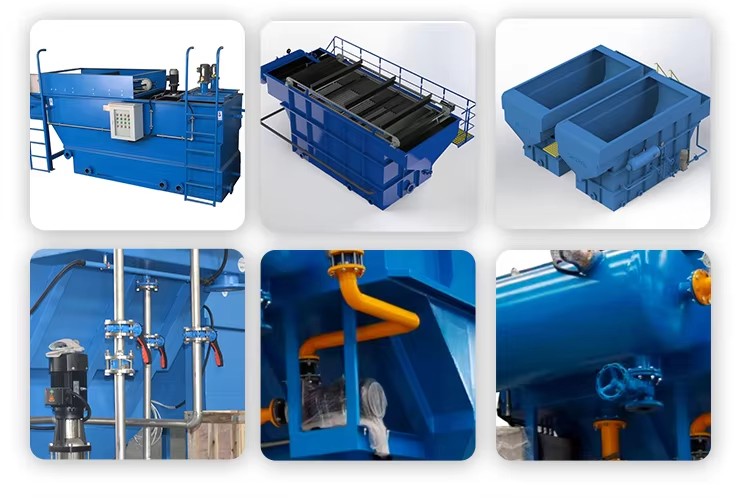
⚙️Supplier Information
We are a professional supplier specializing in high-efficiency Dissolved air flotation (DAF) systems, offering customized engineering solutions, bench-scale testing services, and robust equipment designed for demanding industrial and municipal applications.
Contact Us for a Consultation:
Related News