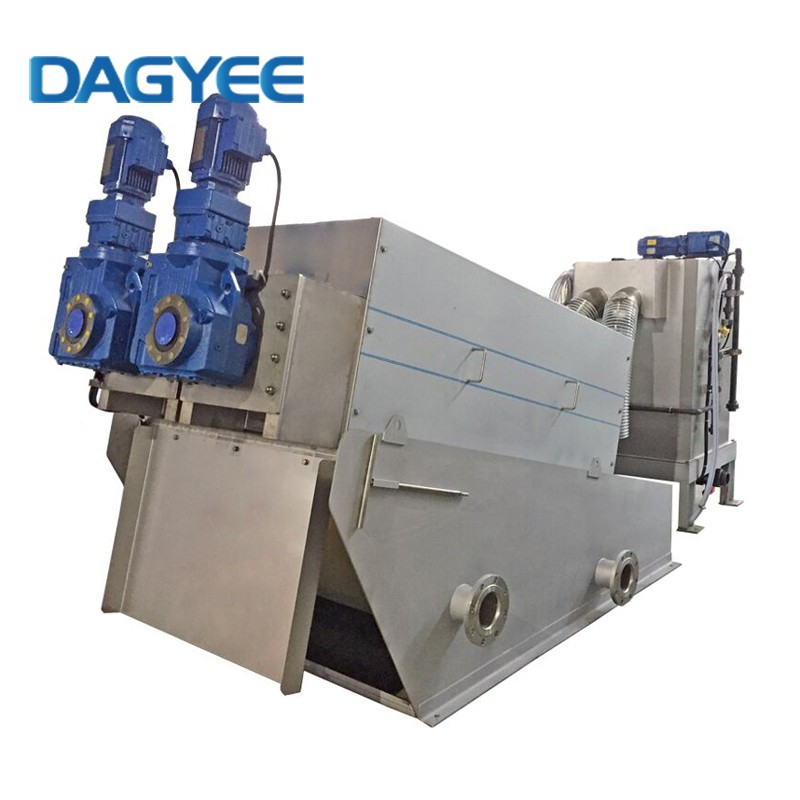
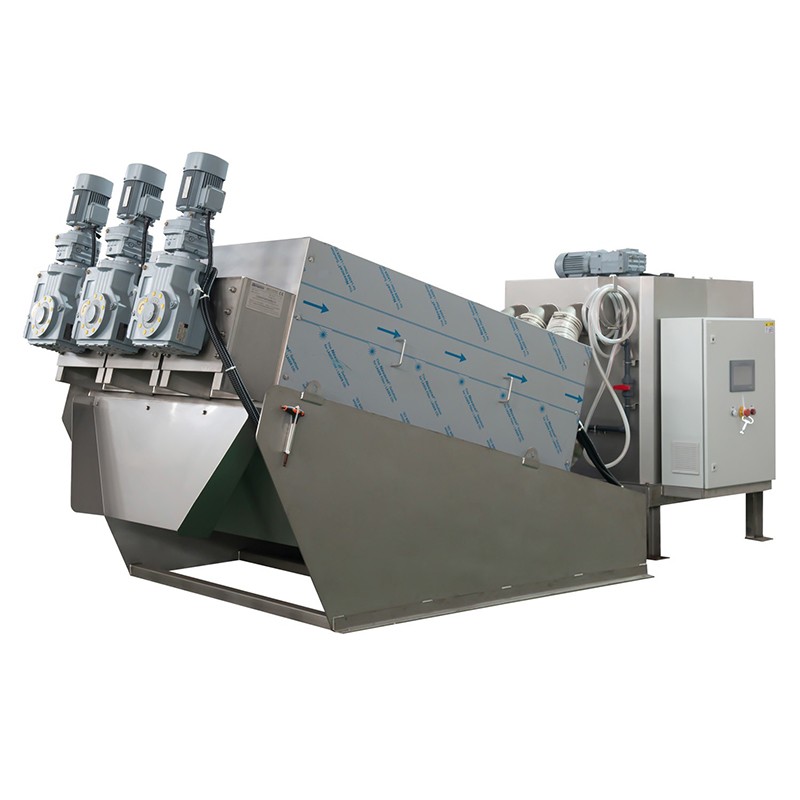
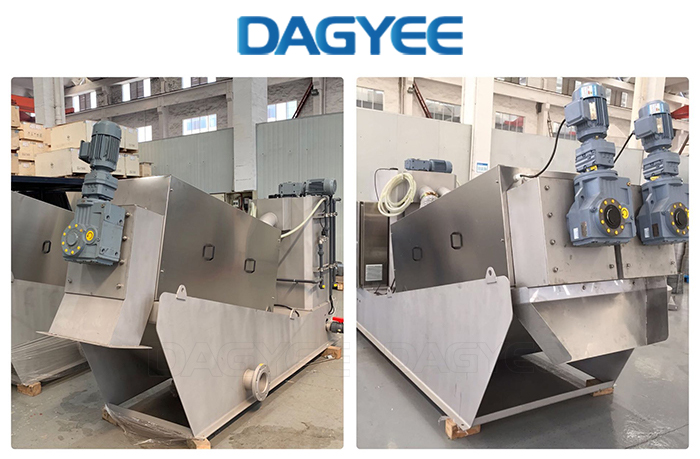
Look, there are plenty of ways to dewater sludge. Belt presses, centrifuges, plate frames – they all work, sort of. But if you've run any of them for a while, you already know the pain.
Belt presses blind. Constantly. You're out there with a pressure washer every shift, unclogging spray nozzles, tracking belts, replacing cloths. It gets old fast.
Centrifuges? They're loud. Real loud. And they eat power like crazy. Plus when something breaks – and it will – the parts aren't cheap.
That's why we started building screw presses. Not because it's fancy. Because it fixes the stuff that actually annoys you.
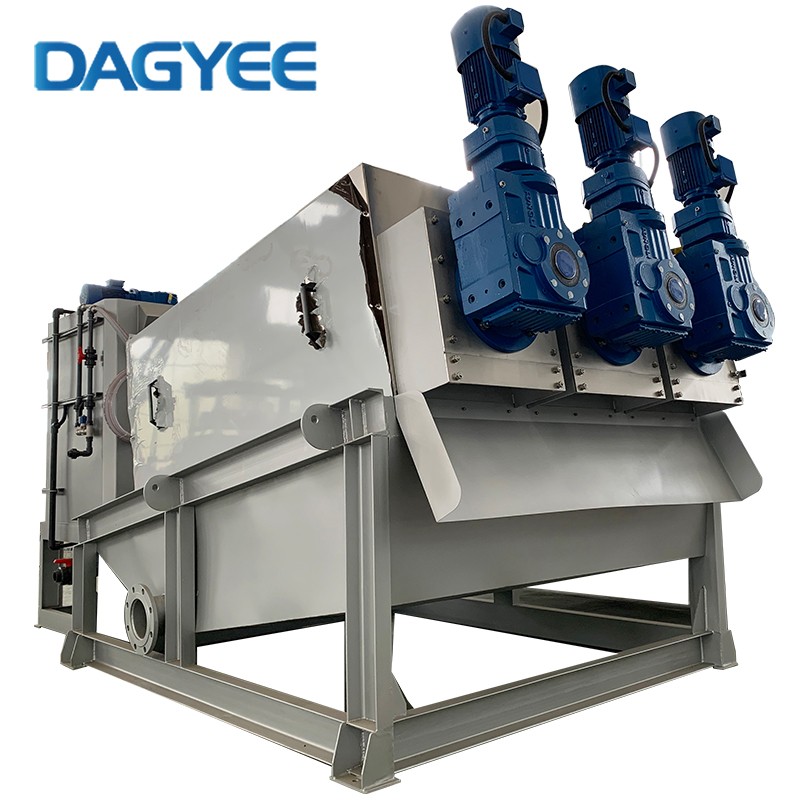
Our machine runs slow. Real slow. Like 2 to 5 RPM slow. That means no screaming noise, no vibration, no high-speed bearings that explode every 18 months. Just a big screw turning inside a stack of rings, squeezing water out gently.
The rings move. Just a tiny bit. But that little movement keeps the gaps clean. No clogging. No high-pressure wash water running all day. No standing there with a scraper.
And power? A centrifuge might pull 30 kW for the same job our 2.2 kW machine does. Do the math on that over a year. The centrifuge pays for our machine in electricity savings alone.
We've been making these for years. Not the biggest name out there, but the people who buy from us tend to stick around. Because the machine works, and when they call us, someone actually picks up.
That's why you'd pick DAGYEE. Not because we have the best brochures. Because we built something that doesn't make your life harder.
2. Working Principle
Alright, here's how it works. No engineering degree required.
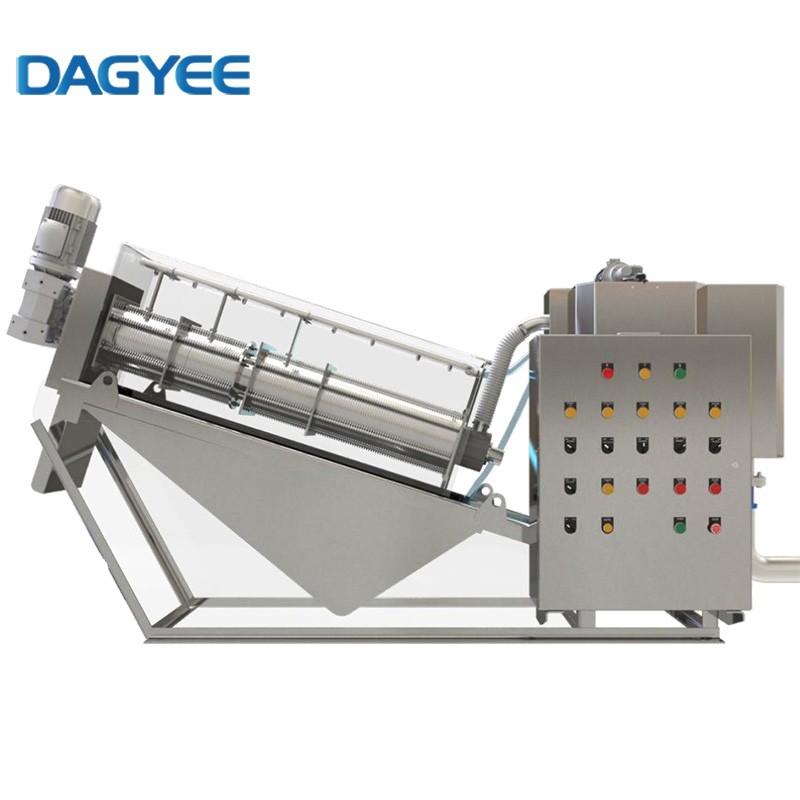
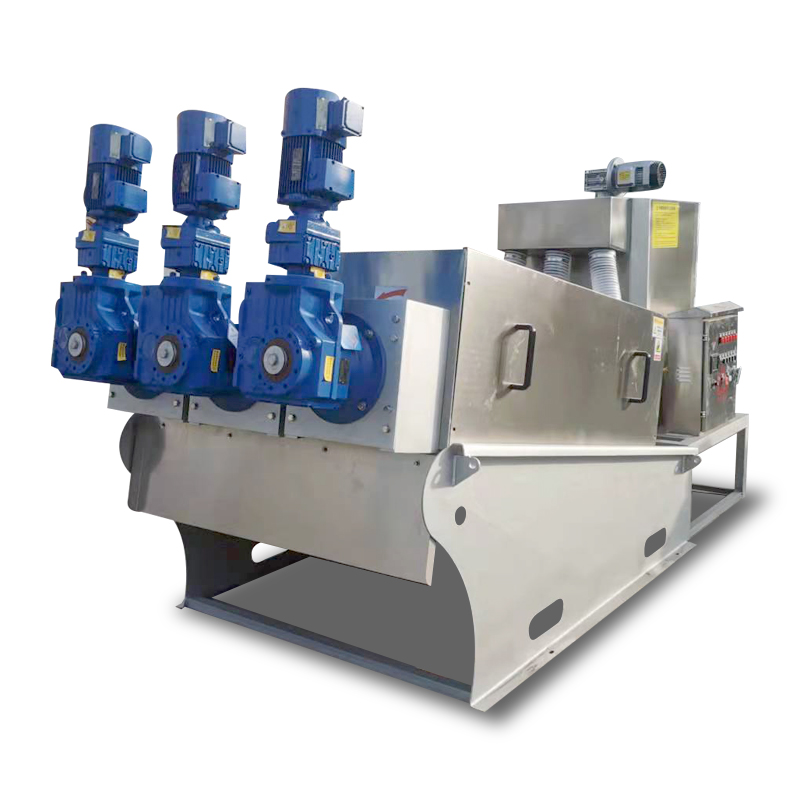
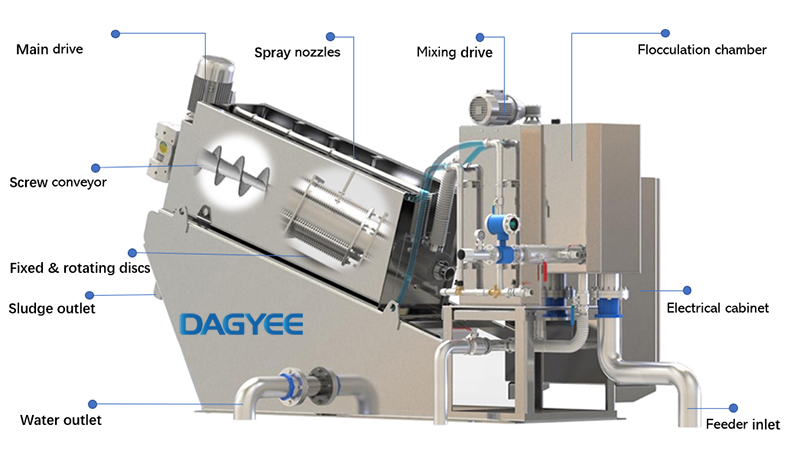
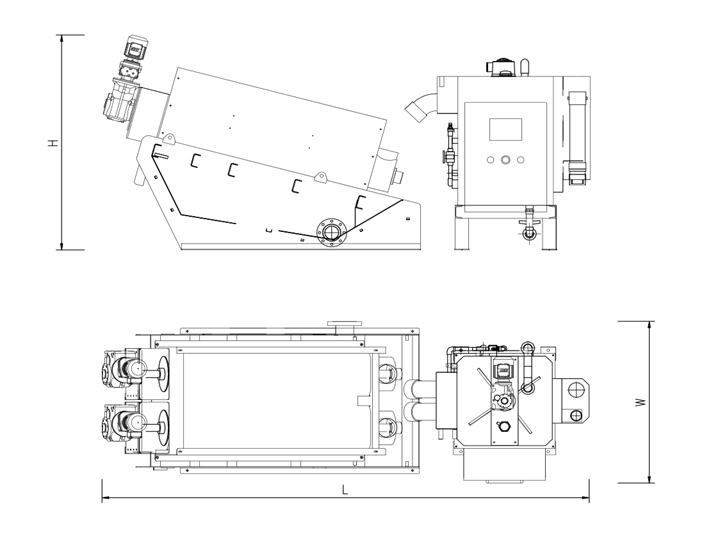
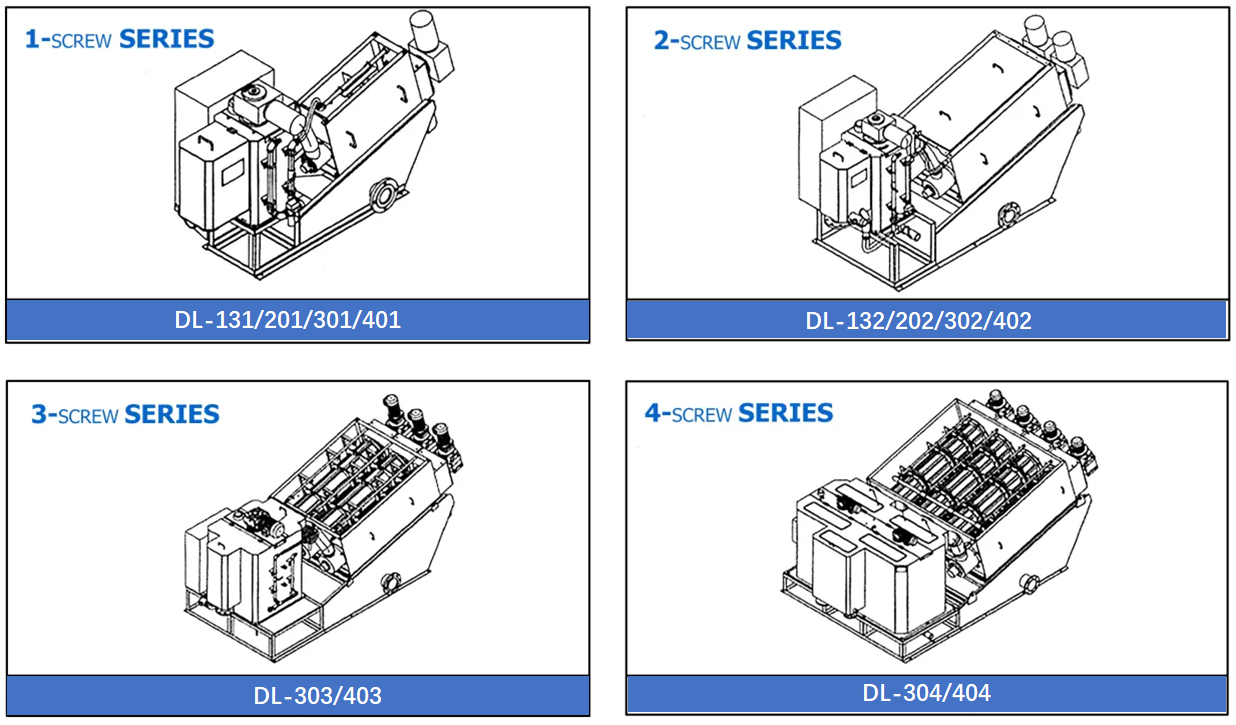
You've got a screw shaft. Looks like a giant auger. It spins inside a cylinder made of rings – fixed rings and moving rings stacked alternately.
Sludge comes in one end. The screw turns, pushes the sludge forward. As it moves, the space gets tighter. Water gets squeezed out through the gaps between the rings.
Here's the clever bit – the moving rings shift slightly as the screw turns. That motion scrapes the gaps clean constantly. So stuff that would normally stick and clog just gets pushed along and out.
By the time the sludge reaches the other end, most of the water is gone. What comes out is a cake – not bone dry, but dry enough to haul away or burn or compost. Usually 15% to 30% solids, depending on your sludge and chemical.
No belts to track. No high-speed bowl to balance. No filter cloths to replace. Just a screw turning slowly.
You can run it 24 hours a day. It doesn't get tired. Doesn't complain. Just keeps turning.
3. Key Advantages
Let me list this straight. No fluff.
It doesn't clog. This is the big one. Oily sludge, greasy sludge, fibrous sludge – the self-cleaning rings handle it. Belt presses choke on this stuff. Ours doesn't.
Power bill drops. Our 2.2 kW machine does what a 22 kW centrifuge does. You do the math on that for a year.
No earplugs needed. Runs under 65 dB. You can stand next to it and talk on your phone.
Runs alone. Set it up, turn it on, walk away. It'll run all shift, all night, all week. Checks itself, alarms if something's wrong.
Water use is almost nothing. Belt presses need constant high-pressure spray. We don't. Occasional rinse is plenty.
Simple maintenance. Change gear oil once a year. Grease bearings occasionally. That's pretty much it.
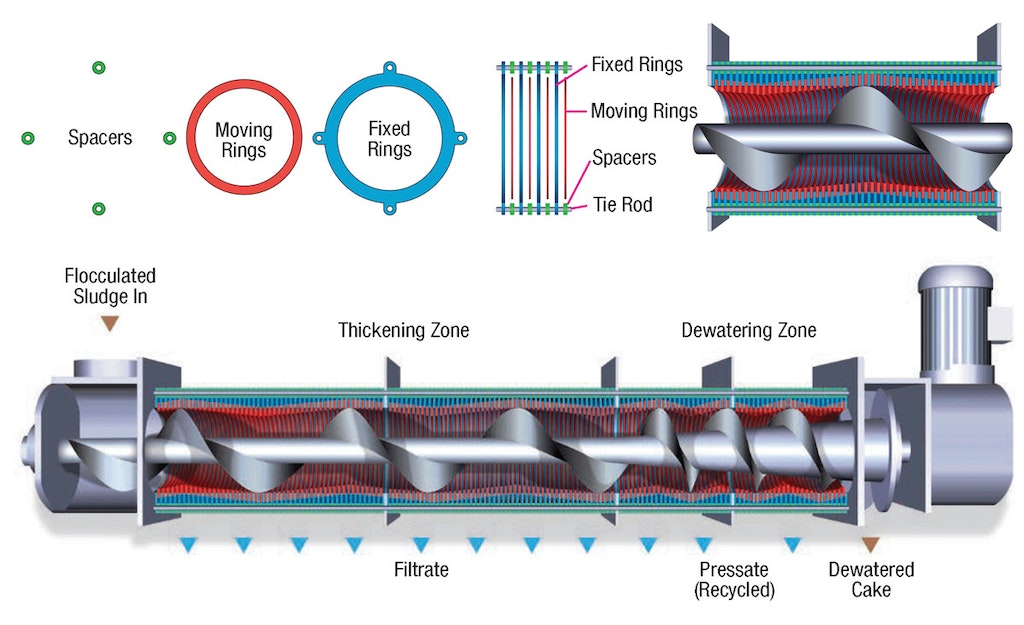
Small footprint. Fits in tight spaces. Our smallest model takes about as much floor space as a pallet.
Safe. Low speed, no pinch points, no exposed spinning parts. Your operators won't get hurt.
Handles variable sludge. Thick, thin, dirty, clean – the machine adapts. No recalibration every time something changes upstream.
We answer the phone. Real support from real people who know the machine. Not a ticket system that replies three days later.
4. Technical Specifications
5. Comparison with Traditional Equipment
| Parameter | Belt filter press | Plate and Frame Press | Centrifuge | Screw Press |
|---|---|---|---|---|
| Energy Consumption | High | Higher | Highest | Lowest |
| Footprint | Large | Large | Medium | Small |
| Automation Level | Moderate | Low | High | High |
| Clogging Risk | High | High | Medium | Very Low |
| Wash Water Usage | High | Medium | Low | Very Low |
| Suitable Concentration | ≥5000 mg/L | ≥10000 mg/L | ≥3000 mg/L | ≥2000 mg/L |
| Continuous Operation | Yes | Intermittent | Yes | Yes |
6. Selection & Maintenance
How to pick the right size
Don't guess. Send us your numbers.
What we need to know:
What kind of sludge? (municipal, food, chemical, etc.)
How much flow? (cubic meters per hour)
How thick is it going in? (percent solids or grams per liter)
We'll run your sludge on our test machine and tell you exactly which model works. Free. No obligation.
Rough sizing guide:
Take your dry solids per hour. Pick a model rated for at least 1.5 times that number. That gives you room for variations.
Example: 200 kg/hour dry solids → DAG-401 or bigger.
Maintenance – what you actually need to do
Daily (5 minutes):
Walk by. Listen for weird noises. Look for leaks.
Weekly (15 minutes):
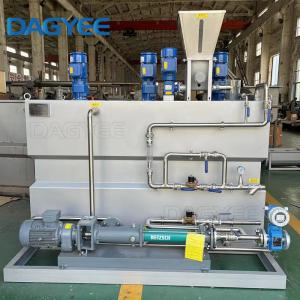
Quick check of the chemical mix tank if you're using polymer.
Monthly (30 minutes):
Check gearbox oil level.
Grease motor bearings if they have fittings.
Yearly (2 hours):
Change gearbox oil.
Inspect rings for wear (they usually last years).
That's it. No daily cleaning. No filter changes every week. No spray nozzles to unclog.
What wears out:
Seals: every 2-3 years
Rings: 5-8 years
Bearings: 5-10 years
Screw shaft: 10+ years
Spare parts to keep on hand:
One set of shaft seals
One spare relay for the control panel
We can send you a full list for your model.
7. Applications
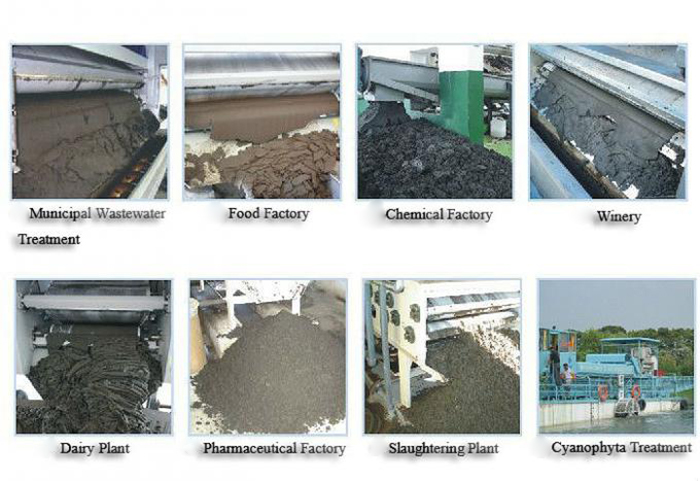
| Industry | Applications |
|---|---|
| Municipal Wastewater | Municipal sludge dewatering |
| Food Processing | Soybean, starch, juice, brewery wastewater sludge |
| Slaughterhouse & Farming | Livestock and poultry slaughter, farming wastewater sludge |
| Textile & Dyeing | Printing and dyeing sludge, pulp recovery |
| Paper Industry | Paper sludge, fiber recovery |
| Chemical & Pharmaceutical | Chemical sludge, pharmaceutical wastewater sludge |
What you need to install
Floor space about 1 meter bigger than the machine on all sides
Level floor – doesn't need a special foundation
Power: one connection, we match your voltage
Water: garden hose pressure is fine, just for occasional wash
Drain for the filtrate (gravity flow)
Installation steps (simplified)
Set machine on floor. Level it with shims if needed.
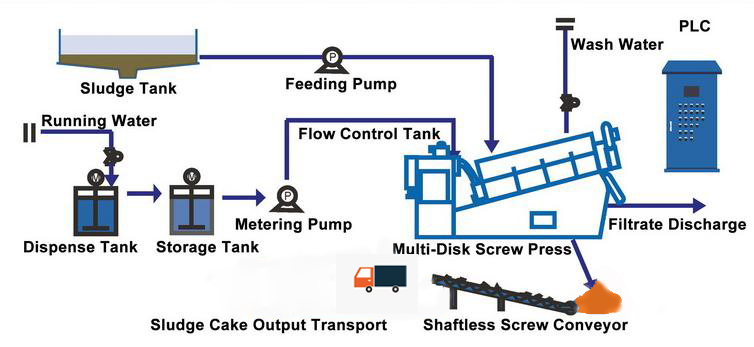
Connect sludge inlet pipe.
Connect filtrate drain.
Hook up wash water.
Wire power to control panel.
Set up chemical dosing if you're using polymer.
Test with water first, then sludge.
Takes about 2-4 days from delivery to running.
9. Service & Contact
Get in Touch:
Free Application Assessment – We'll look at your wastewater and suggest what fits
Customized Design – Built around your flow, space, and treatment goals
Fast Quotation – Detailed estimate within 48 hours
Project References – We'll share examples of similar installations
Factory Tour – Come see our facility