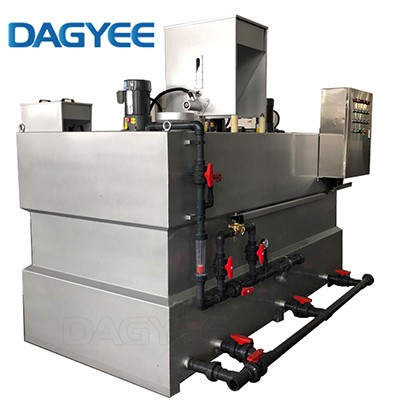
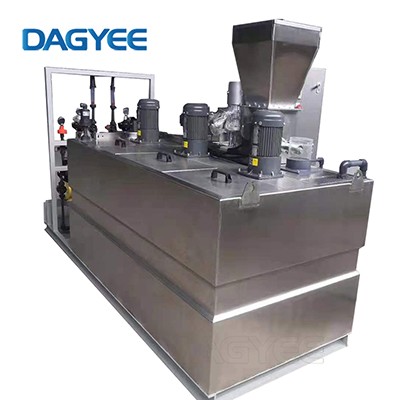
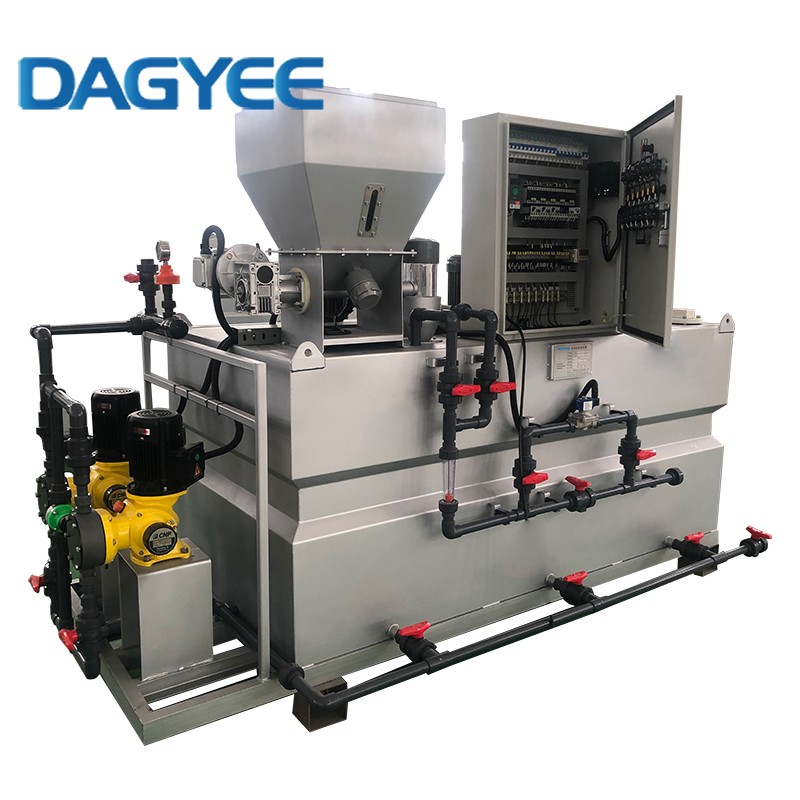
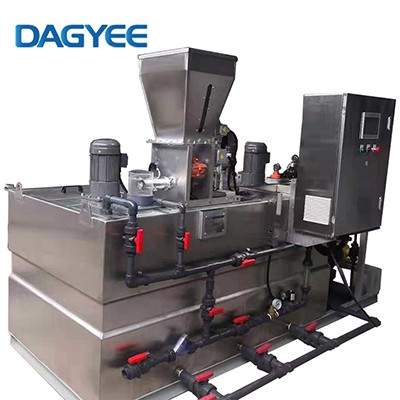
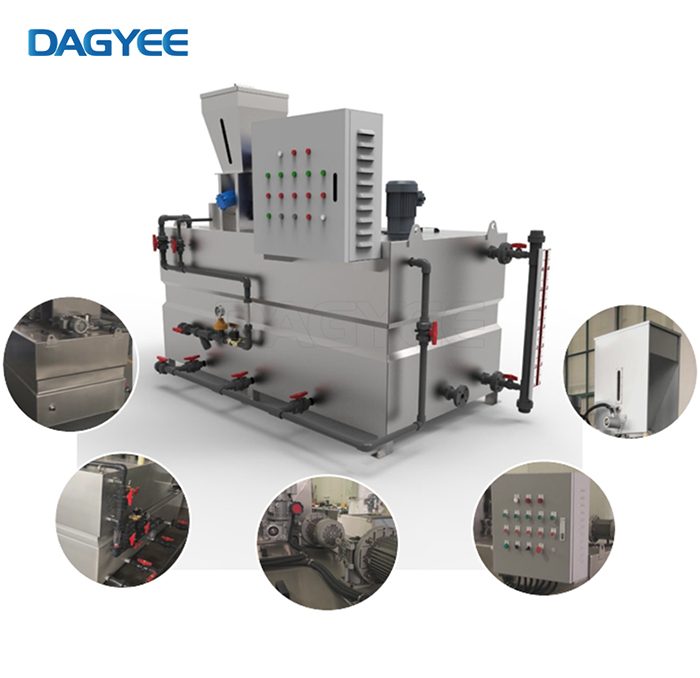
DAGYEE Polymer Unit
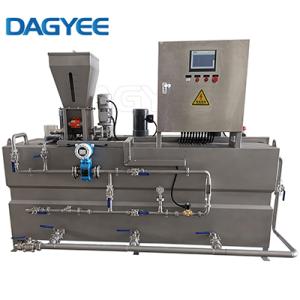
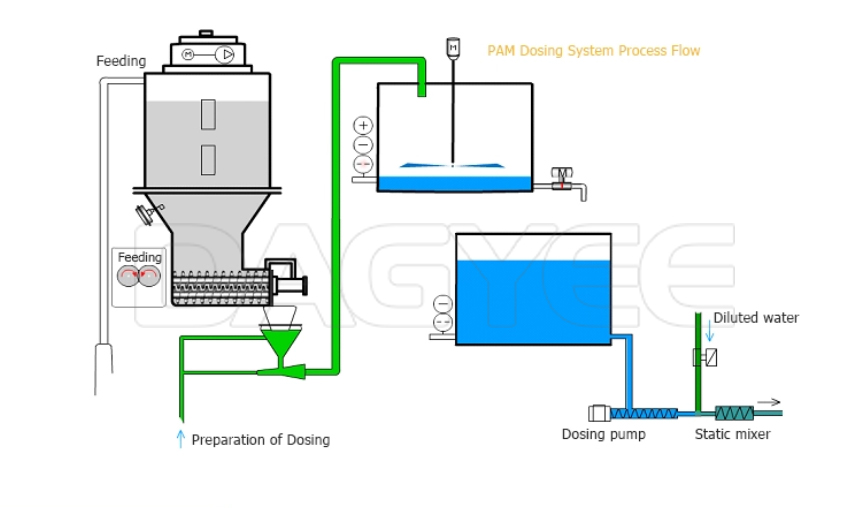
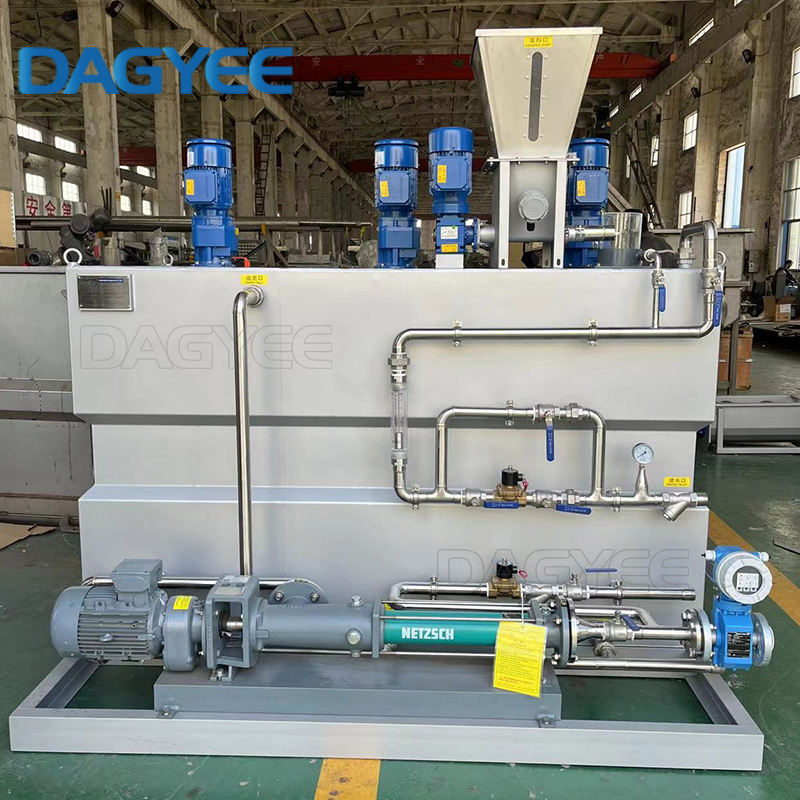
DAGYEE polymer preparation units are designed for maximum efficiency, ensuring your operations run smoothly. With our batch preparation philosophy, you can achieve the ideal concentration quickly, thanks to a one-hour aging process from start to finish. High-quality stainless steel materials and components guarantee both product excellence and long-term reliability.
Tailoring polymer concentration to your specific needs is easy. Our units offer precise calibration for the dry polymer feed rate and dilution water flow rate, all easily adjustable through the user-friendly PLC panel. Experience flexibility like never before, with standard volumes ranging from 1 m³ to 10 m³ and strengths from 0.05% to 0.5%. Need further dilution? We’ve got you covered.
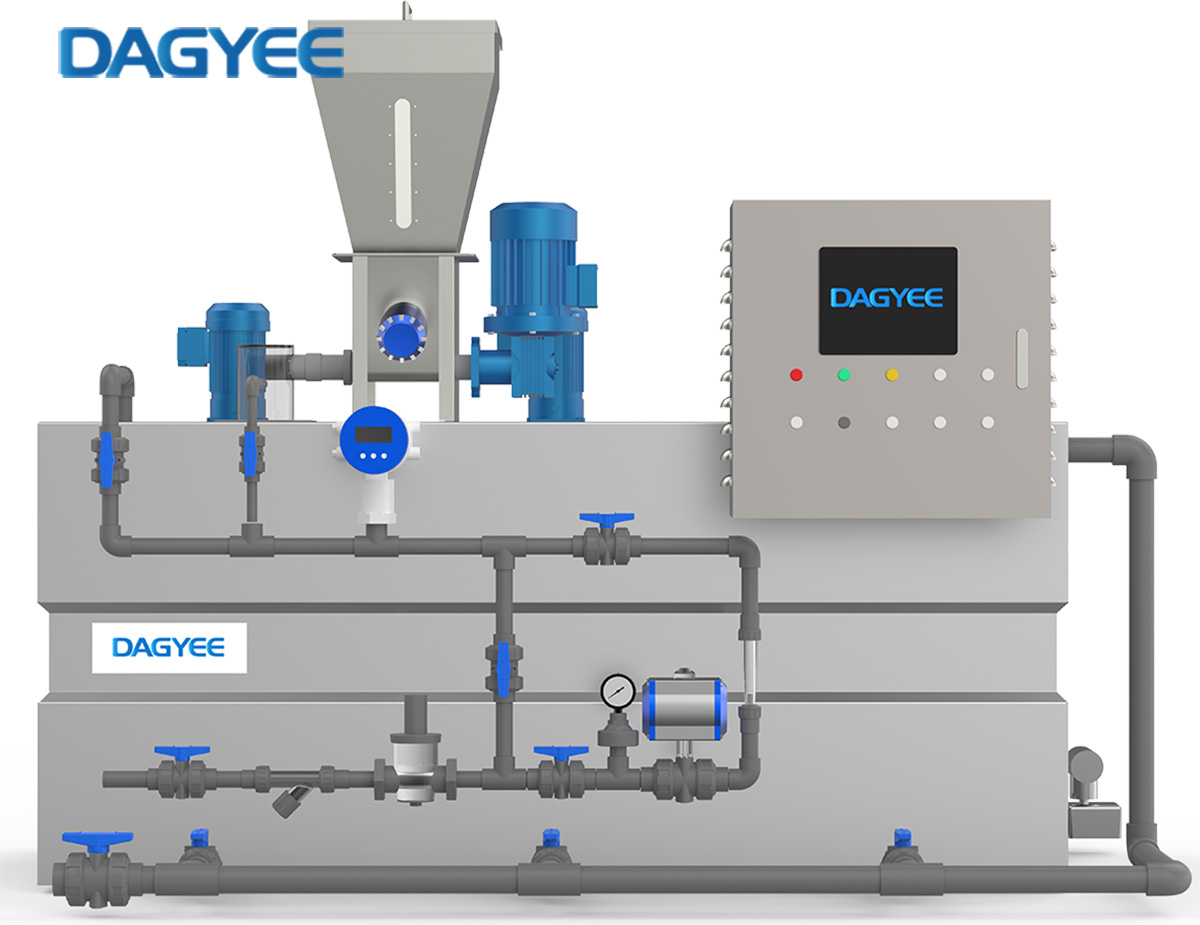
DAGYEE Polymer Prep Units redefine efficiency and savings. Fully automatic, they streamline operations and dramatically reduce maintenance costs. Say goodbye to time-consuming manual processes and costly upkeep. Our units optimize polymer consumption, minimizing waste and maximizing performance.
DAGYEE commitment is to enhance your operations with effortless efficiency. Our units save you time, money, and effort, all while delivering superior results. Experience the future of polymer preparation. Contact us today.

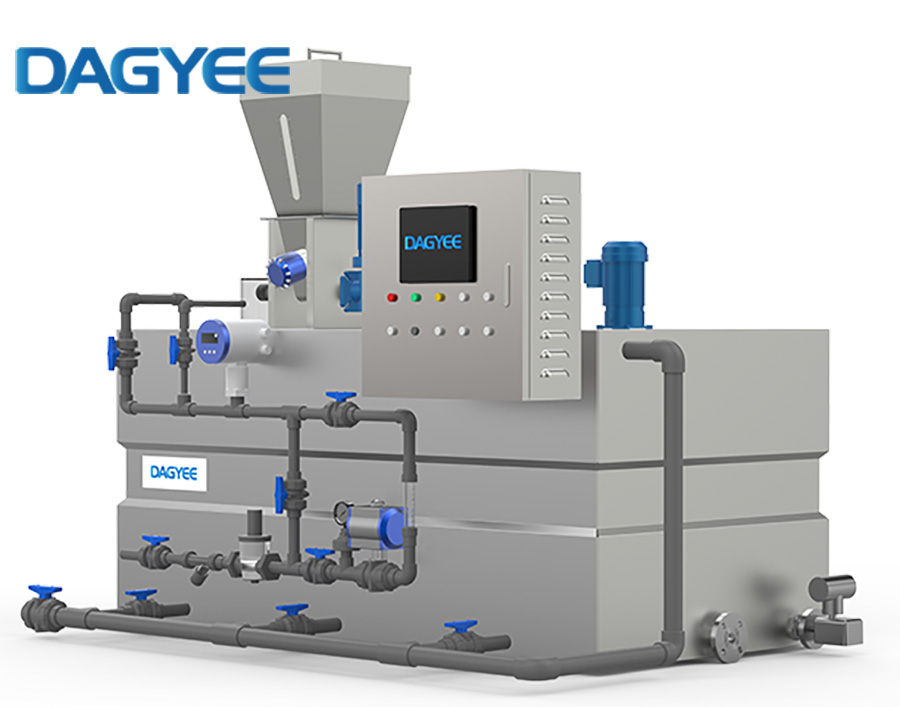
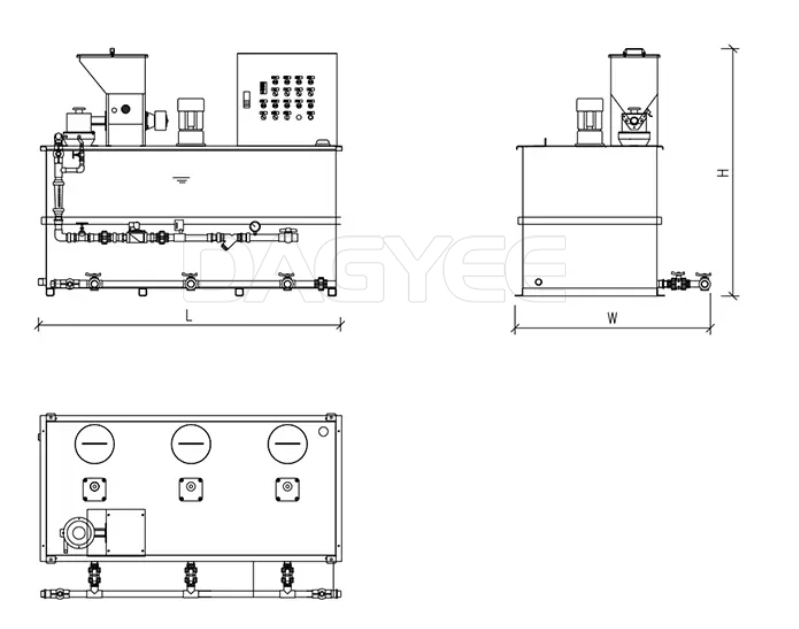
Polymer Preparation unit Model
| Model | Capacity L/H | Volume L | Timing H | Dimensions MM | Weight KG | Power KW |
|---|---|---|---|---|---|---|
| DT300 | 300 | 450 | 0.6-1 | 1500*1000*500 | 300 | 1.8 |
| DT500 | 500 | 750 | 0.6-1 | 1500*1000*650 | 420 | 1.8 |
| DT1000 | 1000 | 1500 | 0.6-1 | 2000*1000*900 | 500 | 2.8 |
| DT1500 | 1500 | 2250 | 0.6-1 | 2000*1200*900 | 620 | 3 |
| DT2000 | 2000 | 3000 | 0.6-1 | 2500*1200*1000 | 800 | 3.9 |
| DT3000 | 3000 | 4500 | 0.6-1 | 3000*1500*1000 | 950 | 5.3 |
| DT5000 | 5000 | 7500 | 0.6-1 | 5000*1500*1000 | 1250 | 7 |
| DT10000 | 10000 | 15000 | 0.6-1 | 4800*1800*2000 | 3600 | 7 |
Material: Stainless Steel, PP, or FRP
| Material | Pros | Cons | Best For |
|---|---|---|---|
| SS304 | Stands up to corrosion, strong, lasts a long time | Higher cost | Most projects |
| SS316 | Even better corrosion resistance | Costs more than 304 | High salt, very corrosive conditions |
| PP (Polypropylene) | Cheap, handles chemicals well | Low strength, ages faster | Small, low requirement projects |
| FRP (Fiberglass) | Handles chemicals, lightweight | Expensive, hard to fix | Chemical plants, special conditions |
I have seen too many plants buy a PP tank to save money. Three years later, the tank is cracked and leaking. The fittings are brittle. They end up buying a stainless steel unit anyway. The cheap one ends up being the expensive one.
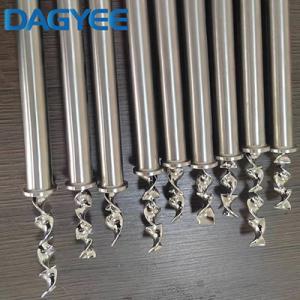
The feeding screw is one of the parts that gives people the most trouble. Pay attention to three things:
• VFD control: Adjustable screw speed lets you match changing polymer demand. When your sludge flow drops, the screw slows down. When it picks up, the screw speeds up. You do not waste polymer.
A good unit should have PLC control with a touchscreen. Look for these features:
• Remote communication ready (so you can hook it up to your SCADA system)
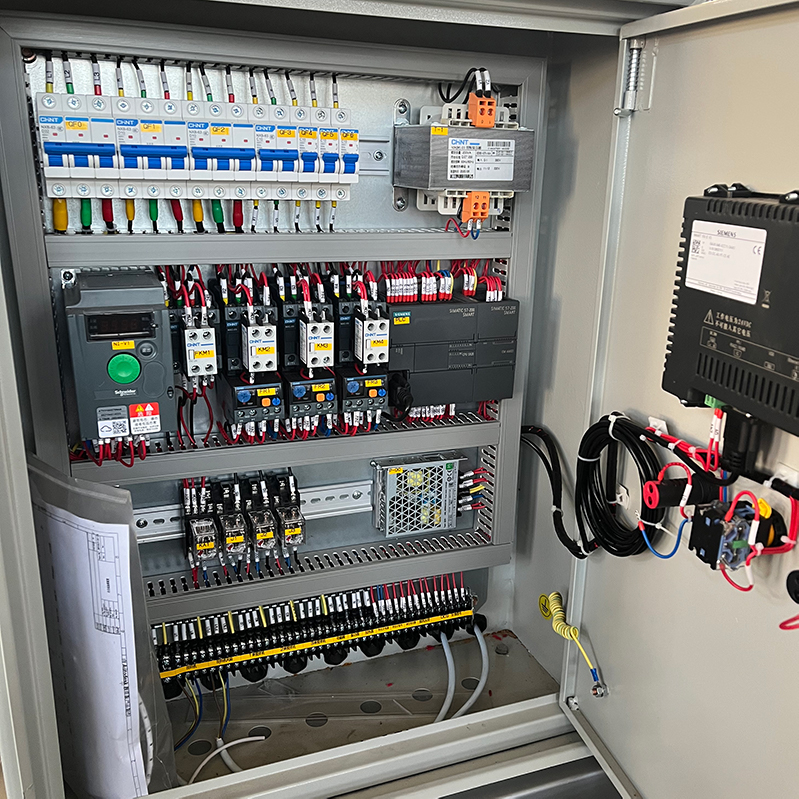
Polymer preparation Unit Feature
Polymer preparation Unit Remark
♦ Model selection: Process capacity or flow volume is necessary
♦ Raw material: SS304 or SS316.
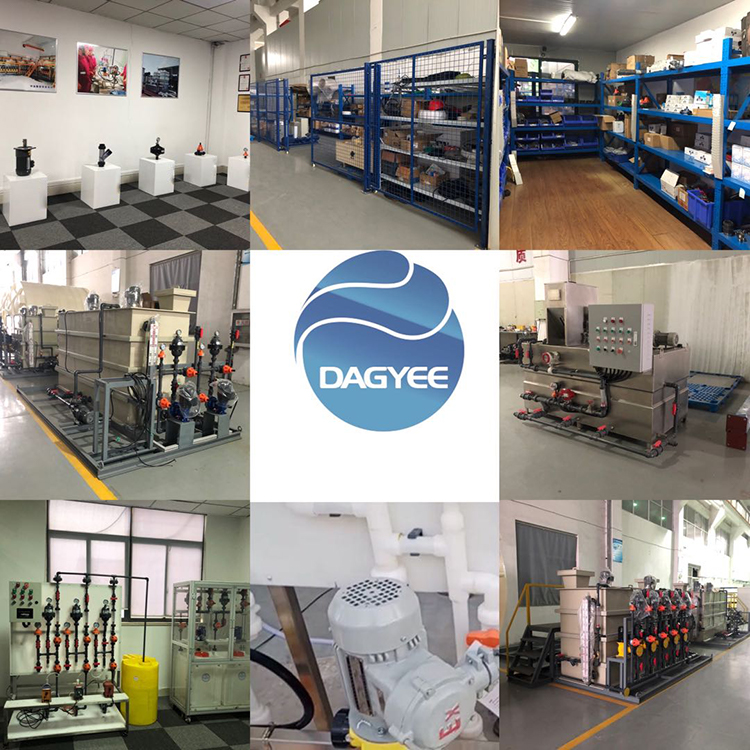
♦ Manufacturer: We have our own workshop so that best quality and loweat price can be provided for you.
♦ Customization: Custom-made is available.

What Makes DAGYEE Units Different
Summary
A few rules of thumb for selection:
• Higher automation saves you more money in the long run.
Still not sure what size or configuration you need?
Get in Touch:
Free Application Assessment – We'll look at your wastewater and suggest what fits
Customized Design – Built around your flow, space, and treatment goals
Fast Quotation – Detailed estimate within 48 hours
Project References – We'll share examples of similar installations
Factory Tour – Come see our facility