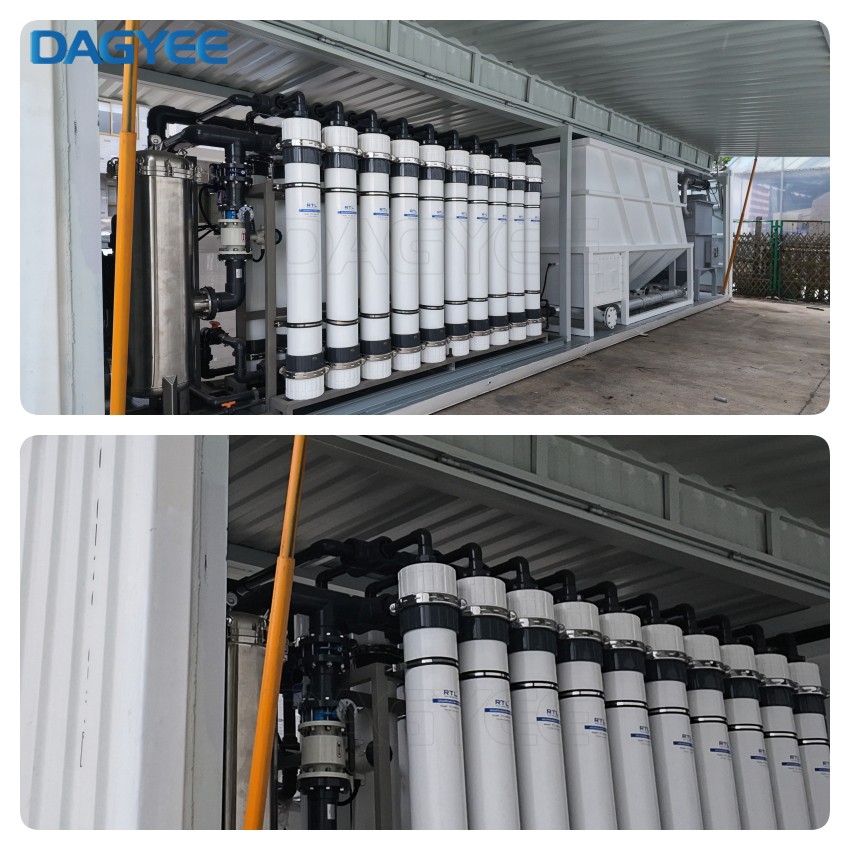
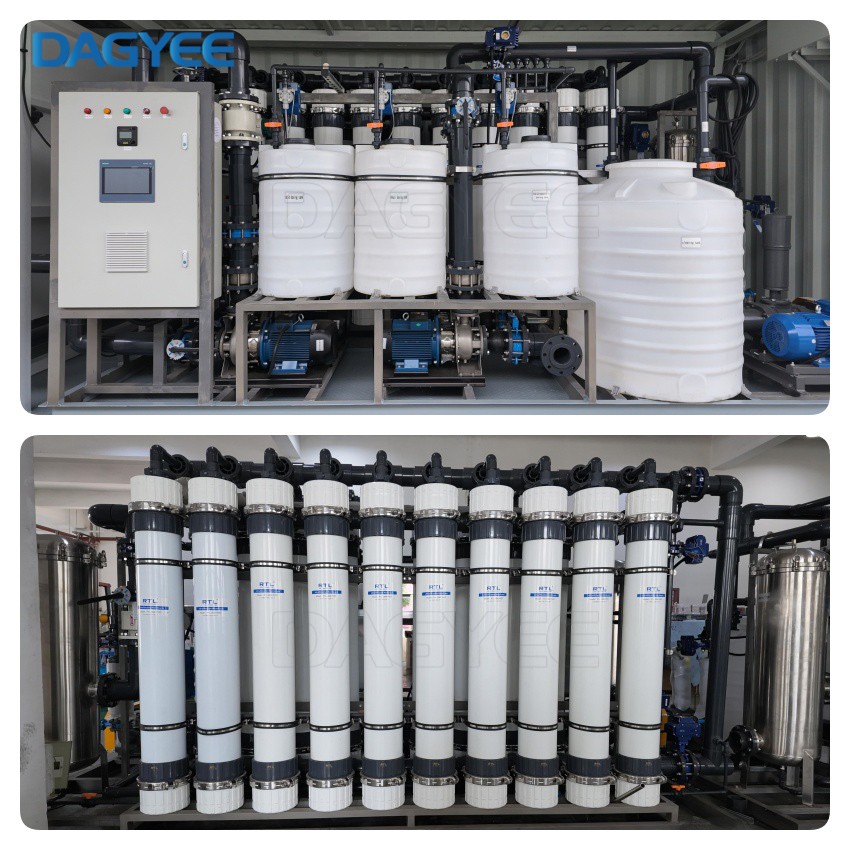
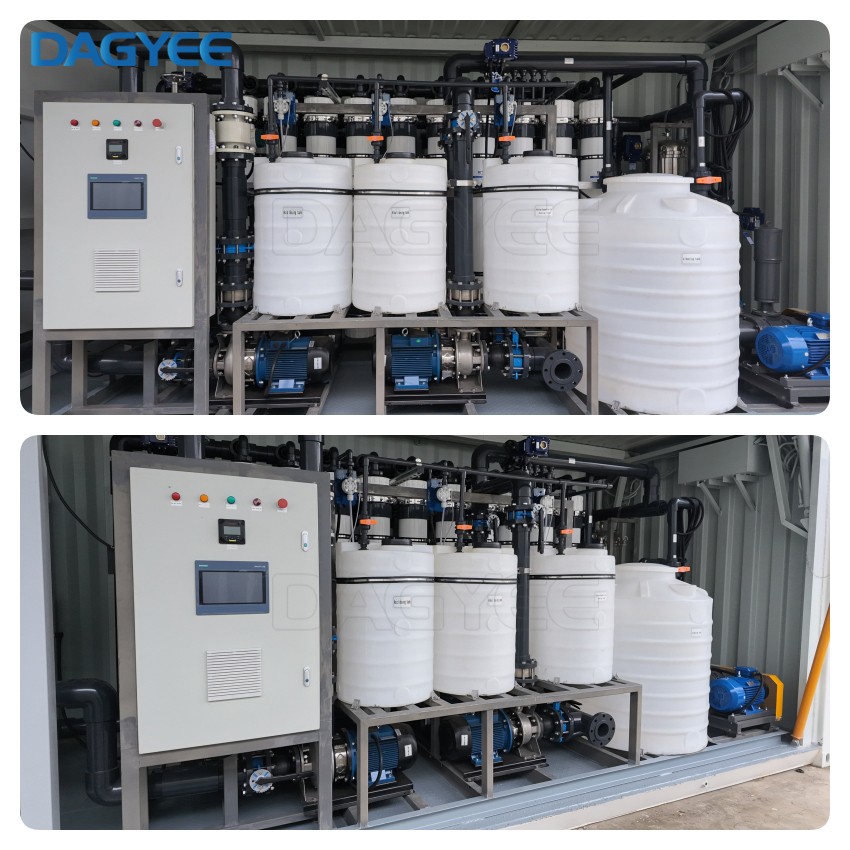
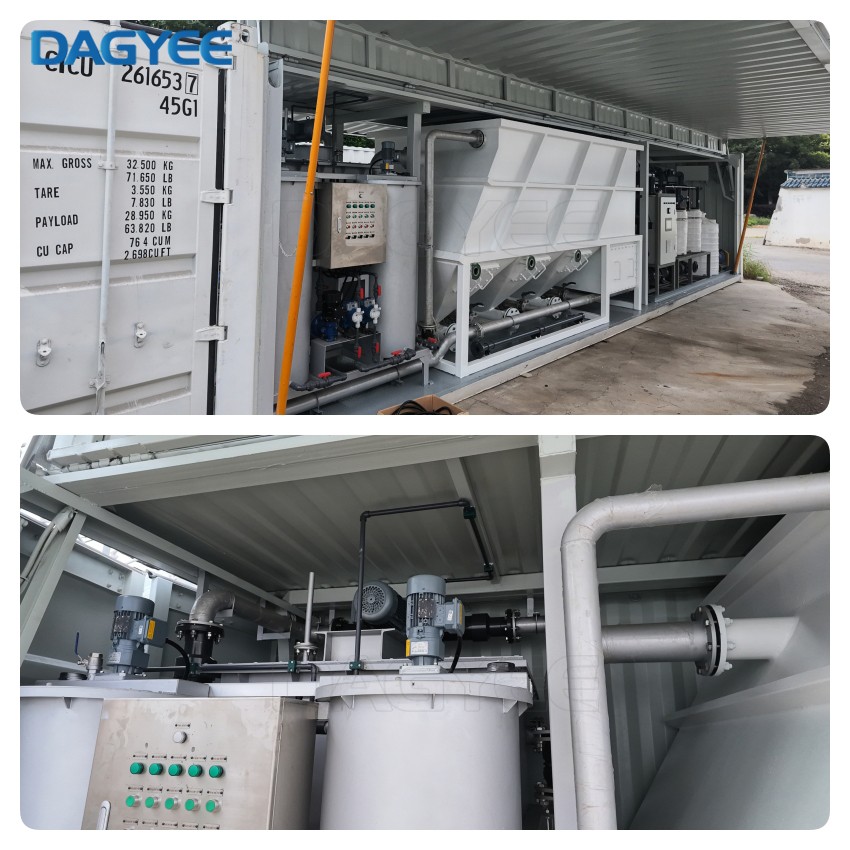
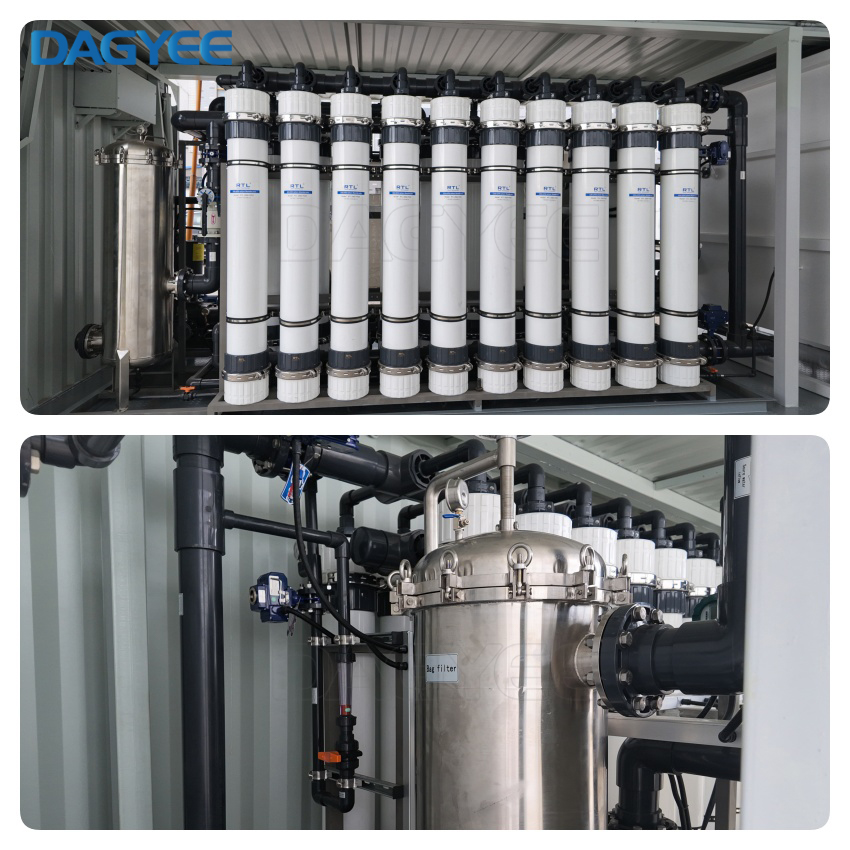
In recent years, surface water purification with ultrafiltration membrane has become an attractive alternative to conventional clarification. No or less need of chemical agents, good quality of produced water independent of feed water quality, good removal efficiency towards microorganisms, less production of sludge, compact process, and easy automation are some of the advantages of ultrafiltration compared to conventional treatment. Originally, ultrafiltration was used to remove turbidity and microorganism from good-quality surface water. Nowadays the main goal is to improve this technology and to apply it to worse quality sources for the removal of microorganisms, natural organic matter (NOM), Total Organic Carbon (TOC) including particulate organic carbon (POC) and dissolved organic carbon (DOC), disinfection by-products (DBPs) and other components.
Product Overview
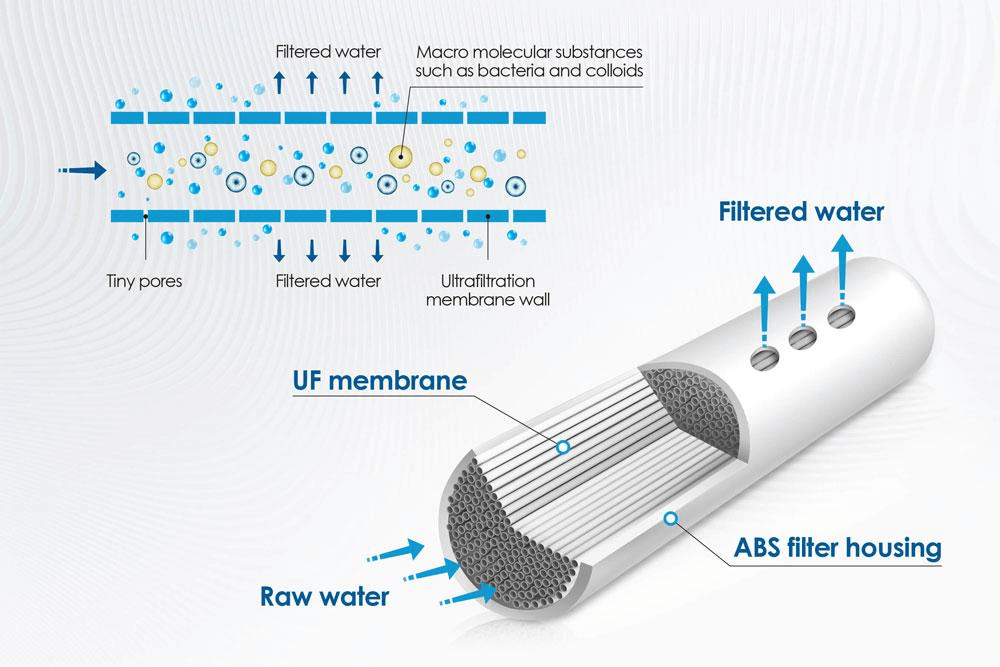
Ultrafiltration, often abbreviated as UF, is a hollow-fibre membrane-based separation process used in water treatment. It's a type of filtration that uses a semi-permeable membrane with very fine pores to separate water from suspended solids, colloids, and high molecular weight substances.
Depending on the type of hollow-fiber UF system, a vacuum applied to the inside of the membrane to suck the feed water to the inside of the membrane through many microscopic pores, results in a clean filtered water. In a pressurized UF system, the water is pressurized and pumped through the hollow fibers to force the water through the membranes. Both hollow fiber UF membranes effectively remove particles, bacteria, viruses, and other contaminants. This results in high-quality water suitable for various applications, from drinking water production to industrial processes.
What sets ultrafiltration apart is its ability to consistently deliver superior water quality regardless of fluctuations in raw water conditions. Additionally, ultrafiltration can serve as an excellent pretreatment step for reverse osmosis systems, when a higher quality water is required. The UF system helps to enhance the longevity of an RO system by removing particles that could potentially foul the RO membranes.
Working Principle
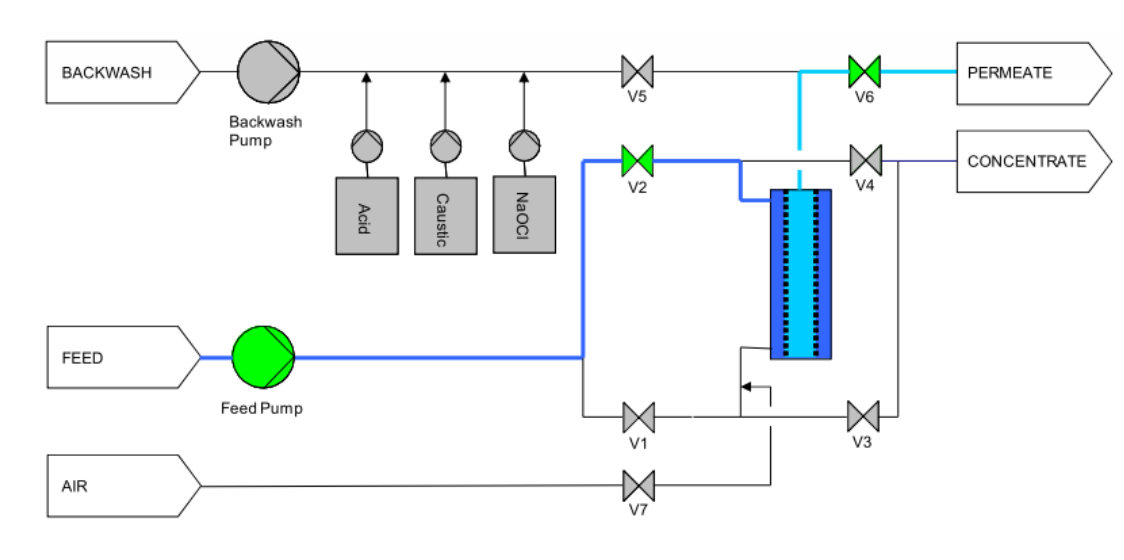
Ultrafiltration (UF) systems have diverse membrane filtrations where hydrostatic pressure pushes solvents against a very fine membrane. They block suspended particulates and solids that are large while water and solutes with a lower molecular weight are allowed to flow through the membrane.
Industry and research employ this separation process for purifying and concentrating macromolecular (103 - 106 Da) solutions, which are usually protein solutions. Ultrafiltration is similar to microfiltration, nanofiltration or gas separation, except it differs in the molecule sizes it blocks.
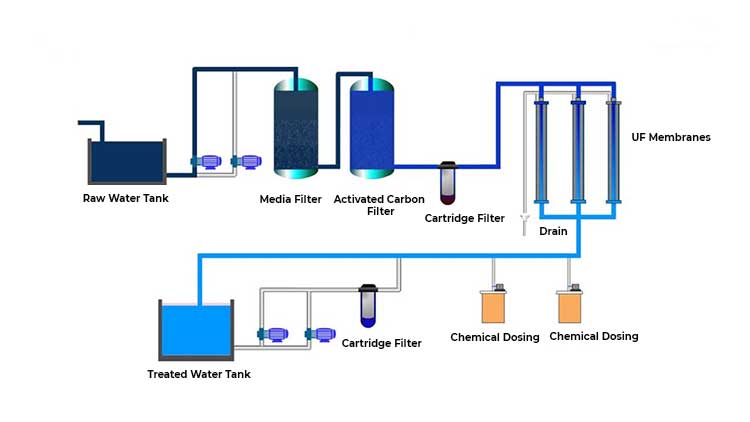
To meet critical discharge criteria, ultrafiltration systems remove the need for clarifiers and multimedia water filtration. Effective ultrafiltration systems use membranes that can be immersed, back-flushable, and air scoured. Spiral wound UF/MF membranes offer excellent performance for the clarification of process water and waste water.
System Components
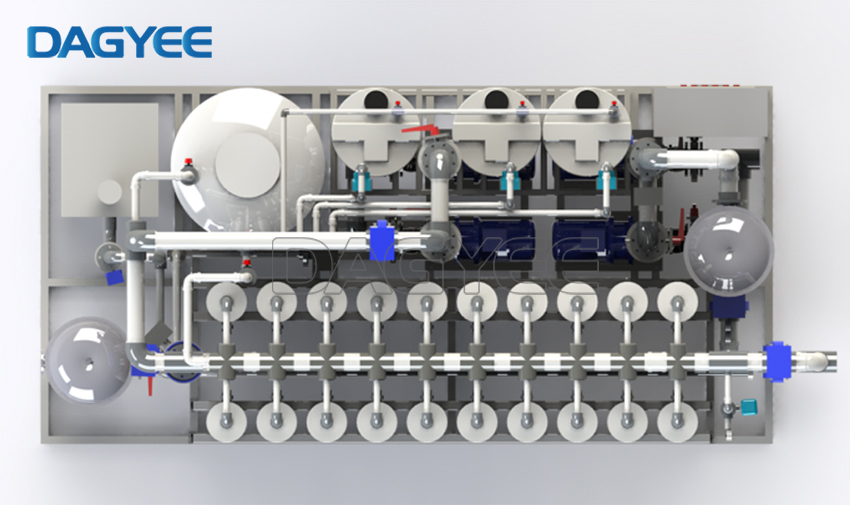
| Component | Function Description |
|---|---|
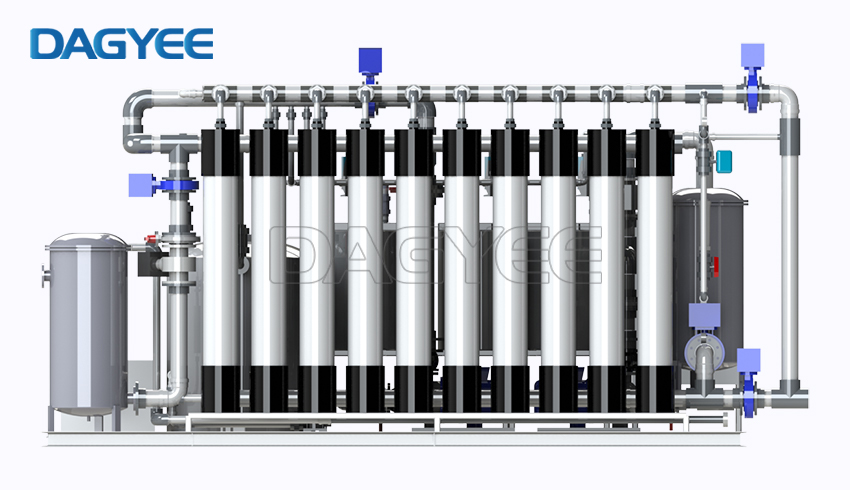
| UF Membrane Modules | PVDF hollow fiber membranes with 0.01 micron precision. Available in inside-out or outside-in configurations. High chemical resistance and chlorine tolerance (> 2,000 ppm). |
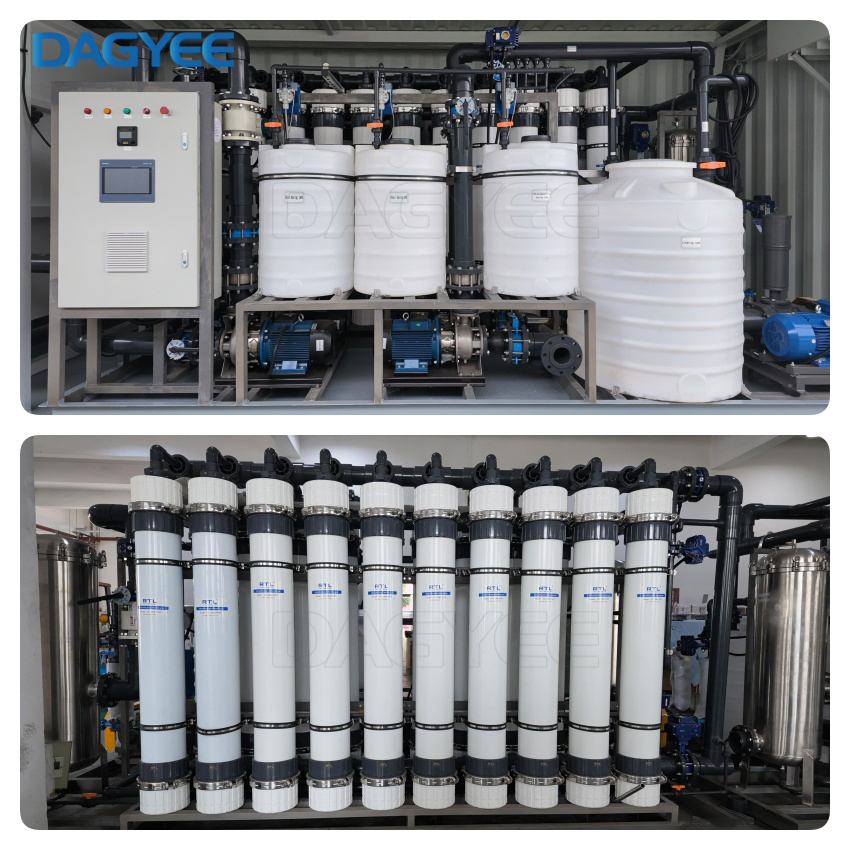
| PLC Control Panel | Siemens/Omron PLC with 7-inch HMI touch screen. Enables fully automatic filtration, backwashing, CEB, CIP, TMP monitoring, alarm logging, and optional SCADA remote access. |
| Feed & Backwash Pumps | Stainless steel centrifugal pumps providing 0.1~0.3 MPa operating pressure. Backwash pump delivers reverse flow at 1.5~2.0x filtration flux. |
| Chemical Dosing System | Dosing pumps and tanks for NaClO, citric acid, NaOH, and EDTA. Enables automated CEB (Chemical Enhanced Backwash) and CIP (Clean-in-Place) procedures. |
| Air Scouring System | Oil-free air compressor and distribution manifold. Generates air bubbles during backwashing to create turbulence and mechanical scouring for superior foulant removal. |
| Pre-filtration Unit | Automatic disc filters or cartridge filters with 100~200 micron rating, protecting UF membranes from large particle damage and extending membrane service life. |
| Instrumentation | Includes pressure transmitters, flow meters, temperature sensors, and turbidity meters. Real-time data acquisition for process optimization and system protection. |
| Tank & Piping System | Feed tank, permeate tank, backwash tank, and chemical tanks. Piping in UPVC or Stainless Steel 304/316L with sanitary fittings, ensuring corrosion resistance and hygienic operation. |
Product Features & Advantages
Ultrafiltration offers numerous advantages in water treatment, making it an increasingly popular choice for municipal and industrial applications. Hollow fiber UF membranes provide a physical barrier to suspended solids and pathogens to consistently produce a high-quality, low-turbidity, and low-SDI effluent.
Here are the key benefits of implementing an ultrafiltration system:
Pressurized or immersed membranes to suit the site requirements.
Greater output in the same footprint and helps reduce capital and lifecycle costs for the application.
Physical UF barrier provides consistent high-quality effluent exceeding stringent regulatory requirements through virtually any change in raw-water quality.
Low lifecycle cost optimized through extended membrane life and low energy and chemical use.
These benefits make ultrafiltration an attractive option for various water treatment applications, from municipal water supplies to industrial process water.
Technical Specifications
| Parameter | Specification |
|---|---|
| Model Number | MOD-UF-2026-02A |
| Filtration Precision | 0.01 ~ 0.02 micron |
| Membrane Material | PVDF |
| Membrane Configuration | Hollow Fiber (HFF) |
| Fiber Inner / Outer Diameter | 0.6~1.0 / 1.0~1.6 mm |
| Operation Mode | Inside-out / Outside-in |
| Operating Pressure | 1.4 ~ 3.5 bar (20 ~ 50 psi) |
| Max Operating Pressure | 6.0 bar (87 psi) |
| Operating Temperature | 2 ~ 38 C (35 ~ 100 F) |
| Max Temperature | 45 C (113 F) |
| Operating pH Range | 2 ~ 13 |
| pH Range (Cleaning) | 1 ~ 14 CIP |
| Recovery Rate | 85% ~ 95% |
| Permeate Turbidity | < 0.1 NTU |
| Permeate SDI | < 1 RO Feed |
| Bacteria / Virus Removal | > 99.99% |
| Chlorine Tolerance | > 2,000 ppm Continuous |
| Power Supply | 220V/380V +-10%, 50/60Hz, 3 Phase |
| Control System | Siemens/Omron PLC + 7" HMI |
| Protection Class | IP54 / IP65 (Optional) |
| Membrane Life Expectancy | 3 ~ 5 years |
What Does Ultrafiltration Remove?
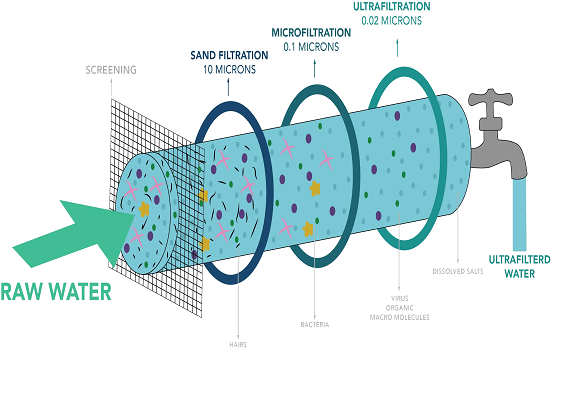
Ultrafiltration is highly effective at removing a wide range of contaminants from water. Here's a breakdown of what an ultrafiltration water filter can typically remove:
1. Particulate matter:
Suspended solids
Colloids
Turbidity
2. Microorganisms:
Bacteria (99.99% removal)
Protozoa (including Giardia and Cryptosporidium)
Many viruses
3. Organic compounds:
High molecular weight organics
Some humic substances
4. Inorganic compounds:
Some heavy metals, when bound to organic matter or particles
5. Other contaminants:
Algae
Some parasites
It's important to note that while ultrafiltration is highly effective at removing many contaminants, it does not remove contaminants like dissolved salts, organic molecules, or ions smaller than the pore size. Additional treatment methods like reverse osmosis or ion exchange may be necessary for these.
Industry Application
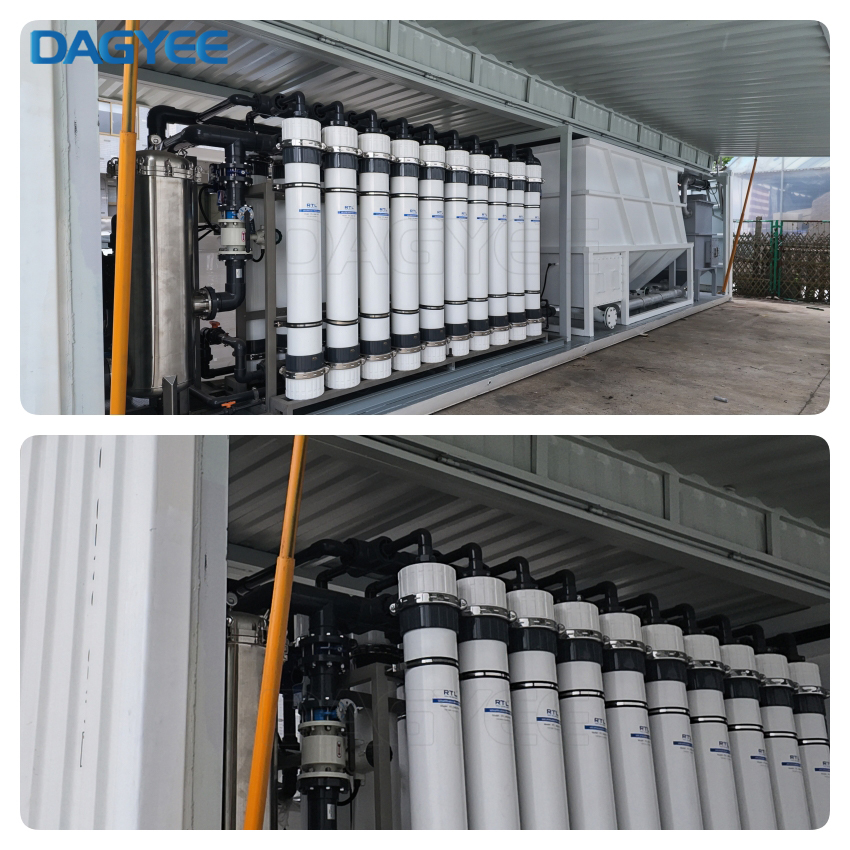
This industrial UF system is suitable for a wide range of applications:
RO Pretreatment – Protects downstream RO membranes by reducing SDI to <1, extending RO membrane life by 30%+ and reducing cleaning frequency by 2~3 times
Drinking Water Production – Municipal water treatment, community supply, and bottled water facilities
Industrial Process Water – Electronics manufacturing, pharmaceutical production, power generation, and food & beverage industries
Wastewater Reuse – Tertiary treatment for industrial and municipal wastewater, enabling water recycling for cooling, irrigation, and process use
Seawater Desalination Pretreatment – Provides high-quality feed water for SWRO systems, minimizing membrane fouling
Surface Water Treatment – Lake, river, and reservoir water clarification for potable or industrial use
Operation & Maintenance
Routine maintenance is straightforward and primarily automated:
Daily Inspection – Check TMP, flow rates, and pump condition
Backwashing – Automatic, every 15~60 minutes, duration 60~120 seconds
Chemical Enhanced Backwash (CEB) – Weekly, using NaClO (50~200 ppm) and/or citric acid
CIP Cleaning – Every 1~6 months, circulating NaClO and acid solutions
Membrane Integrity Test – Quarterly, using pressure decay or bubble point test
Membrane Replacement – Typically every 3~5 years, depending on feed water quality and operating conditions
Why Choose Us
| Feature | Customer Value |
|---|---|
| Siemens/Omron PLC | Globally proven industrial-grade automation with reliable spare parts availability. |
| 7" HMI Touch Screen | Intuitive operation with real-time process visualization and multi-language support. |
| PVDF Membranes | Superior chemical resistance, longer service life (3-5 years), and aggressive CIP capability (pH 1-14). |
| Modular Skid Design | Pre-assembled and factory-tested — reduces on-site installation time by up to 50%. |
| Global Support Network | Local technical support, fast spare parts delivery, and comprehensive documentation. |
Contact Us