
Every wastewater treatment facility faces the same question: how to remove water from sludge without removing money from the budget.
Traditional methods have trade-offs that facility managers know all too well.
Belt filtration systems consume large volumes of wash water and require frequent media replacement. The labor cost alone often exceeds the initial equipment price within the first two years.
High-speed centrifugation achieves dry cake but at the cost of high electrical demand and mechanical complexity. Bearing failures and seal replacements are not matters of if, but when.
Plate and frame presses produce very dry cake but operate in batches and demand significant operator time for each cycle.
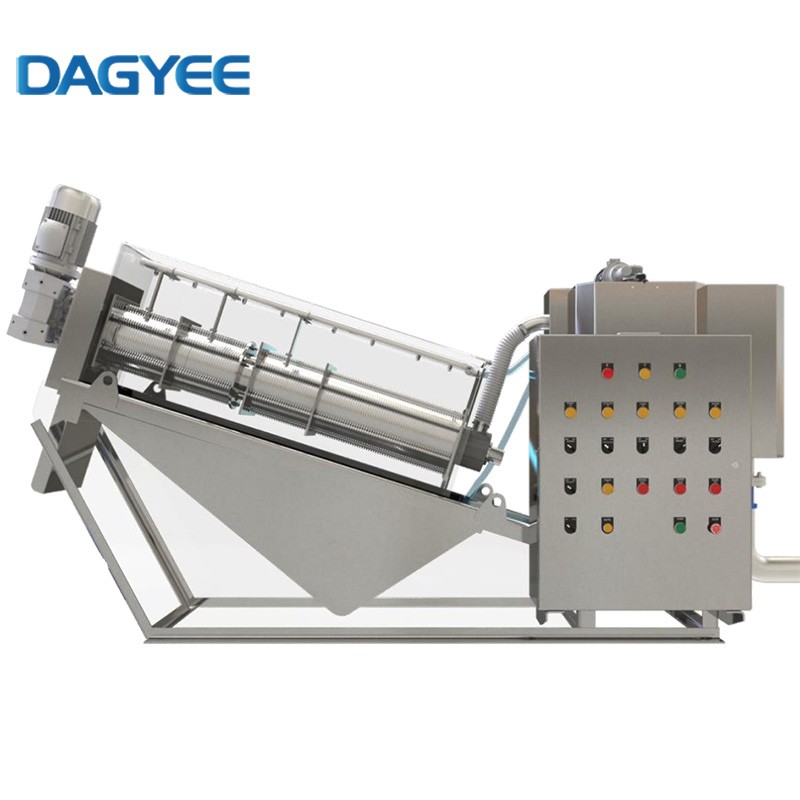
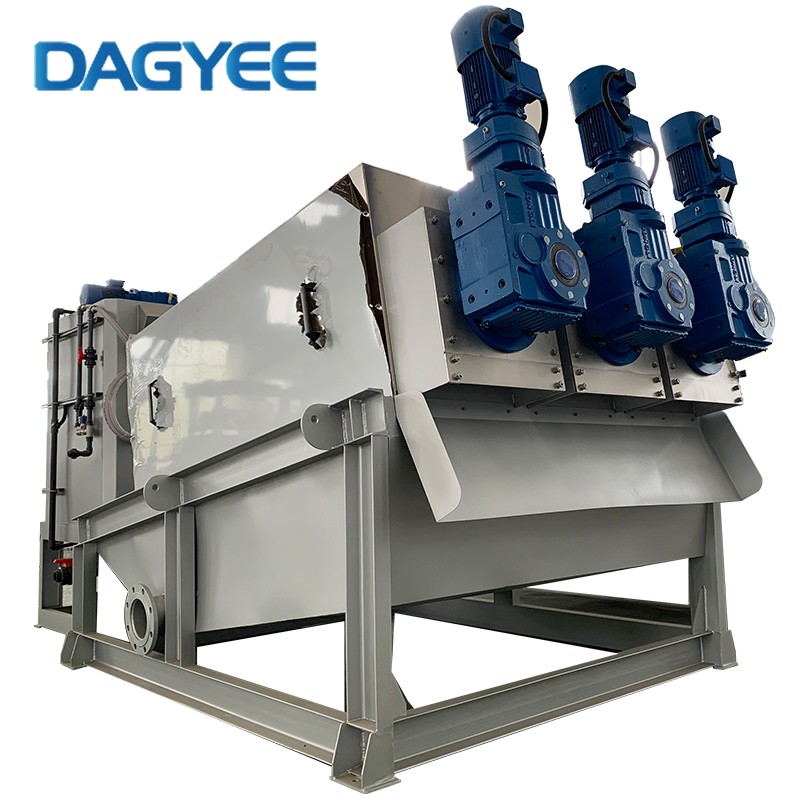
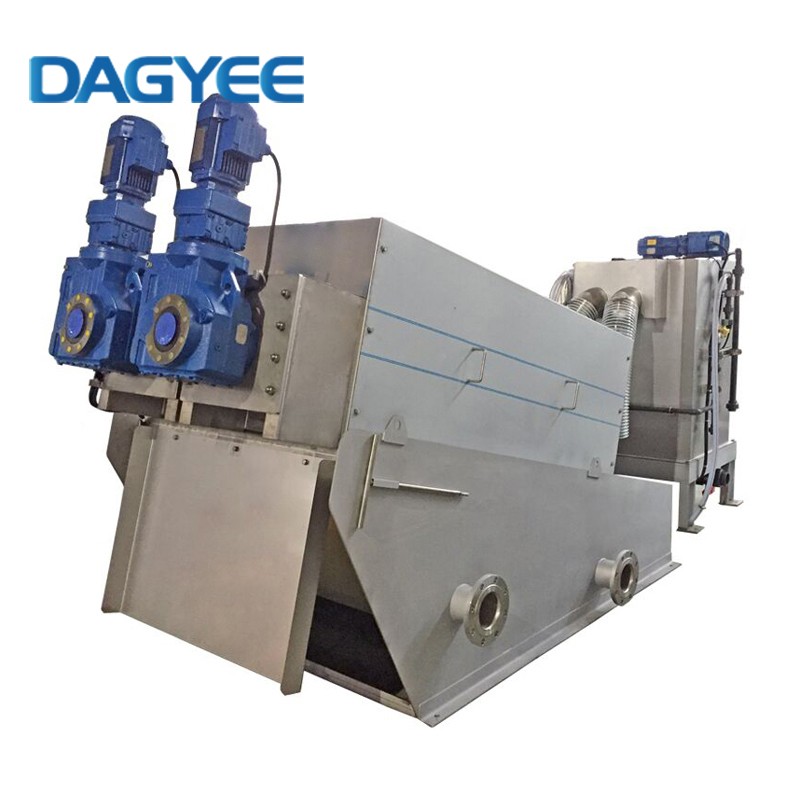
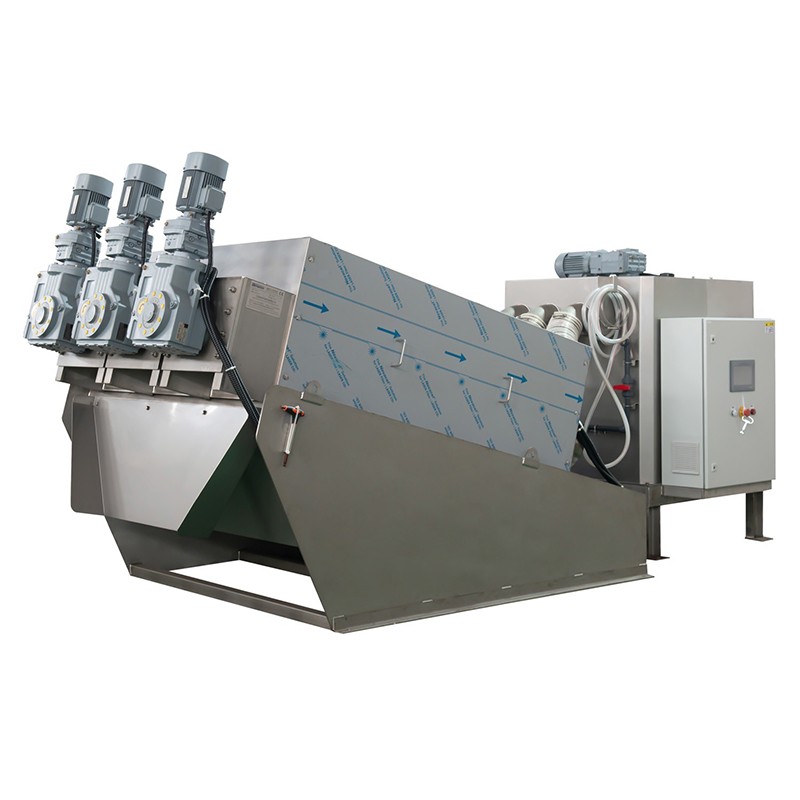
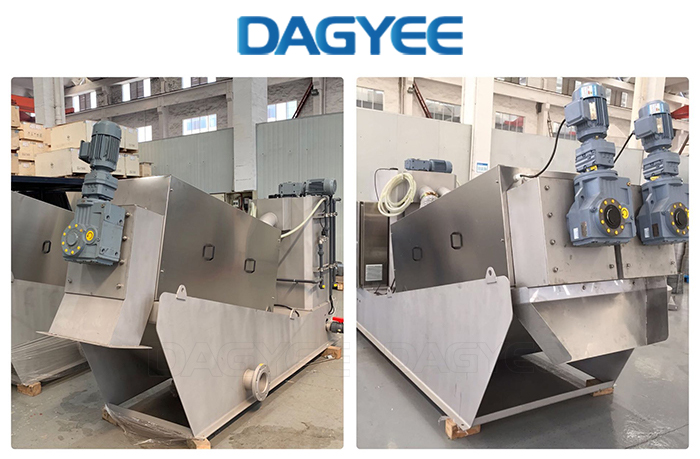
The DAGYEE spiral extrusion system takes a different path.
Rather than high speed or high pressure, it uses gradual mechanical compression at low rotational speed. Rather than disposable filter media, it uses a durable stainless steel ring stack that cleans itself during operation. Rather than batch processing, it runs continuously without operator intervention.
The result is a dewatering system that addresses the real cost drivers in sludge management: labor, energy, water, and maintenance.
Facilities that have switched to DAGYEE report measurable reductions in all four categories. Some have recovered the equipment cost within the first year through savings alone.
2. Working Principle
Here's what happens inside.
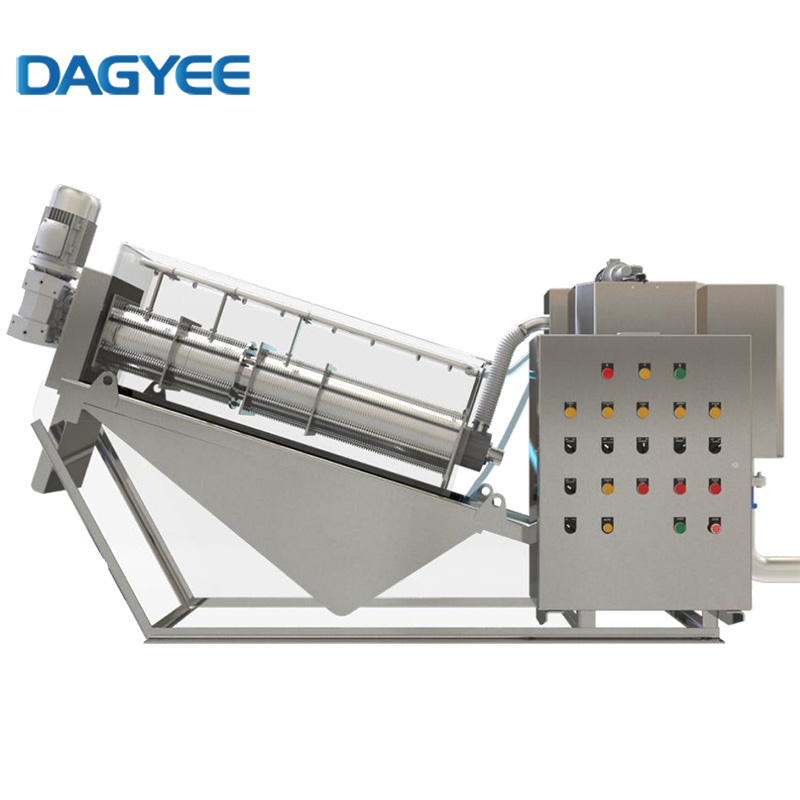
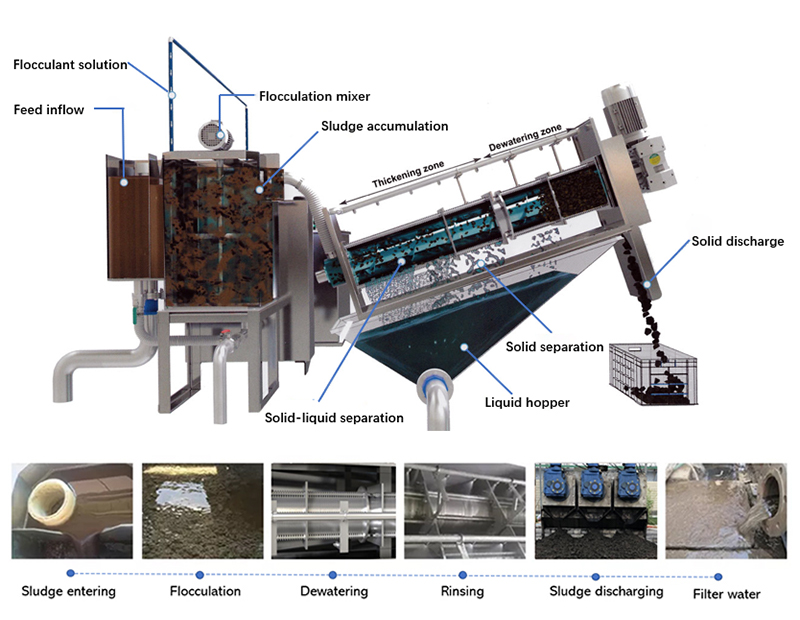
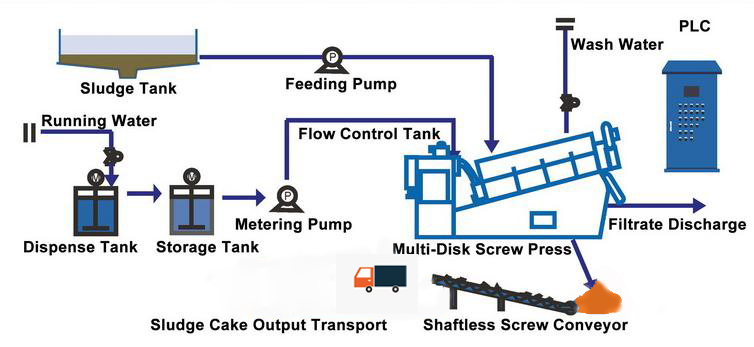
The dewatering process occurs in three stages within a single integrated unit.
Stage One: Gravity Thickening
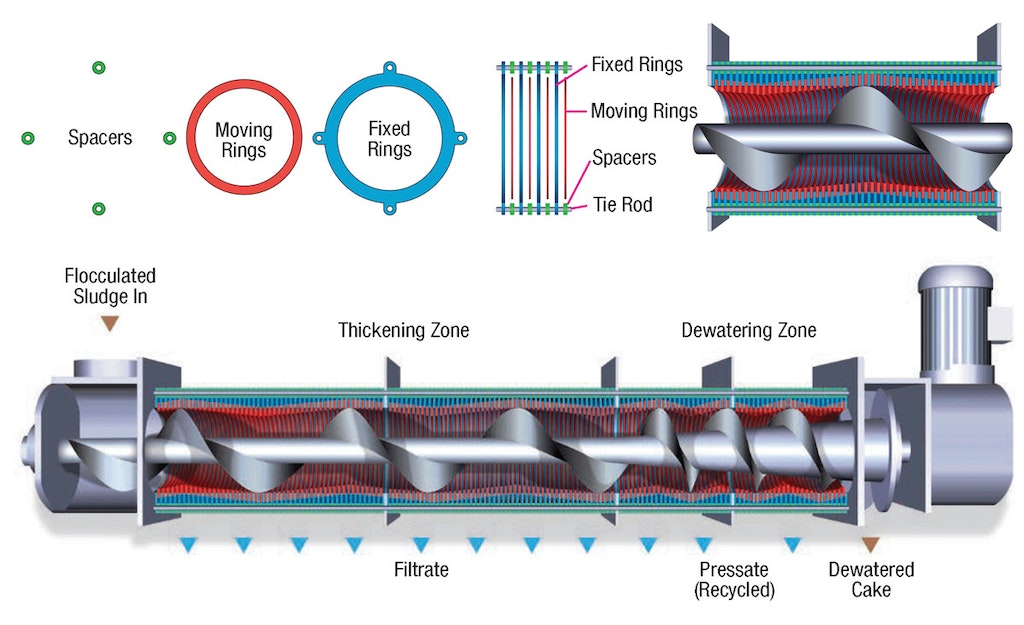
Sludge enters through the feed hopper and flows onto the initial section of the screw. Free water drains through the ring gaps by gravity before any mechanical compression begins. This stage removes the easiest water first, reducing the load on subsequent stages.
Stage Two: Gradual Compression
As the spiral screw rotates, it conveys sludge toward the discharge end. The screw root diameter increases progressively, which reduces the available volume. This geometric design creates gentle but effective compression without the need for high pressure or high speed.
Water forced out during this stage passes through the gaps between fixed and moving rings. The gaps measure between 0.2 and 0.5 millimeters, selected to retain solids while allowing water to escape freely.
Stage Three: Final Extrusion
At the discharge end, an adjustable back-pressure plate creates the final compression zone. The operator sets the plate position based on desired cake dryness. Tighter settings produce drier cake but require more torque from the drive motor.
Throughout all three stages, the moving rings shift axially with each screw rotation. This motion continuously clears any solids that attempt to accumulate in the ring gaps. The self-cleaning action eliminates the need for high-pressure water spray during normal operation.
The dewatered cake exits continuously. The filtrate collects in the base pan and discharges by gravity.
3. Key Advantages
Volume Reduction Up to Ninety Percent
Removing water reduces sludge volume dramatically. A typical installation achieves final cake solids between 15 and 30 percent, which corresponds to a volume reduction of 70 to 90 percent depending on inlet concentration. Less volume means fewer trucks, lower disposal fees, and reduced storage requirements.
Electrical Cost Approximately One-Tenth of Centrifuge
The drive motor on a DAGYEE system draws between 0.75 and 5.5 kilowatts depending on model size. A centrifuge processing the same sludge flow typically requires 15 to 30 kilowatts. The difference becomes substantial when operating continuously.
Wash Water Measured in Liters per Week Rather Than Cubic Meters per Day
Belt presses typically consume hundreds or thousands of liters of water per hour for spray bar operation. The DAGYEE system requires no continuous spray. An occasional rinse during shutdown periods is sufficient for most applications.
No Filter Cloths, No Belts, No Spray Nozzles in the Spare Parts Room
The spare parts inventory for this system fits in a small box. Shaft seals and control relays are the primary wear items. There are no consumable media to purchase repeatedly.
Operator Presence Not Required for Normal Operation
Once the system is running and the back-pressure plate is set, the machine continues operating without intervention. The control panel includes alarms for abnormal conditions, but routine operation requires no operator attention.
Sound Level Below Sixty-Five Decibels at One Meter
Conversation at normal volume is possible while standing next to the operating machine. No hearing protection is required for nearby personnel.
Floor Space Measured in Square Meters Rather Than Tens of Square Meters
The smallest model occupies approximately two square meters. Larger facilities with multiple units can arrange them in parallel without requiring a dedicated dewatering building expansion.
Stainless Steel Construction for Long Service Life
All wetted parts are stainless steel. The frame is carbon steel with epoxy coating. Stainless steel frames are available for corrosive environments.
Variable Frequency Drive Option for Process Control
When equipped with a VFD, screw speed adjusts automatically based on feed conditions or operator setpoint. This allows fine-tuning of cake dryness and throughput for variable sludge characteristics.
4. Technical Specifications
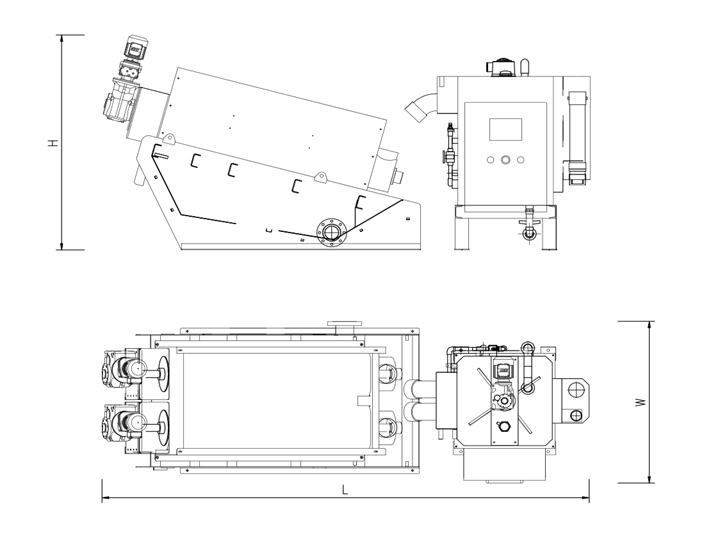
Standard models are listed below. Custom configurations are available upon request.
Note: Capacity and cake dryness depend on sludge characteristics, polymer type, and dosage. A sludge test is recommended for accurate sizing.
Materials:
Screw and rings – Stainless 304 (316L available for corrosive stuff)
Housing – Stainless 304
Frame – Carbon steel with epoxy coating
Cake solids: 15% to 30% depending on your sludge and chemical
Temperature range: 0°C to 60°C
Voltage: We match yours – 380V/50Hz, 460V/60Hz, or others
5. Comparison with Traditional Equipment
| Parameter | Belt filter press | Plate and Frame Press | Centrifuge | Screw Press |
|---|---|---|---|---|
| Energy Consumption | High | Higher | Highest | Lowest |
| Footprint | Large | Large | Medium | Small |
| Automation Level | Moderate | Low | High | High |
| Clogging Risk | High | High | Medium | Very Low |
| Wash Water Usage | High | Medium | Low | Very Low |
| Suitable Concentration | ≥5000 mg/L | ≥10000 mg/L | ≥3000 mg/L | ≥2000 mg/L |
| Continuous Operation | Yes | Intermittent | Yes | Yes |
Each technology has appropriate applications. The selection depends on specific site requirements including sludge characteristics, available labor, energy costs, and budget constraints.
What this means for you:
Want the driest cake possible? Get a centrifuge. But budget for power and repairs.
Have almost no budget upfront? Get a belt press. But plan for labor and water.
Want the lowest total cost and least headache? Get our screw press.
6. Selection & Maintenance
Selection Worksheet
To select the appropriate model, calculate your dry solids production rate.
Step 1: Measure or estimate your sludge flow rate in cubic meters per hour.
Step 2: Measure your inlet solids concentration in percent or grams per liter. One percent solids equals ten grams per liter.
Step 3: Calculate dry solids per hour: Flow rate × Solids concentration × 10 (for grams per liter to kilograms per hour).
Step 4: Multiply by 1.5 to provide margin for variations.
Step 5: Select a model with dry solids capacity exceeding this number.
Example Calculation
Sludge flow: 8 cubic meters per hour
Inlet solids: 2 percent (20 grams per liter)
Dry solids: 8 × 20 = 160 kilograms per hour
With margin: 160 × 1.5 = 240 kilograms per hour
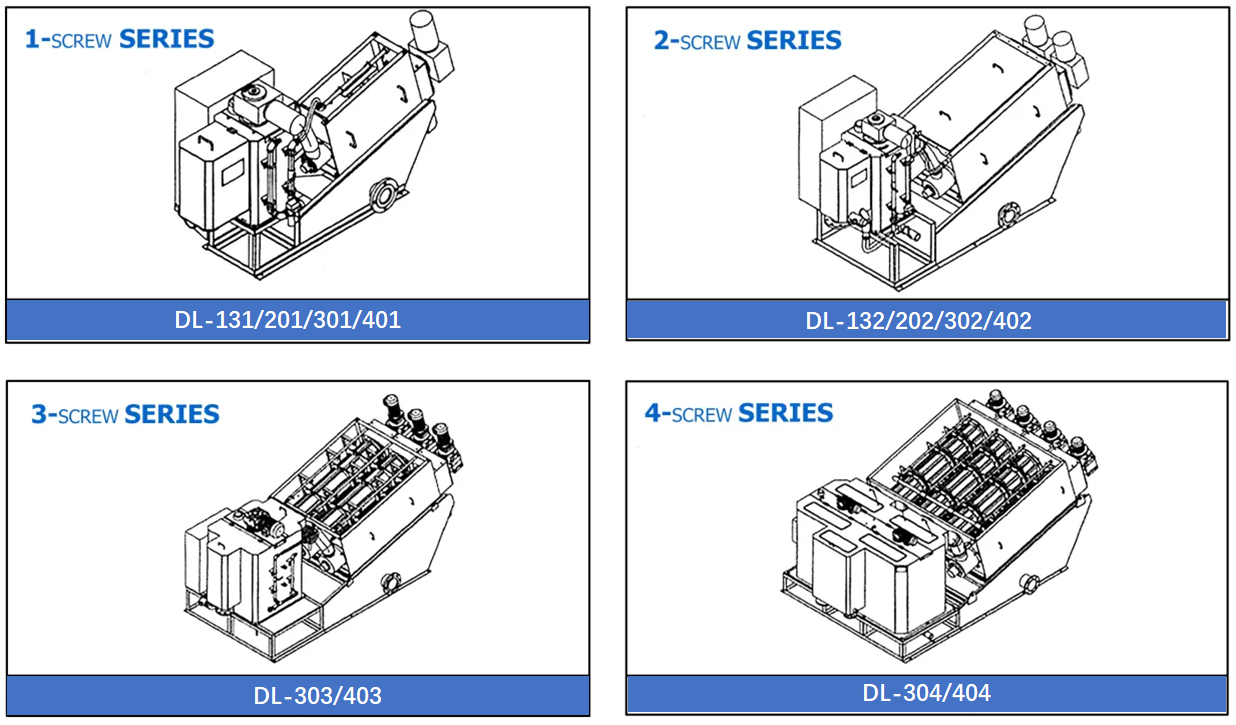
Recommended model: DAG-301 or DAG-302 depending on flow characteristics
Free Laboratory Testing
DAGYEE maintains a pilot-scale test unit for customer sludge samples. The test procedure requires approximately five liters of representative sludge.
The test report includes:
Achievable cake solids content
Recommended polymer type and dosage
Filtrate quality measurements
Recommended model based on test results
There is no charge for this service. Shipping costs for the sample are the responsibility of the customer.
Maintenance Planning
The maintenance program for this equipment is substantially simpler than for belt presses or centrifuges.
Daily Tasks (Five Minutes)
Visual check for any external leaks
Listen for changes in operating sound
Verify control panel shows normal status
Monthly Tasks (Thirty Minutes)
Check gearbox oil level through sight glass
Apply grease to motor bearings if equipped with fittings
Inspect discharge area for abnormal buildup
Quarterly Tasks (One Hour)
Check all accessible fasteners for tightness
Clean any debris from around the machine
Verify wash system operation
Annual Tasks (Two to Four Hours)
Drain and replace gearbox oil
Remove and inspect a sample of rings for wear measurement
Check shaft seals for signs of leakage
Inspect electrical connections in control panel
7. Applications