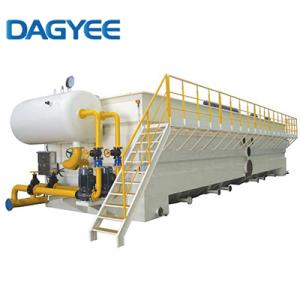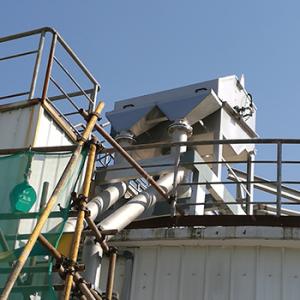
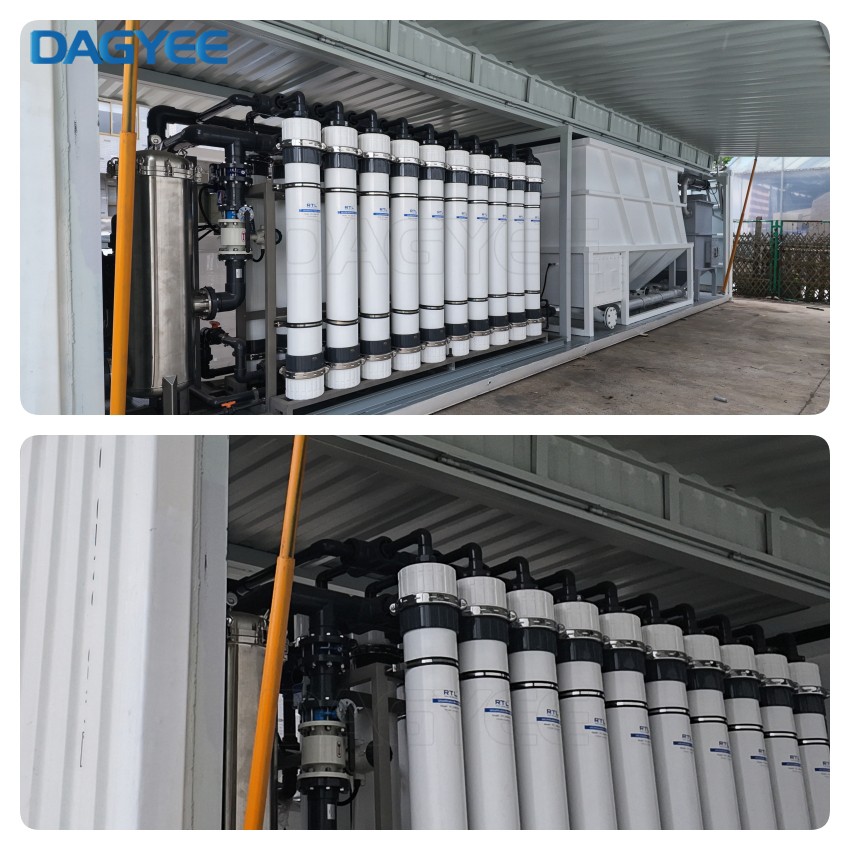
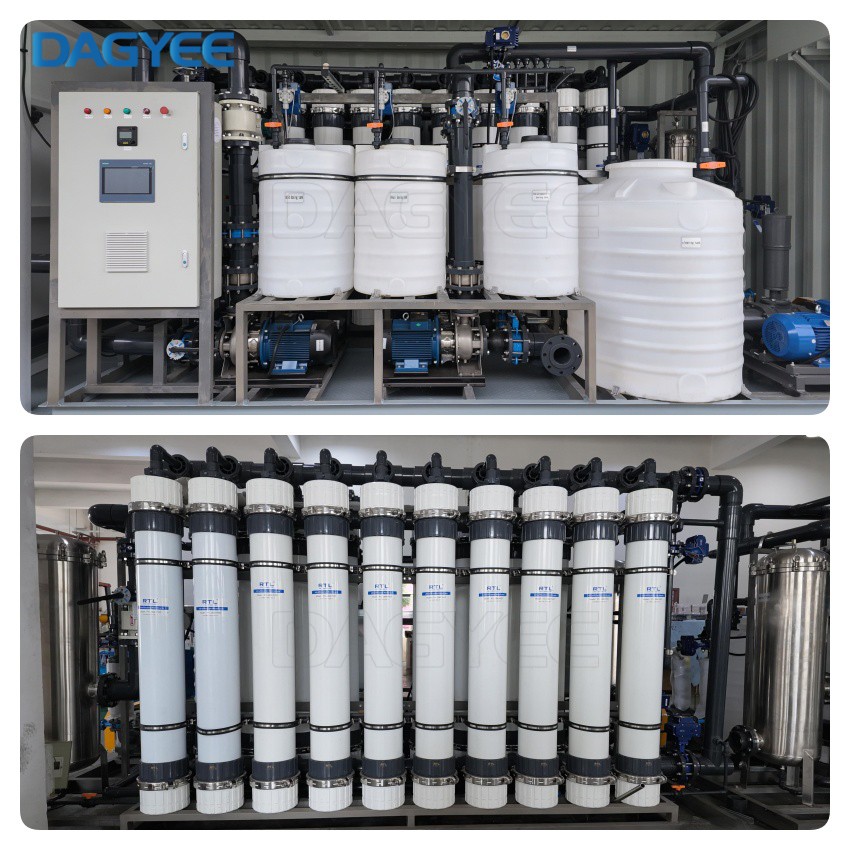
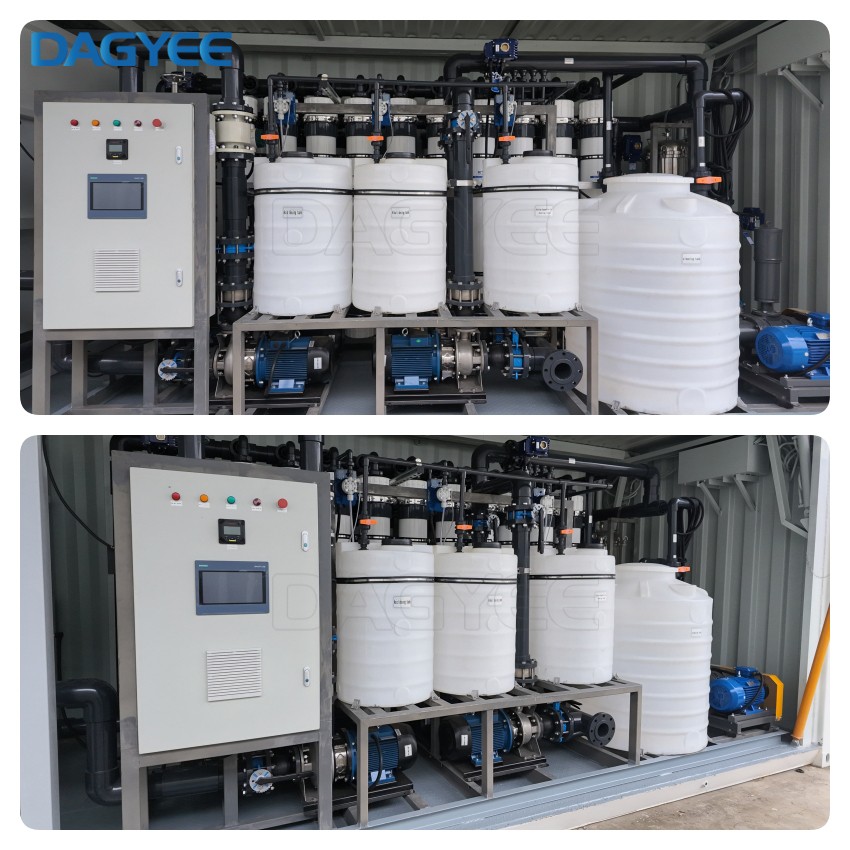
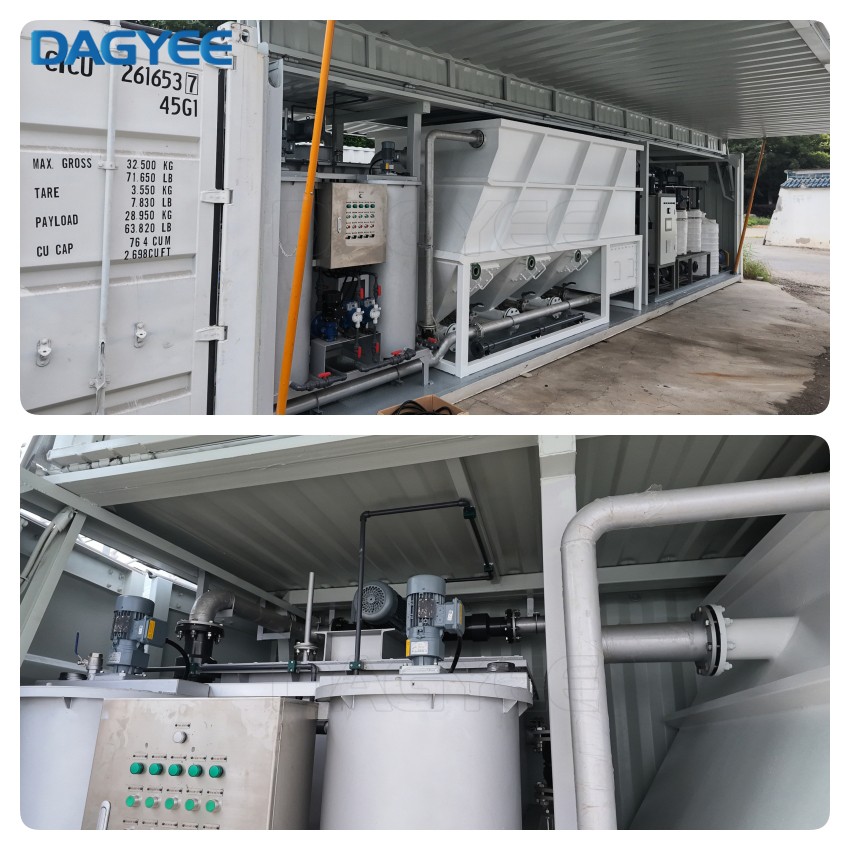
In recent years, surface water purification with ultrafiltration membrane has become an attractive alternative to conventional clarification. No or less need of chemical agents, good quality of produced water independent of feed water quality, good removal efficiency towards microorganisms, less production of sludge, compact process, and easy automation are some of the advantages of ultrafiltration compared to conventional treatment. Originally, ultrafiltration was used to remove turbidity and microorganism from good-quality surface water. Nowadays the main goal is to improve this technology and to apply it to worse quality sources for the removal of microorganisms, natural organic matter (NOM), Total Organic Carbon (TOC) including particulate organic carbon (POC) and dissolved organic carbon (DOC), disinfection by-products (DBPs) and other components.
Product Overview
The wastewater treatment industry has a problem. Conventional treatment trains take up too much space, cost too much to build, and struggle to meet tightening discharge standards. Plant operators need solutions that produce better effluent quality, take up less real estate, and cost less to run.
Enter the submerged UF membrane system.
Unlike pressurized UF systems that rely on pumps to push water through membranes, submerged UF uses immersion—the membranes sit directly in the water, and a gentle vacuum or gravity pulls clean water through. This approach is fundamentally simpler, more energy-efficient, and easier to maintain.
The DAGYEE Submerged High-Flux UF Membrane System brings this proven technology to municipal and industrial wastewater applications. It is designed for plants that need to upgrade effluent quality, increase treatment capacity, or reduce footprint—all without the complexity and cost of a completely new plant.
Whether you're a municipal utility needing to meet stricter discharge limits, an industrial facility looking to recycle process water, or an engineer designing a compact treatment plant, this system delivers reliable, high-quality permeate at a cost that makes sense.
There are plenty of reasons to put a water treatment plant inside a shipping container. Here are the ones that matter most:
Speed of Deployment
A conventional water treatment plant takes months to design, build, and commission. A containerized system takes days to ship and hours to commission. When water is urgently needed, that difference is everything.
Complete Mobility
The system is built to move. A flatbed truck delivers it. A crane sets it down. When the project ends, the same truck takes it to the next site. The equipment doesn't get left behind—it follows the work.
Minimal Civil Works
No foundations. No buildings. No permanent utilities. Just a reasonably level piece of ground, a water source, and a power connection. That's all it takes.
Plug-and-Play Simplicity
Everything is pre-installed and pre-wired inside the container. The operator doesn't need to be a water treatment specialist. The system is designed to be operated by someone with basic training. Connect the hoses, turn it on, and let it run.
Weather Protection
The container provides built-in shelter for all equipment. Rain, dust, wind, and extreme temperatures don't affect performance. The system operates reliably in conditions that would shut down an open-air plant.
Security
The container is lockable, providing physical security for equipment in remote or unstable locations. Vandalism and theft are real concerns in some settings—a shipping container offers practical protection.
Working Principle
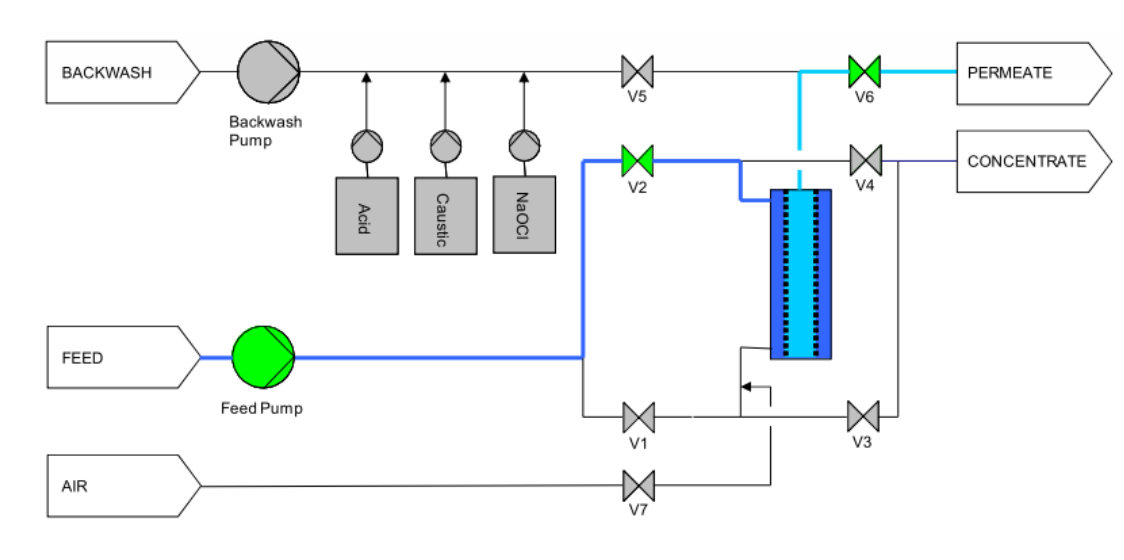
The system operates on a simple but effective principle:
Step 1: Immersion
Membrane cassettes are submerged in a basin or tank containing the water to be treated. The water can be mixed liquor from a biological reactor, secondary effluent, or tertiary treatment influent.
Step 2: Filtration
A low-pressure pump (or gravity) applies gentle suction to the permeate side of the membranes. Water is drawn through the membrane pores while suspended solids, bacteria, and other contaminants are retained on the outside surface of the hollow fibers.
Step 3: Air Scouring
Air is introduced at the bottom of each membrane cassette through a dedicated air distribution manifold. Rising air bubbles create turbulence around the membrane fibers, scouring the surface and preventing fouling accumulation. This allows the system to maintain stable flux without frequent chemical cleaning.
Step 4: Relaxation
Periodically, suction is stopped for a short relaxation period (typically 1-2 minutes every 10-20 minutes). During relaxation, accumulated solids fall away from the membrane surface, reducing fouling and improving long-term performance.
Step 5: Backwashing (Optional)
For more aggressive fouling control, the system can be configured for permeate backwashing—reversing the flow of clean permeate through the membranes to flush accumulated solids back into the basin.
Step 6: Chemical Cleaning (Periodic)
When operating pressure rises beyond acceptable limits, the system can be chemically cleaned in place. The membranes are soaked or backwashed with sodium hypochlorite or citric acid to remove accumulated foulants and restore permeability.
System Components
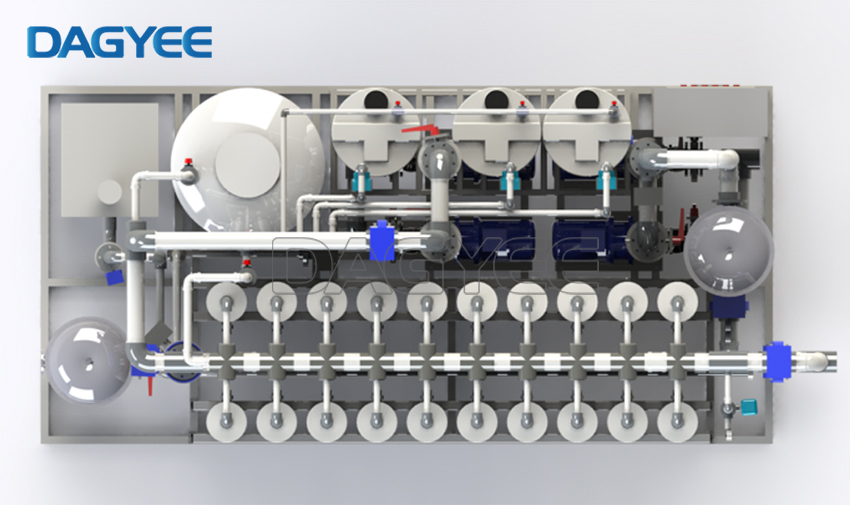
| Component | Function Description |
|---|---|
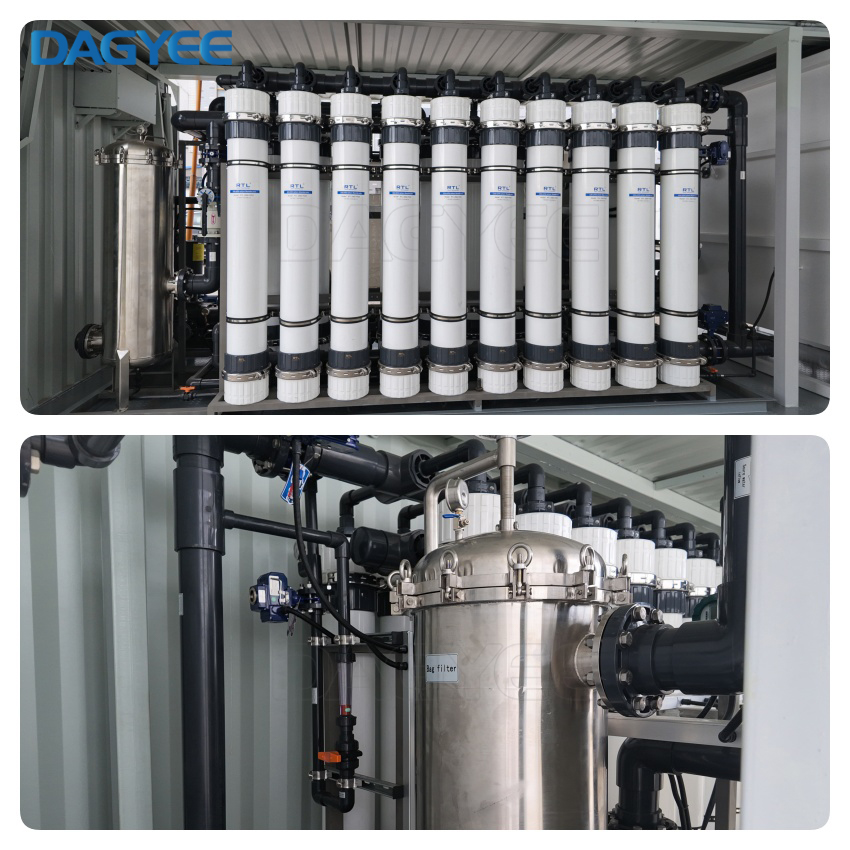
| UF Membrane Modules | PVDF hollow fiber membranes with 0.01 micron precision. Available in inside-out or outside-in configurations. High chemical resistance and chlorine tolerance (> 2,000 ppm). |
| PLC Control Panel | Siemens/Omron PLC with 7-inch HMI touch screen. Enables fully automatic filtration, backwashing, CEB, CIP, TMP monitoring, alarm logging, and optional SCADA remote access. |
| Feed & Backwash Pumps | Stainless steel centrifugal pumps providing 0.1~0.3 MPa operating pressure. Backwash pump delivers reverse flow at 1.5~2.0x filtration flux. |
| Chemical Dosing System | Dosing pumps and tanks for NaClO, citric acid, NaOH, and EDTA. Enables automated CEB (Chemical Enhanced Backwash) and CIP (Clean-in-Place) procedures. |
| Air Scouring System | Oil-free air compressor and distribution manifold. Generates air bubbles during backwashing to create turbulence and mechanical scouring for superior foulant removal. |
| Pre-filtration Unit | Automatic disc filters or cartridge filters with 100~200 micron rating, protecting UF membranes from large particle damage and extending membrane service life. |
| Instrumentation | Includes pressure transmitters, flow meters, temperature sensors, and turbidity meters. Real-time data acquisition for process optimization and system protection. |
| Tank & Piping System | Feed tank, permeate tank, backwash tank, and chemical tanks. Piping in UPVC or Stainless Steel 304/316L with sanitary fittings, ensuring corrosion resistance and hygienic operation. |
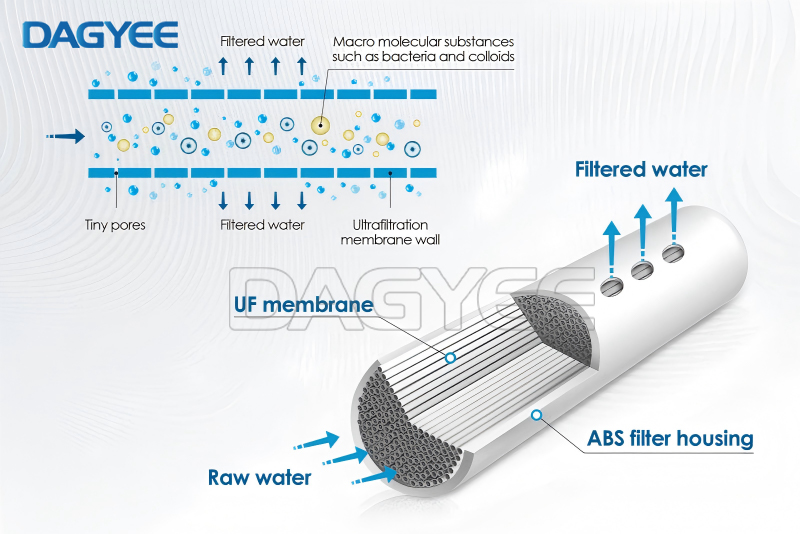
The Compact UF System is a physical barrier. It removes anything larger than its pore size. Here's what that means in practical terms:
| Contaminant | Removal Efficiency | Notes |
|---|---|---|
| Suspended solids | > 99.9% | Sand, silt, clay, and other particulate matter |
| Colloids | > 99.9% | Clay particles, silica, iron oxides |
| Bacteria | > 99.99% | Including E. coli, coliforms, and pathogenic bacteria |
| Viruses | > 99.99% | Including enteric viruses and rotaviruses |
| Protozoa | > 99.99% | Giardia, Cryptosporidium |
| Turbidity | To < 0.1 NTU | Consistently low, regardless of feed turbidity |
| Algae | > 99.9% | Removes algae cells and algal debris |
Ultrafiltration offers numerous advantages in water treatment, making it an increasingly popular choice for municipal and industrial applications. Hollow fiber UF membranes provide a physical barrier to suspended solids and pathogens to consistently produce a high-quality, low-turbidity, and low-SDI effluent.
Here are the key benefits of implementing an ultrafiltration system:
Pressurized or immersed membranes to suit the site requirements.
Greater output in the same footprint and helps reduce capital and lifecycle costs for the application.
Physical UF barrier provides consistent high-quality effluent exceeding stringent regulatory requirements through virtually any change in raw-water quality.
Low lifecycle cost optimized through extended membrane life and low energy and chemical use.
These benefits make ultrafiltration an attractive option for various water treatment applications, from municipal water supplies to industrial process water.
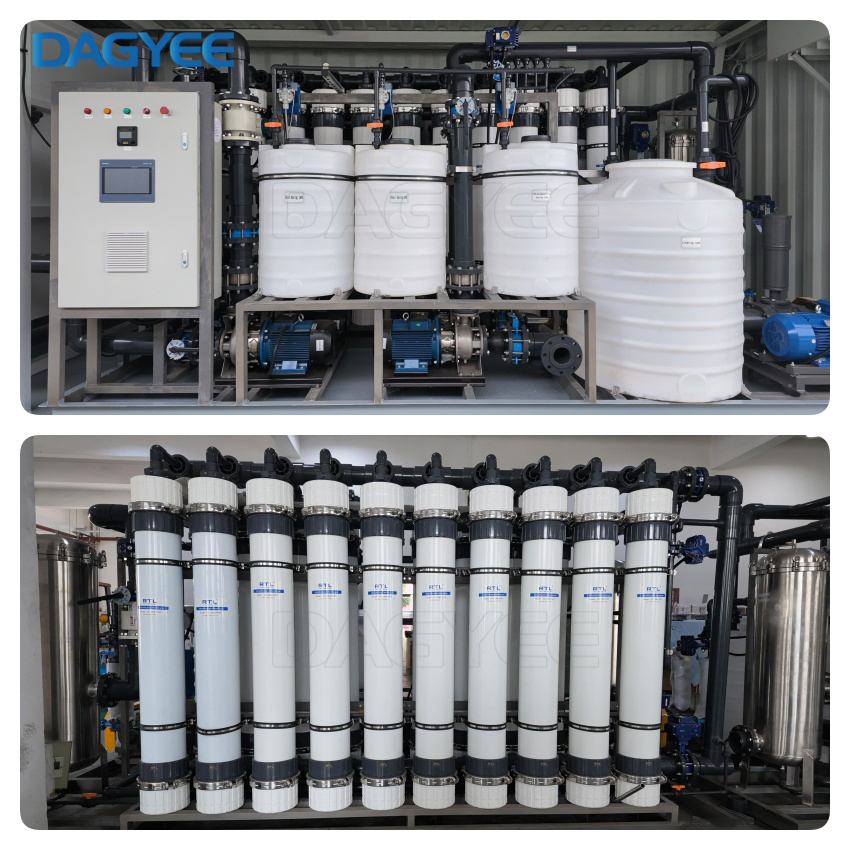
Technical Specifications
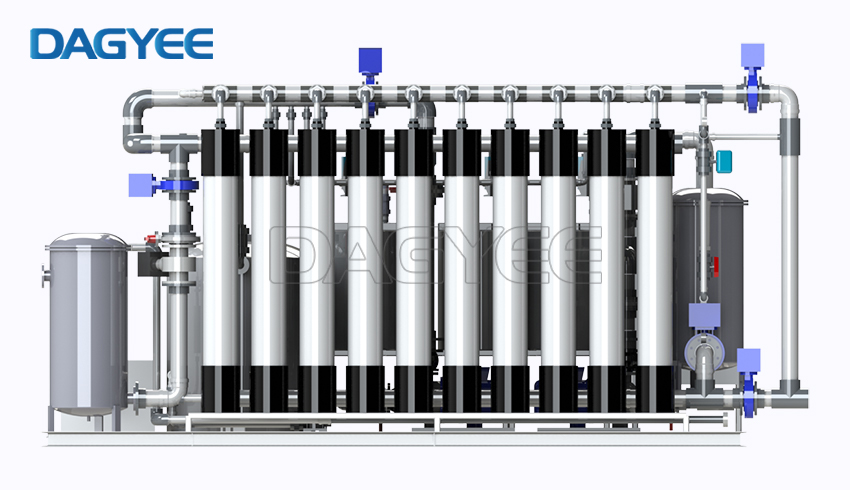
| Parameter | Specification |
|---|---|
| Model Number | MOD-UF-2026-02A |
| Filtration Precision | 0.01 ~ 0.02 micron |
| Membrane Material | PVDF |
| Membrane Configuration | Hollow Fiber (HFF) |
| Fiber Inner / Outer Diameter | 0.6~1.0 / 1.0~1.6 mm |
| Operation Mode | Inside-out / Outside-in |
| Operating Pressure | 1.4 ~ 3.5 bar (20 ~ 50 psi) |
| Max Operating Pressure | 6.0 bar (87 psi) |
| Operating Temperature | 2 ~ 38 C (35 ~ 100 F) |
| Max Temperature | 45 C (113 F) |
| Operating pH Range | 2 ~ 13 |
| pH Range (Cleaning) | 1 ~ 14 CIP |
| Recovery Rate | 85% ~ 95% |
| Permeate Turbidity | < 0.1 NTU |
| Permeate SDI | < 1 RO Feed |
| Bacteria / Virus Removal | > 99.99% |
| Chlorine Tolerance | > 2,000 ppm Continuous |
| Power Supply | 220V/380V +-10%, 50/60Hz, 3 Phase |
| Control System | Siemens/Omron PLC + 7" HMI |
| Protection Class | IP54 / IP65 (Optional) |
| Membrane Life Expectancy | 3 ~ 5 years |
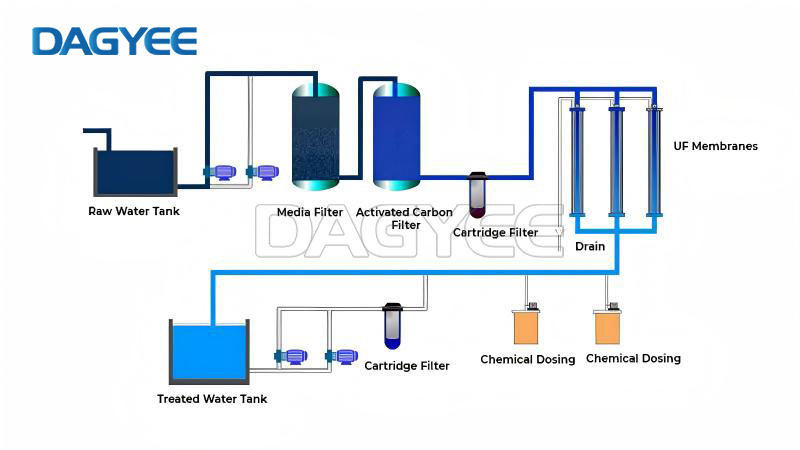
What Does Ultrafiltration Remove?
Ultrafiltration is highly effective at removing a wide range of contaminants from water. Here's a breakdown of what an ultrafiltration water filter can typically remove:
1. Particulate matter:
Suspended solids
Colloids
Turbidity
2. Microorganisms:
Bacteria (99.99% removal)
Protozoa (including Giardia and Cryptosporidium)
Many viruses
3. Organic compounds:
High molecular weight organics
Some humic substances
4. Inorganic compounds:
Some heavy metals, when bound to organic matter or particles
5. Other contaminants:
Algae
Some parasites
It's important to note that while ultrafiltration is highly effective at removing many contaminants, it does not remove contaminants like dissolved salts, organic molecules, or ions smaller than the pore size. Additional treatment methods like reverse osmosis or ion exchange may be necessary for these.
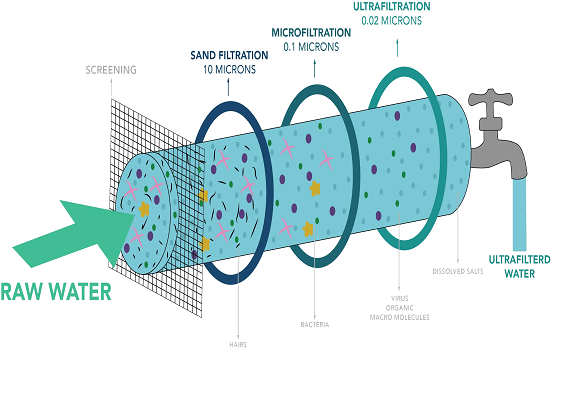
Industry Application
| Application | Why It's Used | Typical Capacity |
|---|---|---|
| Disaster Relief | Immediate clean water after earthquakes, floods, hurricanes, and tsunamis. Deployed within hours of arrival. | 5-20 m³/h |
| Military Operations | Water supply for forward operating bases, peacekeeping missions, and field exercises. Mobile, robust, low-maintenance. | 5-30 m³/h |
| Refugee Camps | Safe drinking water for displaced populations in humanitarian emergency settings. | 10-50 m³/h |
| Mining Exploration | Remote mine sites where water sources are unreliable. Moves with the exploration team. | 5-20 m³/h |
| Construction Sites | Temporary water supply for large construction projects in areas without municipal water. | 10-30 m³/h |
| Village Water Supply | Permanent or semi-permanent water treatment for communities without existing infrastructure. | 5-20 m³/h |
| Municipal Backup | Emergency backup for existing water treatment plants during maintenance or failure. | 20-50 m³/h |
| Event Water Supply | Temporary water supply for large outdoor events, festivals, and sporting competitions. | 5-20 m³/h |
Operation & Maintenance
Routine maintenance is straightforward and primarily automated:
Daily Inspection – Check TMP, flow rates, and pump condition
Backwashing – Automatic, every 15~60 minutes, duration 60~120 seconds
Chemical Enhanced Backwash (CEB) – Weekly, using NaClO (50~200 ppm) and/or citric acid
CIP Cleaning – Every 1~6 months, circulating NaClO and acid solutions
Membrane Integrity Test – Quarterly, using pressure decay or bubble point test
Membrane Replacement – Typically every 3~5 years, depending on feed water quality and operating conditions
| Feature | Customer Value |
|---|---|
| Energy Efficiency | 40-60% lower energy consumption than conventional UF systems |
| Water Conservation | 95-98% recovery reduces freshwater intake and wastewater discharge |
| Low Operating Pressure | 0.5-1.5 bar operation extends membrane life and reduces wear |
| Smart Automation | TMP-based backwash optimization saves water, chemicals, and energy |
| Sustainability | Reduced carbon footprint and water footprint for corporate ESG goals |
| Fast Payback | 1-2 year payback on the additional investment over conventional UF |
| Global Support | Technical support, commissioning, and spare parts worldwide |
Contact Us
The DAGYEE Submerged UF Membrane System offers a compact, energy-efficient, and flexible solution for municipal and industrial wastewater treatment. Whether you're upgrading an existing plant, adding capacity, or designing a new facility, this system delivers high-quality permeate with minimal operating costs.
Contact our technical team for a free feasibility study and customized system design for your application.
Membrane solutions for a changing world.