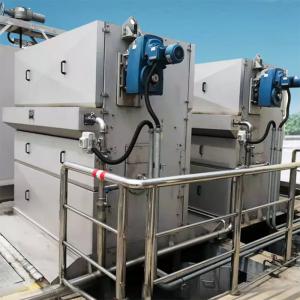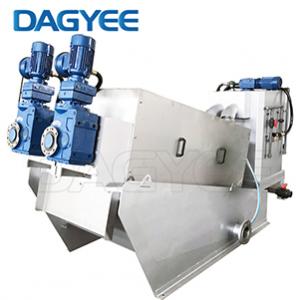
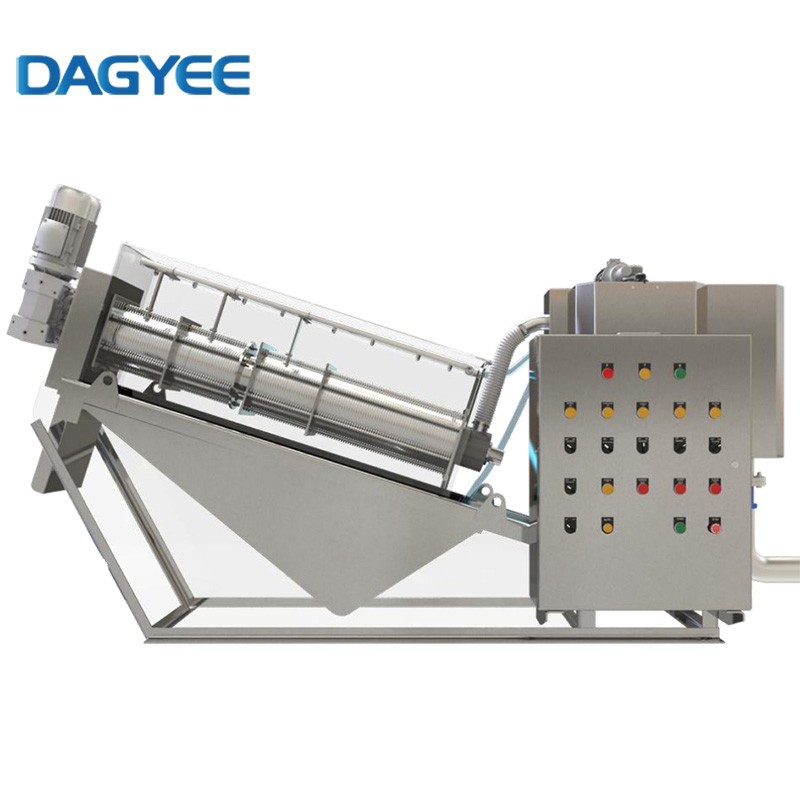
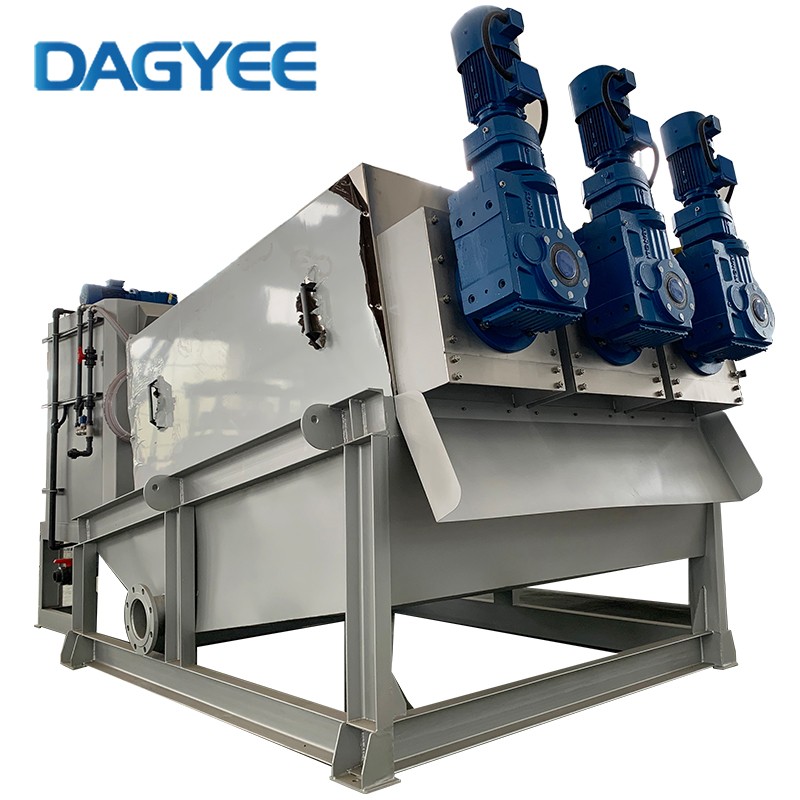
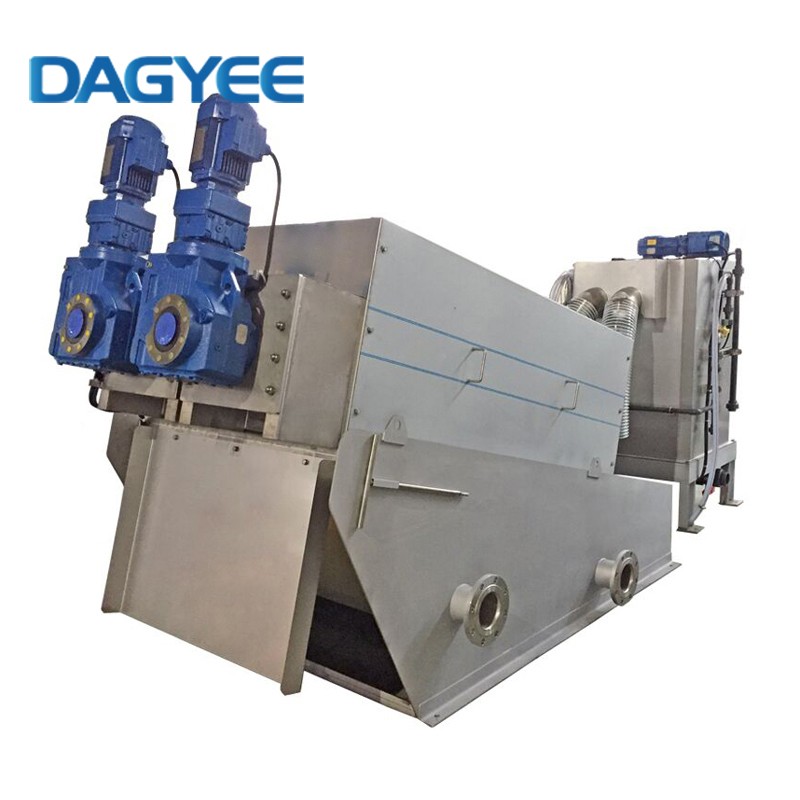
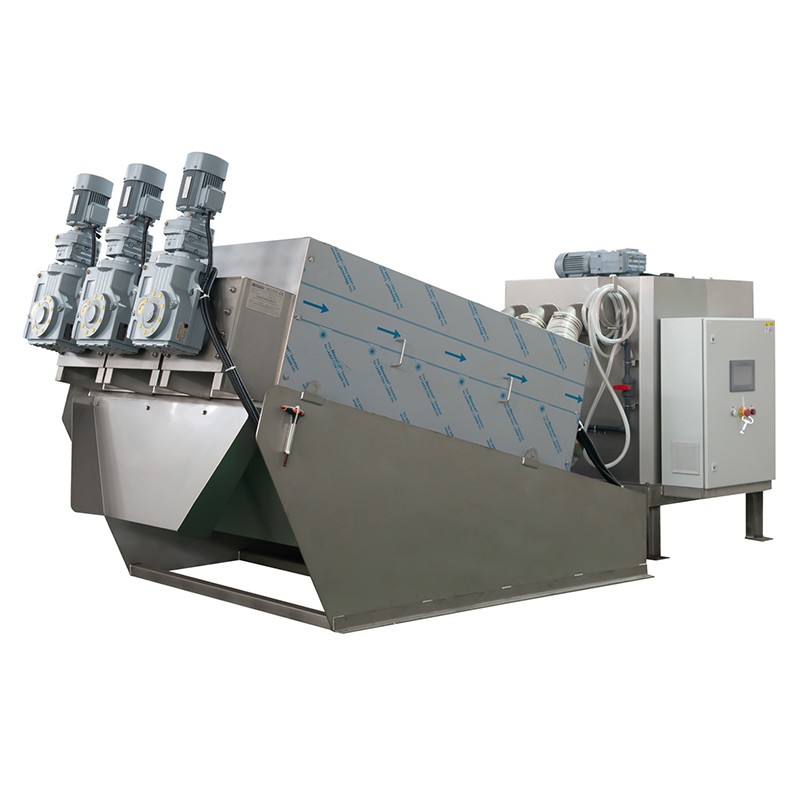
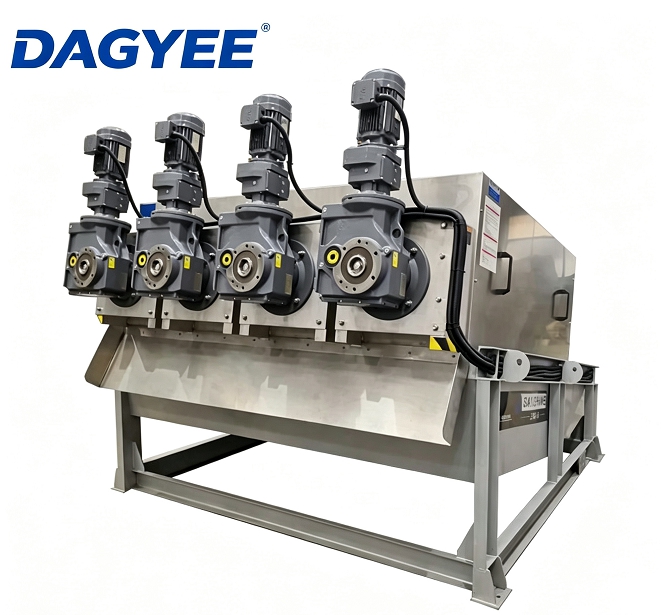
This is a compact volute screw press designed specifically for package plants, small municipal WWTPs, and facilities with limited space. It dewaters sludge continuously, producing a stable cake with 15-20% dry solids, and reduces sludge volume by up to 80-90%. The entire system is self-contained on a small skid that fits into tight spaces where larger dewatering equipment simply cannot go.
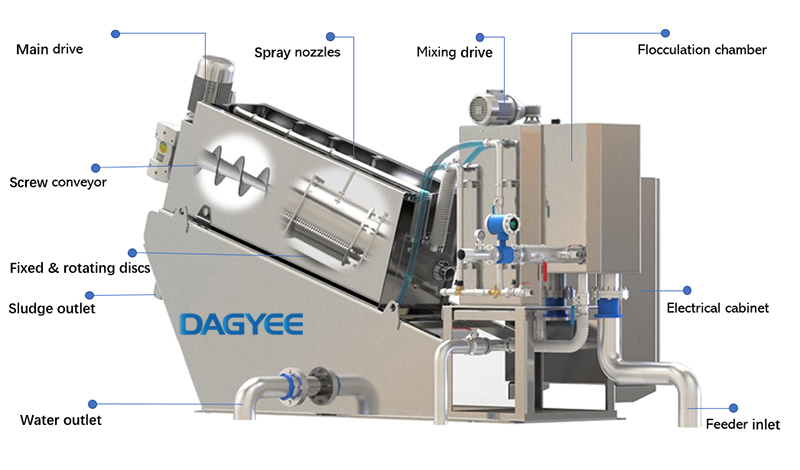
The volute screw press uses the same self-cleaning disc technology as larger models. A low-speed screw pushes sludge through a gradually narrowing chamber, squeezing water out through gaps between fixed and moving rings. The self-cleaning action prevents clogging even with biological sludges that are difficult to dewater.
This system is ideal for small communities, remote sites, package treatment plants, and facilities upgrading from drying beds or lagoon storage. It provides mechanical dewatering in a compact, affordable, low-maintenance package that can be operated by existing plant staff with minimal training.
Working Principle
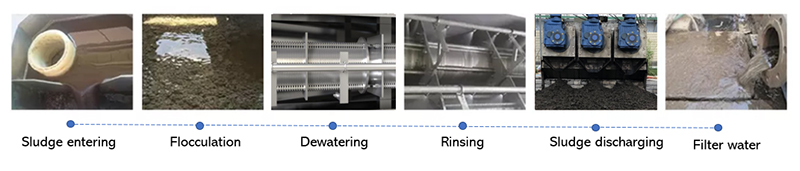
Step 1: Sludge Collection
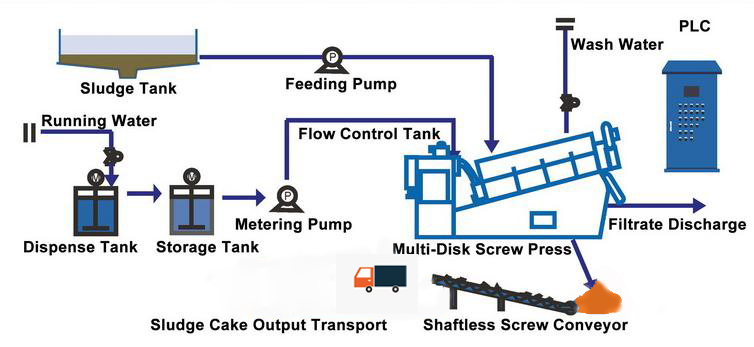
Sludge is collected from the treatment process—primary clarifiers, secondary clarifiers, or DAF units—and pumped to a small holding tank. The system can handle variable sludge flows without adjustment.
Step 2: Conditioning
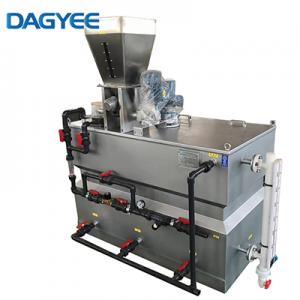
Sludge is pumped from the holding tank into a small flocculation mixing tank. Polymer flocculant is added to condition the sludge. The polymer dosage is typically 3-8 kg per tonne of dry solids. A small static mixer ensures thorough mixing.
Step 3: Gravity Thickening
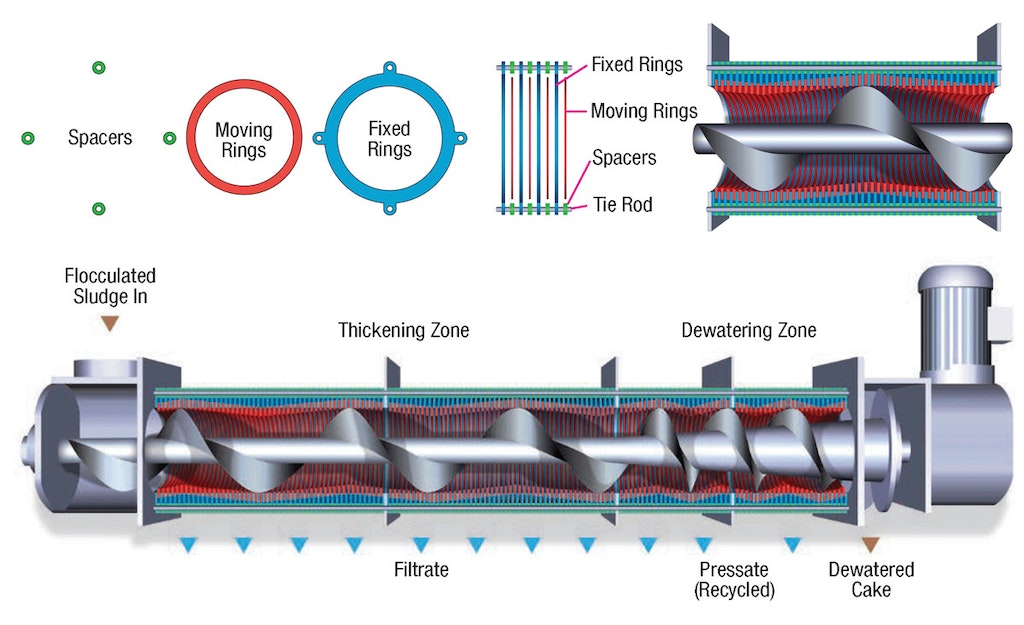
The conditioned sludge flows into the volute screw press. In the initial section, free water drains through the gaps between rings under gravity. This removes a significant portion of the water before compression begins.
Step 4: Compression
As the screw rotates, the sludge is pushed along the shaft. The shaft is tapered, gradually reducing the volume available to the sludge. Water is squeezed out through the gaps between rings. The pressure increases gradually, creating a gentle but effective dewatering action.
Step 5: Self-Cleaning
The movement of the screw causes the rings to move relative to each other. This self-cleaning action prevents sludge from building up on the rings. Even fibrous and biological sludges pass through without clogging.
Step 6: Cake Discharge
The dewatered cake exits through the discharge opening. The cake typically contains 15-20% dry solids. It is stable, stackable, and ready for transport to landfill or further processing.
Step 7: Filtrate Return
The water removed from the sludge returns to the head of the treatment plant for further processing.
Key Features
Compact Footprint
The entire system fits on a small skid that is significantly smaller than Belt filter presses or filter presses of equivalent capacity. It can fit into existing plant buildings without expansion.
Simple Operation
The system runs continuously without operator intervention. Controls are simple and intuitive. Plant staff with basic training can operate the system.
Low Energy Consumption
Power consumption is only 0.05-0.15 kWh per kilogram of dry solids processed. This is much lower than centrifuges and even lower than some belt filter presses.
Self-Cleaning Design
The volute design prevents clogging with biological sludges. This is a major advantage for small plants where operators may not have extensive troubleshooting experience.
Minimal Wash Water
Wash water consumption is very low—typically 20-40 litres per hour. This is important for small plants where water supply may be limited.
Quiet Operation
The screw operates at low speed (2-5 RPM), resulting in very quiet operation. No special noise mitigation is required.
No Filter Cloth Replacement
Unlike belt filter presses, there is no filter cloth to replace. This eliminates a significant maintenance item and ongoing cost.
Simple Maintenance
Maintenance is limited to periodic checks of the screw, bearings, and seals. No specialized skills are required.
Technical Specifications
Standard models are listed below. Custom configurations are available upon request.
Wear part life extended 2-3 times vs. standard machines
Handles sludge with up to 40% solids concentration
Processes abrasive materials (sand, grit, mineral fines) without excessive wear
Reduced maintenance downtime (annual servicing vs. quarterly for standard units)
Lower total cost of ownership over 5-10 year period
Suitable for applications where grit and sand are present in sludge
No filter belts or cloths to replace (reduced consumable cost)
Standby capability for critical applications
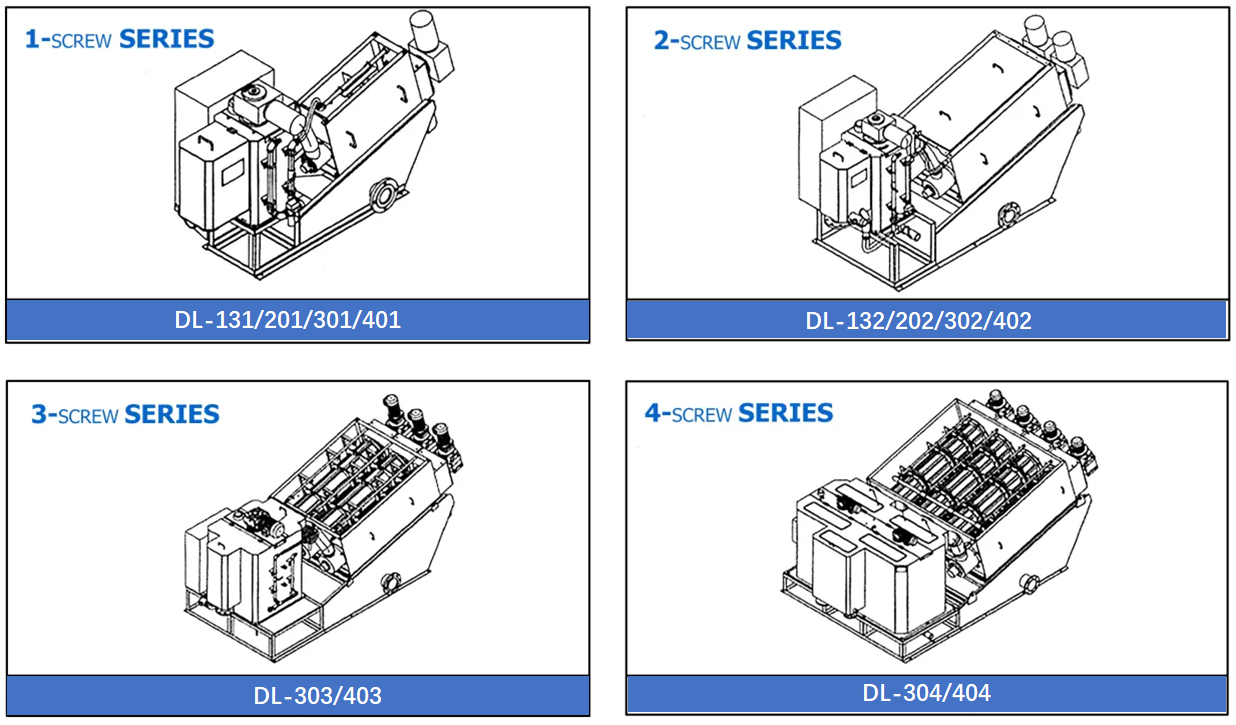
Note: Capacity and cake dryness depend on sludge characteristics, polymer type, and dosage. A sludge test is recommended for accurate sizing.
Materials:
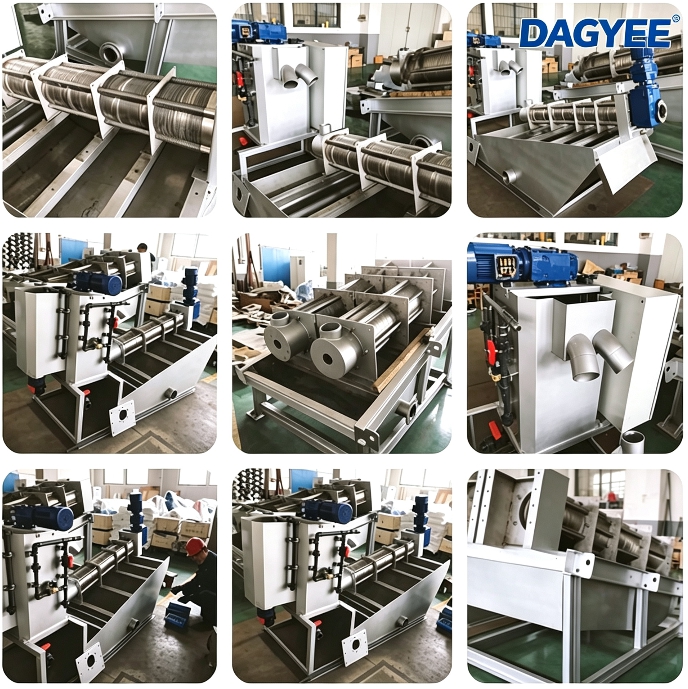
Screw and rings – Stainless 304 (316L available for corrosive stuff)
Housing – Stainless 304
Frame – Carbon steel with epoxy coating
Cake solids: 15% to 30% depending on your sludge and chemical
Temperature range: 0°C to 60°C
Voltage: We match yours – 380V/50Hz, 460V/60Hz, or others
Comparison with Traditional Equipment
| Parameter | Belt Filter Press | Plate and Frame Press | Centrifuge | Screw Press |
|---|---|---|---|---|
| Energy Consumption | High | Higher | Highest | Lowest |
| Footprint | Large | Large | Medium | Small |
| Automation Level | Moderate | Low | High | High |
| Clogging Risk | High | High | Medium | Very Low |
| Wash Water Usage | High | Medium | Low | Very Low |
| Suitable Concentration | ≥5000 mg/L | ≥10000 mg/L | ≥3000 mg/L | ≥2000 mg/L |
| Continuous Operation | Yes | Intermittent | Yes | Yes |
Each technology has appropriate applications. The selection depends on specific site requirements including sludge characteristics, available labor, energy costs, and budget constraints.
What this means for you:
Want the driest cake possible? Get a centrifuge. But budget for power and repairs.
Have almost no budget upfront? Get a belt press. But plan for labor and water.
Want the lowest total cost and least headache? Get our screw press.
Applications
Small Municipal WWTPs
Plants treating less than 5,000 m³/day use the compact screw press for dewatering primary sludge, WAS, and mixed sludges. The small footprint allows installation in existing buildings without expansion.
Package Treatment Plants
Prefabricated treatment systems for remote sites include the screw press as an integrated dewatering solution. The compact size fits within the package dimensions.
Remote Communities
Isolated communities use the screw press for reliable sludge dewatering with minimal technical support. The simple design and low maintenance requirements are ideal for remote locations.
Construction Camps
Temporary construction camps need dewatering equipment that can be set up quickly and moved when the project ends. The compact screw press is portable and easy to install.
Resorts and Seasonal Operations
Seasonal facilities need dewatering equipment that can be started up and shut down easily. The screw press handles seasonal operation without problems.
Industrial Pretreatment
Small factories and food processors use the screw press for dewatering their treatment plant sludge. The compact size fits into existing pretreatment buildings.
Pilot Plants
Testing facilities and pilot plants use the small screw press for dewatering trials and process development. The system can be moved between sites as needed.
Conditioning: The Key to Effective Dewatering
Effective sludge dewatering requires proper conditioning of the sludge before it enters the dewatering equipment. Polymer flocculants are used to bind fine particles into larger, more stable flocs that are easier to dewater.
Polymer Addition
Polymer is added to the sludge feed line through an injection ring. The polymer dosage is typically 3-8 kg per tonne of dry solids, depending on sludge type.
Sludge Feed Preparation
The conditioned sludge is typically thickened to 2-6% solids before dewatering. This improves the efficiency of the dewatering equipment and produces a drier cake.
Optimal Performance
The correct polymer selection and dosage are critical to achieving maximum cake dryness and solids capture. DAGYEE provides jar testing and process optimisation services to develop the ideal chemical program for each site.
Why Choose DAGYEE Multi-Disc Screw Press?
| Feature | Customer Value |
|---|---|
| Energy Efficient | Only 0.05-0.15 kWh/kg DS, lowest in class |
| Self-Cleaning Design | Handles challenging sludges without clogging |
| Low Maintenance | Minimal wearing parts, no filter cloth replacement |
| Compact Footprint | Saves valuable plant space |
| Continuous Operation | 24/7 dewatering without batch cycles |
| Enclosed Operation | Odour control, safe indoor installation |
| Automated Control | PLC controls with remote monitoring capability |
| Cost-Effective | Low energy, low wash water, low operating cost |
Contact Us
DAGYEE offers a comprehensive range of sludge dewatering solutions to meet the diverse needs of municipal and industrial wastewater treatment facilities. From the energy-saving volute screw press and the high-performance decanter centrifuge to the heavy-duty belt filter press and the rapid-deployment mobile system, each product is engineered with the latest technology to deliver reliable performance, low operating costs, and minimal environmental impact.
The DAGYEE Compact Volute Screw Press provides reliable, continuous sludge dewatering for package plants and small municipal WWTPs. With a compact footprint, simple operation, and low energy consumption, it is the ideal solution for small communities, remote sites, and facilities with limited space.
Contact our team for a free consultation and customized system design for your small plant application.