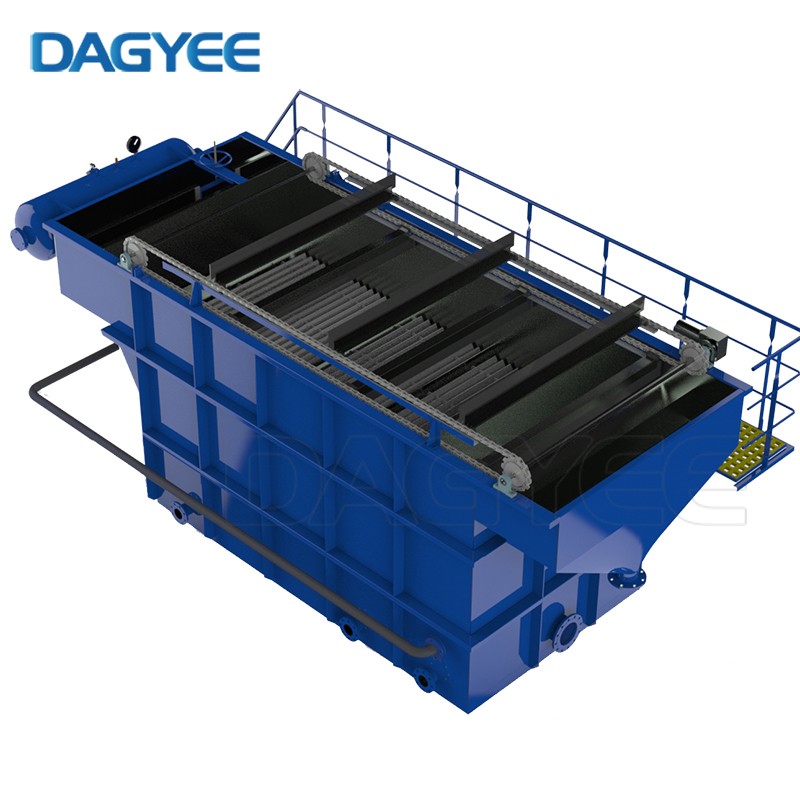
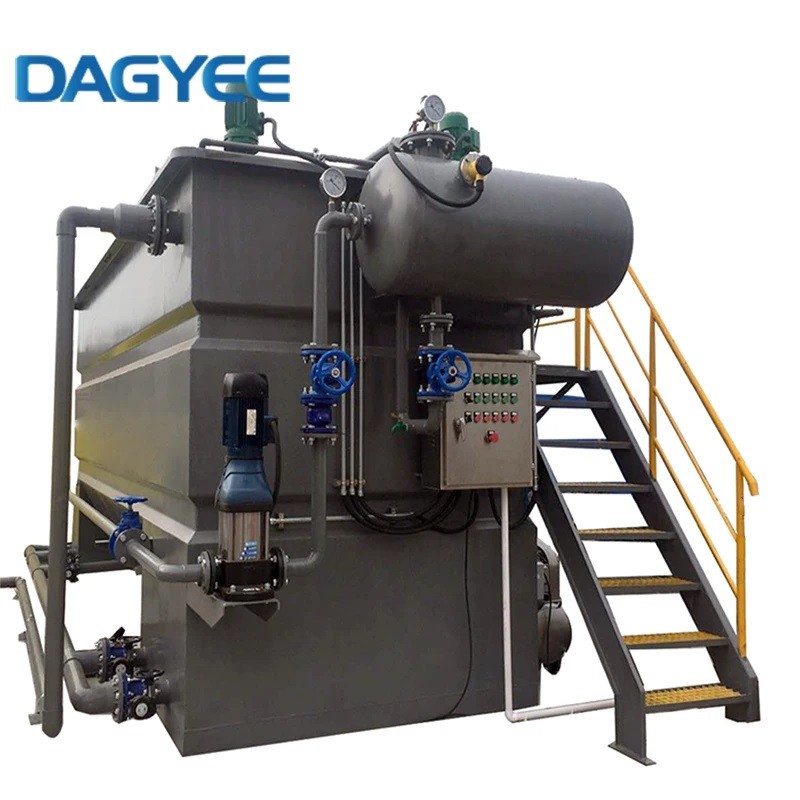
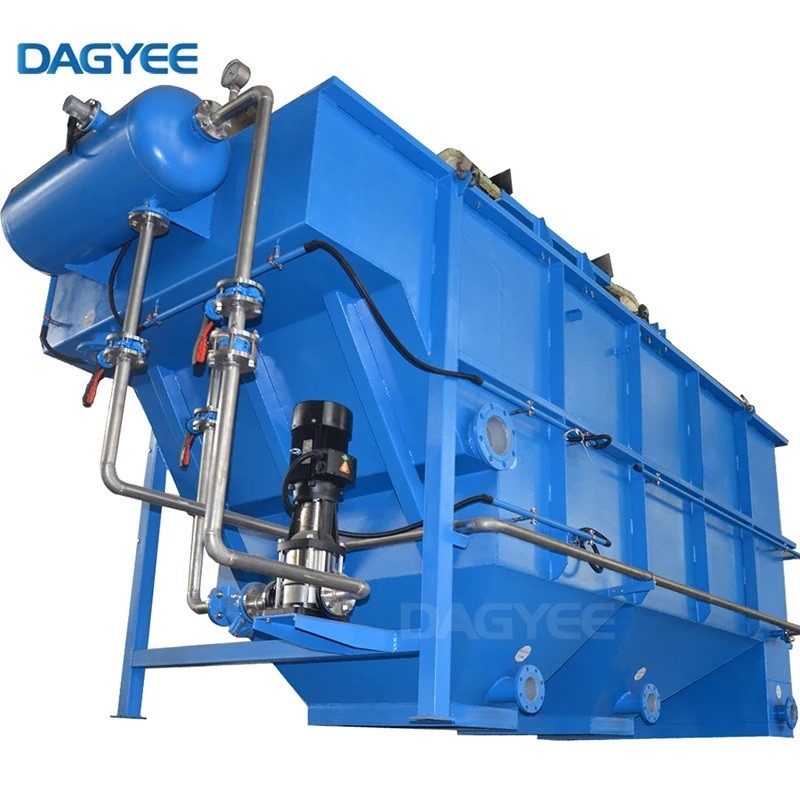
Dissolved air flotation (DAF) System for Dairy Processing – High-Efficiency FOG and Protein Removal from High-Strength Wastewater
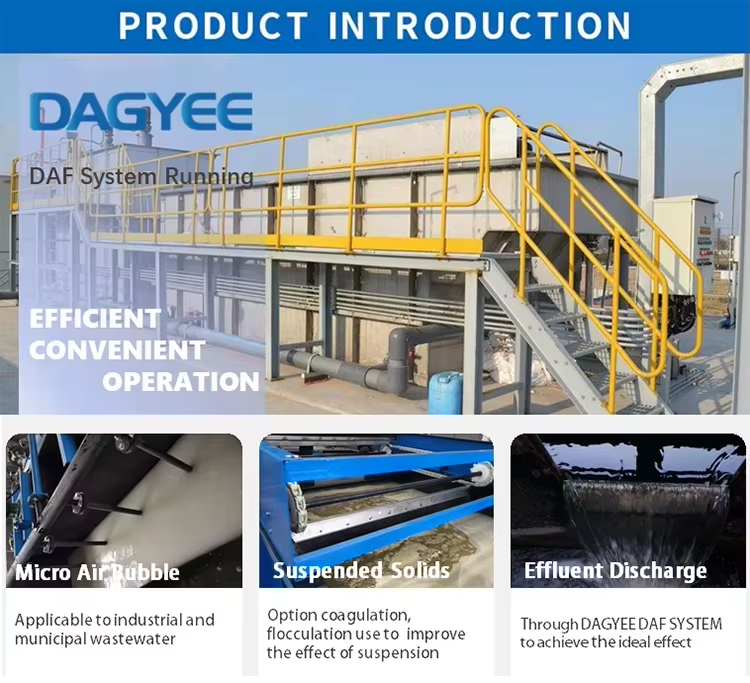
Dairy processing generates some of the most challenging wastewater in the food industry. Milk, cheese, butter, yoghurt, and whey processing operations produce effluent containing high concentrations of milk fats, proteins, lactose, and suspended solids. Municipalities impose significant surcharges on high-strength wastewater, and discharge permits for dairy processors are increasingly stringent. At the same time, milk fat and whey proteins are valuable by-products that represent lost revenue when discharged.
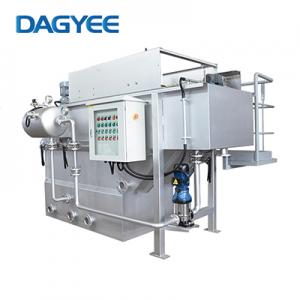
The DAGYEE DAF System for Dairy Processing is specifically engineered for the unique challenges of dairy wastewater. It removes milk fats, proteins, and suspended solids with exceptional efficiency. By reducing the organic load discharged to municipal sewers, the system lowers sewer surcharges, ensures regulatory compliance, and recovers valuable by-products that can be sold or used in animal feed.
From small cheese plants to large milk processing facilities, DAGYEE DAF systems deliver consistent, reliable performance with automated operation and low maintenance requirements. The system is designed for the high organic loads, variable flow conditions, and hygienic standards of dairy processing facilities.
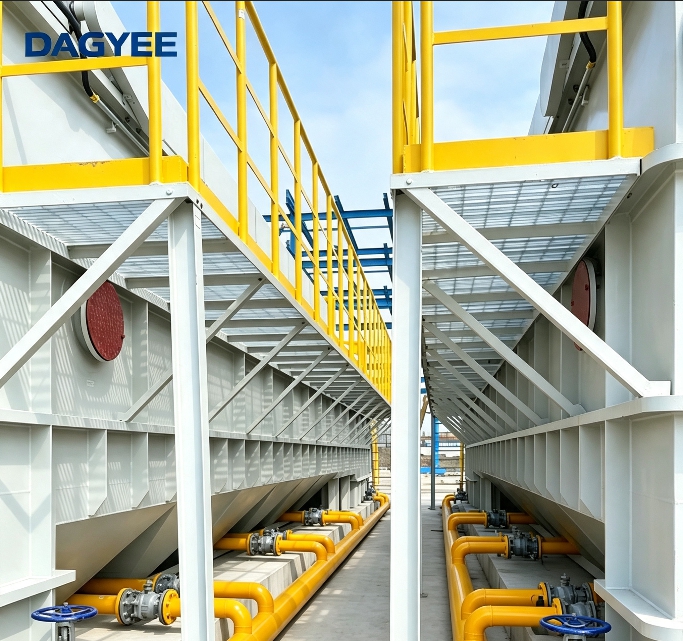
How the DAF System Works
Step 1: Screening
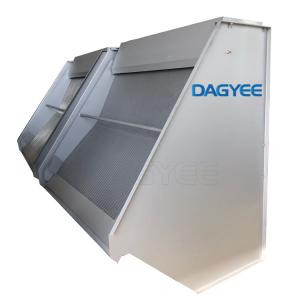
Raw wastewater passes through a fine screen to remove curd particles, cheese fines, and other coarse solids that could damage pumps or interfere with the DAF process.
Step 2: Chemical Conditioning
Coagulants are added to destabilize emulsions and precipitate proteins. Flocculants are then added to form larger, more floatable flocs. Chemical selection is critical—we conduct jar testing on your specific effluent to develop the optimal chemical program.
Step 3: pH Adjustment
The system automatically adjusts pH as needed to optimize coagulation chemistry. Most dairy applications perform best at pH 6.5 to 8.0.
Step 4: Air Saturation and Micro-Bubble Generation
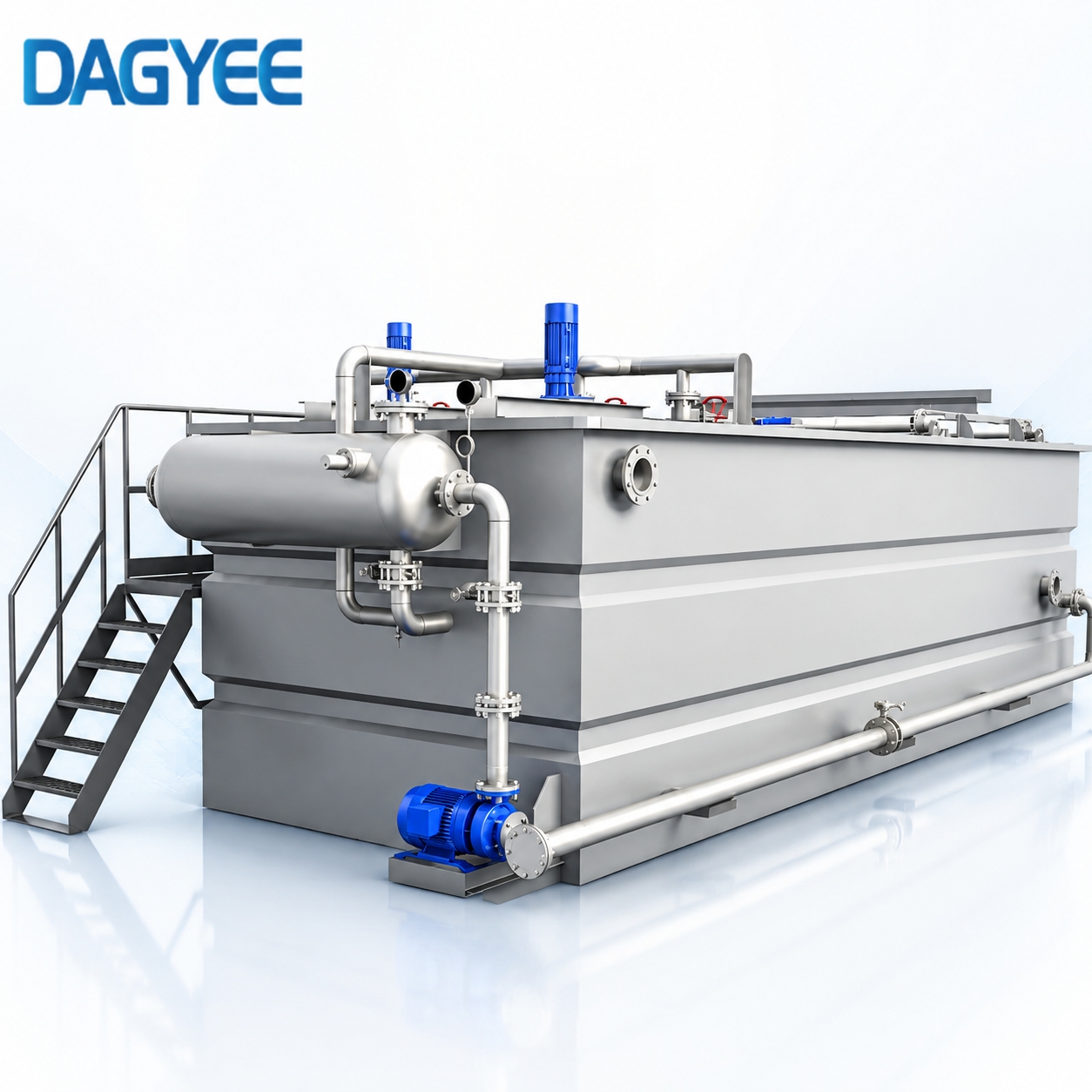
A portion of the clarified effluent is recycled through the saturator, where air is dissolved under pressure. The pressurized recycle stream is released through specially designed nozzles at the DAF inlet, creating millions of micro-bubbles that attach to flocs and lift them to the surface.
Step 5: Flotation and Skimming
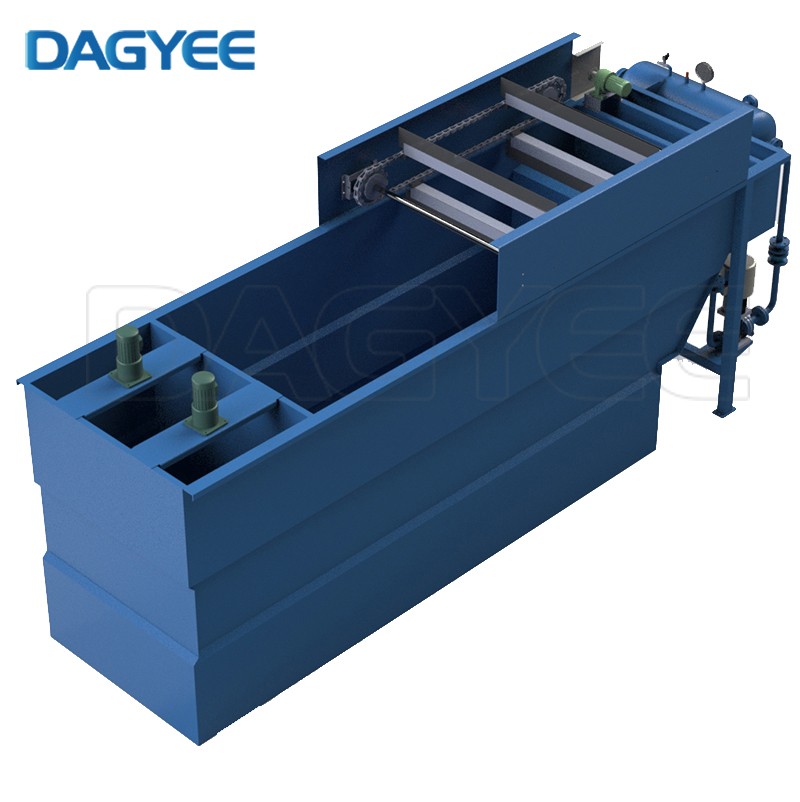
Floated solids form a blanket on the water surface. A heavy-duty chain-and-flight skimmer continuously removes the fat-rich float to a collection hopper. The recovered fats and proteins can be sold or used in animal feed.
Step 6: Clarified Effluent Discharge
Clean water is drawn from the bottom of the tank and discharged to the sewer or sent to further treatment. BOD, FOG, and TSS are substantially reduced, lowering sewer surcharges.
Step 7: Float Sludge Handling
The float sludge is typically 3-7% solids and can be pumped directly to storage, further dewatering, or sent to rendering.
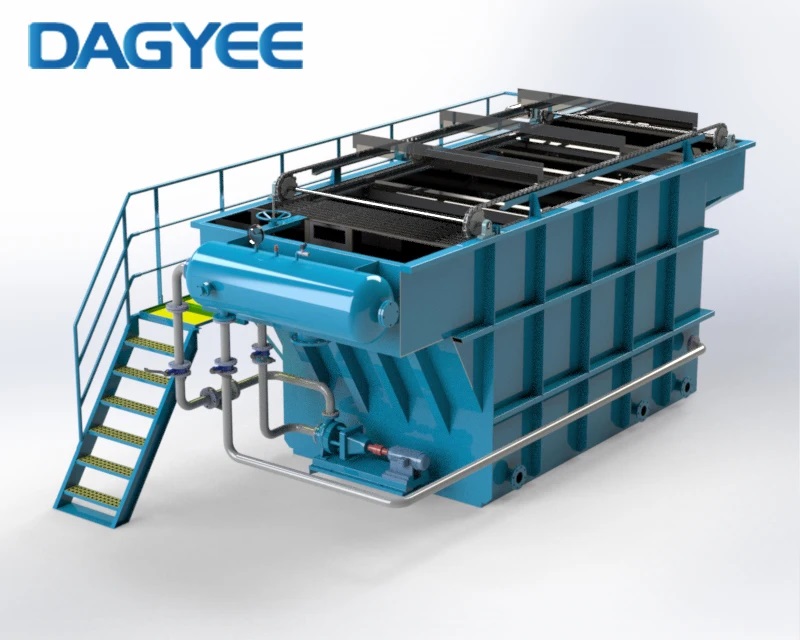
DAGYEE Technical Specifications
Model Number: DAGYEE-DAF
Flow Capacity: 3 – 200 m³/h (selectable)
Tank Configuration: Circular or Rectangular
Micro-Bubble Size: 20 – 100 microns
Saturator Pressure: 4 – 6 bar
Recycle Ratio: 10 – 30% of influent flow
Hydraulic Retention Time: 15 – 45 minutes
TSS Removal: Up to 95%
FOG Removal: Up to 99%
Sludge Concentration: 3 – 7% solids
Construction Materials: SS304 / SS316L / Carbon steel with epoxy coating
Power Supply: 380V ± 10%, 50/60Hz, 3 Phase
Control System: PLC with HMI touch screen
Certification: CE
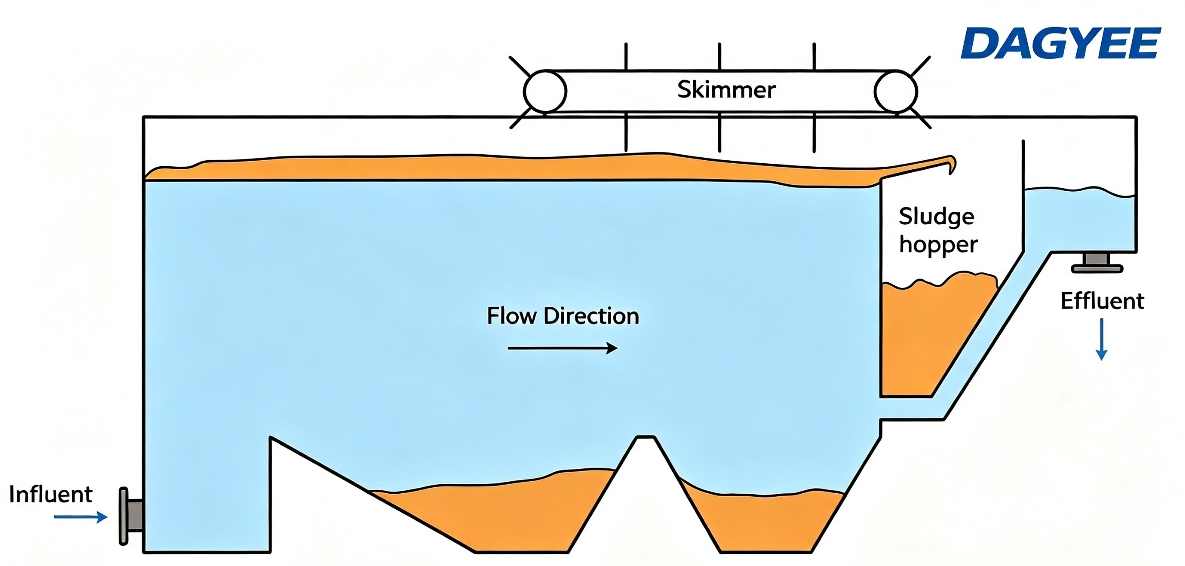
Model Selection Guide
| DAF Model | Qm3/h | Piping Connections | Physical Dimensions(m) | Weight (Kg) | Operating Weight (Kg) |
|---|---|---|---|---|---|
| DAF-003 | 3 |
Inlet: DN50 Outlet: DN50 Sludge: DN100 Vent: DN100 |
L/L1: 3.7/2.8 W/W1: 2.4/1.16 H/H1: 2.2/1.7 |
1500 | 5000 |
| DAF-005 | 5 |
Inlet: DN80 Outlet: DN80 Sludge: DN100 Vent: DN80 |
L/L1: 4/3 W/W1: 2.4/1.16 H/H1: 2.2/1.7 |
1600 | 7000 |
| DAF-010 | 10 |
Inlet: DN100 Outlet: DN100 Sludge: DN100 Vent: DN100 |
L/L1: 4.65/3.8 W/W1: 2.7/1.36 H/H1: 2.4/1.9 |
2000 | 12000 |
| DAF-015 | 15 |
Inlet: DN125 Outlet: DN100 Sludge: DN150 Vent: DN100 |
L/L1: 5.6/4.5 W/W1: 2.9/1.66 H/H1: 2.5/2 |
2200 | 18000 |
| DAF-020 | 20 |
Inlet: DN150 Outlet: DN150 Sludge: DN150 Vent: DN100 |
L/L1: 5.9/4.8 W/W1: 3.2/1.96 H/H1: 2.5/2 |
3000 | 22000 |
| DAF-030 | 30 |
Inlet: DN150 Outlet: DN150 Sludge: DN150 Vent: DN100 |
L/L1: 6.8/5.5 W/W1: 3.2/2.16 H/H1: 2.7/2.2 |
3800 | 32000 |
| DAF-040 | 40 |
Inlet: DN200 Outlet: DN150 Sludge: DN150 Vent: DN100 |
L/L1: 8/6.7 W/W1: 3.6/2.6 H/H1: 2.7/2.2 |
5000 | 45000 |
| DAF-050 | 50 |
Inlet: DN200 Outlet: DN150 Sludge: DN150 Vent: DN100 |
L/L1: 8.4/7 W/W1: 3.6/2.6 H/H1: 2.7/2.2 |
5500 | 55000 |
| DAF-060 | 60 |
Inlet: DN250 Outlet: DN200 Sludge: DN150 Vent: DN100 |
L/L1: 9.9/8.4 W/W1: 3.8/2.8 H/H1: 2.9/2.4 |
6000 | 66000 |
| DAF-070 | 70 |
Inlet: DN250 Outlet: DN200 Sludge: DN150 Vent: DN100 |
L/L1: 10.4/9 W/W1: 3.8/2.8 H/H1: 2.9/2.4 |
6500 | 75000 |
| DAF-080 | 80 |
Inlet: DN250 Outlet: DN250 Sludge: DN150 Vent: DN100 |
L/L1: 10.8/9.4 W/W1: 4/3 H/H1: 2.9/2.4 |
7500 | 100000 |
| DAF-100 | 100 |
Inlet: DN300 Outlet: DN250 Sludge: DN150 Vent: DN100 |
L/L1: 12.1/10.6 W/W1: 4.2/3.2 H/H1: 2.9/2.4 |
9000 | 110000 |
| DAF-120 | 120 |
Inlet: DN300 Outlet: DN250 Sludge: DN150 Vent: DN100 |
L/L1: 12.5/11.4 W/W1: 4.4/3.4 H/H1: 2.9/2.4 |
10000 | 130000 |
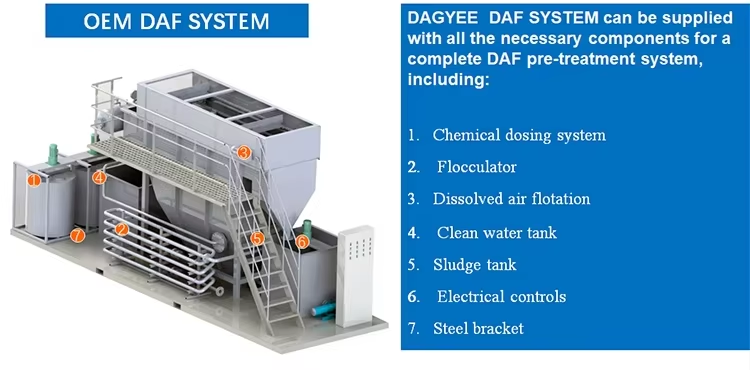
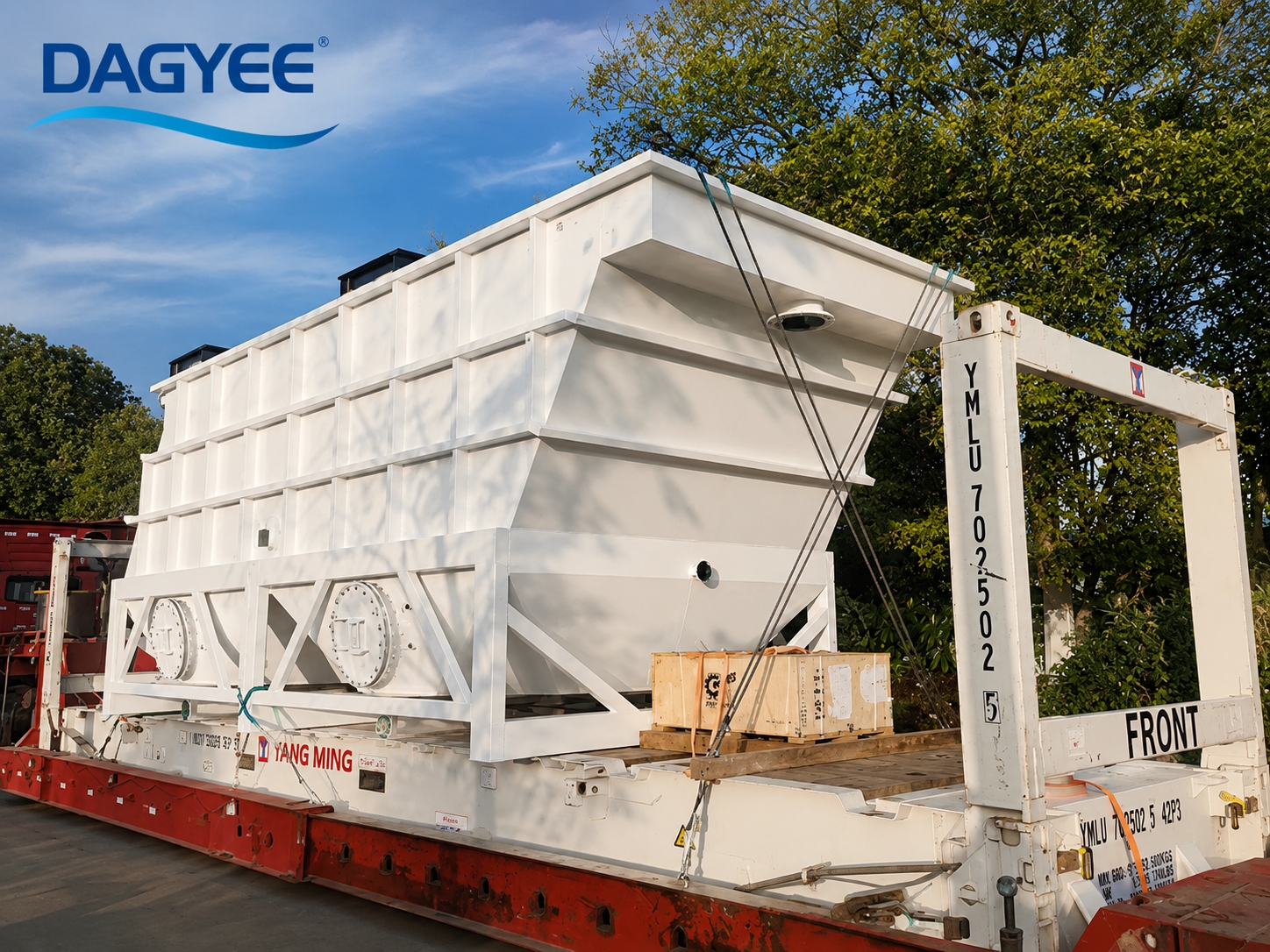
Dissolved air flotation process flow
Chemical Treatment: Wastewater is mixed with coagulants and flocculants to form larger particles ("flocs").
Air Injection & Contact: Pressurized, air-saturated water is released into the water stream, creating fine bubbles that attach to the flocs.
Separation: The air-floc aggregates float to the surface, forming a sludge layer.
Sludge Removal: A surface scraper removes the floating sludge.
Water Outlet: Clarified water is collected from the bottom of the tank and discharged. Part of it is often recycled to create the pressurized air stream.
Milk Fats – high removal efficiency. Removes milk fat that causes sewer blockages and high surcharges. Recovered fat has value in animal feed.
Proteins – high removal. Removes casein and whey proteins that contribute high BOD. Recovered protein has feed value.
Total Suspended Solids – high removal. Removes curd fines, particles, and other solids.
Biochemical Oxygen Demand – substantial reduction. Significantly lowers BOD, reducing sewer surcharges.
Chemical Oxygen Demand – substantial reduction. Removes soluble and particulate organic matter.
Lactose – partial removal in suspended form. Soluble lactose passes through.
Turbidity – significant reduction. Clearer effluent.
DAF vs. Conventional Clarifiers
| Feature | DAF System | Gravity Settling Tank | Lamella Clarifier |
|---|---|---|---|
| Best at Removing | Light suspended solids, emulsified oils, FOG, biological flocs | Dense, fast-settling solids | Medium-density solids |
| Performance on FOG | Excellent — micro-bubbles lift oil to surface | Weak — FOG does not settle | Limited — plates do not address emulsified oil |
| Footprint | Compact — high hydraulic loading rate | Large — requires long residence time | Compact |
| Sludge Characteristics | Drier float sludge — easier to dewater | Wet settled sludge — higher disposal volume | Moderate |
| Chemical Usage | Moderate (coagulation/flocculation) | Low | Low to moderate |
| Space Savings | 30-50% less than conventional clarifiers | Baseline | Compact |
Cheese Manufacturing
Whey from cheese production is a high-strength wastewater with significant protein and lactose content. DAF removes fats and recovers whey proteins, reducing organic load and generating revenue.
Milk Processing
Receiving, pasteurization, and bottling operations generate wastewater with milk solids and fats. DAF provides effective primary treatment.
Butter and Cream Production
Buttermilk and cream processing wastewater contains high fat content. DAF effectively removes these fats.
Yoghurt Production
Yoghurt wastewater contains milk solids, proteins, and sugars. DAF reduces organic load.
Whey Processing
Whey is a major by-product of cheese making. DAF removes suspended solids and recovers proteins before the whey goes to further processing.
Ice Cream Production
Ice cream plant wastewater contains fats, sugars, and solids. DAF provides effective treatment.
Milk Powder Production
Drying operations generate wastewater with milk solids. DAF removes these solids.
Contact Us
The DAGYEE DAF System for Dairy Processing delivers reliable, high-efficiency removal of milk fats, proteins, and suspended solids from dairy wastewater. It reduces sewer surcharges, ensures permit compliance, and recovers valuable by-products.
Contact our team today to discuss your dairy processing wastewater challenges. We offer free initial consultation and treatability testing for your specific effluent.