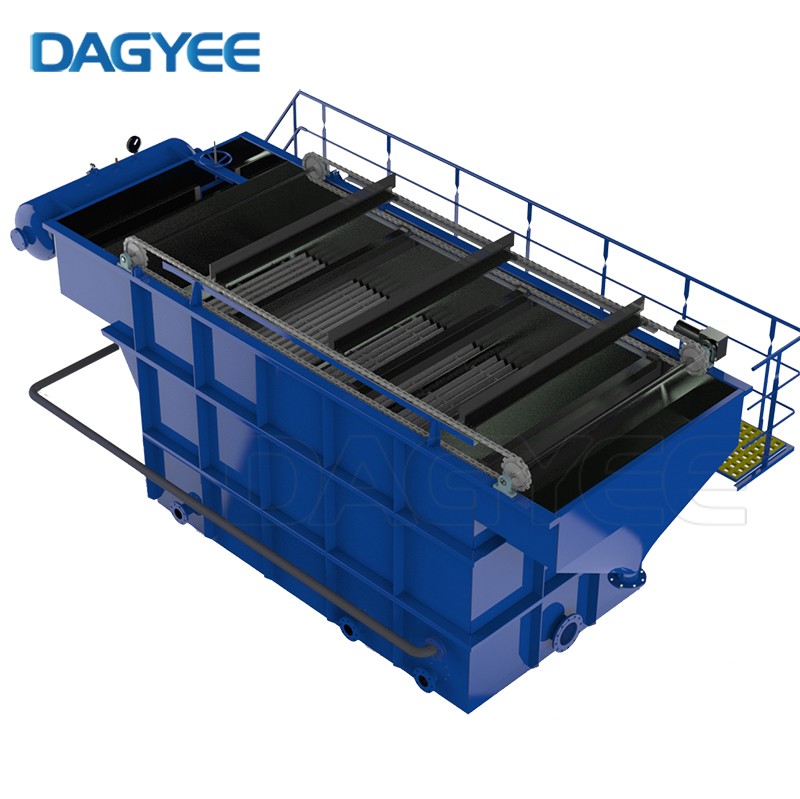
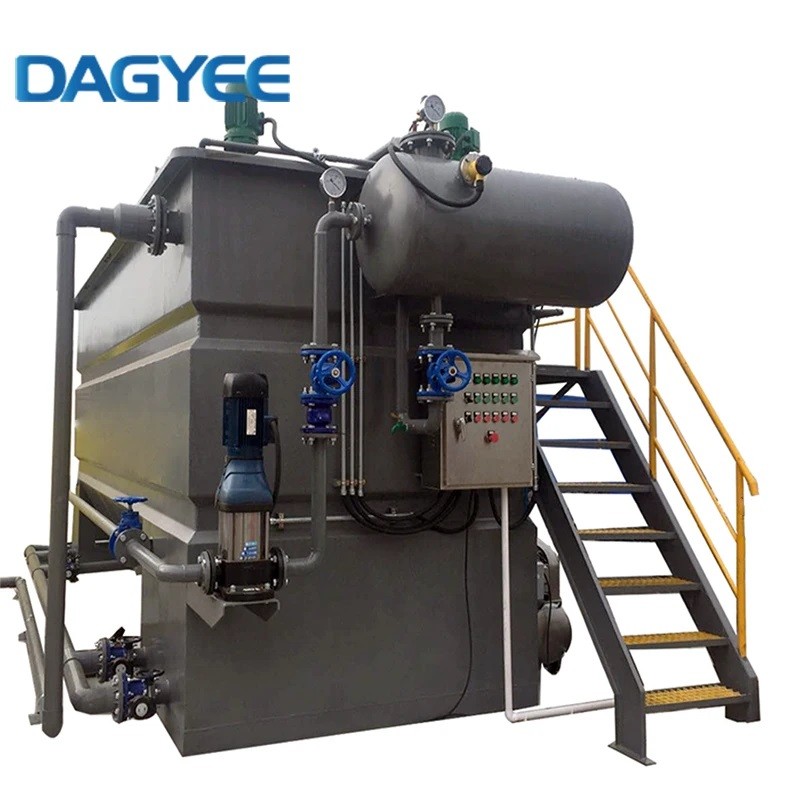
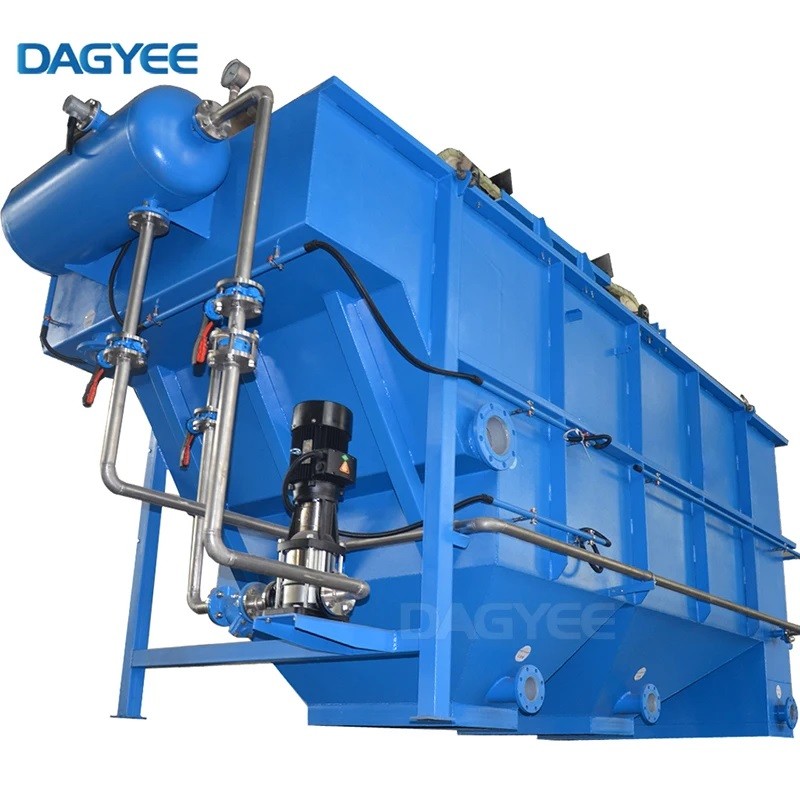
Dissolved air flotation (DAF) System for Food & Beverage Industry – High-Efficiency FOG and TSS Removal from Process Wastewater
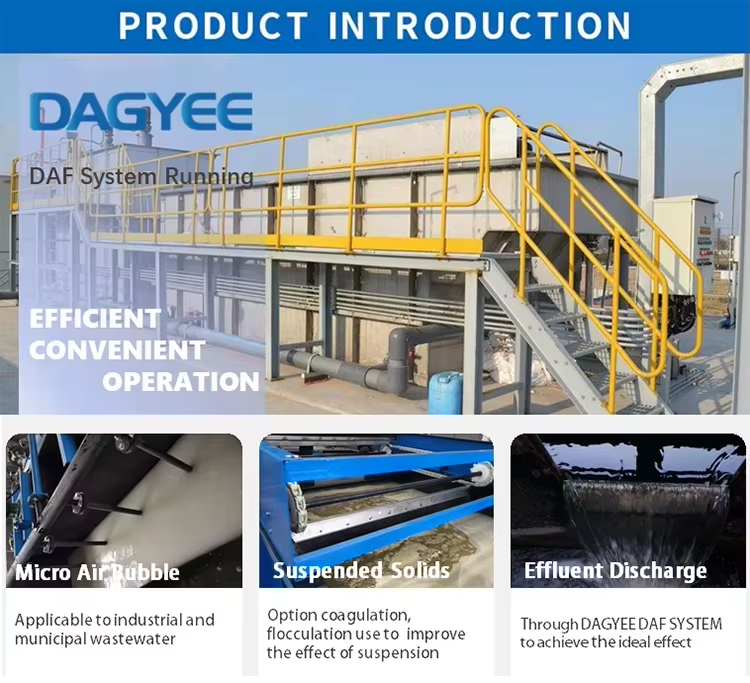
The food and beverage industry generates some of the most challenging wastewater streams in the industrial sector. High concentrations of fats, oils, and grease (FOG), proteins, starches, and suspended solids are common across meat processing, poultry plants, dairies, beverage production, and vegetable processing facilities. These contaminants are not only difficult to treat with conventional methods—they also carry significant financial penalties if discharged without proper treatment. Municipalities levy high surcharges for high-strength wastewater, and permit violations can result in fines and shutdowns.
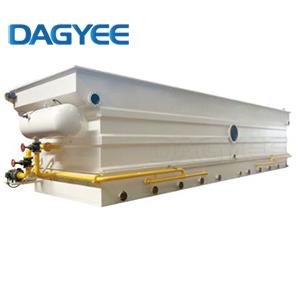
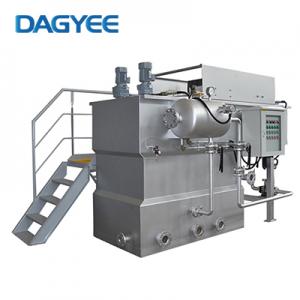
The DAGYEE DAF System for Food & Beverage Industry is specifically engineered to address these challenges. It removes FOG, TSS, and organic loads from food processing wastewater with exceptional efficiency—achieving up to 99% removal of FOG and up to 95% removal of TSS. This significantly reduces sewer surcharges, ensures regulatory compliance, and allows for water reuse where required. The system is designed for the high organic loads and variable flow conditions typical of food production facilities.
From large meatpacking plants to small craft breweries, DAGYEE DAF systems deliver consistent, reliable performance with minimal operator attention. Food safety and hygiene are built into every aspect of the design, with sanitary construction and easy-to-clean surfaces.
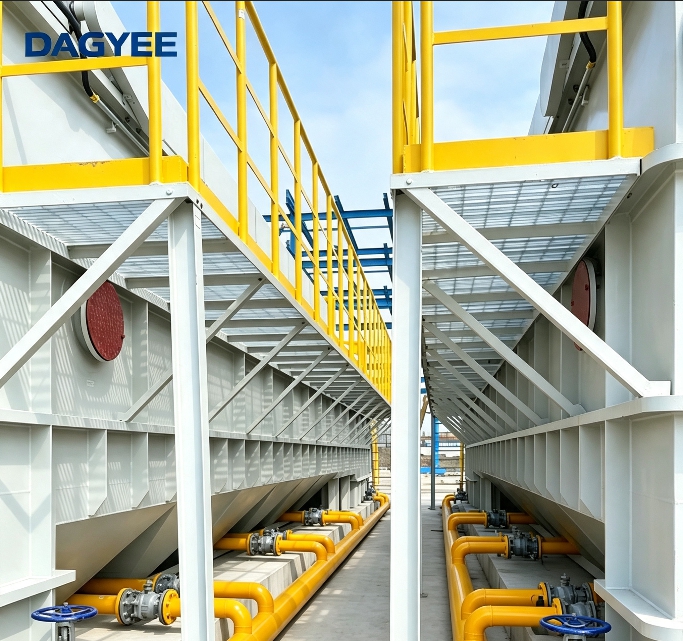
How the DAF System Works
Food processing wastewater presents unique challenges that require a tailored approach. The DAGYEE DAF system uses a proven multi-step process to handle high-strength organic wastewater effectively.
Step 1: Screening
Raw wastewater passes through a fine screen (typically 1-3 mm) to remove large solids, bone fragments, vegetable pieces, and other debris that could damage pumps or interfere with the DAF process.
Step 2: Chemical Conditioning
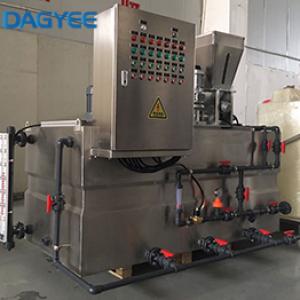
Coagulants (typically aluminum or iron-based) are added to neutralize charges on fine particles and emulsified oils. Flocculants (polymers) are then added to form larger, more floatable flocs. For food wastewater, proper chemical selection is critical—we conduct jar testing on your specific effluent to determine the optimal chemical program.
Step 3: pH Adjustment
The system automatically adjusts pH as needed to optimize coagulation chemistry. Most food wastewater applications perform best in the pH range of 6.5 to 8.0.
Step 4: Air Saturation and Micro-Bubble Generation
A portion of the treated effluent is recycled through the saturator, where air is dissolved under pressure. This air-saturated water is released through special nozzles at the DAF inlet, creating a cloud of micro-bubbles (20-100 microns) that attach to the flocs and lift them to the surface.
Step 5: Separation and Skimming
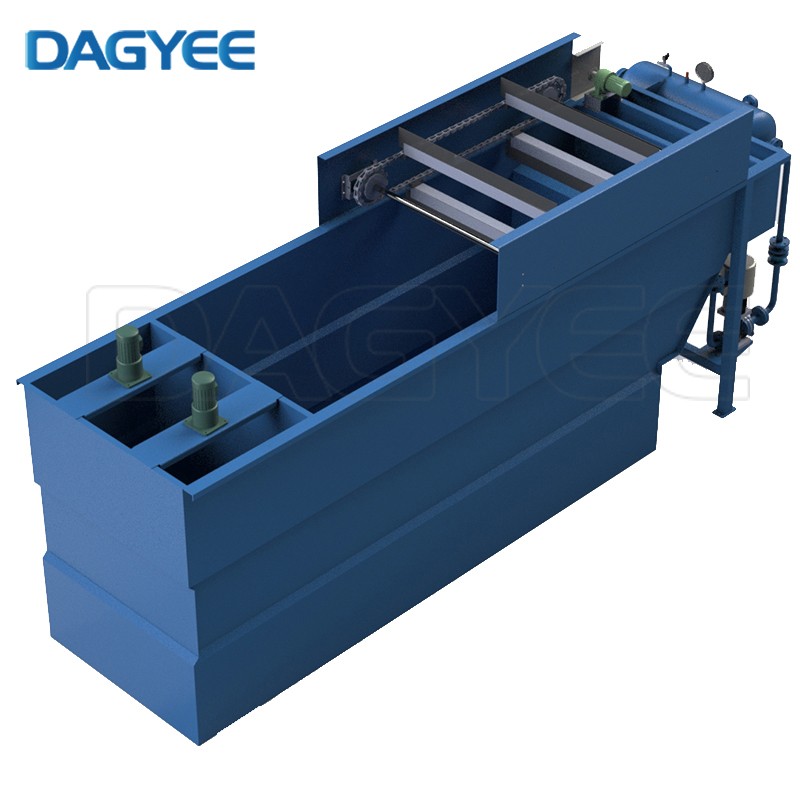
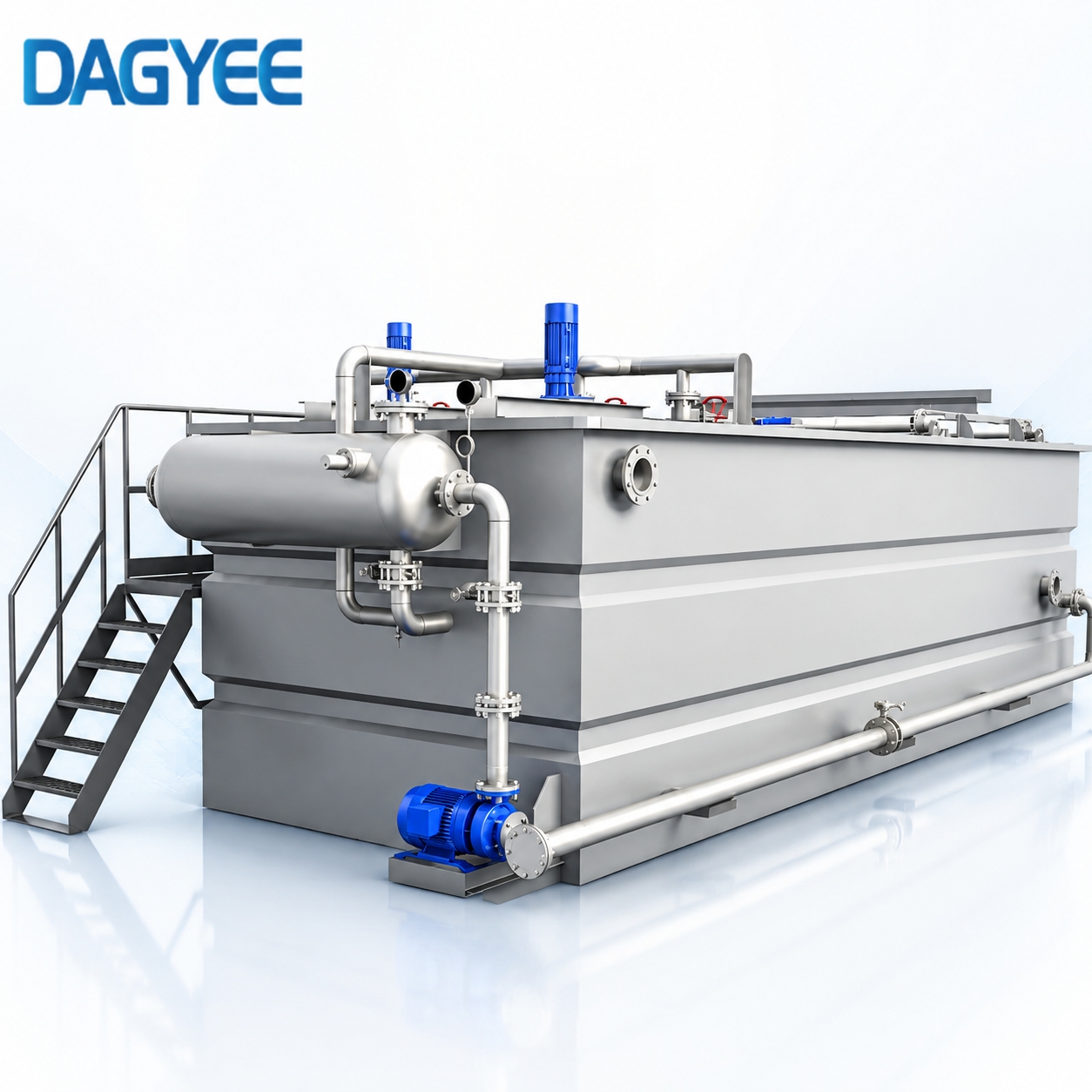
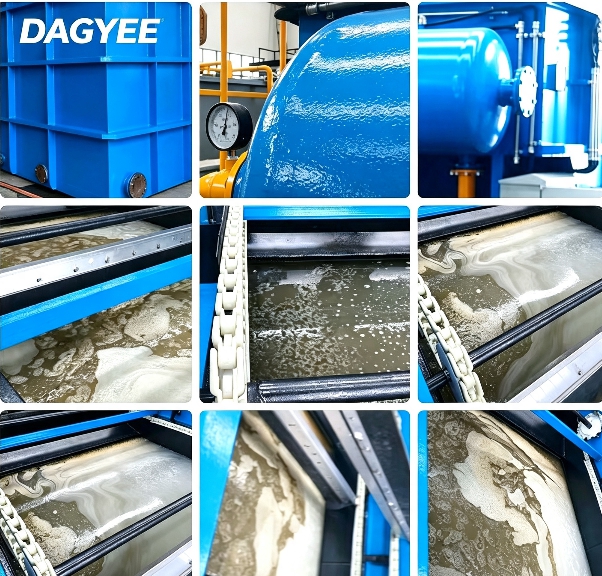
Floated solids form a blanket of sludge on the water surface. A chain-and-flight skimmer or rotary skimmer continuously removes this sludge to a collection hopper. Clean water is drawn from the bottom of the tank and discharged or sent to further treatment.
Step 6: Sludge Handling
The floated sludge is typically 3-7% solids and can be directly discharged to a holding tank for further dewatering or disposal. Some facilities use the recovered fats and proteins for rendering or biogas production.
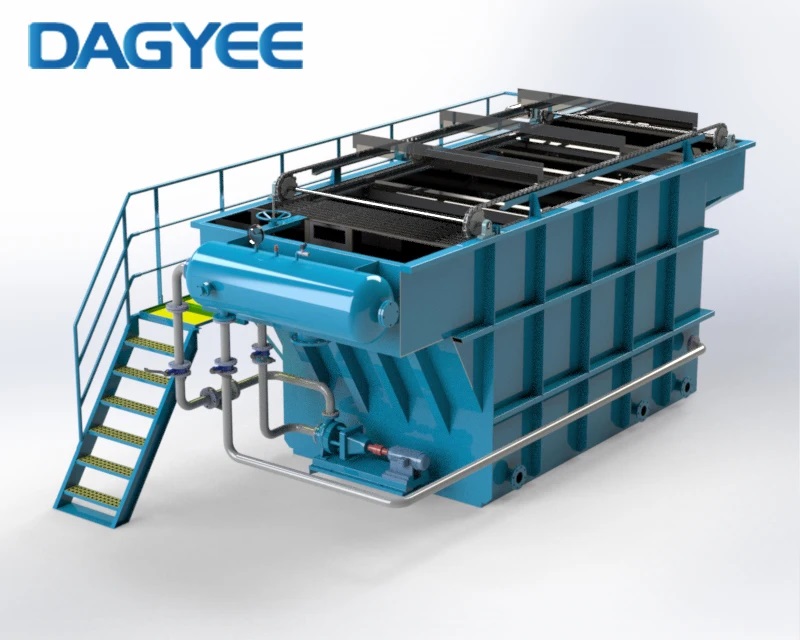
DAGYEE Technical Specifications
Model Number: DAGYEE-DAF
Flow Capacity: 3 – 200 m³/h (selectable)
Tank Configuration: Circular or Rectangular
Micro-Bubble Size: 20 – 100 microns
Saturator Pressure: 4 – 6 bar
Recycle Ratio: 10 – 30% of influent flow
Hydraulic Retention Time: 15 – 45 minutes
TSS Removal: Up to 95%
FOG Removal: Up to 99%
Sludge Concentration: 3 – 7% solids
Construction Materials: SS304 / SS316L / Carbon steel with epoxy coating
Power Supply: 380V ± 10%, 50/60Hz, 3 Phase
Control System: PLC with HMI touch screen
Certification: CE
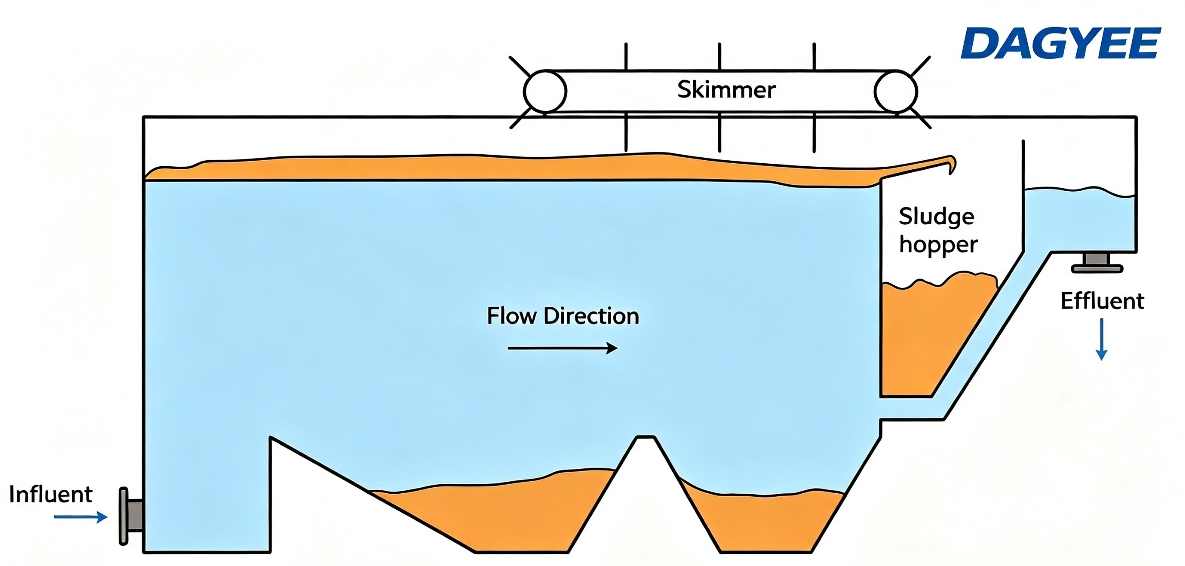
Model Selection Guide
| DAF Model | Qm3/h | Piping Connections | Physical Dimensions(m) | Weight (Kg) | Operating Weight (Kg) |
|---|---|---|---|---|---|
| DAF-003 | 3 |
Inlet: DN50 Outlet: DN50 Sludge: DN100 Vent: DN100 |
L/L1: 3.7/2.8 W/W1: 2.4/1.16 H/H1: 2.2/1.7 |
1500 | 5000 |
| DAF-005 | 5 |
Inlet: DN80 Outlet: DN80 Sludge: DN100 Vent: DN80 |
L/L1: 4/3 W/W1: 2.4/1.16 H/H1: 2.2/1.7 |
1600 | 7000 |
| DAF-010 | 10 |
Inlet: DN100 Outlet: DN100 Sludge: DN100 Vent: DN100 |
L/L1: 4.65/3.8 W/W1: 2.7/1.36 H/H1: 2.4/1.9 |
2000 | 12000 |
| DAF-015 | 15 |
Inlet: DN125 Outlet: DN100 Sludge: DN150 Vent: DN100 |
L/L1: 5.6/4.5 W/W1: 2.9/1.66 H/H1: 2.5/2 |
2200 | 18000 |
| DAF-020 | 20 |
Inlet: DN150 Outlet: DN150 Sludge: DN150 Vent: DN100 |
L/L1: 5.9/4.8 W/W1: 3.2/1.96 H/H1: 2.5/2 |
3000 | 22000 |
| DAF-030 | 30 |
Inlet: DN150 Outlet: DN150 Sludge: DN150 Vent: DN100 |
L/L1: 6.8/5.5 W/W1: 3.2/2.16 H/H1: 2.7/2.2 |
3800 | 32000 |
| DAF-040 | 40 |
Inlet: DN200 Outlet: DN150 Sludge: DN150 Vent: DN100 |
L/L1: 8/6.7 W/W1: 3.6/2.6 H/H1: 2.7/2.2 |
5000 | 45000 |
| DAF-050 | 50 |
Inlet: DN200 Outlet: DN150 Sludge: DN150 Vent: DN100 |
L/L1: 8.4/7 W/W1: 3.6/2.6 H/H1: 2.7/2.2 |
5500 | 55000 |
| DAF-060 | 60 |
Inlet: DN250 Outlet: DN200 Sludge: DN150 Vent: DN100 |
L/L1: 9.9/8.4 W/W1: 3.8/2.8 H/H1: 2.9/2.4 |
6000 | 66000 |
| DAF-070 | 70 |
Inlet: DN250 Outlet: DN200 Sludge: DN150 Vent: DN100 |
L/L1: 10.4/9 W/W1: 3.8/2.8 H/H1: 2.9/2.4 |
6500 | 75000 |
| DAF-080 | 80 |
Inlet: DN250 Outlet: DN250 Sludge: DN150 Vent: DN100 |
L/L1: 10.8/9.4 W/W1: 4/3 H/H1: 2.9/2.4 |
7500 | 100000 |
| DAF-100 | 100 |
Inlet: DN300 Outlet: DN250 Sludge: DN150 Vent: DN100 |
L/L1: 12.1/10.6 W/W1: 4.2/3.2 H/H1: 2.9/2.4 |
9000 | 110000 |
| DAF-120 | 120 |
Inlet: DN300 Outlet: DN250 Sludge: DN150 Vent: DN100 |
L/L1: 12.5/11.4 W/W1: 4.4/3.4 H/H1: 2.9/2.4 |
10000 | 130000 |
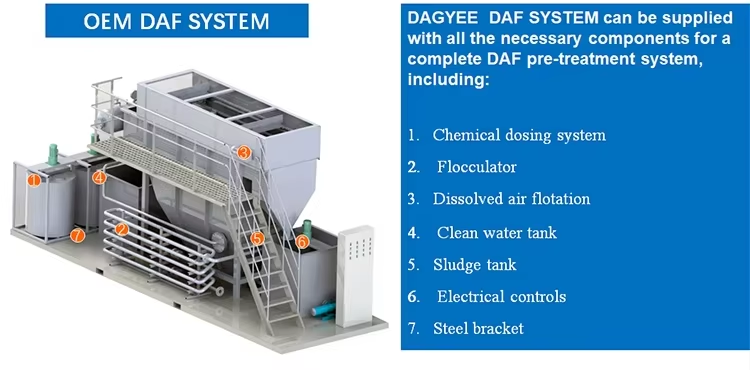
Dissolved air flotation process flow
Chemical Treatment: Wastewater is mixed with coagulants and flocculants to form larger particles ("flocs").
Air Injection & Contact: Pressurized, air-saturated water is released into the water stream, creating fine bubbles that attach to the flocs.
Separation: The air-floc aggregates float to the surface, forming a sludge layer.
Sludge Removal: A surface scraper removes the floating sludge.
Water Outlet: Clarified water is collected from the bottom of the tank and discharged. Part of it is often recycled to create the pressurized air stream.
Fats, Oils, and Grease (FOG) – up to 99% removal. Removes animal fats, vegetable oils, and grease that cause sewer blockages and high surcharges.
Total Suspended Solids (TSS) – up to 95% removal. Removes proteins, starches, fibers, and other solid matter.
Biochemical Oxygen Demand (BOD) – 60-85% removal. Significantly reduces the organic strength of effluent, lowering sewer surcharges.
Chemical Oxygen Demand (COD) – 50-80% removal. Removes soluble and particulate organic matter.
Proteins and Starches – high removal. Recovers valuable protein solids that can be sold or used for rendering.
Emulsified Oils – up to 95% removal. Effective on stable oil-water emulsions common in processed food wastewater.
DAF vs. Conventional Clarifiers
| Feature | DAF System | Gravity Settling Tank | Lamella Clarifier |
|---|---|---|---|
| Best at Removing | Light suspended solids, emulsified oils, FOG, biological flocs | Dense, fast-settling solids | Medium-density solids |
| Performance on FOG | Excellent — micro-bubbles lift oil to surface | Weak — FOG does not settle | Limited — plates do not address emulsified oil |
| Footprint | Compact — high hydraulic loading rate | Large — requires long residence time | Compact |
| Sludge Characteristics | Drier float sludge — easier to dewater | Wet settled sludge — higher disposal volume | Moderate |
| Chemical Usage | Moderate (coagulation/flocculation) | Low | Low to moderate |
| Space Savings | 30-50% less than conventional clarifiers | Baseline | Compact |
Meat and Poultry Processing
Meat plants produce high-strength wastewater containing blood, animal fats, proteins, and suspended solids. DAF systems remove up to 99% of FOG and significantly reduce BOD, allowing compliance with municipal discharge limits. Recovered fats can be sold for rendering or used in biogas production.
Dairy Processing
Dairy wastewater contains milk fats, whey proteins, lactose, and cleaning chemicals. DAF systems effectively separate fats and proteins, reducing COD by 50-80% and allowing recovered fats to be used in animal feed.
Beverage Production
Breweries, wineries, and soft drink plants generate wastewater with high organic loads from sugars, starches, and cleaning solutions. DAF removes suspended solids and reduces BOD, lowering sewer surcharges and protecting downstream biological treatment.
Vegetable and Fruit Processing
Wash water from vegetable peeling, cutting, and juice extraction contains fibers, starches, and sugars. DAF systems recover valuable solids and produce clear effluent for discharge or reuse.
Seafood Processing
Fish and shellfish processing wastewater contains proteins, oils, and suspended solids. DAF removes these contaminants, reducing odor and allowing compliance with discharge permits.
Chemical Pre-Treatment Requirements
Effective DAF operation typically requires chemical conditioning to achieve high removal efficiencies.
Typical Chemical Addition:
Coagulant — aluminum sulfate (alum), ferric chloride, or polyaluminum chloride (PAC). Neutralizes particle charges to allow aggregation.
Flocculant — anionic or cationic polymer. Binds particles into larger, more floatable flocs.
pH Adjustment — acid or caustic to optimize coagulation chemistry.
Dosing Considerations:
Dosage depends on wastewater characteristics and is determined by jar testing.
Automated dosing systems ensure consistent chemical feed.
Chemical savings of up to 50% can be achieved compared to coagulation-settling systems.
Contact Us
The DAGYEE DAF System for the Food & Beverage Industry delivers reliable, high-efficiency removal of FOG, TSS, and organic loads from food processing wastewater. With up to 99% FOG removal and up to 95% TSS removal, it helps food processors reduce sewer surcharges, achieve permit compliance, and recover valuable by-products.
Contact our team today to discuss your food wastewater challenges. We offer free initial consultation and jar testing for your specific effluent.