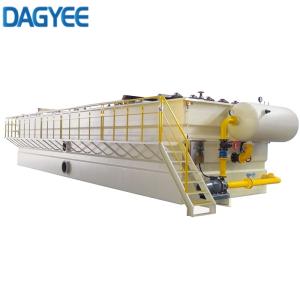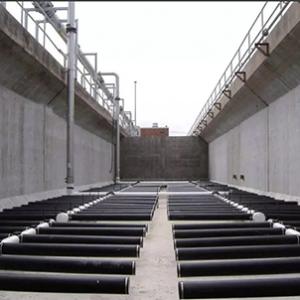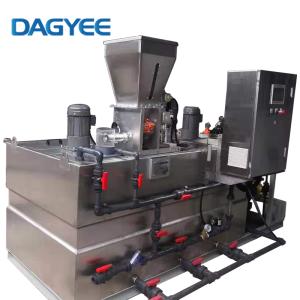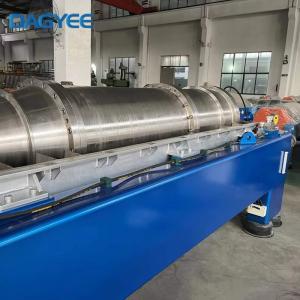
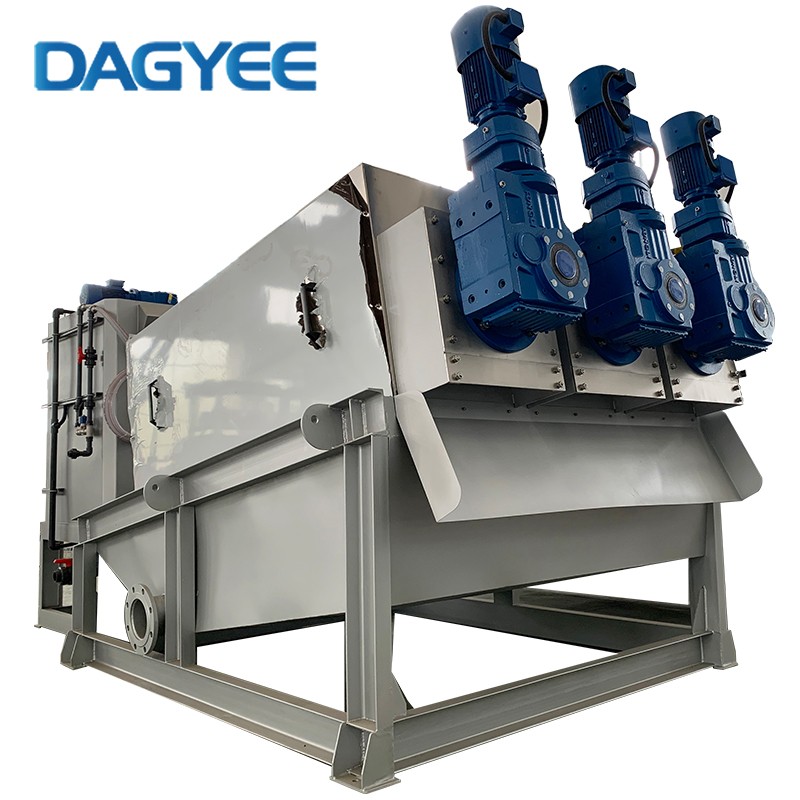
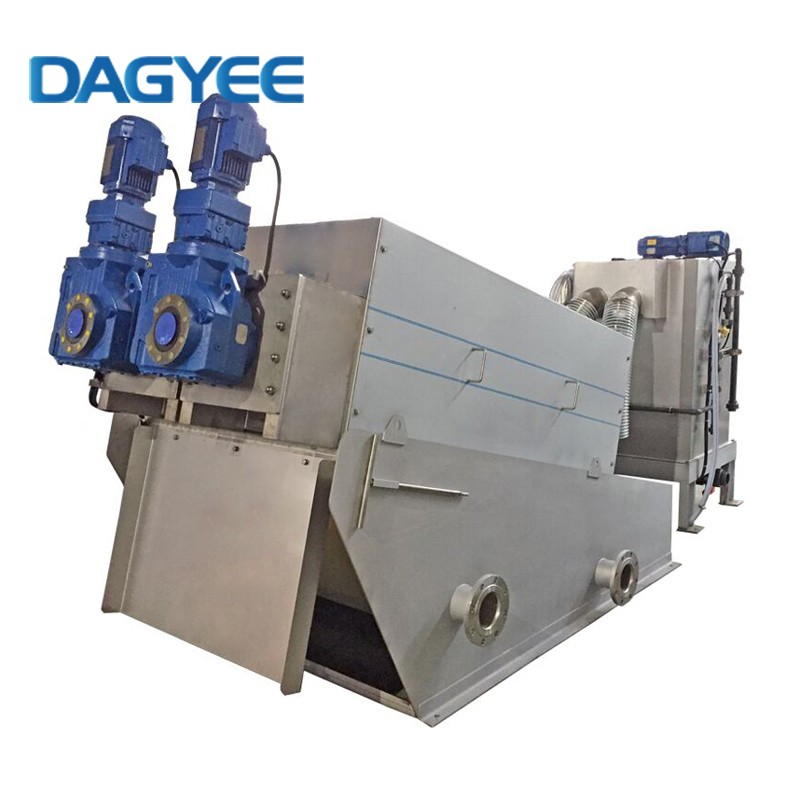
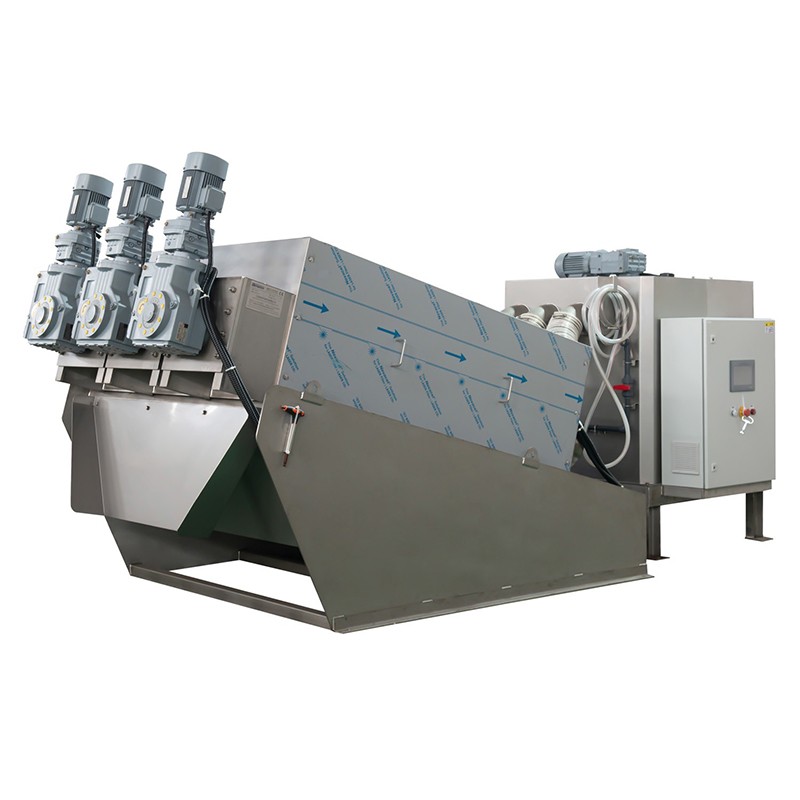
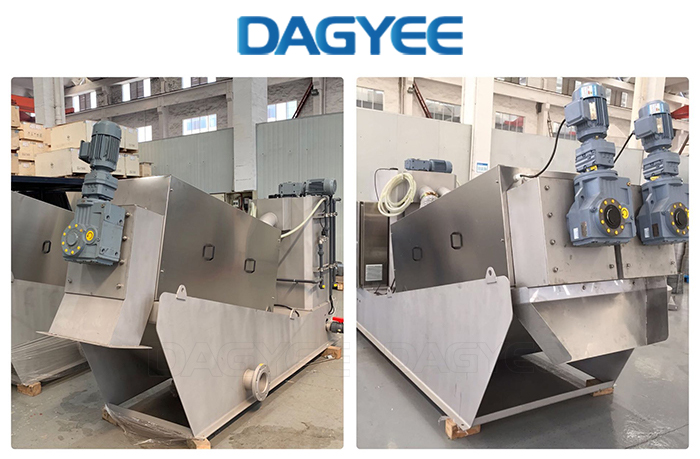
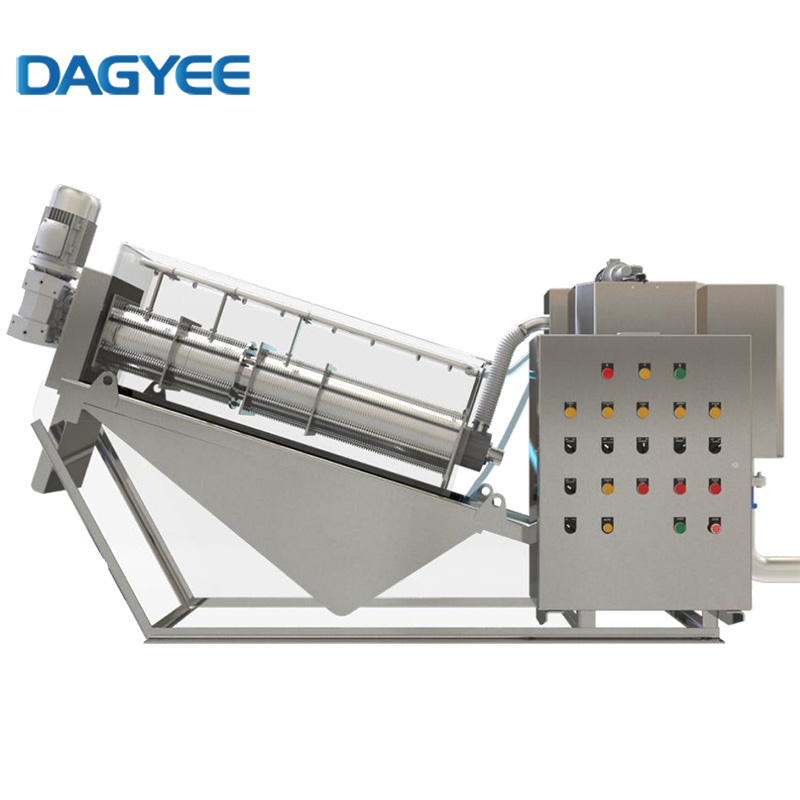
The DAGYEE High-Speed Decanter Centrifuge is a powerful, high-performance dewatering solution designed for applications requiring maximum solids capture and the driest possible cake. Utilizing high centrifugal force (up to 3000 G), this machine achieves exceptional separation efficiency, making it the preferred choice for municipal sewage treatment plants, large industrial facilities, and operations where cake dryness and solids recovery are critical performance metrics.
2. Working Principle
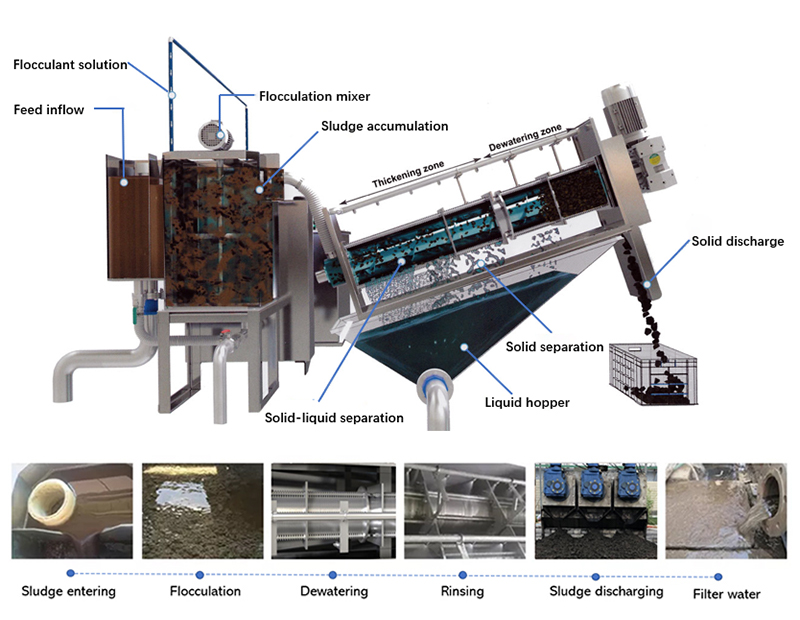
The decanter centrifuge operates on the principle of accelerated sedimentation. A horizontal bowl rotates at high speed, generating centrifugal force thousands of times greater than gravity:
1. High-Speed Rotation: The stainless steel bowl spins at speeds up to 4000 RPM, generating centrifugal forces up to 3000 G. This massive force drives solids to the bowl wall at a rate millions of times faster than gravity settling.
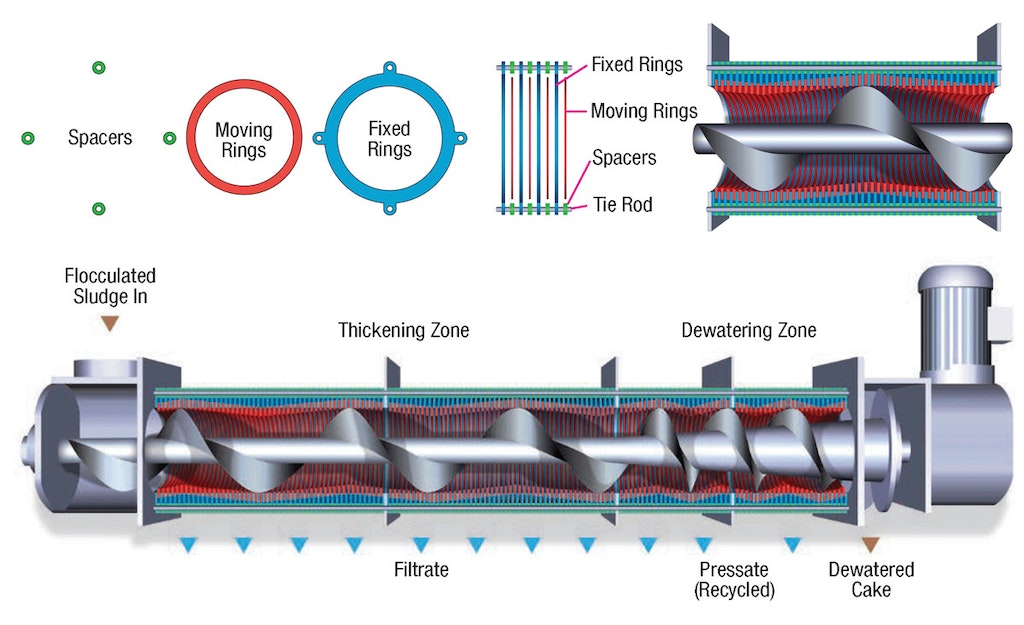
2. Continuous Solids Conveying: A screw conveyor (scroll) rotates within the bowl at a slightly different speed (differential speed). This relative motion continuously conveys separated solids toward the conical discharge end, where they exit the machine.
3. Liquid Discharge: The clarified liquid (centrate) overflows from the opposite end of the bowl through adjustable weir plates, providing the desired liquid clarity and pool depth.
4. Differential Speed Control: The difference between bowl and scroll speeds is precisely controlled via a gearbox or variable frequency drive, allowing optimization for different sludge types and dewatering requirements.
3. Key Advantages
High G-Force – Up to 3000 G for maximum solids recovery and cake dryness
Continuous Operation – 24/7 automatic operation with minimal supervision
Adjustable Weir Plates – Allows optimization of pool depth for different sludge characteristics
VFD Control – Variable frequency drives on both bowl and scroll for maximum process flexibility
Wear Protection – Tungsten carbide or ceramic tiles on critical wear areas
Dual Drive System – Independent bowl and scroll speed control
Vibration Monitoring – Early warning system for imbalance or bearing wear
4. Technical Specifications
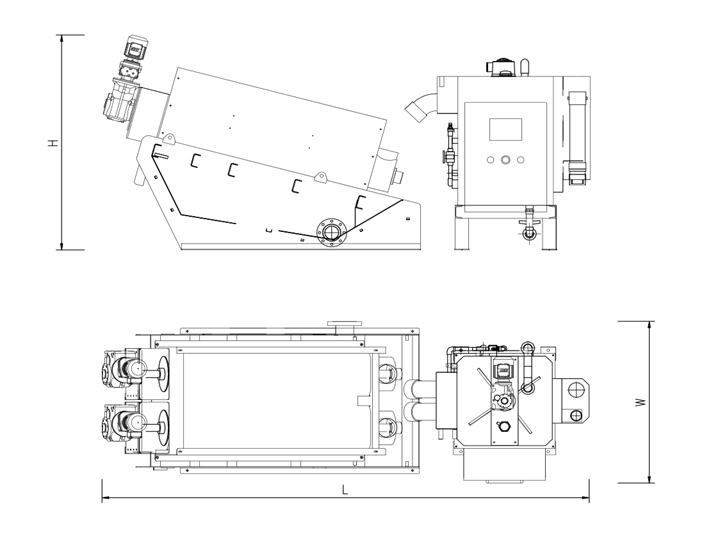
Standard models are listed below. Custom configurations are available upon request.
Achieves the driest cake among all dewatering technologies (20-35% DS)
Highest solids recovery rate (95-99% capture)
Handles the widest range of sludge concentrations and types
Suitable for both thickening and dewatering applications
Compact footprint relative to belt presses (similar floor space but higher capacity)
Enclosed, odorless operation for improved working environment
Simple operation once set up; stable performance with consistent sludge feed
Note: Capacity and cake dryness depend on sludge characteristics, polymer type, and dosage. A sludge test is recommended for accurate sizing.
Materials:
Screw and rings – Stainless 304 (316L available for corrosive stuff)
Housing – Stainless 304
Frame – Carbon steel with epoxy coating
Cake solids: 15% to 30% depending on your sludge and chemical
Temperature range: 0°C to 60°C
Voltage: We match yours – 380V/50Hz, 460V/60Hz, or others
5. Comparison with Traditional Equipment
| Parameter | Belt filter press | Plate and Frame Press | Centrifuge | Screw Press |
|---|---|---|---|---|
| Energy Consumption | High | Higher | Highest | Lowest |
| Footprint | Large | Large | Medium | Small |
| Automation Level | Moderate | Low | High | High |
| Clogging Risk | High | High | Medium | Very Low |
| Wash Water Usage | High | Medium | Low | Very Low |
| Suitable Concentration | ≥5000 mg/L | ≥10000 mg/L | ≥3000 mg/L | ≥2000 mg/L |
| Continuous Operation | Yes | Intermittent | Yes | Yes |
Each technology has appropriate applications. The selection depends on specific site requirements including sludge characteristics, available labor, energy costs, and budget constraints.
What this means for you:
Want the driest cake possible? Get a centrifuge. But budget for power and repairs.
Have almost no budget upfront? Get a belt press. But plan for labor and water.
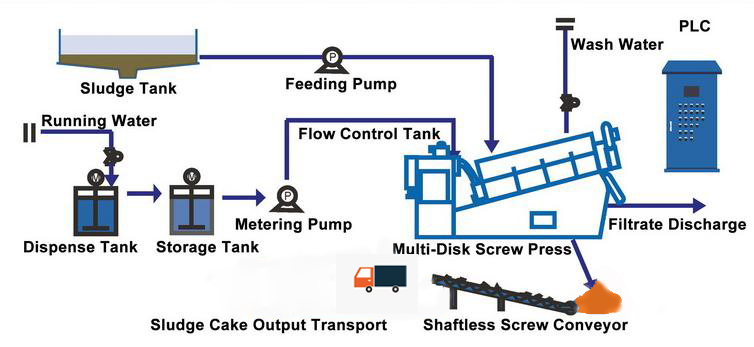
Want the lowest total cost and least headache? Get our screw press.
6. Selection & Maintenance
Selection Worksheet
To select the appropriate model, calculate your dry solids production rate.
Step 1: Measure or estimate your sludge flow rate in cubic meters per hour.
Step 2: Measure your inlet solids concentration in percent or grams per liter. One percent solids equals ten grams per liter.
Step 3: Calculate dry solids per hour: Flow rate × Solids concentration × 10 (for grams per liter to kilograms per hour).
Step 4: Multiply by 1.5 to provide margin for variations.
Step 5: Select a model with dry solids capacity exceeding this number.
Example Calculation
Sludge flow: 8 cubic meters per hour
Inlet solids: 2 percent (20 grams per liter)
Dry solids: 8 × 20 = 160 kilograms per hour
With margin: 160 × 1.5 = 240 kilograms per hour
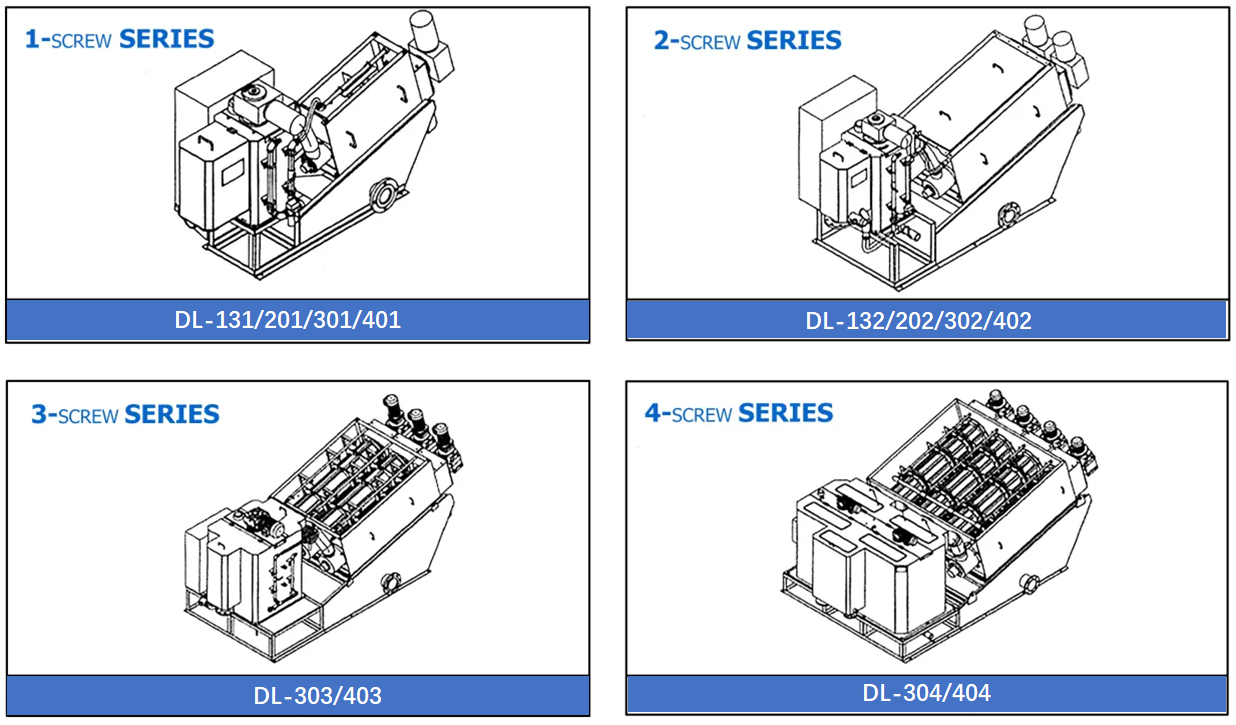
Recommended model: DAG-301 or DAG-302 depending on flow characteristics
Free Laboratory Testing
DAGYEE maintains a pilot-scale test unit for customer sludge samples. The test procedure requires approximately five liters of representative sludge.
The test report includes:
Achievable cake solids content
Recommended polymer type and dosage
Filtrate quality measurements
Recommended model based on test results
There is no charge for this service. Shipping costs for the sample are the responsibility of the customer.
Maintenance Planning
The maintenance program for this equipment is substantially simpler than for belt presses or centrifuges.
Daily Tasks (Five Minutes)
Visual check for any external leaks
Listen for changes in operating sound
Verify control panel shows normal status
Monthly Tasks (Thirty Minutes)
Check gearbox oil level through sight glass
Apply grease to motor bearings if equipped with fittings
Inspect discharge area for abnormal buildup
Quarterly Tasks (One Hour)
Check all accessible fasteners for tightness
Clean any debris from around the machine
Verify wash system operation
Annual Tasks (Two to Four Hours)
Drain and replace gearbox oil
Remove and inspect a sample of rings for wear measurement
Check shaft seals for signs of leakage
Inspect electrical connections in control panel
Large municipal sewage treatment plants (>100,000 PE)
Industrial wastewater treatment (paper, chemical, petrochemical)
Sludge thickening (WAS thickening before digestion)
Sludge dewatering (final dewatering before disposal)
Mining and mineral processing (tailings dewatering)
Oil drilling waste treatment (drilling mud recovery)
Food processing (protein recovery, juice clarification)
Biogas and fermentation residues
Note: For best results, a stable feed concentration and consistent sludge characteristics are recommended. DAGYEE provides full sizing and selection support based on your specific sludge analysis.