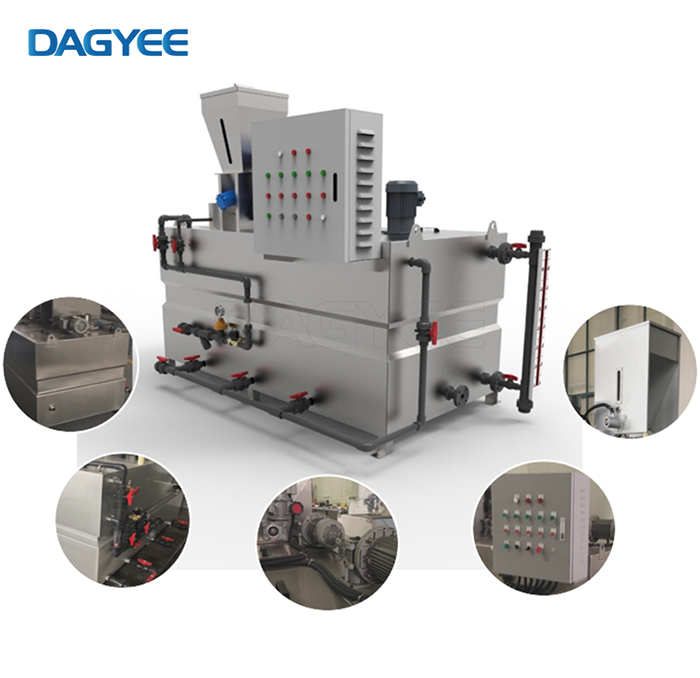
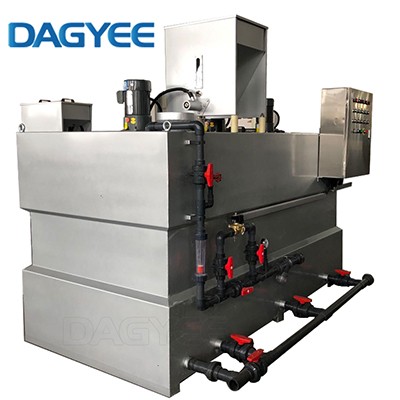
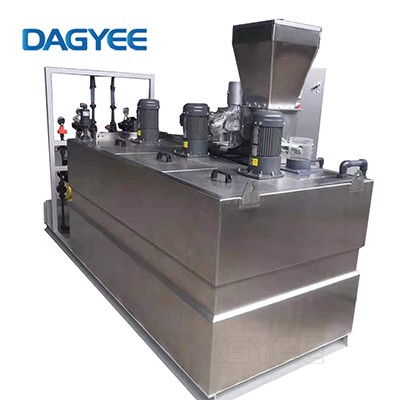
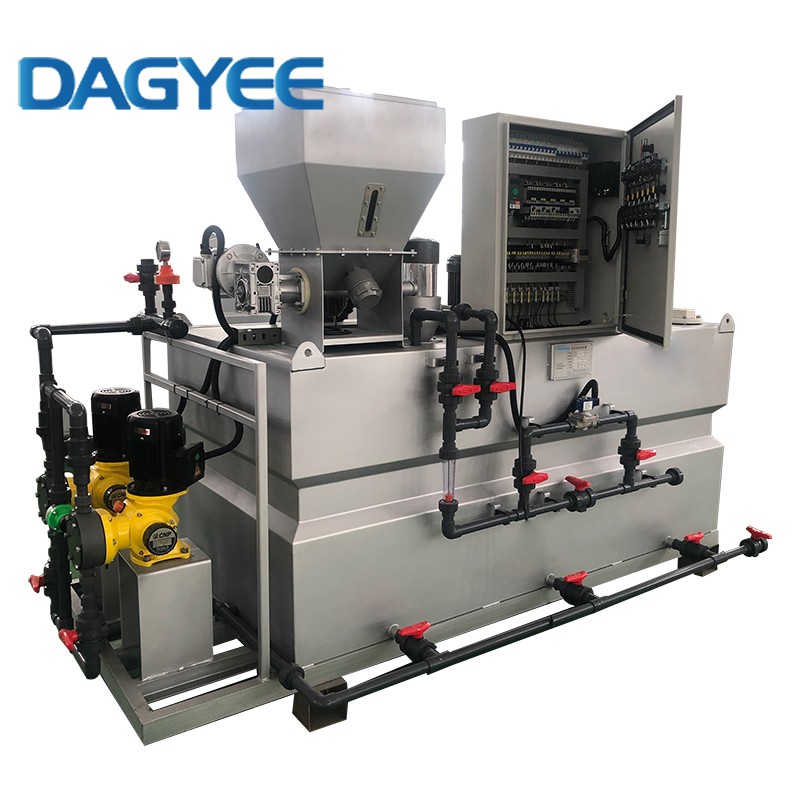
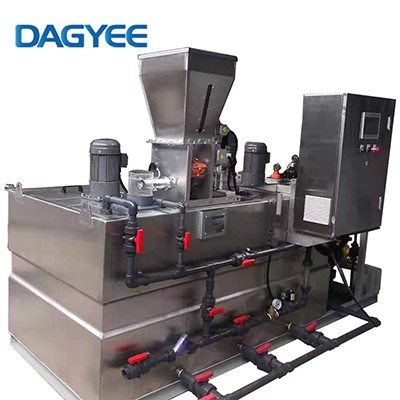
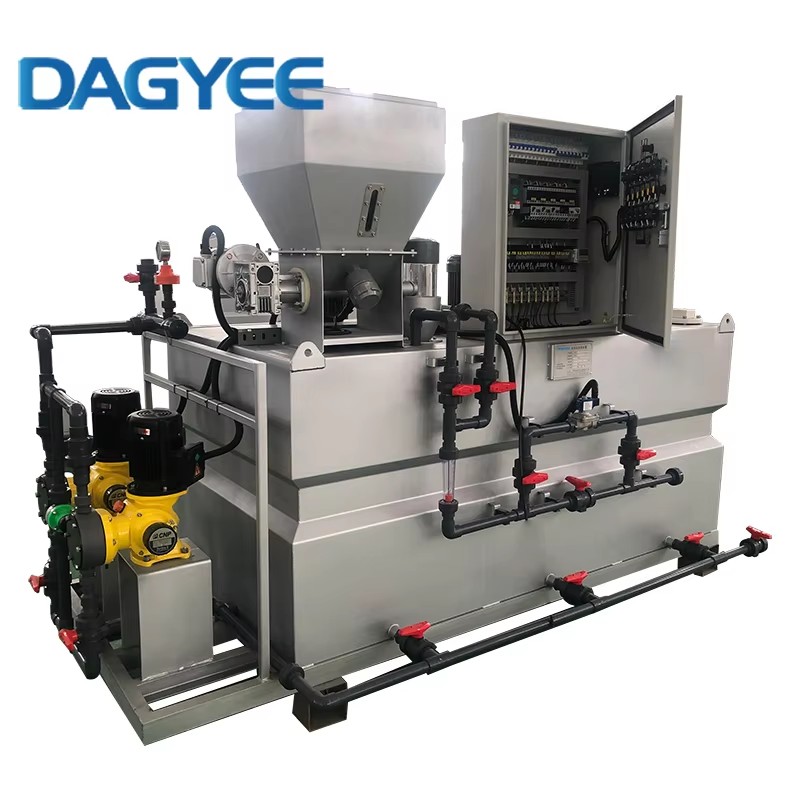
DAGYEE Polymer Unit
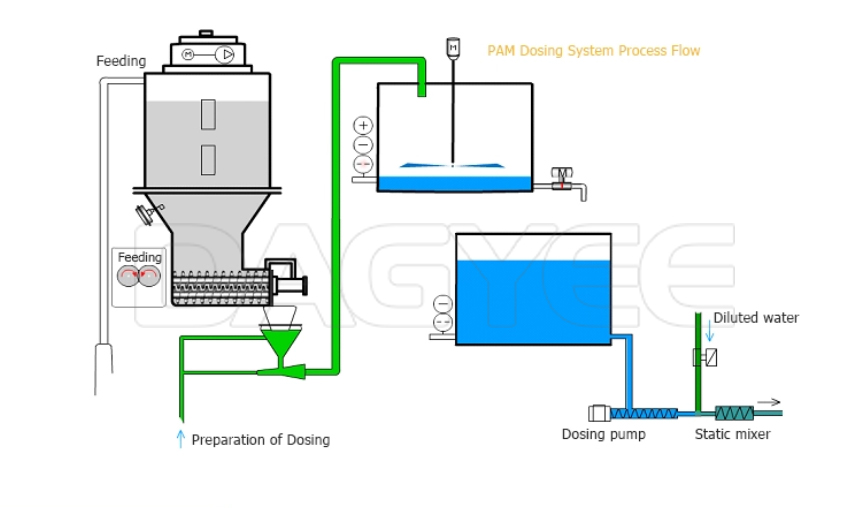
DAGYEE polymer preparation units are designed for maximum efficiency, ensuring your operations run smoothly. With our batch preparation philosophy, you can achieve the ideal concentration quickly, thanks to a one-hour aging process from start to finish. High-quality stainless steel materials and components guarantee both product excellence and long-term reliability.
Tailoring polymer concentration to your specific needs is easy. Our units offer precise calibration for the dry polymer feed rate and dilution water flow rate, all easily adjustable through the user-friendly PLC panel. Experience flexibility like never before, with standard volumes ranging from 1 m³ to 10 m³ and strengths from 0.05% to 0.5%. Need further dilution? We’ve got you covered.
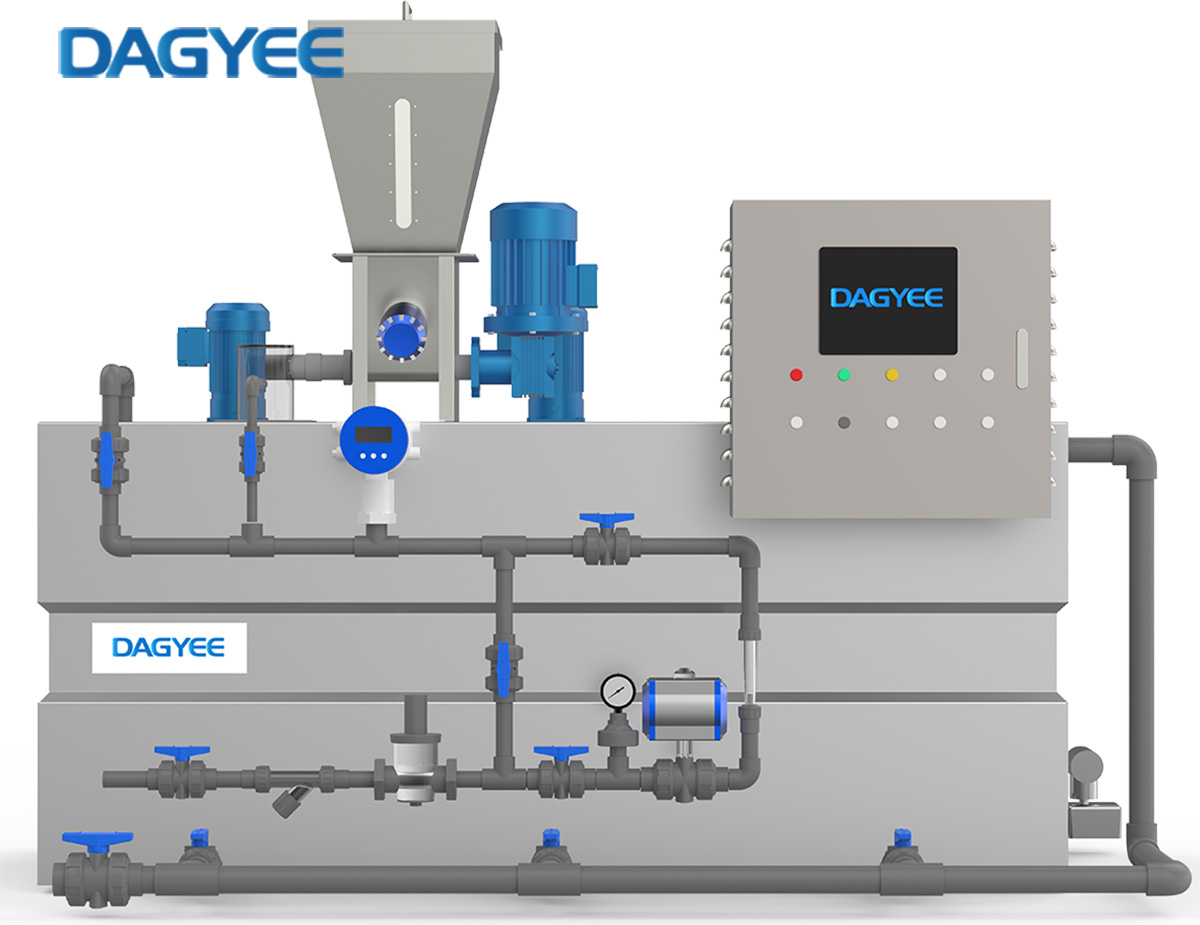
DAGYEE Polymer Prep Units redefine efficiency and savings. Fully automatic, they streamline operations and dramatically reduce maintenance costs. Say goodbye to time-consuming manual processes and costly upkeep. Our units optimize polymer consumption, minimizing waste and maximizing performance.
DAGYEE commitment is to enhance your operations with effortless efficiency. Our units save you time, money, and effort, all while delivering superior results. Experience the future of polymer preparation. Contact us today.

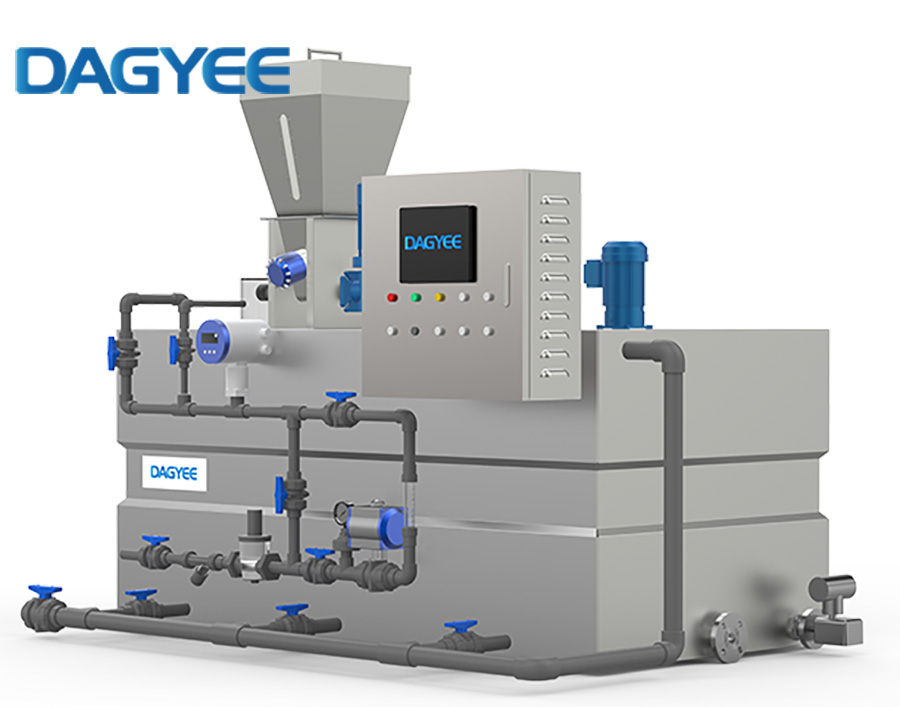
DAGYEE Polymer Preparation Unit Specifications
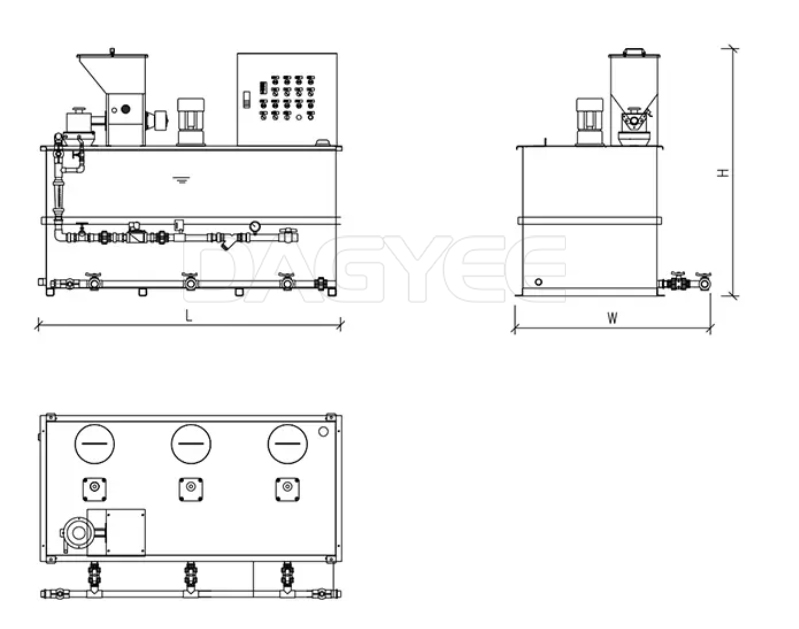
| Model | Capacity (L/h) | Dimensions (mm) | Weight (kg) | Power (kW) | Plant Size |
|---|---|---|---|---|---|
| DT300 | 300 | 1370×730×1450 | 350 | 0.92 | Lab, pilot trials |
| DT500 | 500 | 1370×730×1450 | 350 | 0.92 | Small WWTPs, small industrial parks |
| DT1000 | 1000 | 1800×950×1620 | 480 | 1.3 | County WWTPs, medium industrial parks |
| DT2000 | 2000 | 2130×1120×1620 | 560 | 1.7 | Medium WWTPs, large industrial parks |
| DT3000 | 3000 | 2450×1270×2000 | 790 | 2.4 | City WWTPs, large industrial parks |
| DT4000 | 4000 | 2780×1440×2250 | 1050 | 3.2 | Large city WWTPs |
| DT6000 | 6000 | 3100×1600×2650 | 1200 | 4.8 | Large city WWTPs with duty and standby |
| DT10000 | 10000 | 3970×2040×2650 | 1450 | 6.4 |
Mega scale WWTPs, watershed projects |
Material: Stainless Steel, PP, or FRP
| Material | Pros | Cons | Best For |
|---|---|---|---|
| SS304 | Stands up to corrosion, strong, lasts a long time | Higher cost | Most projects |
| SS316 | Even better corrosion resistance | Costs more than 304 | High salt, very corrosive conditions |
| PP (Polypropylene) | Cheap, handles chemicals well | Low strength, ages faster | Small, low requirement projects |
| FRP (Fiberglass) | Handles chemicals, lightweight | Expensive, hard to fix | Chemical plants, special conditions |
I have seen too many plants buy a PP tank to save money. Three years later, the tank is cracked and leaking. The fittings are brittle. They end up buying a stainless steel unit anyway. The cheap one ends up being the expensive one.
Sizing Summary Table
| Plant Size | Daily Capacity | Recommended Model | Preparation Capacity | Typical Applications |
|---|---|---|---|---|
| Small | Less than 5,000 m³/d | DT300 or DT500 | 300 to 500 L/h | Township WWTPs, small industrial parks |
| Medium | 5,000 to 20,000 m³/d | DT1000 or DT2000 | 1000 to 2000 L/h | County WWTPs, medium industrial parks |
| Large | 20,000 to 50,000 m³/d | DT3000 or DT4000 | 3000 to 4000 L/h | City WWTPs, large industrial parks |
| Extra Large | More than 50,000 m³/d | DT6000 or DT10000 | 6000 to 10000 L/h | Mega WWTPs, watershed projects |
Mistake 1: Only looking at capacity and ignoring aging time
Some units claim high output, but their tanks are tiny. PAM needs 45 to 60 minutes to age properly. If the tank is too small, the solution moves through too fast. The polymer chains never fully open up, and your flocs end up weak.
DAGYEE uses three separate tanks. One for mixing, one for aging, and one for storage. Each stage does its own job. The aging tank gives the polymer the time it needs. That is how you get good flocculation.
Leave yourself 20% to 30% margin. That is enough. Bigger is not always better. The right size is what matters.
| Feature | Benefit |
|---|---|
| Three tank design | Preparation, aging, and storage ensures 45 to 60 minutes of aging time for maximum polymer activity |
| Anti caking design | Heated screw end prevents moisture caking; tapered hopper with smooth walls prevents bridging |
| Fully automatic | PLC and HMI control handles feeding, water addition, mixing, and transfer automatically |
| Precise concentration | Feed rate and water flow are interlocked; concentration stays within plus or minus 5 percent |
| Durable construction | HDPE or SS304 tanks, SS316 agitator shafts, stainless steel feeding screw |
| Dry powder and emulsion compatible | One unit handles both polymer forms with simple adjustments |
| Remote control ready | 4 to 20 mA remote control supports SCADA integration |
| Low level alarm | Storage tank low level alarm prevents polymer starvation |
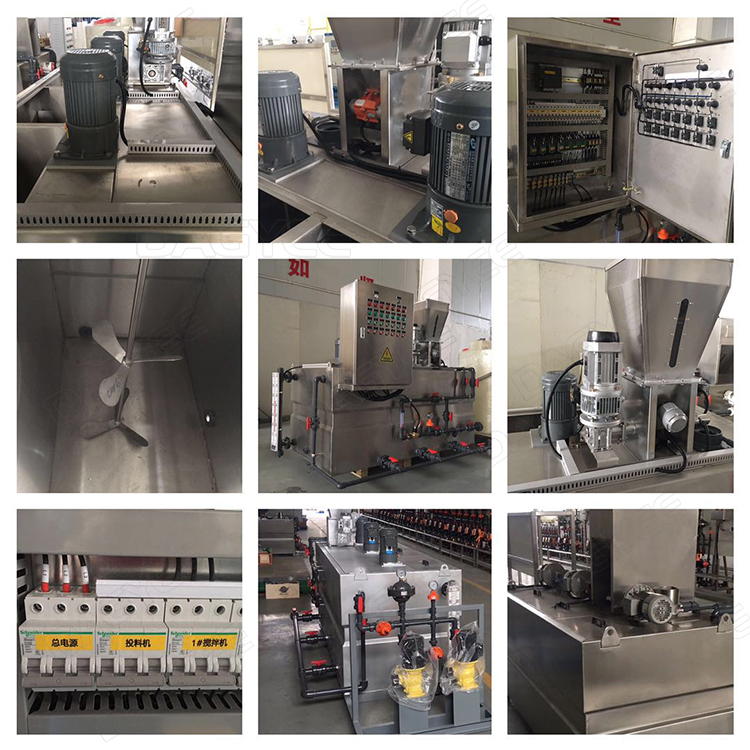
Polymer preparation Unit Remark
♦ Model selection: Process capacity or flow volume is necessary
♦ Raw material: SS304 or SS316.
♦ Manufacturer: We have our own workshop so that best quality and loweat price can be provided for you.
♦ Customization: Custom-made is available.

What Makes DAGYEE Units Different
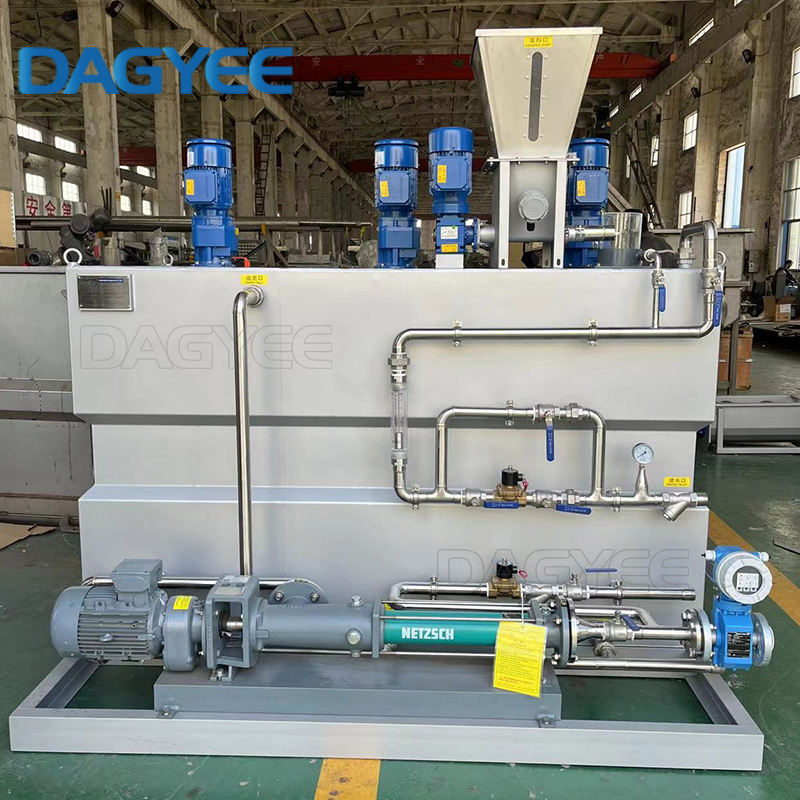
Conclusion: Size It Right, Save Money
Sizing a polymer preparation unit is about doing the math.| Daily Capacity | Recommended Model |
|---|---|
| Less than 5,000 m³/d | DT300 or DT500 |
| 5,000 to 20,000 m³/d | DT1000 or DT2000 |
| 20,000 to 50,000 m³/d | DT3000 or DT4000 |
| More than 50,000 m³/d | DT6000 or DT10000 or multiple units |