Solar-Powered UF Water Treatment System – Off-Grid Filtration for Remote Communities
Product Overview
Around the world, nearly 2 billion people lack access to safely managed drinking water. Many of these communities are in remote areas where grid electricity is unreliable or non-existent. Diesel generators are expensive to run, hard to maintain, and environmentally problematic. Conventional water treatment systems simply aren't designed for these conditions.
Solar power changes the equation.
The DAGYEE Solar-Powered UF Water Treatment System combines proven ultrafiltration technology with photovoltaic power. It runs directly from solar panels, with or without battery backup. No grid connection. No diesel. No expensive fuel deliveries. Just clean water from sunlight.
This system is designed for rural villages, humanitarian aid operations, off-grid schools and clinics, and any community that needs reliable drinking water without reliable electricity. It produces the same high-quality permeate as any UF system—removing bacteria, viruses, and suspended solids—but it does it using the most abundant energy source available: the sun.
There's a reason ultrafiltration has become so popular in recent years, even for smaller-scale applications. The technology simply makes sense.
No Chemicals Needed
During normal operation, a UF system doesn't require any chemical dosing. No coagulants, no flocculants, no pH adjustment. This is a significant advantage for smaller installations where chemical handling, storage, and safety can be a hassle. You just pump water through the membranes, and clean water comes out.
Consistent Quality, Regardless of Feed Water
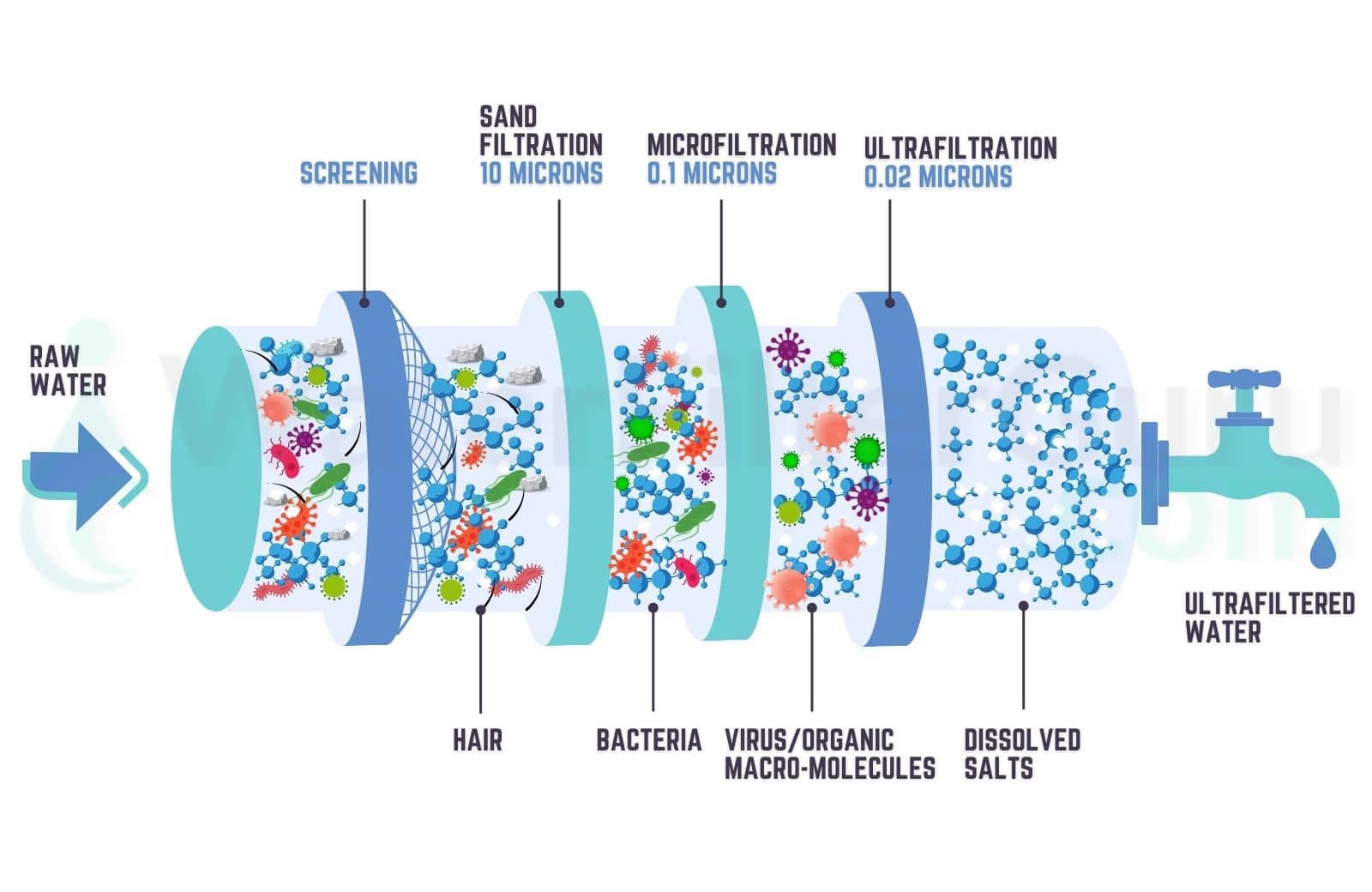
Conventional filters (sand filters, media filters, cartridge filters) produce water that varies with the quality of the incoming water. During dry seasons, they work fine. During rain events, when turbidity spikes, the output quality drops. A UF system doesn't care about seasonal fluctuations. The membrane pores are physical barriers. If the contaminant is larger than 0.01 microns, it stays behind. Period. The permeate quality is the same in April as it is in November.
Small Footprint
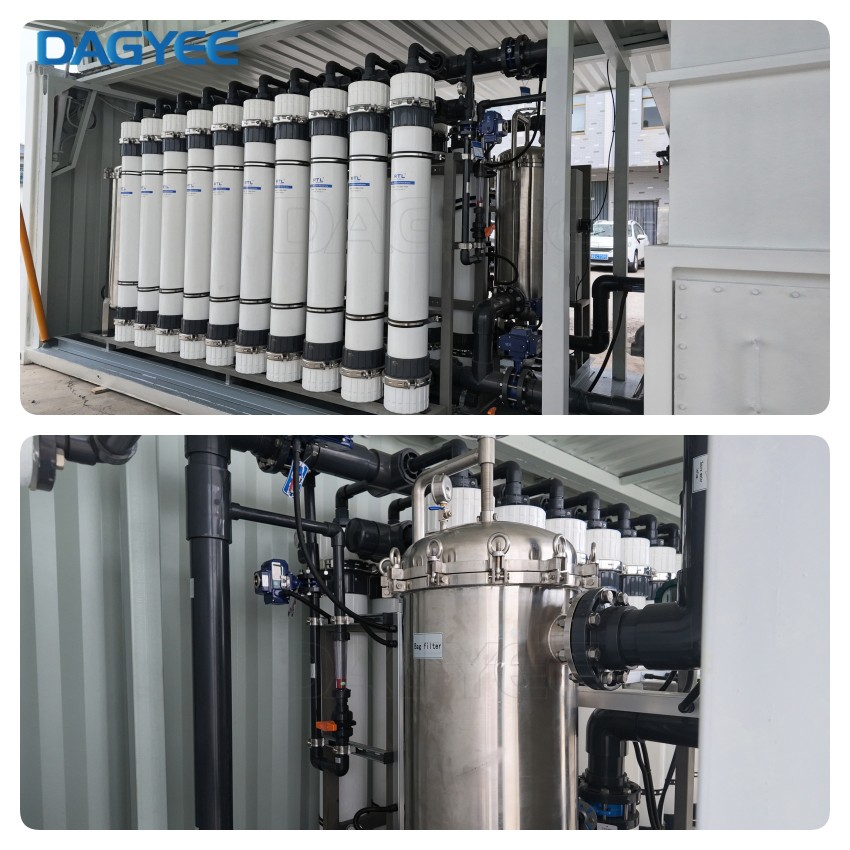
For smaller projects, space is often limited. You might not have an entire building for a water treatment plant. UF systems are compact. A system producing 5 m³/h fits on a skid about the size of a small car. It can go into a corner of an existing building, a shipping container, or a small dedicated room.
Low Maintenance
Modern UF systems are automated. They backwash themselves. Some models can even do simple chemical cleanings automatically. This is a big deal for smaller operations that don't have a dedicated water treatment specialist on staff. With a UF system, routine operation is straightforward. Check the pressures in the morning. Top up the chemicals if needed. The system handles the rest.
Long-Term Reliability
UF membranes have a service life of 3 to 5 years with proper operation. That's much longer than sand filters that require regular media replacement, or cartridge filters that need changing every few months. The total cost of ownership usually comes out ahead with UF.
Step 1: Solar Power Generation
Solar panels convert sunlight into DC electricity. The number of panels is sized to match the system's power requirements and local solar radiation conditions.
Step 2: Power Conditioning
A charge controller manages the power flow. It protects the batteries from overcharging and ensures stable power delivery to the UF system. For direct-drive systems (no batteries), a controller matches the panel output to the pump's requirements.
Step 3: Water Intake
Feed water is drawn from a well, river, lake, or storage tank. The intake includes a strainer to remove large debris.
Step 4: Pre-Filtration
Water passes through a pre-filter (100-200 microns) to remove sand and coarse particles that could damage the UF membranes.
Step 5: Ultrafiltration
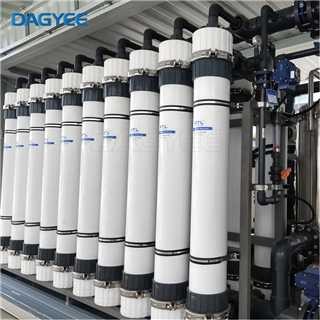
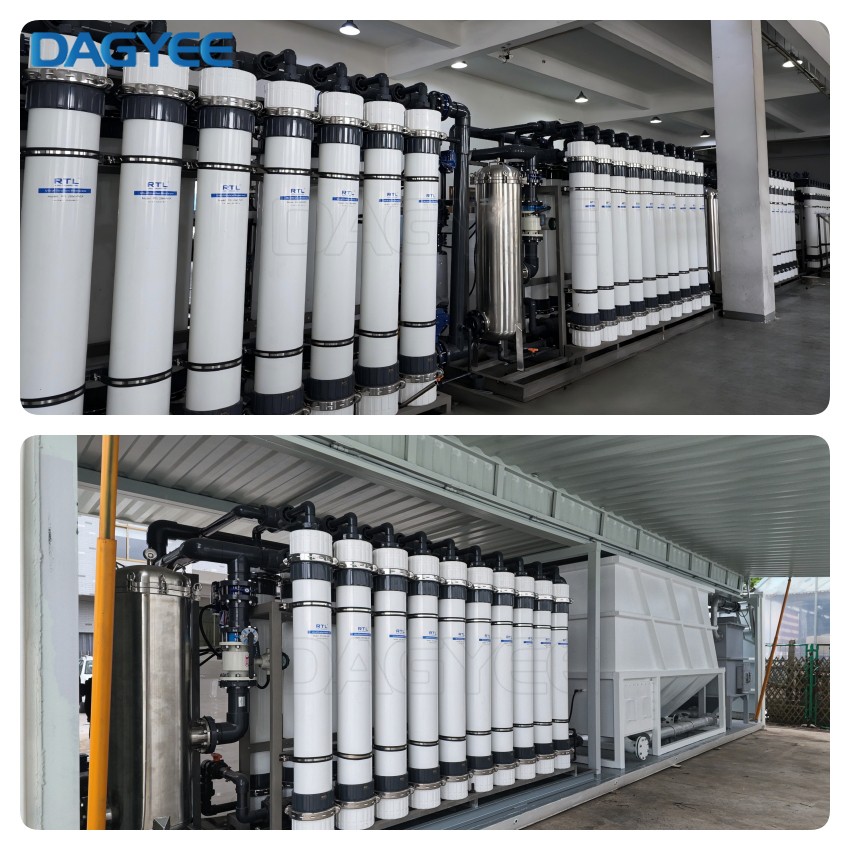
The heart of the system. PVDF hollow fiber membranes remove bacteria, viruses, protozoa, colloids, and suspended solids. Clean permeate is produced for drinking and domestic use.
Step 6: Backwash
The system performs automatic backwashes using either permeate or clean water. The backwash energy is supplied by the solar system. For battery-equipped systems, backwashes can run at any time. For direct-drive systems, they are timed to occur during peak sunlight hours.
Step 7: Clean Water Storage
Permeate flows into a storage tank. This tank provides buffer capacity for periods of low sunlight or high demand.
Step 8: Distribution
Water is distributed to the community via gravity, hand pumps, or small distribution pumps (also solar-powered).
System Components
| Component | Function Description |
|---|---|
|
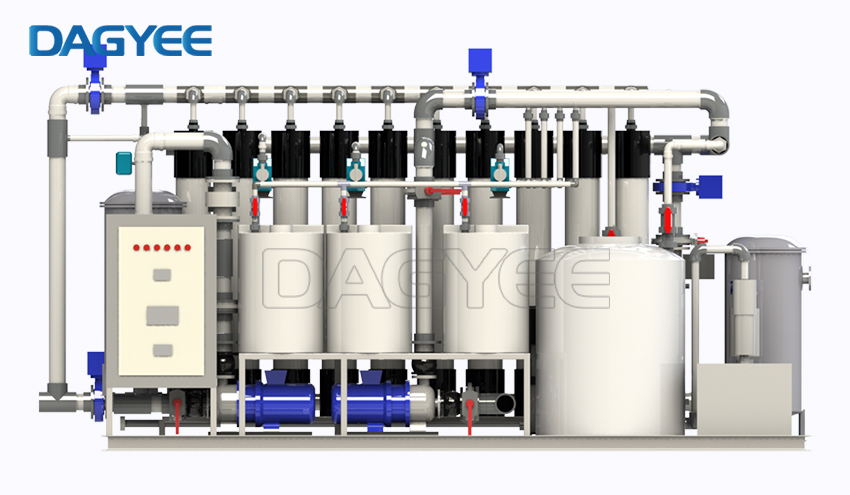
Core
|
Core filtration units; typically made of PVDF (Polyvinylidene Fluoride) or PES (Polyethersulfone), featuring excellent anti-fouling properties, high chemical resistance, and long service life. Available in inside-out or outside-in configurations. |
|
Feed Pump
Power
|
Provides stable operating pressure for the filtration process, typically ranging from 0.1 to 0.3 MPa. Designed for continuous duty with energy-efficient performance and low noise operation. |
|
Backwash System
Cleaning
|
Periodically flushes the membrane with clean water or an air-water combination in the reverse direction to effectively remove surface fouling, restore membrane flux, and extend membrane lifespan. |
|
Chemical Cleaning System
CIP/CEB
|
Utilizes chemical agents such as NaClO (sodium hypochlorite), citric acid, NaOH, and EDTA for online (CEB) or offline (CIP) chemical cleaning to remove irreversible fouling and fully recover membrane performance. |
|
PLC Control System
Automation
|
Equipped with advanced PLC and HMI touch screen interface, enabling fully automated operation including automatic filtration, backwashing, chemical cleaning, TMP monitoring, alarm diagnostics, and optional remote control. |
|
Pre-filtration System
Protection
|
Includes disc filters or cartridge filters with 100~200 μm filtration precision to remove large suspended particles and protect the UF membranes from mechanical damage and premature clogging. |
|
Air Scouring System
Enhanced
|
Generates air bubbles during backwashing to enhance cleaning efficiency by creating turbulence and mechanical scouring on the membrane surface, significantly improving foulant removal. |
|
Tank & Piping System
Infrastructure
|
Comprises feed tank, permeate tank, backwash tank, and chemical dosing tanks, all constructed from high-quality corrosion-resistant materials such as UPVC or Stainless Steel 304/316L, ensuring durability and hygienic operation. |
The Compact UF System is a physical barrier. It removes anything larger than its pore size. Here's what that means in practical terms:
| Contaminant | Removal Efficiency | Notes |
|---|---|---|
| Suspended solids | > 99.9% | Sand, silt, clay, and other particulate matter |
| Colloids | > 99.9% | Clay particles, silica, iron oxides |
| Bacteria | > 99.99% | Including E. coli, coliforms, and pathogenic bacteria |
| Viruses | > 99.99% | Including enteric viruses and rotaviruses |
| Protozoa | > 99.99% | Giardia, Cryptosporidium |
| Turbidity | To < 0.1 NTU | Consistently low, regardless of feed turbidity |
| Algae | > 99.9% | Removes algae cells and algal debris |
What the System Does NOT Remove:
Dissolved salts (TDS)
Dissolved ions (sodium, calcium, chloride, etc.)
Low molecular weight organics
Color that is truly dissolved (not particle-bound)
For applications requiring dissolved solids removal, UF is typically followed by reverse osmosis or ion exchange. In fact, one of the most common uses of UF is as pretreatment for an RO system—it removes the particulates that would otherwise foul the RO membranes.
Technical Specifications
| Parameter | Specification |
|---|---|
| Filtration Precision | 0.01 ~ 0.02 μm |
| Membrane Material | PVDF (Polyvinylidene Fluoride) / PES (Polyethersulfone) |
| Membrane Configuration | Hollow Fiber (HFF) |
| Fiber Inner Diameter | 0.6 ~ 1.0 mm |
| Fiber Outer Diameter | 1.0 ~ 1.6 mm |
| Operation Mode | Inside-out / Outside-in |
| Operating Pressure | 1.4 ~ 3.5 bar (20 ~ 50 psi) |
| Maximum Operating Pressure | 6.0 bar (87 psi) |
| Operating Temperature | 2 ~ 38℃ (35 ~ 100℉) |
| Maximum Temperature | 45℃ (113℉) |
| Operating pH Range | 2 ~ 13 |
| pH Range (Cleaning) | 1 ~ 14 CIP |
| Recovery Rate | 85% ~ 95% |
| Permeate Turbidity | < 0.1 NTU |
| Permeate SDI | < 1 RO Feed |
| Bacteria Removal Rate | > 99.99% |
| Virus Removal Rate | > 99.99% |
| Chlorine Tolerance (PVDF) | > 2,000 ppm Continuous |
| Power Supply | 220V / 380V ± 10%, 50/60Hz, 3 Phase |
| Control System | PLC + HMI Touch Screen Fully Automatic |
| Protection Class | IP54 (Standard) / IP65 Optional |
This compact UF system shows up in a wide range of applications. Here's where we most often see it installed:
| Application | Why It's Used | Typical Capacity |
|---|---|---|
| Village Water Supply | Provides safe drinking water for rural communities without complex infrastructure | 1-5 m³/h |
| Hotels & Resorts | Ensures consistent water quality for guests, protects plumbing and fixtures | 2-10 m³/h |
| Schools & Colleges | Produces safe drinking water for students and staff | 1-5 m³/h |
| Restaurants & Cafes | Provides high-quality water for cooking, beverages, and ice | 0.5-2 m³/h |
| Farms & Agriculture | Removes suspended solids for livestock drinking water or drip irrigation | 1-5 m³/h |
| Small Factories | Supplies consistent process water for food, beverage, and light manufacturing | 3-10 m³/h |
| RO Pretreatment | Protects downstream RO systems by removing particles and reducing SDI to < 1 | 1-10 m³/h |
| Campgrounds & Parks | Provides safe water for visitors in remote locations | 1-3 m³/h |
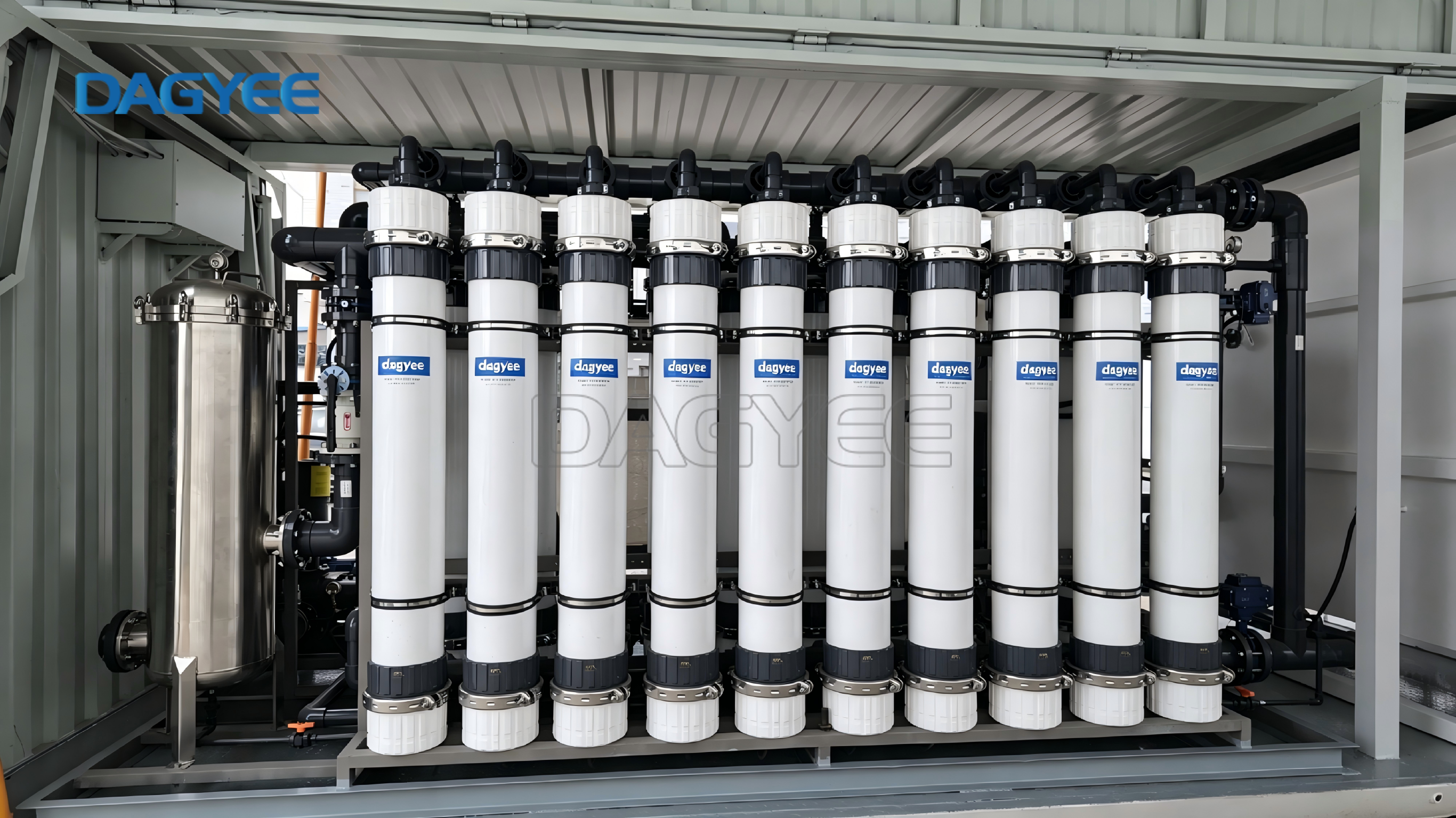
One of the advantages of the Compact UF System is its simplicity. Here's what you need to know:
What You Get
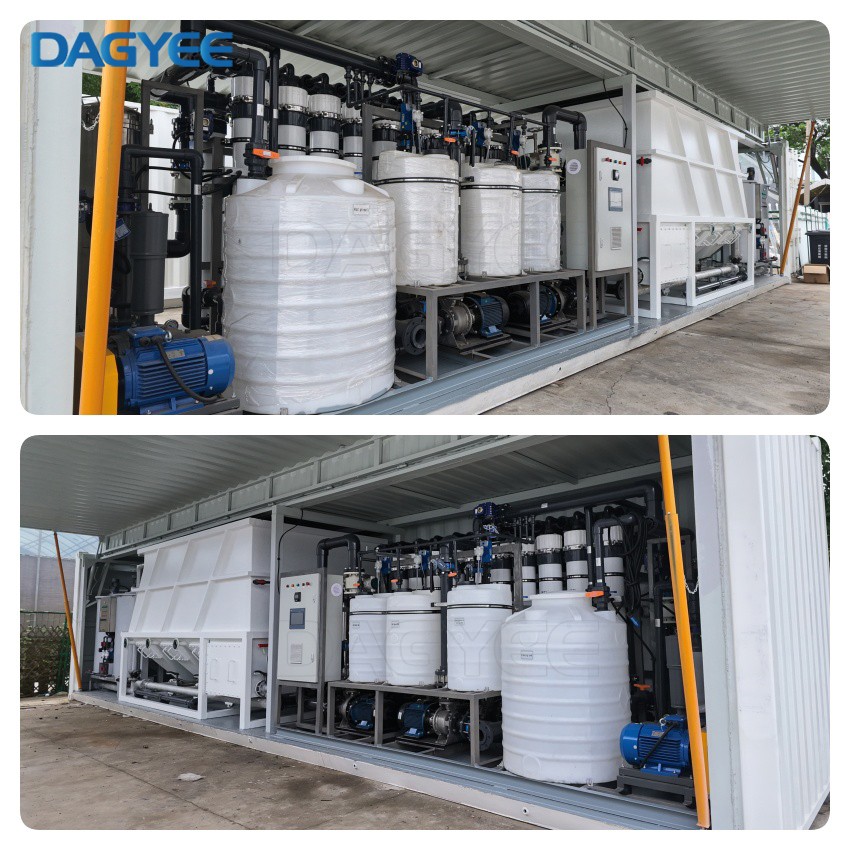
The system arrives fully assembled on a steel skid. All piping, the UF membrane modules, the feed pump, the control panel, and the instrumentation are already connected. The pre-filter is installed. The backwash system is plumbed. It's essentially plug-and-play.
Connection Requirements
Water Supply: Pipe connection to your feed water source (well, tank, municipal supply, or surface water)
Permeate Discharge: Pipe connection to your product water tank or distribution system
Reject / Drain Discharge: Pipe connection to drain or recycle line (small flow, typically 5-10% of feed)
Power: Single-phase electrical connection at the specified voltage
Space: Level floor area sufficient for the skid, plus 600 mm access around all sides for maintenance
Commissioning
A trained technician can commission the system in one day. The process includes flushing the membrane modules, checking all instrumentation, programming the control parameters, and verifying performance. Operator training takes about 2-3 hours.
Operator Requirements
No specialized technical background is needed. The system is designed so that a facilities manager, maintenance person, or even a trained operator can handle the daily tasks. The checklist is simple: check pressures, monitor flow rates, top up chemicals if applicable, and call for service if something looks unusual.
Contact Us
The DAGYEE Solar-Powered UF Water Treatment System brings safe drinking water to communities that need it most. No grid, no diesel, no complex infrastructure—just sunlight and membrane technology working together to deliver clean water.
Contact our team to discuss your off-grid water treatment project.