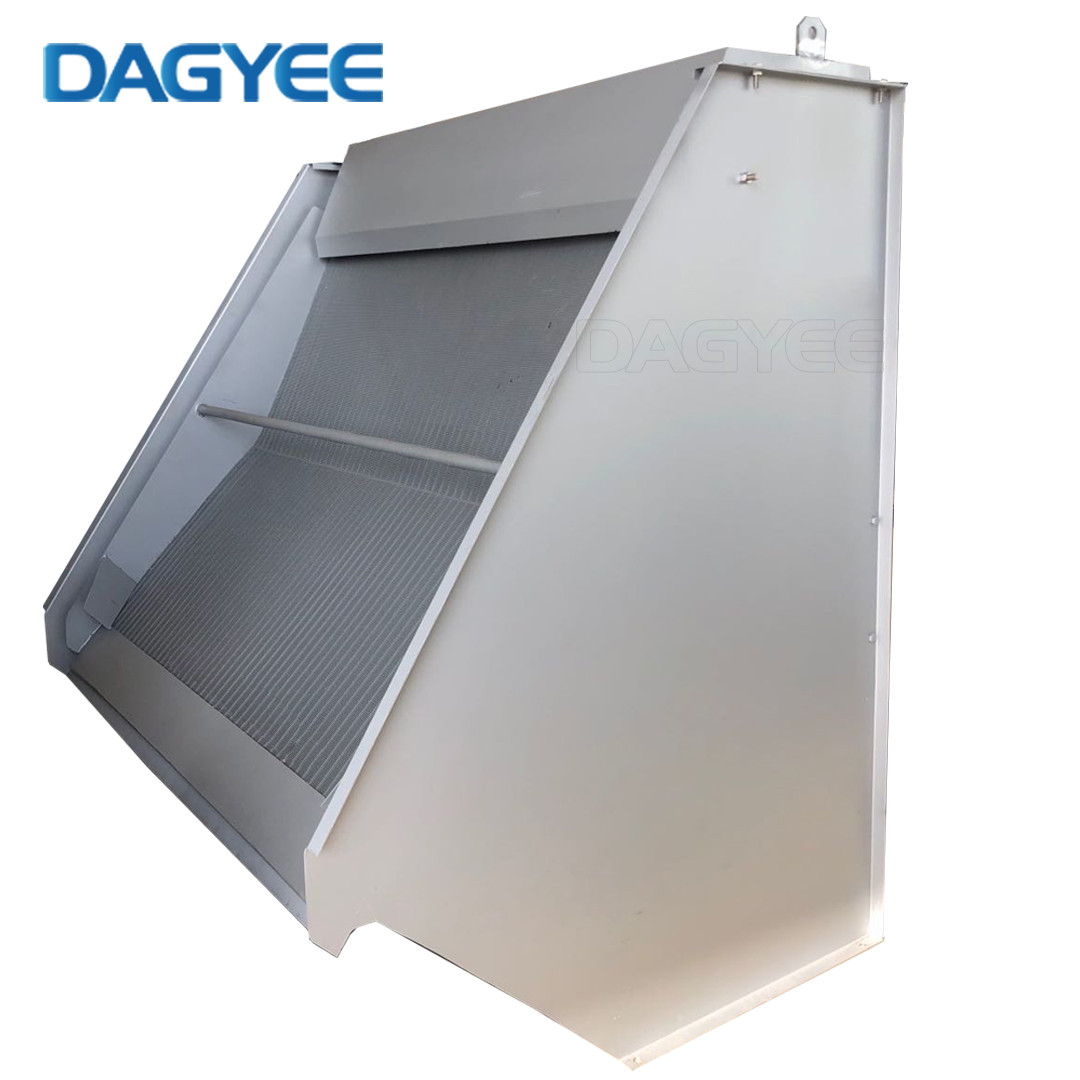

Static screen wastewater description
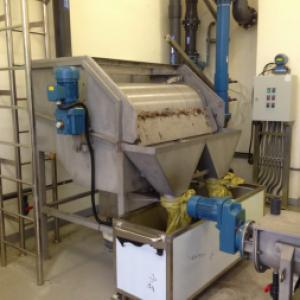
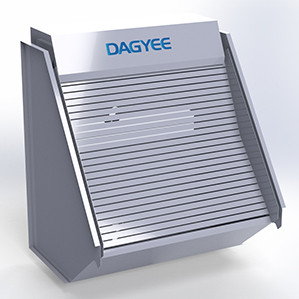
Static screens are often located in channels and tanks and consist of a flat or curved panel with closely spaced openings that trap solids while allowing water to pass through.
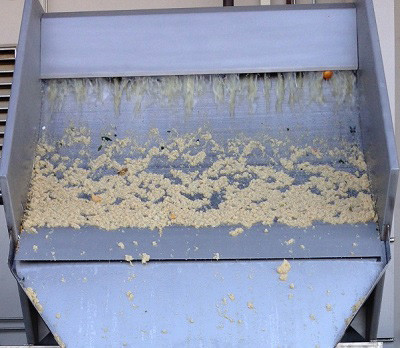
As wastewater flows through the screen, solid materials (sticks, leaves, etc.) are caught in the slots.
Eventually, the solid materials will build up on the screen’s surface, forming a mat or layer that filters finer particles.
When the layer of solid material becomes thick enough, it is removed manually or automatically using a spray bar, scraper, or conveyor.
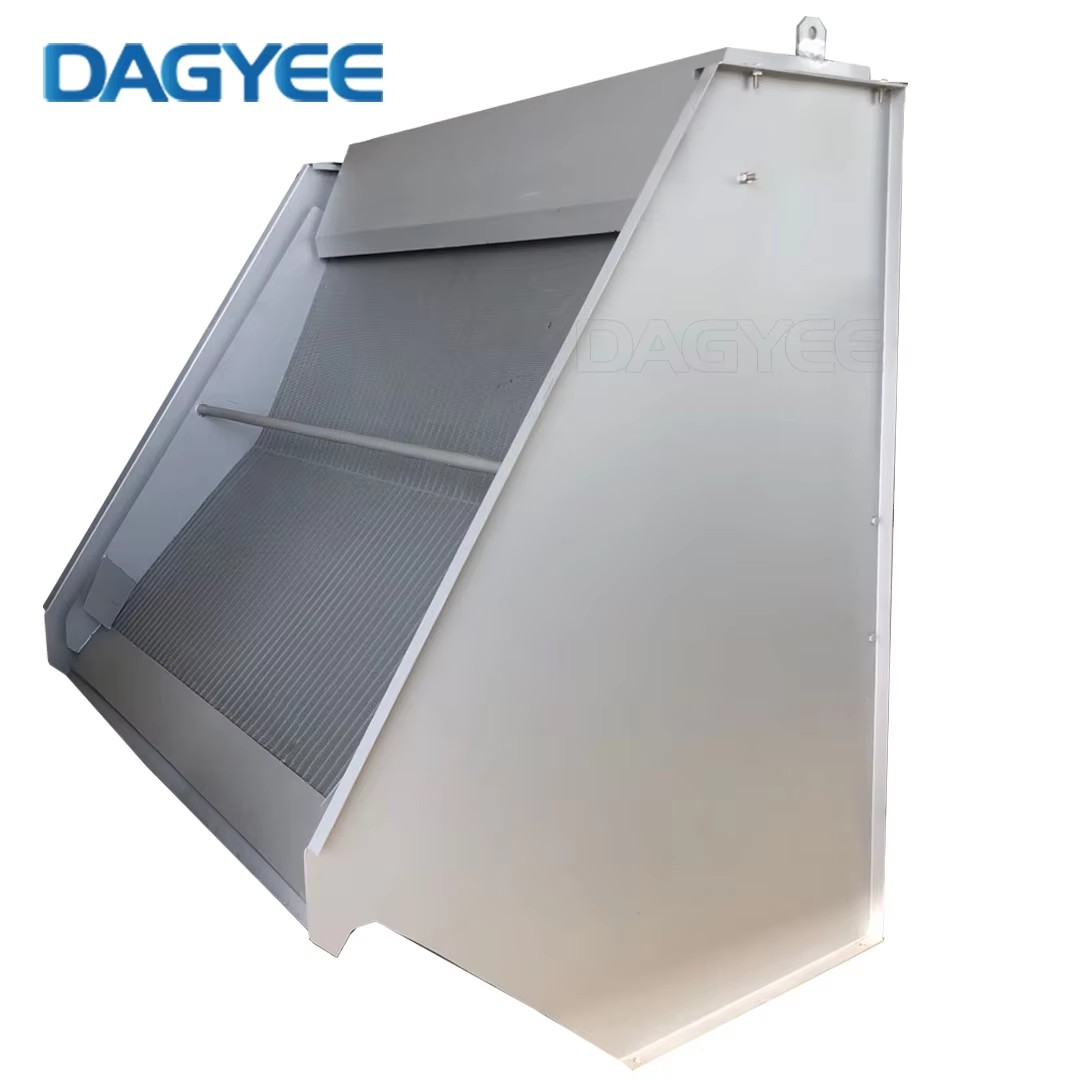
Static screen wastewater works
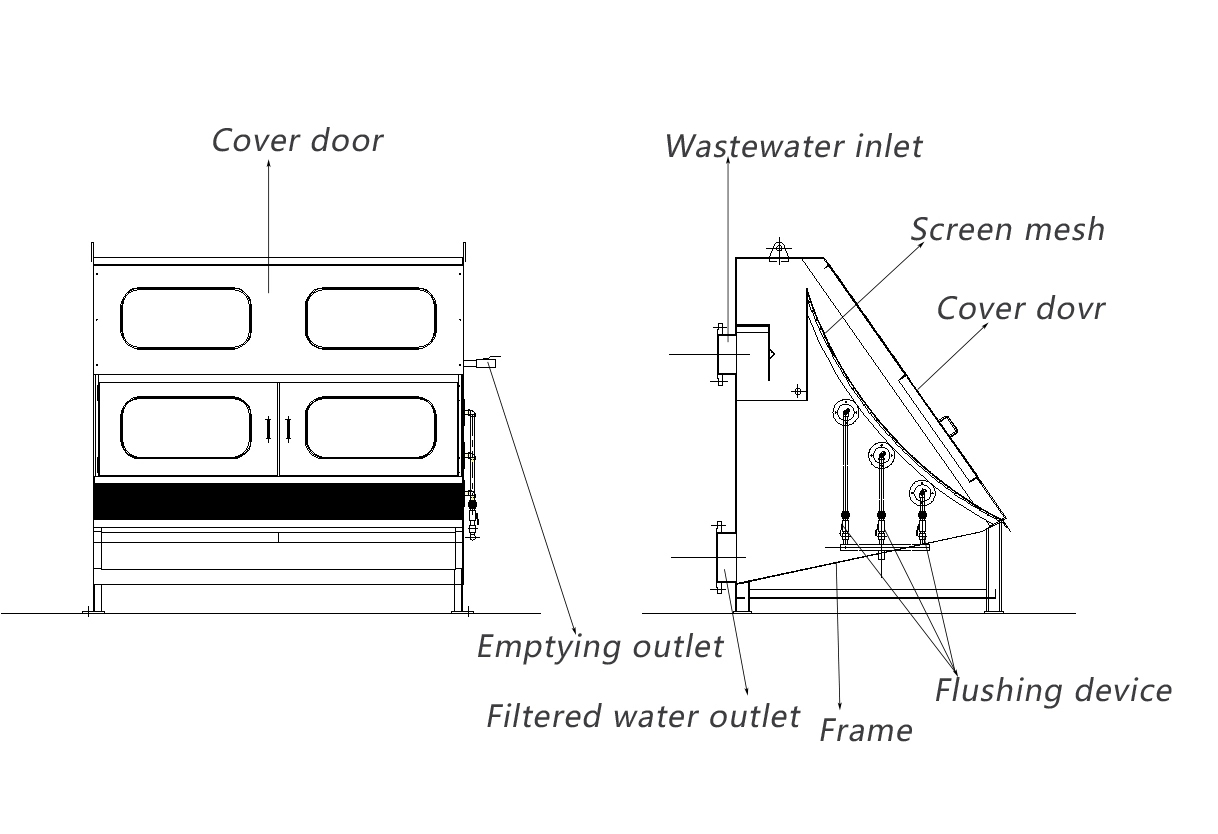
The main body of the Static Screen is a stainless steel arc or plane filter screen surface scientifically made of wedge wire steel rods.
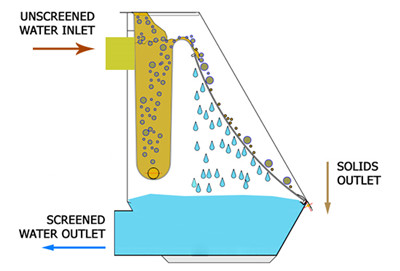
The wastewater to be treated is evenly distributed on the Static Screen surface through the overflow weir.
The drainage is smooth and not easy to block; the solid matter is retained, the filtered water flows out from the gap of the sieve plate, and at the same time, under the action of hydraulic force, the solid matter is pushed to the lower end of the sieve plate for discharge, so as to achieve the purpose of solid-liquid separation.
Static screen wastewater model
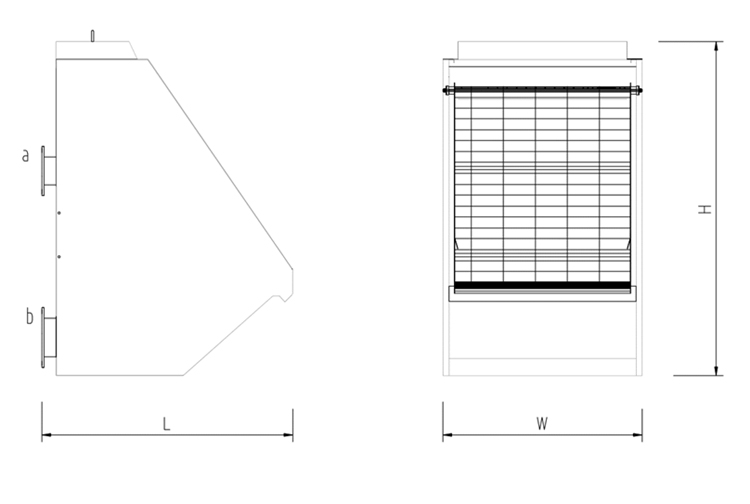

| HS Model |
Piping Connections Inlet(a) | Effluent(b) |
Physical Dimensions(m) L | W | H |
Weight (Kg) |
Capacities(m³/h) 0.5mm | 1mm | 1.5mm |
|---|---|---|---|---|
| HS-300 | 80 | 80 | 1.43 | 0.43 | 2 | 150 | 6 | 13 | 16 |
| HS-500 | 100 | 100 | 1.43 | 0.63 | 2 | 180 | 10 | 22 | 35 |
| HS-700 | 100 | 100 | 1.43 | 0.83 | 2 | 200 | 15 | 30 | 50 |
| HS-800 | 100 | 125 | 1.43 | 0.93 | 2 | 250 | 16 | 35 | 55 |
| HS-1000 | 150 | 150 | 1.43 | 1.13 | 2 | 280 | 20 | 45 | 70 |
| HS-1500 | 150 | 150 | 1.43 | 1.63 | 2 | 300 | 30 | 65 | 100 |
| HS-2000 | 200 | 200 | 1.43 | 2.13 | 2 | 400 | 40 | 75 | 120 |
Static screen wastewater advantage
What are the advantages of static screens in wastewater treatment? One of the first benefits is that they’re cost-effective.
They do not require electricity, and the purchase and installation costs are not out of reach, especially when you consider that they help make the rest of the wastewater treatment process a little easier to manage.
Static screens also require very little maintenance, so you won’t need to spend a lot of time training or hiring additional workers to keep the screens maintained.
They clean themselves with water spray or bar rakes that clear the screen’s bars as the system moves around with the water’s current.
Some are also self-reversing to clear any jams that may occur after a storm where large branches enter systems that combine wastewater and stormwater runoff.
Static screens do their job effectively.
The mesh screens capture a lot. They can remove small particles of solidified grease, corn skins that are harder for a body to digest, or bone particles from animals that get into a sewer and end up in wastewater.With these items removed before the remaining wastewater treatment measures take place, it eases wear and tear on equipment and gets the treatment process started faster.
With a static screen, they don’t need ideal conditions in order to work correctly. It doesn’t matter if flow rates increase or decrease or if temperatures are colder or hotter than usual.
Static screens will work effectively in any condition.
Because static screens come in a variety of sizes and formats, it’s easy to fit one into your existing system.
Some require very little headroom.
When you’re shopping for the best static screen, finding a variety of sizes ends up helping out if you have little space.
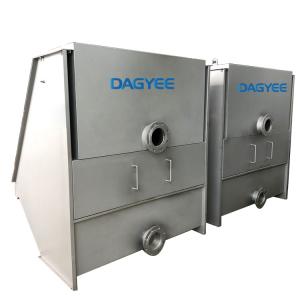
Static screen wastewater feature
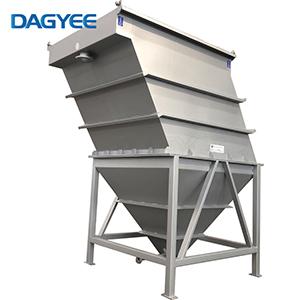
High Separation Efficiency: Effectively removes solids from liquids with a simple yet innovative inclined screen design.
No Moving Parts: Ensures minimal maintenance, reduced operational costs, and long-lasting performance.
Durable Construction: Built from corrosion-resistant materials such as stainless steel for demanding environments.
Customizable Screen Openings: Available in various mesh sizes to match specific particle separation requirements.
Easy Integration: Compact design allows seamless installation into existing processing lines.
Eco-Friendly Operation: Reduces water usage and waste volume by optimizing solid capture and liquid recovery.
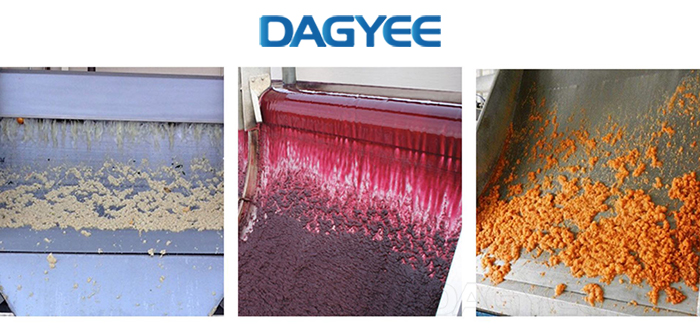
Static screen wastewater application
Municipal and industrial wastewater treatment
Food processing (fruit, vegetable, meat, and dairy)
Mining and mineral processing
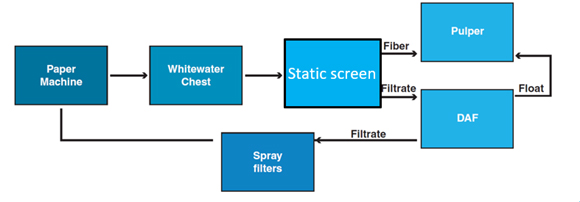
Pulp and paper screening
Agricultural and aquaculture water management
Why Choose Our Static Screen?
Our static sieve combines simplicity with performance, offering a cost-effective and energy-efficient alternative to mechanical screening systems. Ideal for both primary and fine screening, it delivers consistent results with negligible downtime.
Upgrade your separation process with a dependable, low-maintenance static screen – engineered for durability and designed for efficiency. Contact us today to discuss your application needs and customize your solution.
Supplier Information
We are a professional supplier specializing in high-efficiency Static Screen , offering customized engineering solutions, bench-scale testing services, and robust equipment designed for demanding industrial and municipal applications.
Contact us today for a free application review and mixer selection recommendation!