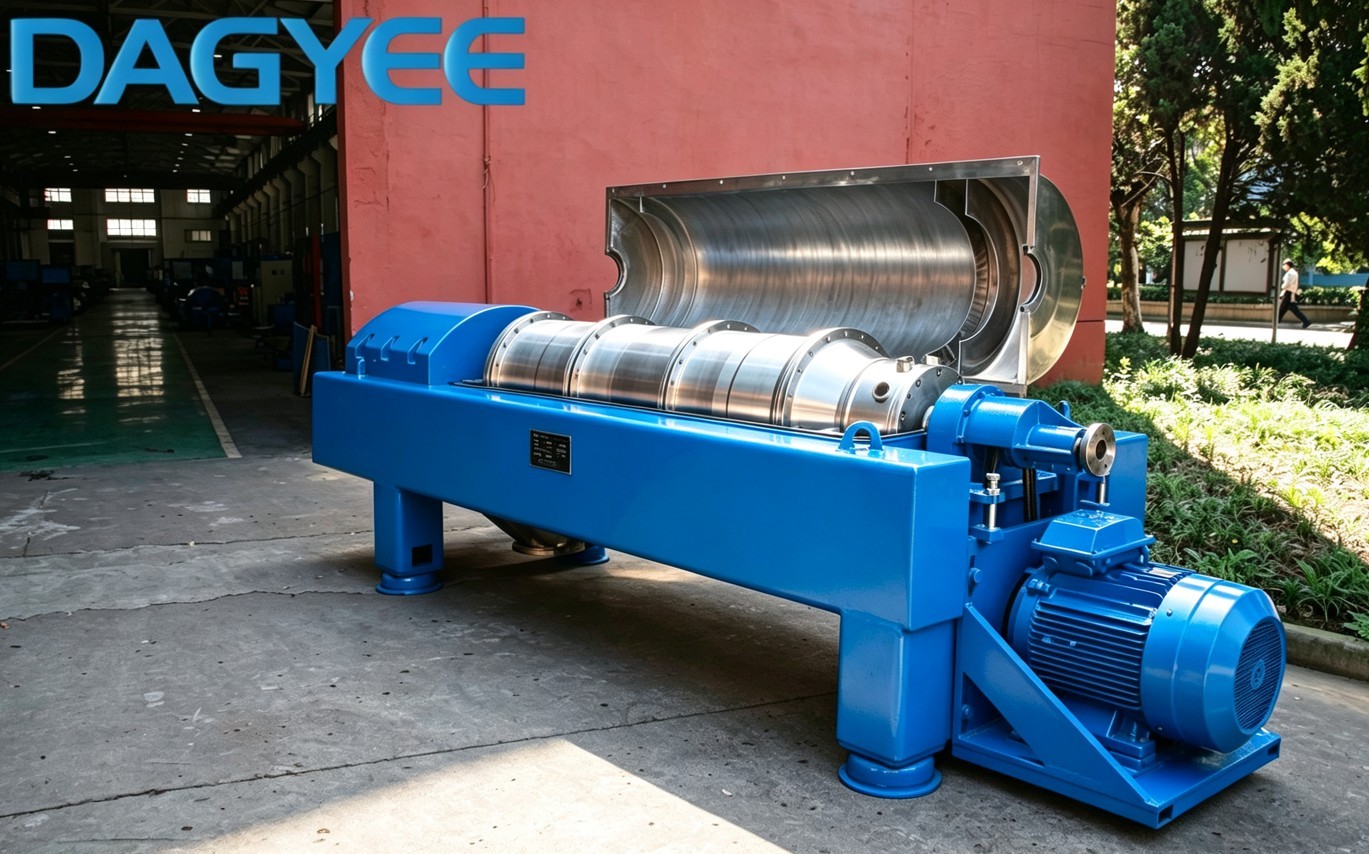
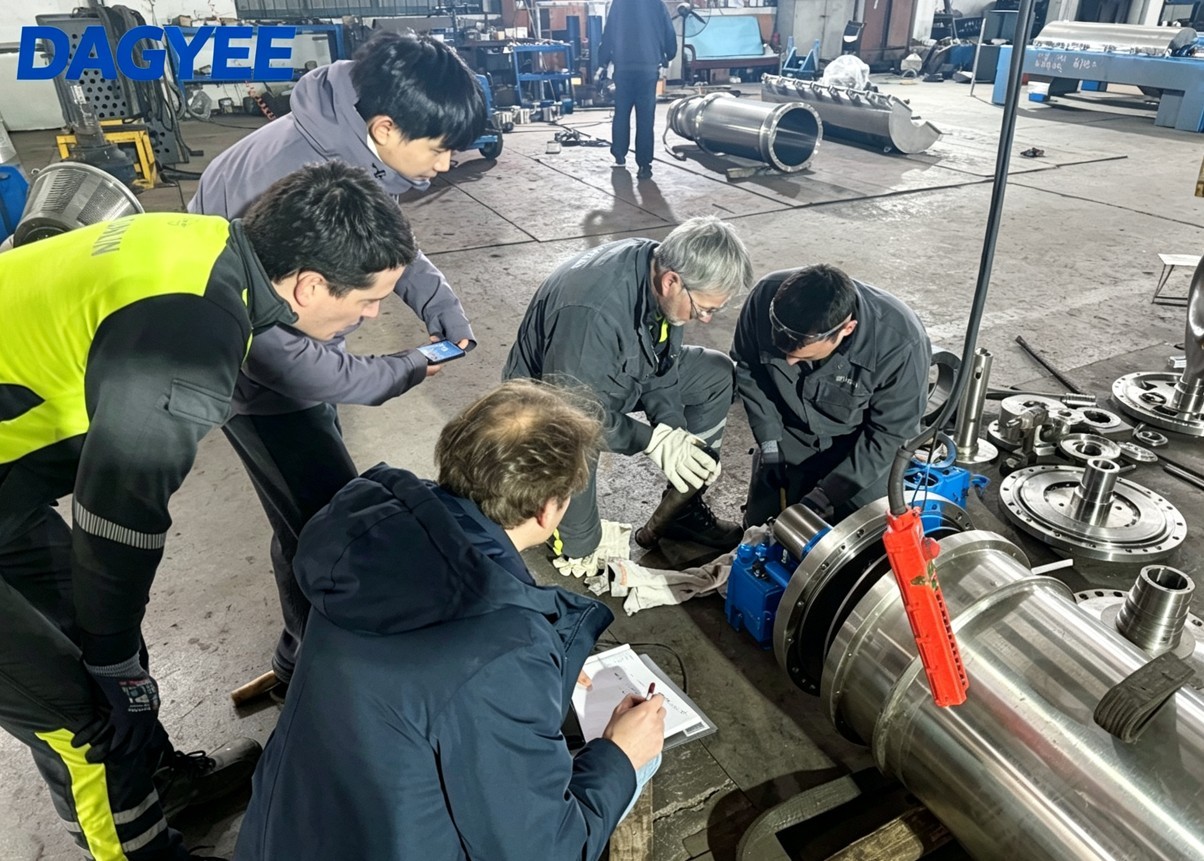
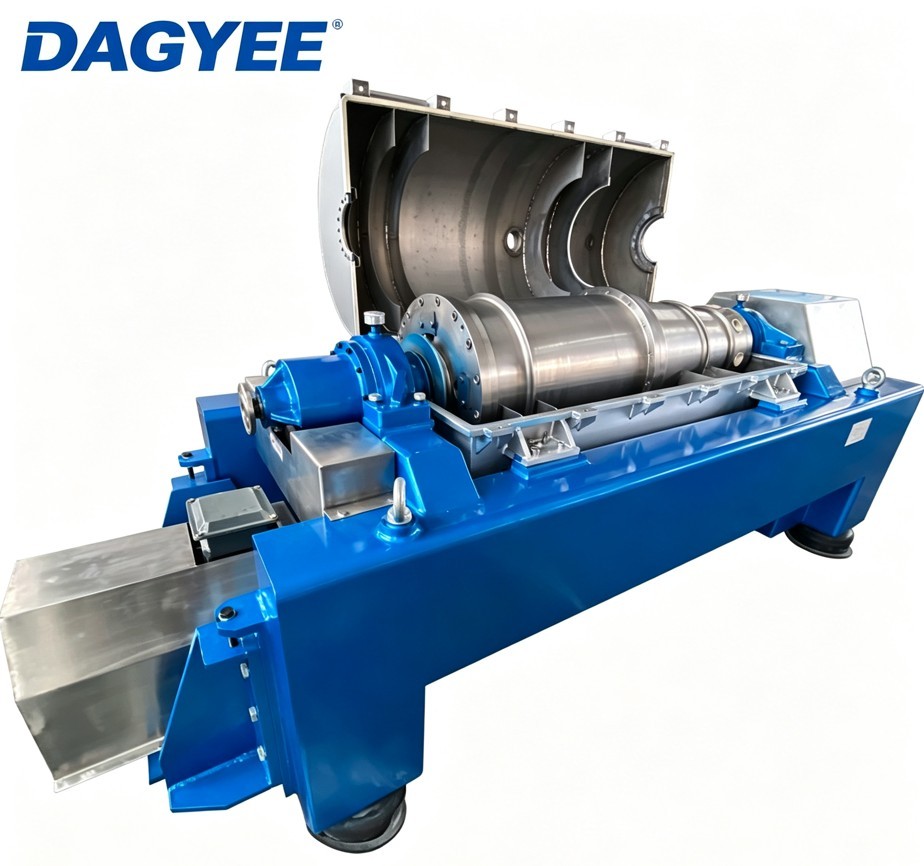
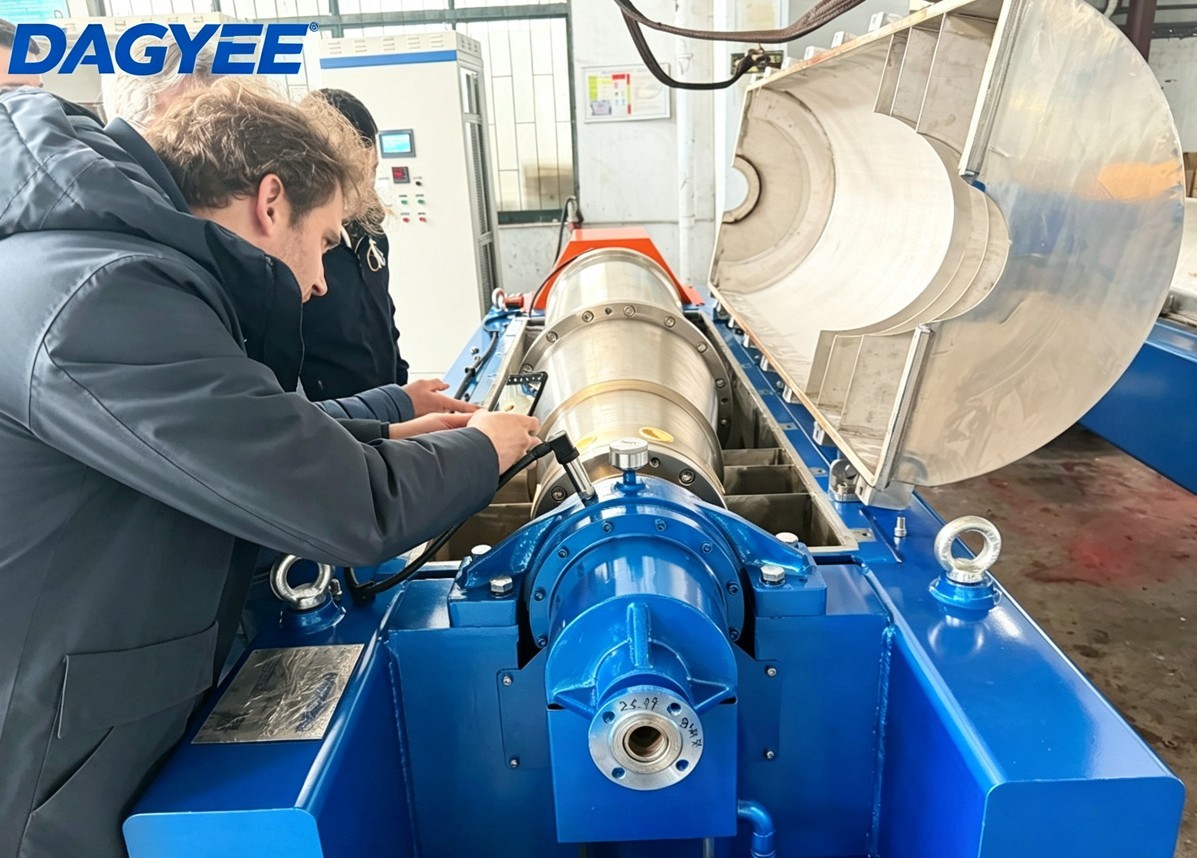
The DAGYEE Energy Saving Decanter Centrifuge represents a breakthrough in industrial solid-liquid separation technology. In an era where energy costs are rising and environmental regulations are tightening, we have engineered a centrifuge that delivers exceptional separation performance while consuming significantly less power.
By integrating advanced Variable Frequency Drive (VFD) technology, intelligent process control algorithms, and optimized mechanical design, our energy saving decanter centrifuge
achieves up to 30% reduction in energy consumption compared to conventional centrifuge designs—without compromising on throughput or separation quality.
Whether you are upgrading existing equipment or designing a new processing line, the DAGYEE
energy saving decanter centrifuge offers the perfect balance of performance, sustainability, and return on investment.
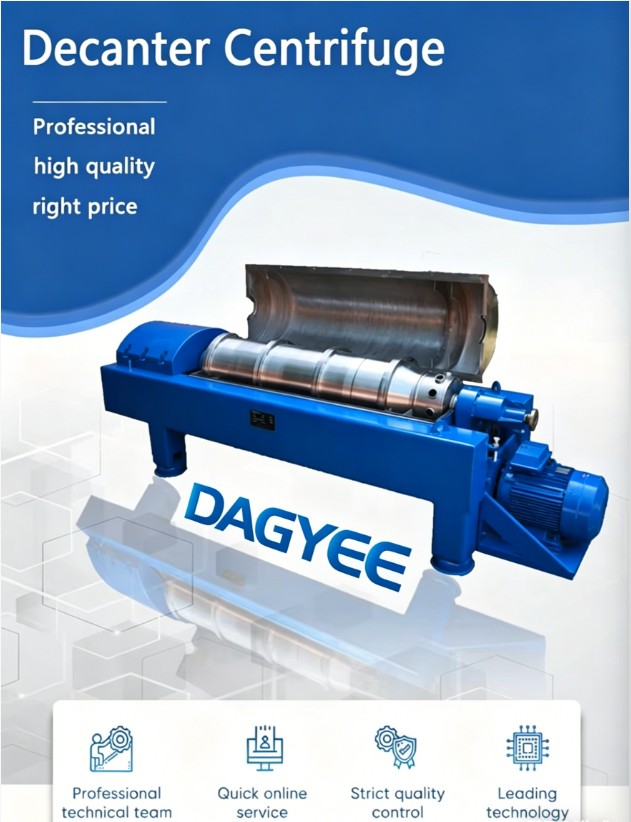
A three-phase decanter centrifuge is a specialized machine that simultaneously separates three components from a feed stream: oil, water, and solids. Unlike standard two-phase decanters that separate solids from a single liquid, three-phase decanters separate two immiscible liquids of different densities—typically oil and water—while also dewatering and discharging solids.
The DAGYEE three-phase decanter is designed for refinery oily wastewater treatment, produced water processing, crude oil sludge dewatering, and petrochemical applications. It handles streams with significant oil, water, and solids content, recovering valuable oil for reuse, producing clean water for discharge or recycling, and dewatering solids for disposal or further processing.
The machine operates continuously and automatically, with dual motor VFD drive providing precise control over bowl speed, differential speed, and liquid levels. ATEX-certified options are available for hazardous areas where flammable vapors may be present.
How does a decanter centrifuge work?
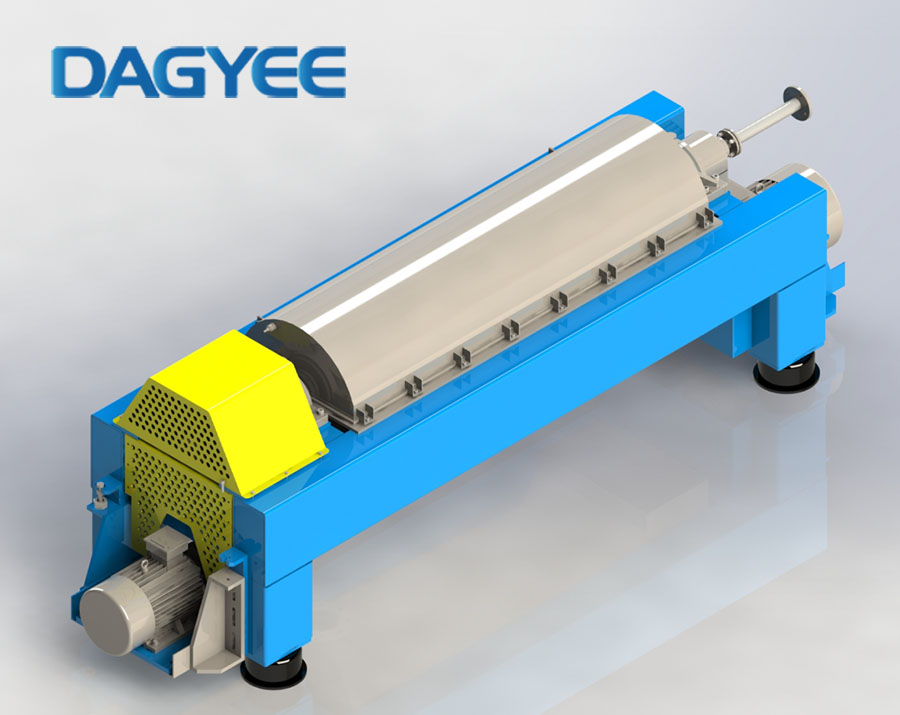
The Process Flow:
Step 1: Feed Entry
The oil-water-solids mixture enters the centrifuge through a stationary feed pipe, passing through the hollow shaft into the distribution chamber within the bowl.
Step 2: Centrifugal Separation
The rotating bowl generates centrifugal forces that separate the three phases by density. The densest phase—solids—is thrown outward against the bowl wall. The heavier liquid phase—water—forms a middle layer. The lightest phase—oil—forms the innermost layer closest to the center.
Step 3: Solids Conveying
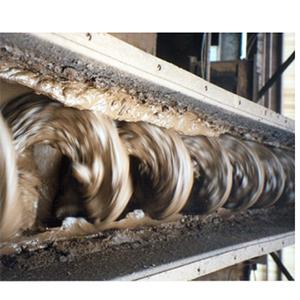
The screw conveyor, rotating at a slightly different speed, "ploughs" the settled solids along the bowl wall and pushes them up the conical beach section for discharge. The conveyor flights are protected with wear-resistant materials to handle abrasive particles.
Step 4: Oil and Water Discharge
The oil and water layers are discharged separately through adjustable discharge ports. The liquid levels (pond depths) can be adjusted to optimize the separation of the two liquid phases. Three-phase decanters use specialized weir plates or centripetal pumps to control the interface between oil and water.
Step 5: Continuous, Automatic Operation
The entire process runs continuously and automatically. PLC controls monitor key parameters and adjust the VFD-controlled motors to maintain optimal separation performance.
Technical Specifications
Decanter centrifuge specifications

| Model | Drum Diameter (mm) | Length (mm) | Maximum Speed (RPM) | Highest Separation Factor (g) | Mixture Capacity (m³/h) |
|---|---|---|---|---|---|
| LW250-900 | 250 | 900 | 5000 | 3500 | 0.5-3 |
| LW350-1500 | 350 | 1500 | 3800 | 2850 | 1-5 |
| LW400-1200 | 400 | 1200 | 3400 | 2581 | 1-8 |
| LW400-1600 | 400 | 1600 | 3400 | 2581 | 2-10 |
| LW400-1800 | 400 | 1800 | 3400 | 2581 | 2-12 |
| LW450-1800 | 450 | 1800 | 3200 | 2572 | 5-20 |
| LW450-2000 | 450 | 2000 | 3200 | 2572 | 5-25 |
| LW530-2280 | 530 | 2280 | 2800 | 2350 | 10-50 |
| LW600-2400 | 600 | 2400 | 2600 | 2265 | 15-65 |
| LW650-2600 | 650 | 2600 | 2400 | 2100 | 20-80 |
| LW720-2500 | 720 | 2500 | 2200 | 1950 | 25-90 |
| LW800-2560 | 800 | 2560 | 2000 | 1800 | 30-100 |
| LW800-3200 | 800 | 3200 | 2000 | 1800 | 30-110 |
| LW900-3200 | 800 | 3200 | 1800 | 1650 | 30-150 |

Decanter centrifuge key features
Simultaneous Three-Phase Separation
The unique bowl and conveyor design separates oil, water, and solids in a single continuous process. Adjustable liquid discharge ports allow precise control of oil-water separation.
Dual Motor with VFD Drive
Two motors with variable frequency drives provide independent control of bowl speed and differential speed. This allows optimization for different feed conditions and separation requirements.
Energy Recovery
Advanced energy-recovery weir plates (Varipond C) reduce energy consumption by up to 30% compared to conventional centripetal pump designs.
Corrosion and Wear Resistance
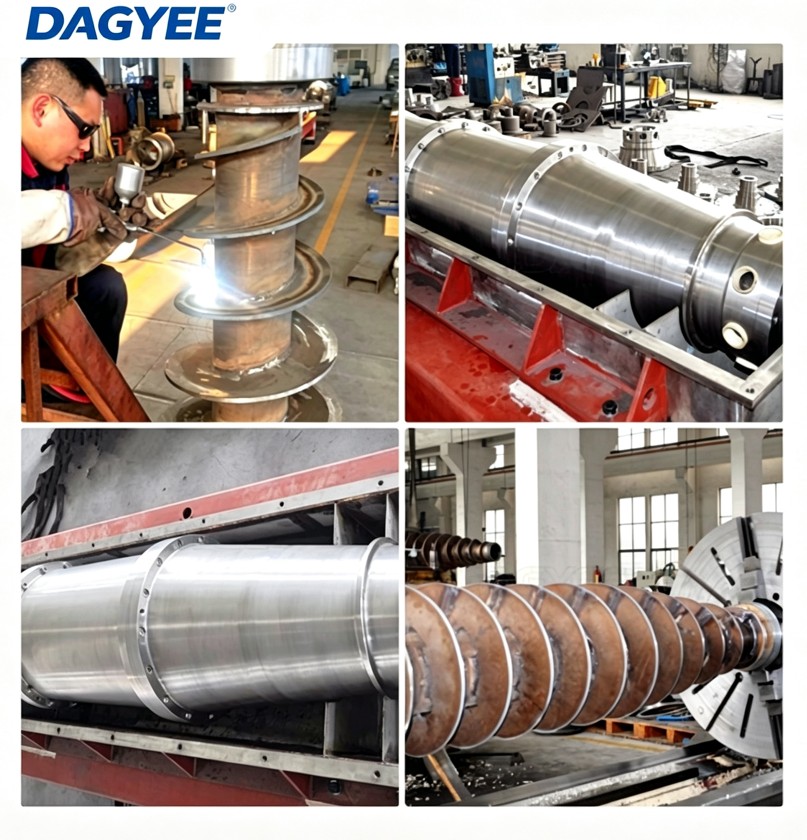
All wetted parts are constructed from Duplex stainless steel or Hastelloy for high corrosion resistance in aggressive hydrocarbon streams. Wear protection—tungsten carbide hardfacing and ceramic liners—extends service life in abrasive applications.
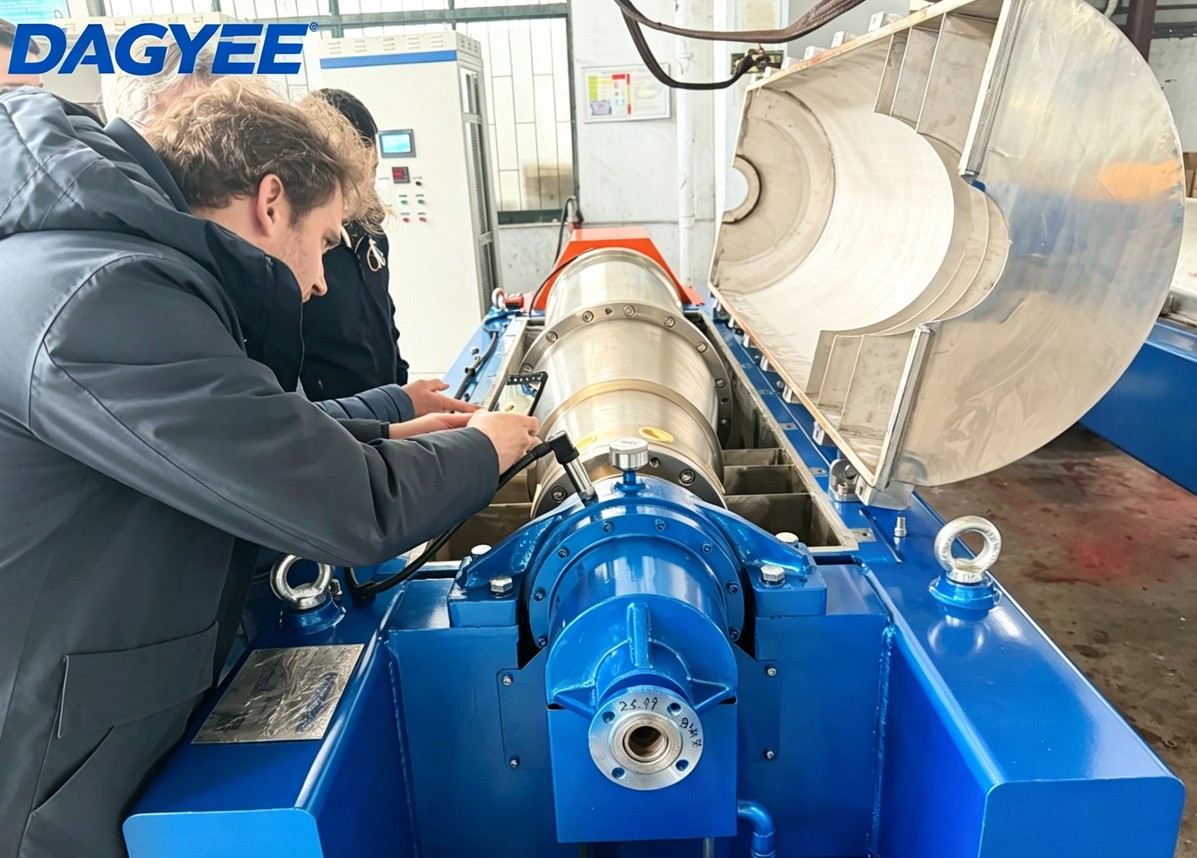
ATEX Certification
Explosion-proof options are available for hazardous areas, with nitrogen blanketing systems for added safety.
Nitrogen Inerting
ATEX-compliant nitrogen blanketing systems eliminate explosive atmospheres during operation, ensuring safety in flammable environments.
Enclosed, Odor-Free Operation
The decanter operates with a fully enclosed casing, preventing fugitive emissions, containing odors, and eliminating splashing.
PLC Automation
Siemens PLC controls with HMI touch screen provide automated operation, real-time monitoring, alarm management, and remote SCADA connectivity.
IoT Connectivity
IoT-ready control systems enable real-time condition monitoring and remote support, increasing machine availability and enabling predictive maintenance.

Applications
Refinery Oily Wastewater Treatment
Refineries generate large volumes of oily wastewater from desalters, tank bottoms, and process operations. Three-phase decanters separate oil, water, and solids in one continuous process, recovering oil for processing and producing clean water for reuse.
Produced Water Treatment
Oil and gas extraction produces large volumes of produced water containing oil, suspended solids, and dissolved salts. Three-phase decanters efficiently separate these components, meeting environmental discharge standards.
Crude Oil Sludge Dewatering
Crude oil storage tanks accumulate sludge containing oil, water, and solids. Three-phase decanters recover oil from sludge, separate water, and dewater the solids for disposal.
API Separator Sludge Treatment
API separators remove free oil from refinery wastewater but produce sludge containing oil, water, and solids. Three-phase decanters process this sludge, recovering oil and reducing disposal volumes.
Drilling Cuttings Treatment
Decanter centrifuges are used to recover drilling fluids from cuttings, reducing waste volume and recovering valuable mud.
Three-Phase Chemical Separations
Separation of immiscible liquid phases with solids in chemical and petrochemical processes.
Why choose the DAGYEE decanter centrifuge?
| Feature | Customer Value |
|---|---|
| Continuous Operation | 24/7 dewatering without downtime for discharge |
| High Throughput | Single unit handles up to 100 m³/h |
| Energy Efficient | Dual motor VFD with energy recovery reduces power consumption |
| Automatic Operation | PLC controls minimize operator attention |
| High Cake Dryness | Stable 18-28% DS reduces disposal costs |
| Low Polymer Consumption | Optimized design reduces chemical usage |
| Wear Protection | Extended service life in abrasive applications |
| Enclosed Operation | Odor control, safe, clean environment |
| Flexible Configuration | 2-phase or 3-phase separation options |
Proven in Diverse Applications
Our energy saving technology has been validated across multiple industries:
"Switching to DAGYEE energy saving decanter centrifuges reduced our electricity consumption by 27% while actually improving our cake dryness by 2%. The payback period was just 14 months."
— Plant Manager, Municipal Wastewater Treatment Facility, Germany
*"We operate 24/7, so energy costs are a major concern. The DAGYEE VFD-controlled centrifuges have cut our power bills significantly, and the remote monitoring feature gives us peace of mind."*
— Operations Director, Chemical Processing Plant, USA
Contact Us
The DAGYEE Three-Phase Decanter Centrifuge delivers simultaneous separation of oil, water, and solids for refinery and petrochemical applications. With continuous operation, oil recovery capability, and ATEX-certified options, it helps processors reduce waste, recover valuable hydrocarbons, and meet environmental compliance standards.
Contact our team for a free consultation and customized centrifuge selection for your three-phase separation application.