Reduce DAF Operating Costs: 5 Practical Tips to Save Chemicals and Electricity
DAF Running Costs Too High? 5 Ways to Cut Chemicals and Energy Bills
Introduction: Equipment You Can Afford to Buy, But Can You Afford to Run?
My answer: The equipment is fine. But you're running it wrong.
When people buy a DAF system, everyone compares the purchase price. Almost no one thinks about what it costs to run for a year. Then the bills come — electricity, chemicals — and suddenly you're looking at tens of thousands of dollars a year.
Here's the thing: most of that money can be saved. Not by running less, but by running smarter.
This article shares five practical ways to lower your DAF operating costs. No complicated theories. Just things you can try in your own plant starting tomorrow.
Part 1: What Does Your DAF Actually Cost?
| Cost Component | Share | What's Included |
|---|---|---|
| Electricity | 30-40% | Air saturator pump, recycle pump, skimmer, chemical dosing pumps |
| Chemicals | 40-50% | PAC, PAM, coagulants, flocculants |
| Sludge Disposal | 10-20% | Hauling and disposal of floated sludge |
| Labor & Maintenance | 5-10% | Daily checks, cleaning, wear parts |
The five tips below will help you cut those costs without sacrificing treatment quality.
Tip 1: Set the Right Air Saturator Pressure — 4-6 bar Is the Sweet Spot
Air saturator pressure is the heart of DAF performance. Too low, and you don't get enough bubbles. Too high, and you waste electricity while creating bubbles that are too large.
The Sweet Spot: 4-6 bar
| Pressure | Problem |
|---|---|
| Below 4 bar | Insufficient bubbles, poor removal |
| 4-6 bar | Ideal range — enough bubbles, efficient energy use |
| Above 6 bar | Larger bubbles, higher energy consumption, minimal improvement |
How to Adjust:
• Check your pressure gauge. If it's outside 4-6 bar, adjust it• If you don't have a pressure gauge, have one installed — it's a small investment
• Different wastewater may need different pressure. Adjust when water quality changes
Dropping pressure from 7 bar to 5 bar cuts energy consumption by 20-30%. Over a year, that's thousands of dollars saved.
Tip 2: Stop Guessing with Chemicals — Run a Jar Test
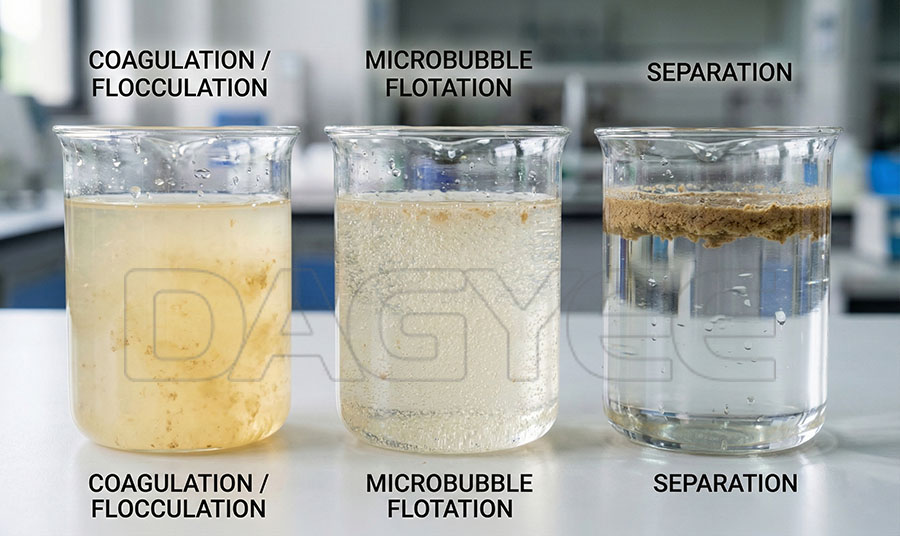
This is the most overlooked opportunity. Many plants add chemicals by guesswork — more when the water looks dirty, less when it looks clear. The result is either waste or inconsistent performance.
Take a liter of your wastewater. Add different amounts of PAC and PAM. See which combination gives you the fastest settling and the clearest water. It takes half a day, and the savings last all year.
| Chemical | Common Mistake | Recommendation |
|---|---|---|
| PAC (Coagulant) | Adding too much can hurt performance | Jar test to find optimal dosage |
| PAM (Flocculant) | Overdosing creates loose, weak flocs | Jar test to find optimal dosage |
Real Example: A food processor was spending over $1,000 a month on chemicals. We ran a jar test, dropped PAC from 150 ppm to 80 ppm, PAM from 5 ppm to 3 ppm. Treatment results stayed the same. Chemical bill dropped by nearly a third.
Chemicals are often 40-50% of DAF operating costs. Optimizing dosage can cut 20-40% of that. For a plant spending $15,000 a year on chemicals, that's $3,000 to $6,000 saved annually.
Tip 3: Set Recycle Ratio at 30-50% — Bigger Isn't Better
Common Myth: Higher recycle ratio means more bubbles, which means better performance.
Reality: Once recycle ratio exceeds 50%, you get diminishing returns. Performance improvements become marginal, but electricity costs keep climbing.
| Wastewater Type | Recommended Recycle Ratio |
|---|---|
| Typical industrial wastewater | 30-40% |
| High-strength (high oil, high TSS) | 40-50% |
| Low-strength (clean water, cooling water) | 20-30% |
How to Adjust:
• If no VFD, you can throttle the return valve (but don't close it too much — you can damage the pump)
Dropping recycle ratio from 60% to 40% cuts recycle pump energy use by one-third. On a 7.5 kW pump, that's $1,000-$2,000 a year depending on your electricity rate.
Tip 4: Find the Right Skimming Frequency — More Isn't Better
Too Frequent:
• Float is skimmed before it can thicken, resulting in higher moisture content and higher disposal costs
• More wear and tear on the drive
• Thick float can start to sink back down
• Skimmer may get overloaded or jam
The Sweet Spot: Skim when float thickness reaches 3-5 cm
• Watch the float layer — when it's 3-5 cm thick, run the skimmer
• Use a timer: for example, run for 1 minute every 30 minutes
• Adjust frequency based on solids loading
Dropping float moisture content from 95% to 92% cuts sludge volume by nearly half. At $100 per ton disposal, a plant producing 10 tons a month could save $6,000 a year.
Tip 5: Stop Your Saturator from "Gasping"
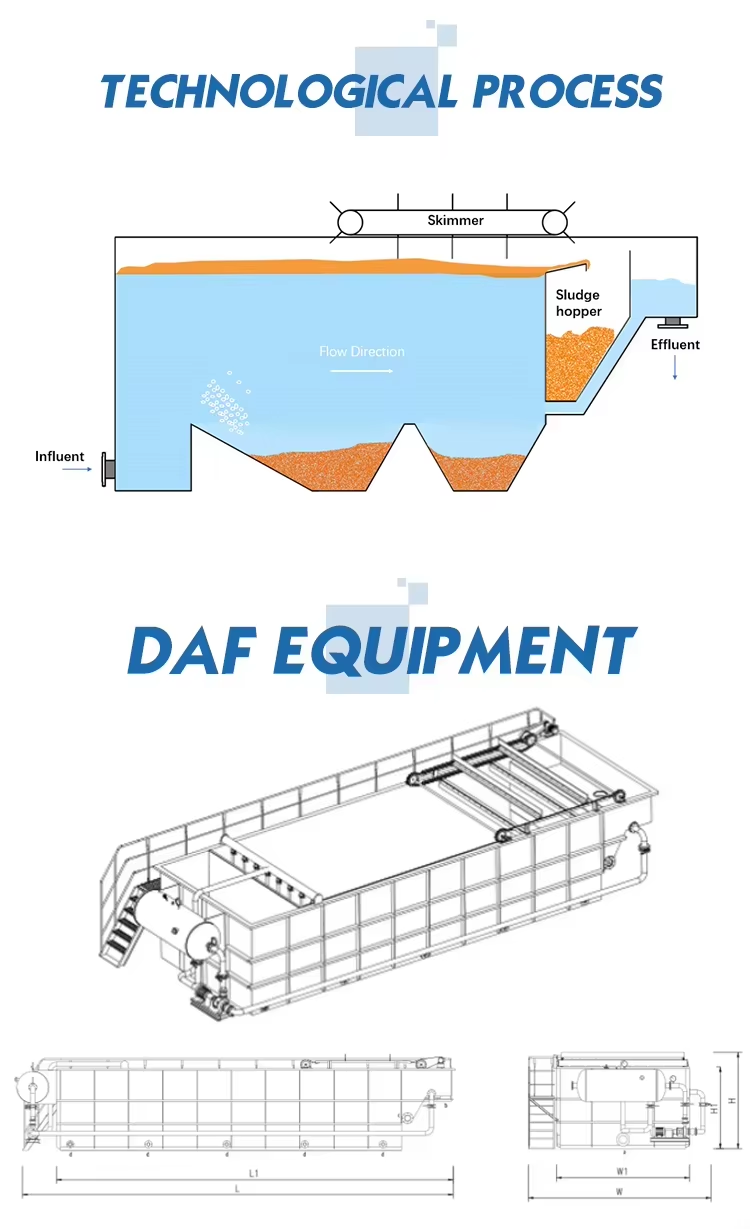
The saturator is the heart of the DAF system. When it's not working right — unstable water level, fluctuating pressure, pump cycling on and off — it's like a heart with arrhythmia. It wastes energy and shortens equipment life.
Common Problems and Fixes:
| Problem | Likely Cause | Fix |
|---|---|---|
| Unstable water level | Level control malfunction | Check level sensor and control valve |
| Pressure fluctuation | Clogged release valve or pump issue | Clean release valve, check pump |
| Pump short-cycling | Pressure switch set incorrectly | Adjust pressure switch settings |
| Clogged release valve | Poor upstream screening | Clean release valve, install or upgrade fine screen |
A "gasping" saturator can use 20-30% more energy than one running properly. Plus, you're looking at higher repair costs and more frequent breakdowns.
Bottom Line: Fix small problems when they appear. A $50 part replaced today could save thousands in electricity and repairs over the next year.
Why DAGYEE DAF Systems Are Built for Efficiency
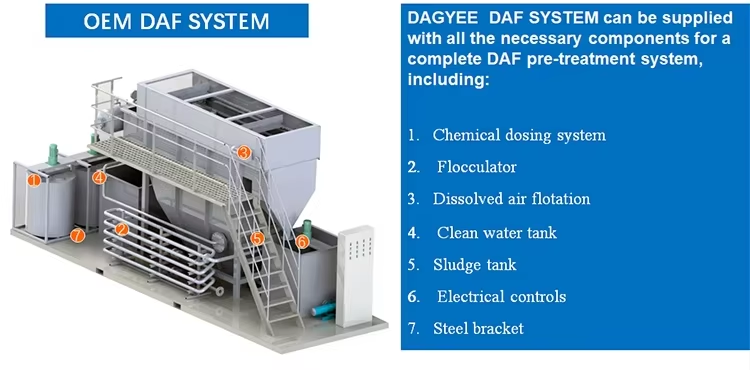
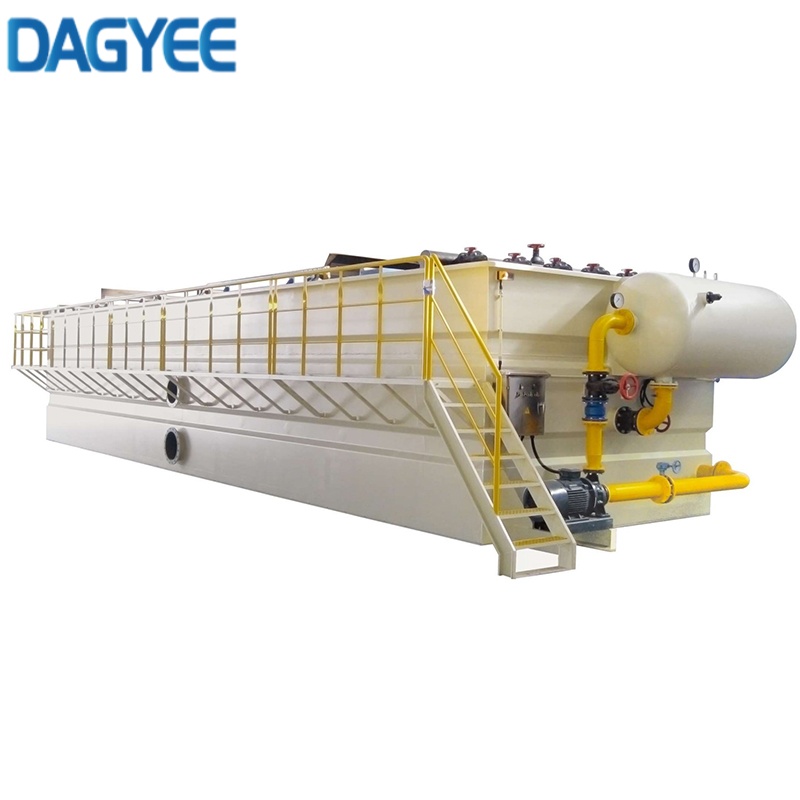
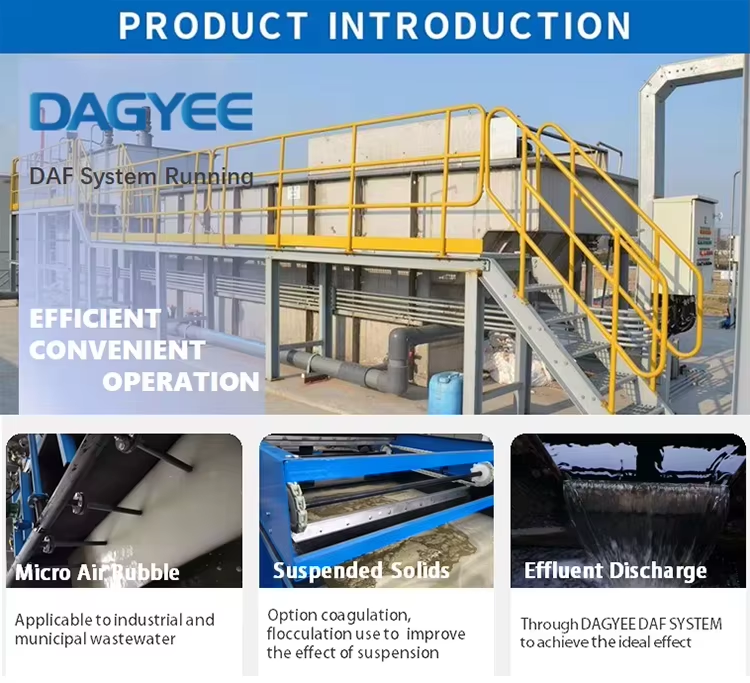
DAGYEE has been designing and building DAF systems for over 20 years. We've learned what works and what doesn't. Here's what sets our equipment apart:
| Feature | How It Helps You Save |
|---|---|
| High-efficiency saturator | Delivers optimal bubble size (30-50μm) with less energy. Our saturator design maintains stable pressure without constant pump cycling. |
| VFD-ready pumps | Standard compatibility with variable frequency drives lets you fine-tune flow rates to match actual load, not peak design. |
| Smart skimmer control | PLC-based skimmer operation with adjustable timing prevents over-skimming and reduces sludge moisture content. |
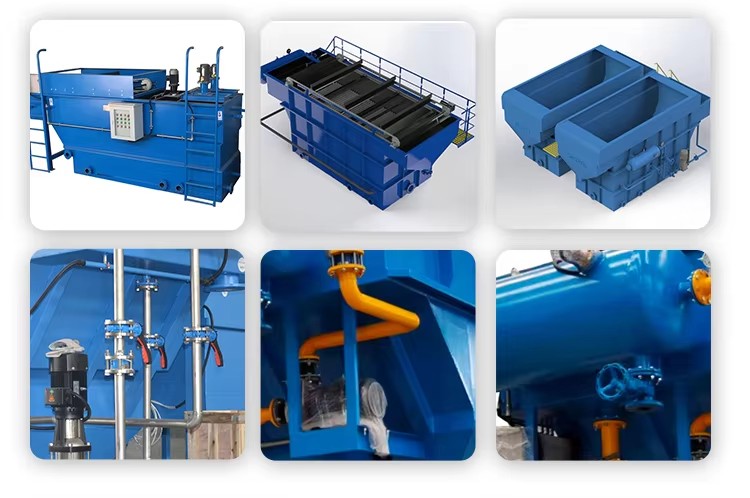
| Precision chemical dosing | Our systems include accurate metering pumps and mixing tanks designed for optimal polymer activation, so you use less chemical to get the same result. |
| Corrosion-resistant construction | SUS304 / SUS316L stainless steel means no painting, no peeling, no hidden rust. Your DAF stays efficient for decades. |
DAF systems don't run in laboratories. They run in factories with variable flows, changing loads, and operators who have other things to do. We design ours to handle that.
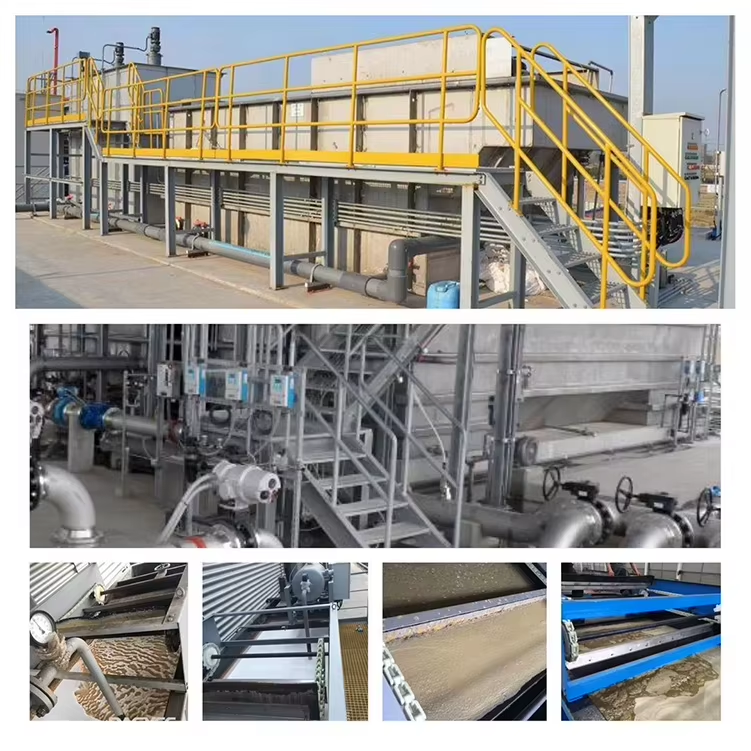
• Easy access: Everything you need to check or clean is right where you can reach it
• Clear documentation: We provide startup guides, troubleshooting flowcharts, and maintenance schedules that actual operators can understand
• Remote monitoring ready: PLC systems with optional connectivity let you check performance without walking out to the tank
DAGYEE DAF Technical Specifications
| Model | Flow Rate (m³/h) | Saturator Pressure (bar) | Motor Power (kW) | Dimensions (mm) | Typical Applications |
|---|---|---|---|---|---|
| DAF-5 | 1-5 | 4-6 | 1.5 | 2000×1500×1800 | Labs, small restaurants |
| DAF-10 | 5-10 | 4-6 | 2.2 | 3000×1800×2000 | Small food plants, slaughterhouses |
| DAF-20 | 10-20 | 4-6 | 3.0 | 4000×2000×2200 | Medium food plants, farms |
| DAF-30 | 20-30 | 4-6 | 4.0 | 4500×2200×2400 | Medium slaughterhouses, chemical |
| DAF-50 | 30-50 | 4-6 | 5.5 | 5500×2500×2600 | Large food plants, municipal |
| DAF-80 | 50-80 | 4-6 | 7.5 | 6500×2800×2800 | Large municipal, industrial parks |
| DAF-100 | 80-100 | 4-6 | 11 | 7500×3000×3000 | Mega-scale projects |
Standard Inclusions:
• PLC control panel with HMI touchscreen
• Air saturator with pressure gauge and safety valves
• Recycle pump with inlet strainer
• Skimmer drive and mechanism
• Chemical mixing tanks and metering pumps
• Interconnecting piping and valves
• Installation drawings and operation manual
Real Case Study: Before and After
| Item | Before Optimization | After Optimization |
|---|---|---|
| Electricity | $1,800 | $1,350 |
| Chemicals | $1,200 | $750 |
| Sludge Disposal | $2,200 | $1,800 |
| Total | $5,200 / month | $3,900 / month |
Results
Monthly savings: $1,300 | Annual savings: $15,600
Investment: Almost nothing — just adjusting parameters, adding a level sensor, and replacing a few small parts. Total cost under $300.
Monthly savings: $1,300 | Annual savings: $15,600
Investment: Almost nothing — just adjusting parameters, adding a level sensor, and replacing a few small parts. Total cost under $300.
The plant manager said: "If I'd known it was this simple, I would have done it two years ago."
What Customers Say About DAGYEE DAF
"The energy savings alone paid for the upgrade. We replaced an old Dissolved air flotation unit with a DAGYEE system, and our monthly power bill dropped by nearly a third. The payback was faster than we expected." — Facilities Engineer, Industrial Laundry
"What I appreciate most is the support. When we had questions during startup, their engineer walked us through it on the phone. They didn't just sell us a box and disappear." — Operations Supervisor, Municipal WWTP
Conclusion: Saving Money Isn't About Running Less — It's About Running Smarter
The real savings come from using the right parameters and finding the right balance:
• Run a jar test, and chemical costs drop
• Optimize recycle ratio, and energy use drops
• Find the right skimming frequency, and disposal costs drop
• Fix saturator problems early, and repair costs drop
And if you're in the market for a new DAF, or thinking about upgrading your existing one, the same principles apply. Look for equipment that's built to run efficiently, not just to look good on a spec sheet. Look for saturators that hold pressure without constant pump cycling. Look for skimmers that don't overskim. Look for controls that let you fine-tune without a computer science degree.
That's what we build at DAGYEE.
How DAGYEE Can Help
| Service | Description |
|---|---|
| Free Operating Assessment | Analyze your existing DAF system's energy and chemical usage. We'll tell you what's working and what could be better. No obligation. |
| Jar Test Service | Run lab tests to find your optimal chemical dosage. We'll do the testing and send you the results with clear recommendations. |
| Parameter Optimization | Help you set the right pressure, recycle ratio, and skimming frequency for your specific wastewater. |
| System Upgrades | Provide high-efficiency saturators, automatic controls, and retrofits for older DAF systems. |
| New System Selection | Recommend the right DAF model for your specific application. We'll work with you to size it right — not too big, not too small. |
Is Your DAF System Costing Too Much?
Related News