Stop Overpaying: 5 Simple Ways to Cut Your Screening Costs by 30%
Static Screen: More Expensive Doesn't Mean Better — Pick the Right Specs and Save 30%People who waste money aren't buying cheap equipment. They're buying equipment that doesn't fit their needs.
After working with screening equipment for years, I've noticed something interesting. When most people pick a static screen, their first instinct is to go bigger and more expensive.
"Why?" I ask.
"Just in case," they say. "What if we expand production later?" "Expensive stuff must be better quality, right?"
Makes sense on the surface. But on the actual production line, that "good intention" often turns into wasted money.
Let me walk you through how to pick the right static screen — what's worth paying for and what's just throwing money away.
1. I've Seen Way Too Many Over-Specified Jobs
Here are a few real examples from my own site visits.
This plant only needed to process about 20 tons per hour. But they bought a huge static screen with stainless steel mesh, an automatic spray system, and a dual-motor vibrating feeder.
When I got there, I asked the operator how often they used the spray. He laughed. "Never. The sand is dry. Why would we?"
"Okay, how's the stainless steel mesh holding up?"
"Five years and hasn't worn out at all," he said.
"What about the dual-motor feeder?"
"We only run one motor. Never turned on the other."
So they paid extra for stainless steel mesh they didn't need, a spray system they never used, and a dual-motor feeder where half the capacity sat idle. Total waste: about $5,000.
This plant owner was convinced imported equipment was better. He paid 2.5 times the price of a domestic static screen.
When I followed up, I asked how it was performing. "Great," he said.
"How's it compare to the plant next door running a domestic unit?" I asked.
He thought for a minute. "About the same, I guess."
The plant next door saved enough money to buy two years' worth of spare parts and add a dust collection system. Which one made the smarter move?
This one was wild. The material was neutral — no corrosion at all. But the purchasing manager demanded 304 stainless steel for everything. The frame, the screen box, the covers, even the bolts.
I asked the technical lead, "Does your material have any corrosion issues?"
"No," he said. "Completely neutral."
"Then why all stainless?"
"Management wants it. Says it's safer."
That "safer" cost them an extra $3,000. A carbon steel unit with a good coating would have lasted 10 years with zero problems.
What do these examples tell us? The equipment wasn't bad. It just wasn't necessary.
2. You Might Be Looking at Cost All Wrong
But the total cost of a static screen has three parts:
• Purchase price — what you pay upfront. About 30-40% of the total.
• Operating cost — electricity, labor, things like that. About 20-30%.
• Maintenance cost — screen mesh replacement, spare parts, repairs, downtime losses. About 30-40%.
Table 1: 5-Year Total Cost Breakdown
| Cost Type | What's Included | % of Total (5 Years) |
|---|---|---|
| Purchase Price | Equipment, freight, installation | 30-40% |
| Operating Cost | Electricity, labor, auxiliary equipment | 20-30% |
| Maintenance Cost | Mesh, spare parts, repairs, downtime | 30-40% |
So the real way to save money isn't just beating down the upfront price. It's reducing the other two-thirds too.
Let me give you an example:
Machine A costs $3,000 upfront, but needs $700 in maintenance every year. Over 5 years, total cost is $6,500.
Machine B costs $4,000 upfront, but only needs $150 in maintenance every year. Over 5 years, total cost is $4,750.
The more expensive one actually saves you money. That's why you need to look at the big picture.
3. Five Key Specs That Affect Your Costs
People always worry about not having enough capacity. So they oversize. But every extra square meter of screening area adds $300-700 to the price.
Table 2: Screening Area Selection Guide
| Actual Throughput (tons/hour) | Coarse Screening | Medium Screening | Fine Screening | Common Oversizing | Extra Cost |
|---|---|---|---|---|---|
| <10 | 1-2㎡ | 2-3㎡ | 3-5㎡ | 5-6㎡ | $400-700 |
| 10-30 | 2-3㎡ | 3-5㎡ | 5-8㎡ | 8-10㎡ | $700-1,400 |
| 30-60 | 3-5㎡ | 5-8㎡ | 8-12㎡ | 12-15㎡ | $1,400-2,800 |
| 60-100 | 5-7㎡ | 8-12㎡ | 12-18㎡ | 20-25㎡ | $2,800-5,600 |
• Coarse screening (>5mm): 15-30 tons/hour per square meter
• Medium screening (1-5mm): 5-15 tons/hour per square meter
• Fine screening (<1mm): 2-8 tons/hour per square meter
Let's say you're processing 20 tons/hour with coarse screening. 20 divided by 20 equals 1 square meter. Add a 1.5x safety factor, and 1.5 square meters is plenty.
But some customers pick 4 square meters instead. That's an extra $1,100 for no reason. That money could buy 4 years' worth of spare screen mesh.
My advice: Pick 1.2 to 1.5 times your calculated need. Don't go over 2 times. That's just wasting money.
Spec 2: Screen Mesh Material — Expensive Doesn't Always Fit
Here's what different materials cost and how long they last:
• Carbon steel: $15-30 per square meter. Good for dry, non-corrosive, low-abrasion materials.
• Manganese steel: $40-70. Good for medium abrasion.
• Stainless steel 304: $70-110. Good for corrosive materials or food-grade applications.
• Polyurethane: $110-210. Good for high-abrasion materials — lasts 3-5 times longer than steel mesh.
How to choose — ask yourself three questions:
1. Is your material wet? Yes → don't use carbon steel (it rusts).
2. Is your material corrosive? Yes → use stainless steel.
3. Is your material highly abrasive? Yes → use polyurethane.
If your material is dry, non-corrosive, and low-abrasion, carbon steel is fine. No need to spend extra.
The angle controls how fast material flows. Smaller angle = slower flow = more screening time. Bigger angle = faster flow = higher capacity.
Adjustable angle costs $200-1,000 more than fixed angle. But here's the real question: will you ever adjust it?
I've tracked over 200 static screen customers. More than 85% set the angle once during installation and never touched it again.
If your production line handles just one material, a fixed angle is fine. Only go adjustable if you're constantly switching between different materials.
Quick reference:
• Fine or wet materials: 15-20 degrees
• Regular granular materials: 20-25 degrees
• Coarse or dry materials: 25-35 degrees
A lot of people immediately ask for a vibrating feeder. That's an extra $700-2,100. But often, a simple chute works just fine.
Here's my rule of thumb:
• Throughput below 10 tons/hour: direct dumping or a simple chute is plenty
• 10-50 tons/hour: add a feed box with baffles ($150-400) — works great
• Above 50 tons/hour: then consider a vibrating feeder
One customer stands out in my memory. He planned to spend $1,700 on a vibrating feeder. I went to his site and saw that the discharge from his crusher was 1.5 meters above the screen. Material was already spreading out naturally as it fell.
I suggested a simple chute instead. Cost him $40. Worked almost as well as the vibrating feeder. He was thrilled.
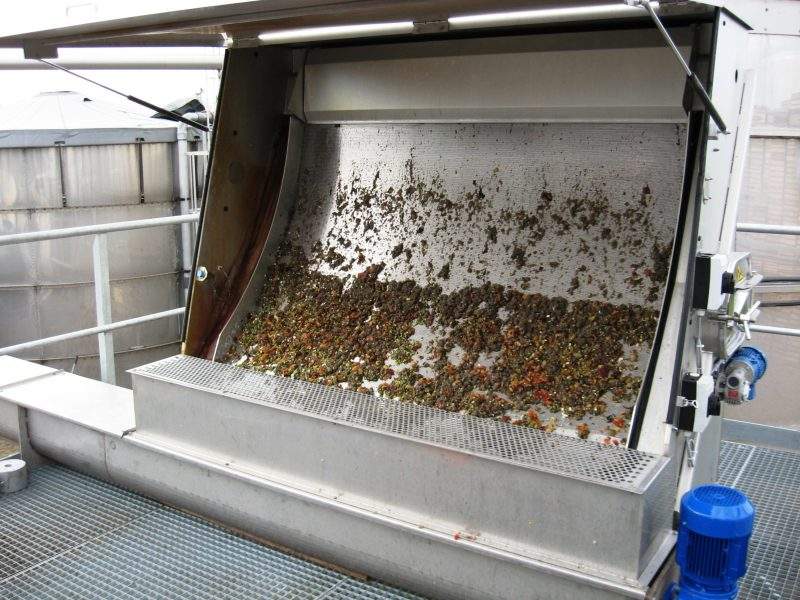
This is the biggest cost difference. A medium static screen (about 5 square meters):
• Carbon steel: $2,100-3,500
• Stainless steel 304: $4,200-7,000
More than double the price.
How to choose based on your environment:
• Dry, indoor, non-corrosive → carbon steel is fine
• Humid, outdoor, occasional moisture → carbon steel with coating — best value
• Corrosive or food-grade → stainless steel 304
• Strong acids, strong alkalis, or seawater → stainless steel 316
Here's a money-saving trick: mix and match.
Not every part needs to be stainless steel. Only parts that touch the material (screen mesh, screen surface, feed area) need corrosion protection. The support frame, covers, and ladders can be carbon steel.
This hybrid approach is 30-50% cheaper than all-stainless, with almost the same protection.
4. Real Case: Saved Over $7,000 in 5 Years
A building materials plant needed a static screen for dry manufactured sand. Throughput was 15 tons/hour. No corrosion. Low abrasion.
Their original plan (clearly over-specified):
8 square meter screening area (they only needed 1.5), stainless steel mesh, manual adjustable angle, vibrating feeder, full stainless steel construction. Total purchase price: $8,800.
The optimized plan I gave them:
4 square meter screening area (plenty for their needs), carbon steel mesh, fixed angle, chute feed (using the drop from upstream equipment), carbon steel with coating. Total purchase price: $3,400.
Savings upfront: $5,400.
Now let's look at 5-year total cost:
• Original plan: $8,800 purchase + $1,400 feeder electricity + $700 mesh and maintenance = about $11,000
• Optimized plan: $3,400 purchase + $0 feeder electricity + $500 mesh and maintenance = about $4,000
Total savings over 5 years: $7,000. Screening performance was exactly the same.
Tell me that money wasn't worth saving.
5. Four Principles to Help You Pick the Right Specs
Pick screening area at 1.2 to 1.5 times your calculated need — don't exceed 2 times. Go one grade above your actual requirement, not two. Only pick features you're certain you'll use.
Mesh wears fast? Use polyurethane, but carbon steel everywhere else. Feed area takes heavy impact? Add local wear plates, but standard steel everywhere else. This is called "graded specification" — putting money where it makes a difference.
A lot of people do this backwards. They decide "I want to spend $3,000 on a screen" and then look for something in that price range.
The right way: figure out "what material, how much throughput, what are the conditions" — then find the best match — then look at the price.
Low purchase price doesn't mean low total cost (could mean frequent mesh changes and breakdowns). High purchase price doesn't mean high total cost (could mean long life and low maintenance). Calculate 5-year total cost before you decide.
6. Quick Check: Is Your Configuration Over-Specified?
| Question | If "Yes" |
|---|---|
| Is your screening area more than 2x your actual need? | Choose a smaller model — save 30-50% |
| Did you choose stainless steel but material isn't corrosive? | Switch to carbon steel + coating — save 40-60% |
| Did you buy adjustable angle but haven't adjusted in a year? | Next time buy fixed angle — save $400-1,100 |
| Did you buy a vibrating feeder but throughput is below 20 tons/hour? | Switch to chute or feed box — save $700-1,400 |
| Did you spec full stainless but only the mesh contacts material? | Hybrid specification — save 30-50% |
| Did you choose an imported brand when domestic would work? | Consider domestic — save 50-70% |
Assessment Guide
0-1 "Yes" — Reasonable configuration. You're doing well.
2-3 "Yes" — Over-specified. Consider optimizing your next purchase.
4+ "Yes" — Seriously over-specified. Strongly recommend re-evaluation.
Assessment:
• 0-1 "Yes" → Reasonable configuration• 2-3 "Yes" → Over-specified — consider optimizing
• 4+ "Yes" → Seriously over-specified — strongly recommend re-evaluation
Wrapping Up
I'm not telling you to buy the cheapest screen out there. I'm telling you to buy what fits.
Carbon steel works? Don't buy stainless. Fixed angle works? Don't buy adjustable. Chute feed works? Don't buy a vibrating feeder. Smaller area works? Don't buy a larger screen. Domestic quality works? Don't buy imported.
The money you save can go to spare parts, better mesh, employee bonuses — anything is better than throwing it away.
Pick the right specs and save 30%. That's not marketing talk. It's real.
Need help with your selection?
Just tell me:
• What material are you processing?
• How many tons per hour?
• Is the material wet? Corrosive? Abrasive?
• How much space do you have?
I'll help you put together a specification — no unnecessary features, no missing essentials, no wasted money.
Related News