Static Mixer Selection: SK vs SV vs SX — Which One Is Right for Your Application?
SK, SV, SX: Complete Guide to Static Mixer Models – No More Selection Confusion
Introduction: Wrong Model, Endless Problems
Anyone who has selected a static mixer knows the feeling. SK, SV, SX — they look similar on paper, but the real-world performance is completely different.Some customers choose SK and get perfect results. Others choose SV and end up with constant clogging. The problem is not the equipment. It is the wrong model for the application.
A static mixer has no moving parts. It uses the fluid's own energy to achieve mixing. Choose the right model, and you get no electricity cost, zero maintenance, and perfect mixing uniformity. Choose the wrong model, and you get high pressure drop, poor mixing, and constant blockages.
This article breaks down the differences between SK, SV, and SX models, backed by DAGYEE's real project cases from around the world, to help you get it right the first time.
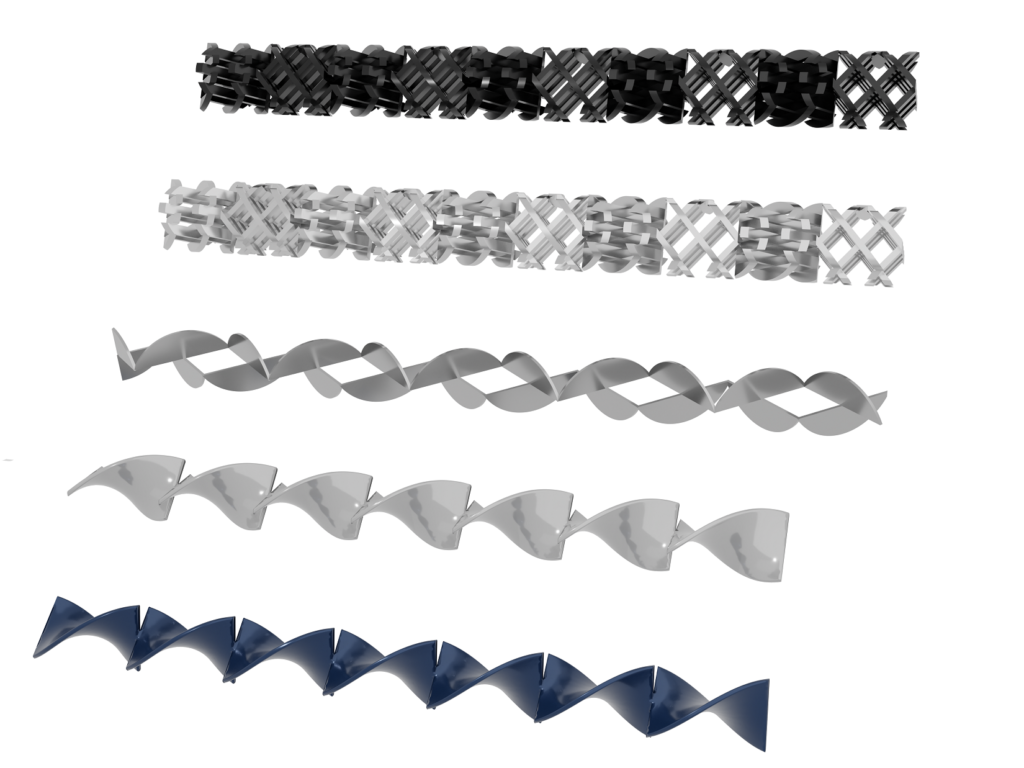
1. Overview of the Three Main Models
Static mixers work by installing fixed mixing elements inside a pipe. As fluid passes through, it is continuously divided, rotated, and recombined, achieving uniform mixing. Different element designs produce different performance characteristics.
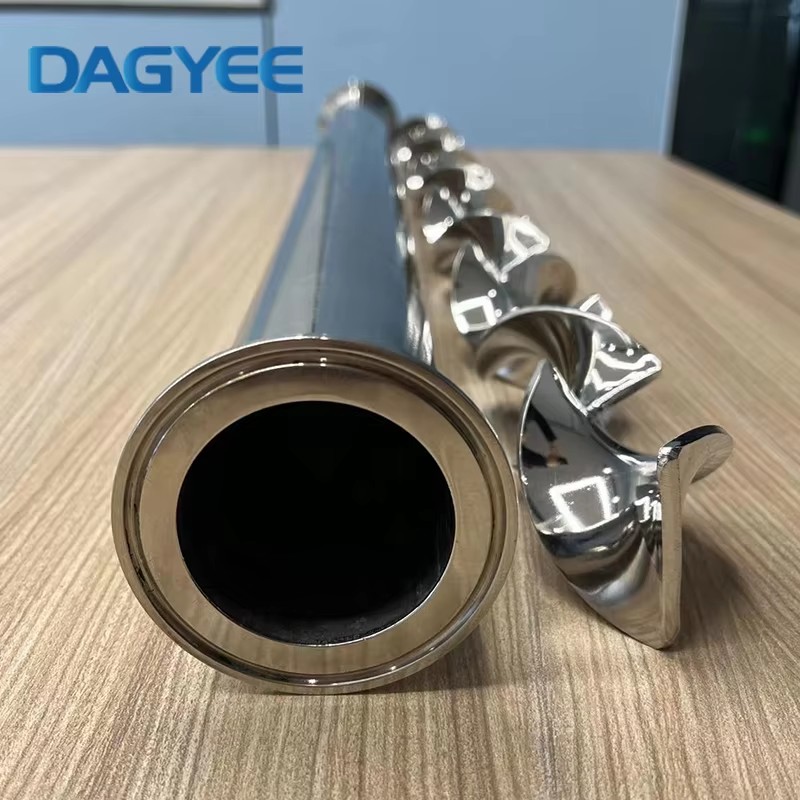
The element is a single helical twist of 180° or 270°. Multiple elements are connected end to end. Fluid rotates and splits as it passes through the helical channels.
• Advantages: Simple structure, low clogging risk, moderate pressure drop
• Best for: High viscosity fluids, fluids containing particles or impurities
• Mixing principle: Division-rotation-recombination, low shear
SV Type (Corrugated Plate / Static Mixer with Cross Channels)
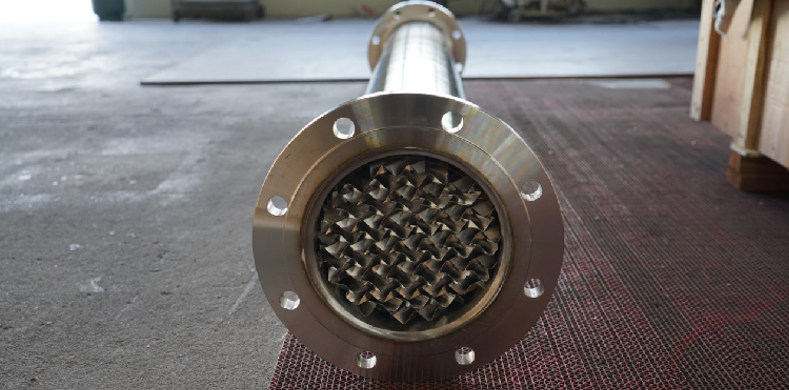
The element consists of multiple layers of corrugated plates stacked crosswise. Fluid changes direction repeatedly as it passes through the channels between plates.
• Advantages: Highest mixing efficiency, finest dispersion (as low as 1-2μm)
• Best for: Low viscosity clean fluids, liquid-liquid mixing, emulsification, gas-liquid dispersion
• Mixing principle: Division-recombination, higher shear
The element consists of crossed bars forming X-shaped channels. Fluid is repeatedly divided and redirected.
• Advantages: Good mixing efficiency, moderate pressure drop, high flow capacity
• Best for: Medium to high viscosity fluids, high flow rate applications
• Mixing principle: Between SK and SV
2. Core Comparison Table
| Parameter | SK Type | SV Type | SX Type |
|---|---|---|---|
| Element Structure | Single helical twist | Multi-layer corrugated plates | Crossed bars (X-form) |
| Viscosity Range | Up to 10⁶ cP (highest) | Up to 10² cP (lowest) | Up to 10⁴ cP (medium) |
| Mixing Efficiency | Moderate (≤10μm) | Best (1-2μm) | Good (2-5μm) |
| Pressure Drop | Moderate | Lower | Moderate |
| Clogging Risk | Lowest | Higher (fine channels) | Moderate |
| Shear Force | Low | Higher | Moderate |
| Typical Applications | High viscosity, dirty fluids | Clean fluids, emulsification, dispersion | Medium-high viscosity, high flow |
Table 1: Comparison of SK, SV, and SX Static Mixer Types

3. Core Selection Principles
• Fluid viscosity is high (heavy fuel oil, grease, butter, wax, yogurt)
• Fluid contains particles or impurities (high clogging risk)
• Low shear is required (dairy products, biological fluids)
• Extreme mixing precision is not required
• Fluid is clean and low viscosity (water, solvents, gases)
• High precision mixing or dispersion is required (additive blending, emulsification)
• Pressure drop is not a major concern
• Fluid will not clog the channels
• Fluid viscosity is medium
• Flow rate is high
• Application falls between SK and SV requirements
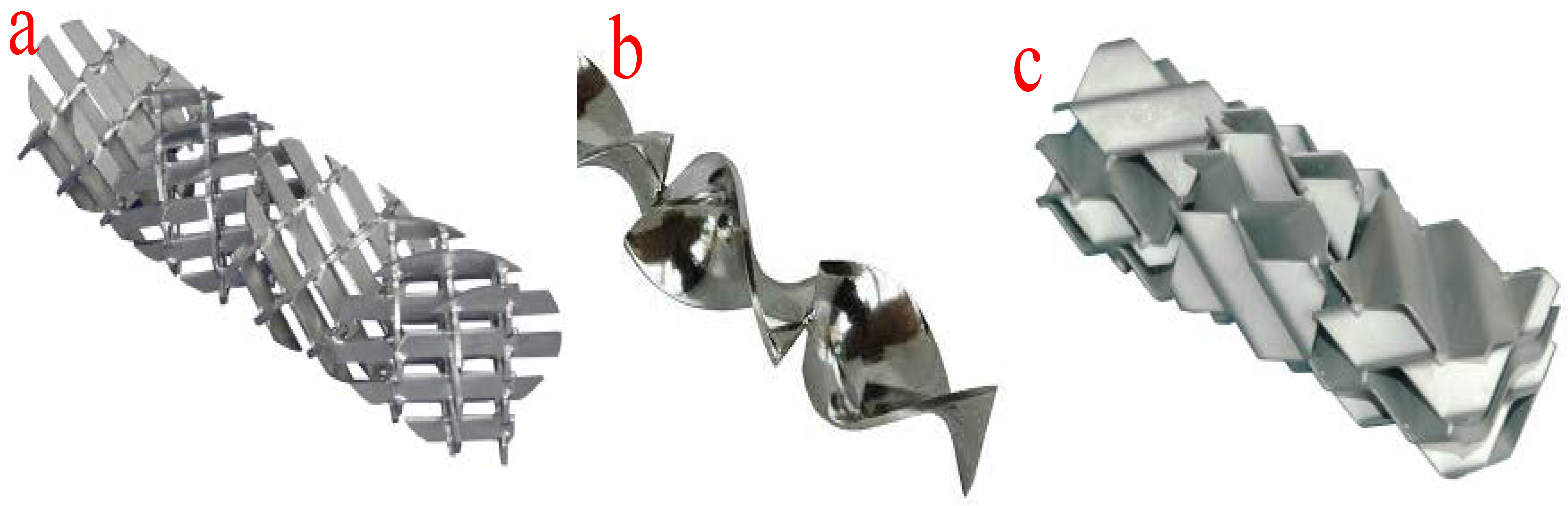
4. DAGYEE Real Project Cases
Case 1: Slovenia – Gas Mixing (SK Type)
Customer Requirement: Industrial gas mixing project in Slovenia required thorough blending of two gas streams.
DAGYEE Solution: SK type static mixer, 1 inch BSP thread connection, 250mm length, SS316L material.
Why SK: Gas mixing is sensitive to pressure drop. SK type has simple structure, moderate pressure drop, and sufficient mixing efficiency. The customer required a compact size — 250mm length fit the space constraint perfectly.
Result: Mixing performance fully met process requirements. Customer has placed repeat orders.
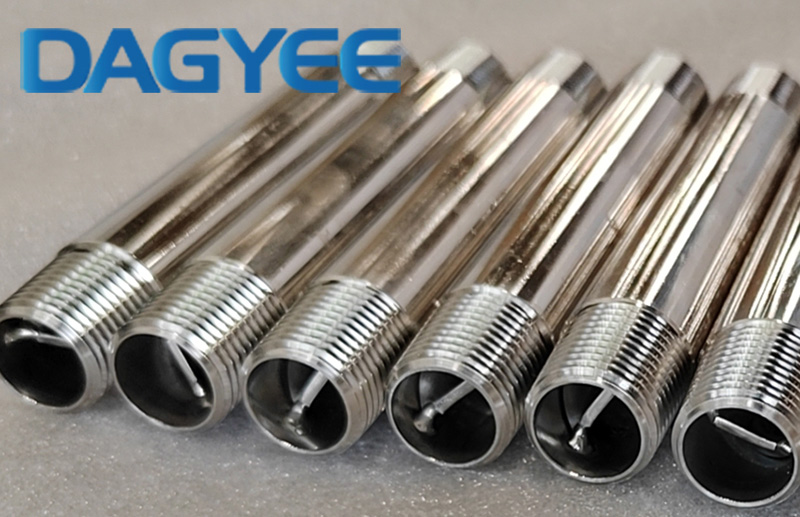
Case 2: Thailand – Stainless Steel Static Mixer (SK Type, 7 Units)
Customer Requirement: Industrial fluid processing project in Thailand required multiple static mixers. Flow rate 33 L/min, operating pressure 1.0 MPa.
DAGYEE Solution: 7 units of SK type static mixers, SUS304 material, 1.5 inch nominal diameter, 600mm length, K10 flange connection.
| Parameter | Specification |
|---|---|
| Model | SK |
| Quantity | 7 units |
| Material | SUS304 |
| Pipe Size | 1.5 inch |
| Flow Rate | 33 L/min |
| Operating Pressure | 1.0 MPa |
| Length | 600 mm |
| Connection | K10 flange |
Table: Thailand Project Static Mixer Specifications
Why SK: 1.0MPa operating pressure required reliable connections — flanges were the best choice. 600mm length provided sufficient number of mixing elements. SK type has simple structure, low clogging risk, suitable for industrial fluid processing.Result: All 7 units delivered and accepted in one shipment. Operation has been stable. Customer has established long-term partnership.
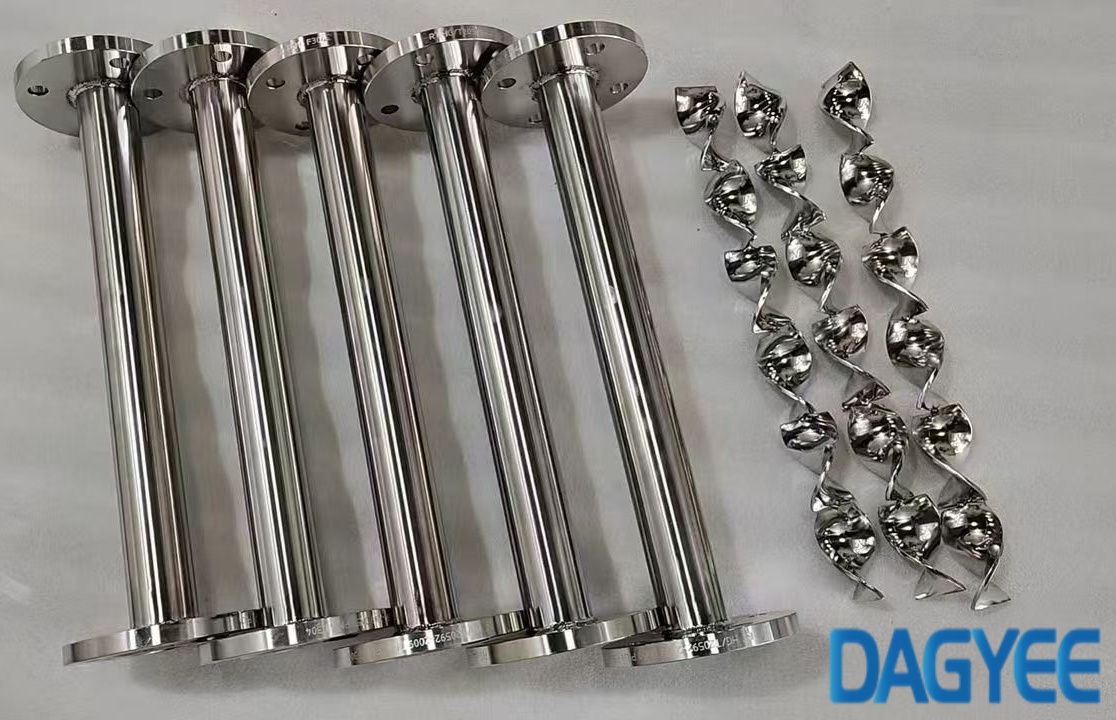
Customer Requirement: Processing heavy fuel oil with additive blending. Extremely high viscosity fluid. Strict surface finish requirements.
DAGYEE Solution: SK type static mixer, SS316L material, 1/2 inch pipe size, 6 bar operating pressure, 100°C operating temperature. BA-grade polished inner wall, polished mixing elements.
Key Specifications:
• Mixing section length: 400mm
• End connections: 1/2 inch with JIC-8 fittings (male and female)
• Side port: 1/2 inch NPT female thread
• Internal construction: Fixed welded
Why SK: Heavy fuel oil has extremely high viscosity. SK type is the only choice (SV and SX would both clog). BA-grade polishing and polished elements ensure smooth flow of high viscosity fluid, reducing wall adhesion and deposition. JIC fittings and NPT side port met site piping requirements.
Result: Additive blending became uniform after commissioning. No pipeline blockage. Customer was very satisfied with the polishing quality.
Case 4: Costa Rica – Greek Yogurt Texture Smoothing (SK Type, Low Shear)
Customer Requirement: Greek yogurt (high viscosity dairy product) required texture smoothing before filling. Extremely shear-sensitive medium. Minimal air entrainment required. Installed between a rotary lobe pump and filling machine hopper.
DAGYEE Solution: 2 SK type static mixers, 2 inch Tri-Clamp connections, SS316L material, internal polished to Ra≤0.8µm, hygienic design, fully CIP compatible.
| Parameter | Specification |
|---|---|
| Model | SK |
| Element count | 8 elements (600mm) / 10 elements (720mm) |
| Pipe size | 2 inch (DN50) |
| Inner diameter | 48mm |
| Flow range | 3.5-7 m³/h |
| Operating pressure | ≤6 bar |
| Material | 316L, Ra≤0.8µm |
| Connection | Tri-Clamp |
| Cleaning | CIP compatible |
Table: Costa Rica Yogurt Project Static Mixer Specifications
Why SK:• Yogurt has high viscosity — SK type is the only choice (SV/SX would create excessive shear)
• Low shear design protects yogurt texture, prevents protein structure damage
• Minimal air entrainment prevents bubbles in filled product
• Ra≤0.8µm polishing prevents product adhesion, easy to clean
• CIP compatibility meets dairy industry hygiene standards
• Two different lengths allowed on-site optimization for best mixing results
Result: Yogurt texture became uniform after installation. Filled product consistency was excellent. This became a benchmark case for DAGYEE in the dairy industry.
Case 5: Australia – NOx Gas Mixing (SV Type)
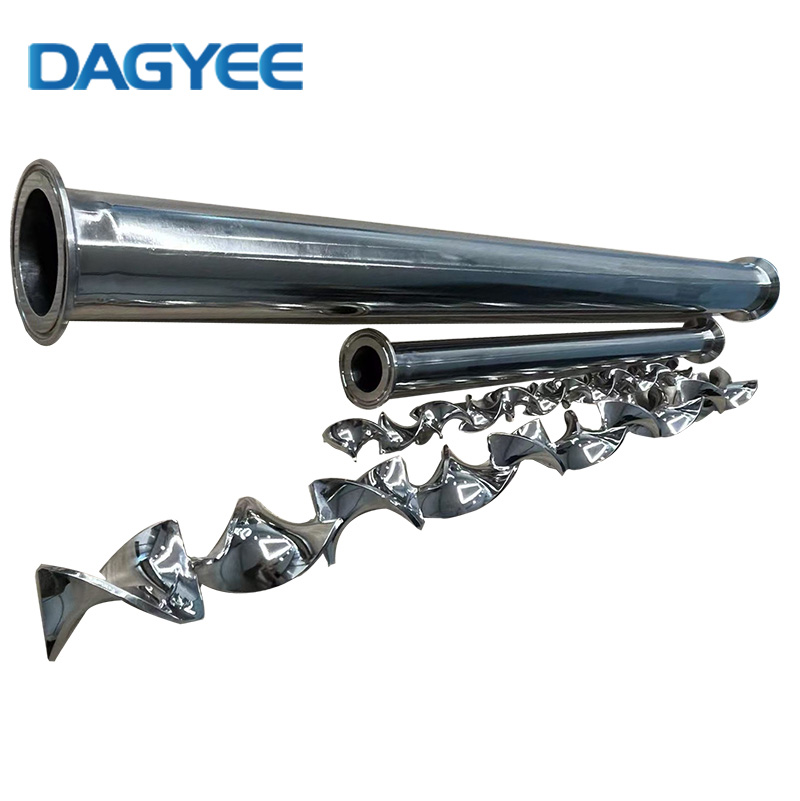
Customer Requirement: Environmental project in Australia required thorough mixing of air and NOx gas. Flow rate 25 m³/h. High mixing precision and low pressure drop required.
DAGYEE Solution: SV51-0.6-1000SS static mixer, 3 units, 2 inch sanitary Tri-Clamp connections, SS304 material, 1000mm total length, mirror polished surface.
Why SV: Gas mixing is sensitive to pressure drop but not to clogging. SV type has the highest mixing efficiency, achieving uniform mixing in the shortest length. Mirror polishing reduces flow resistance. Sanitary Tri-Clamp connections allow quick on-site installation and removal.
Result: After installation, NOx concentration readings were stable. Met environmental emission monitoring requirements completely.
Case 6: USA – Static Mixer with Cooling Jacket (SK Type, Heated Oil/Grease Blending)
Customer Requirement: Processing heated animal fats, butter, oils, wax-based ointments with additive blending. Cooling jacket required for temperature control.
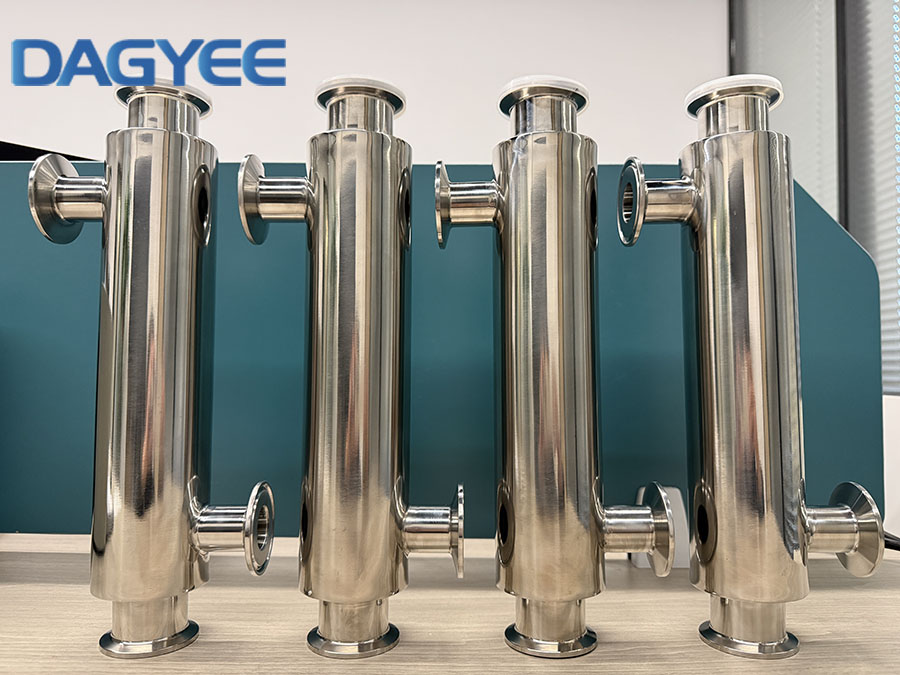
DAGYEE Solution: SK50-0.6-610SL static mixer, 4 units, SS316L hygienic material, 610mm (24 inches) total length, removable SK helical elements.
Key Specifications:
• Process side connection: 2 inch Tri-Clamp
• Internal element: SK type helical, removable
• Jacket type: Full-wrap pipe-in-pipe jacket
• Jacket outer diameter: 6 inches
• Jacket connections: 1.5 inch Tri-Clamp (inlet and outlet)
• Cooling medium: Chilled water / glycol
Why SK:
• Animal fats, butter, wax-based ointments are all high viscosity — SK type is the only choice
• Full-wrap jacket ensures uniform cooling, preventing thermal degradation
• Removable elements allow regular cleaning and maintenance
• 316L material + hygienic design meets food contact standards
Result: 4 units installed across different product lines. Cooling performance met process requirements. Blending uniformity was excellent.
5. Selection Decision Table
| Your Application | Recommended Model | Why |
|---|---|---|
| Heavy fuel oil, grease, wax, high viscosity fluids | SK Type | Low clogging risk, low shear |
| Dairy products, yogurt, syrup | SK Type | Low shear, protects texture, hygienic polishing |
| Fluids with particles or impurities | SK Type | Wide channels, won't clog |
| Gas mixing (air, NOx, natural gas) | SV Type | Highest mixing efficiency, low pressure drop |
| Liquid-liquid mixing, emulsification, dispersion | SV Type | Best dispersion (1-2μm) |
| Water treatment chemical dosing (PAC/PAM) | SV Type | Clean fluid, uniform mixing |
| Medium-high viscosity, high flow rate | SX Type | Between SK and SV |
| Temperature control required (heating/cooling) | SK/SX Type + Jacket | SK for high viscosity, SX for medium viscosity |
| Hygienic applications (food, dairy, pharmaceutical) | SK Type + Polishing | Low shear, easy cleaning, CIP compatible |
Table: Static Mixer Selection Guide by Application
6. DAGYEE Static Mixer Key Advantages
• Full model coverage: SK, SV, SX series — covering everything from gases to ultra-high viscosity fluids
• Complete material options: 304, 316L, Hastelloy, PVC, PP — select based on fluid corrosivity
• Hygienic design: Internal polishing to Ra≤0.8µm, no dead zones, CIP compatible — meets dairy/food/pharmaceutical standards
• Removable elements: SK type helical elements can be removed for easy cleaning and maintenance
• Custom jacketing: Full-wrap cooling/heating jackets for temperature-sensitive media
• Global delivery: Projects delivered to Slovenia, Thailand, Costa Rica, Australia, USA, and more
7. Final Summary
Selecting a static mixer comes down to three rules:
• High viscosity, dirty fluids, low shear required → Choose SK Type
• Low viscosity, high precision, clean fluids → Choose SV Type
• Medium-high viscosity, high flow rate → Choose SX Type
From gas mixing in Slovenia, to industrial fluid processing in Thailand, to Greek yogurt in Costa Rica, to NOx gas mixing in Australia, to heated oil blending in the USA — DAGYEE static mixers have proven themselves across industries worldwide.
Still unsure which model fits your application?
DAGYEE offers free selection consultation. Tell us your fluid, viscosity, flow rate, and pipe size. We will recommend the right model.
Contact DAGYEE