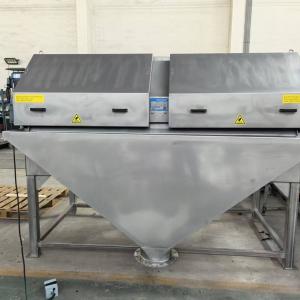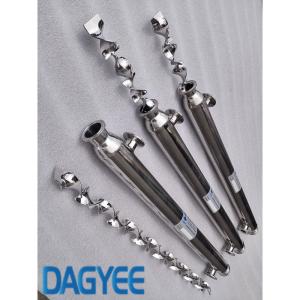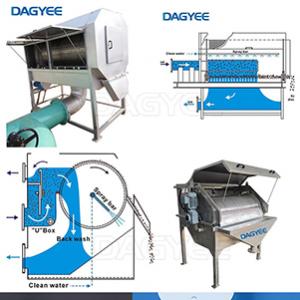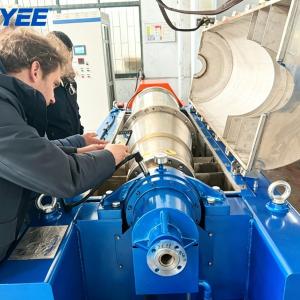
Lamella Clarifier Clogging? 5 Common Causes and How DAGYEE Solves Them
lamella clarifier Keeps Clogging? Here's Everything You Need to Know from Selection to Maintenance
Introduction: A Problem That Just Won't Go Away
High solids? It clogs. Fibers in the water? It clogs. Forget to discharge sludge for a few hours? It clogs again. Eventually, the plates warp, the support frame bends, and you have to shut the whole thing down. Cleaning a clogged clarifier is messy, time consuming, and expensive — a job that can take your plant offline for days.
A lot of people think clogging is just part of owning a lamella clarifier. "They all do that after a while."
That is not true.
I have visited plants where a DAGYEE lamella clarifier has been running for six or seven years. The plates are still clean. The effluent is still clear. The operators barely touch it. And I have also seen brand new units from other manufacturers start clogging within a year, needing cleaning every few months.
So what is the difference?
It comes down to two things: how the unit was selected in the first place, and how it is operated day in and day out. Get both right, and a lamella clarifier can run for years with very little clogging — or almost none at all.
This article covers the main reasons why lamella clarifiers clog, what to look for when selecting a DAGYEE unit, and how to keep it running smoothly.
1. Why Does a Lamella Clarifier Clog?
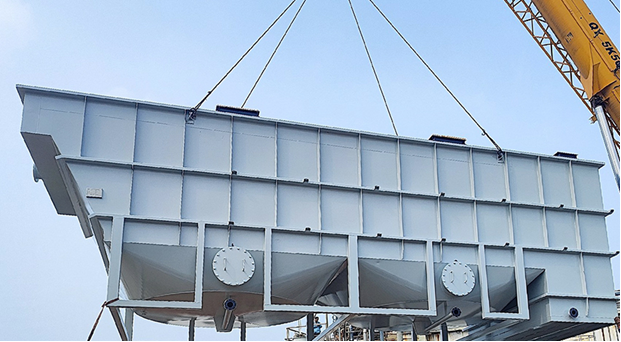
Solids settle on the plates. If they do not slide down and get discharged into the sludge hopper, they keep building up. Eventually, the gaps between the plates fill up, and water stops flowing through.
Here are the most common causes I have seen in the field.
Some wastewater is naturally heavy. Mine drainage, coal washing water, and certain industrial effluents can have suspended solids in the thousands of milligrams per liter. If the clarifier was not selected with this in mind, the plates will fill up fast.
Think about it this way. Every kilogram of solids that enters the tank has to leave somewhere. If the sludge discharge system cannot keep up, those solids stay on the plates.
I once visited a coal washing plant where the original clarifier had been running for less than a year. When we opened it up, the sludge had built up so thick that the plates were bent downward in the middle. The weight of the wet sludge was just too much for them. The plant manager said they had been cleaning it every two months, but the problem just kept coming back. They eventually replaced it with a DAGYEE unit designed with wider plate spacing and a more robust discharge system. That was four years ago. It is still running fine.
Fibers from textile mills, hair from slaughterhouses, grease from food plants — these materials are a nightmare for lamella clarifiers.
Fibers wrap around the plates. One strand catches another, and over time they form a mat that covers the plate surface. Grease sticks to the plates and creates a slippery film. When fibers and grease mix, you get a sticky, tough sludge blanket that will not slide down on its own.
I have seen food processing plants where the grease buildup was so bad that the plates looked like they were coated with wax. The only way to clean them was to send someone in with a pressure washer and a scraper. That job took two days and three people.
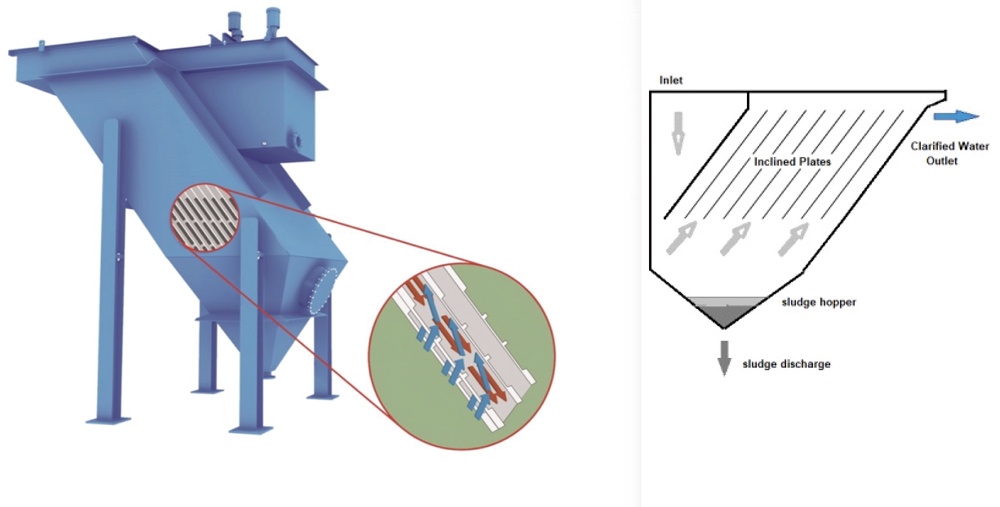
Some manufacturers make the plate spacing very narrow. Why? Because narrower spacing means more plates in a smaller tank. That makes the unit look cheaper on paper. But in real life, narrow spacing clogs much faster.
I have seen units where the plates were spaced only 25mm apart. They worked fine on clean water, but as soon as the solids load went up, they started clogging within days.
Plate angle also matters. If the angle is too shallow, sludge will not slide down. We have tested this in the field. When the angle drops below 50 degrees, most of the sludge stays on the plates. Only a small fraction makes it into the hopper.
A lot of clogging problems start not at the plates, but in the hopper.
If the hopper slope is too shallow, sludge sticks to the walls. If the discharge valve is too small, it clogs. If the discharge cycle is too long, sludge piles up until it reaches the bottom of the plates.
I have seen plants where the operators set the automatic discharge timer to run only once per shift. They thought they were saving trouble. But by the time the valve opened, the sludge had already filled the hopper and was pushing up between the plates. The damage was already done.
Here is a rule I have learned from years of working with these machines: if the sludge does not leave the tank, it will eventually fill the whole thing.
If the inlet distribution system is poorly designed, some parts of the clarifier get more water than others. In the high flow areas, the water rises too fast, and particles do not have time to settle. In the low flow areas, sludge settles and never gets pushed toward the discharge.
These low flow areas become "dead zones." Over time, they fill up with sludge and start to block the plates around them. Once a dead zone forms, cleaning it out is hard because you cannot reach it without draining the tank.
2. How DAGYEE Designs Its Lamella Clarifiers to Prevent Clogging
At DAGYEE, we have been building lamella clarifiers for over 15 years. We have learned what works and what does not. Here is how we design our units to stay clog free.
We offer three standard spacings: 35mm, 50mm, and 80mm. Most of our units for industrial applications use 50mm or 80mm.
| Application | Recommended Spacing | Why |
|---|---|---|
| Clean water, low solids | 35mm | Maximum efficiency |
| Typical municipal or industrial wastewater | 50mm | Good balance between efficiency and anti‑clogging |
| High solids, fibers, or grease | 80mm | Wide channels, much less clogging |
If you are unsure about your water quality, go with 80mm. A slightly larger unit that does not clog is better than a smaller unit that is down for cleaning every month.
All DAGYEE lamella clarifiers use a 60 degree plate angle. We have tested other angles — 45 degrees, 50 degrees, 55 degrees — and found that 60 degrees gives the best combination of settling area and sludge sliding.
At 60 degrees, sludge slides down reliably even when it is thick or slightly sticky. At shallower angles, we have seen sludge hang up on the plates for days.
Our sludge hoppers are designed with a slope of 60 degrees or more. The walls are smooth, with no corners or ledges where sludge can collect.
We offer two types of sludge discharge:
• Manual valves for small plants where an operator can discharge sludge a few times per shift.
• Automatic valves with timers or sludge level sensors for larger plants.
The automatic system is a big help. It never forgets to discharge. It never says "I will do it later." It just runs.
2.4 Material Choices
| Material | Surface | Best For |
|---|---|---|
| PP (Polypropylene) | Smooth, chemical resistant | Most industrial applications |
| PVC | Smooth, low cost | Clean water, indoor installations |
| Stainless Steel 304 | Very smooth, very strong | Tough applications, long life |
| Stainless Steel 316 | Very smooth, very strong | Corrosive wastewater, high chlorides |
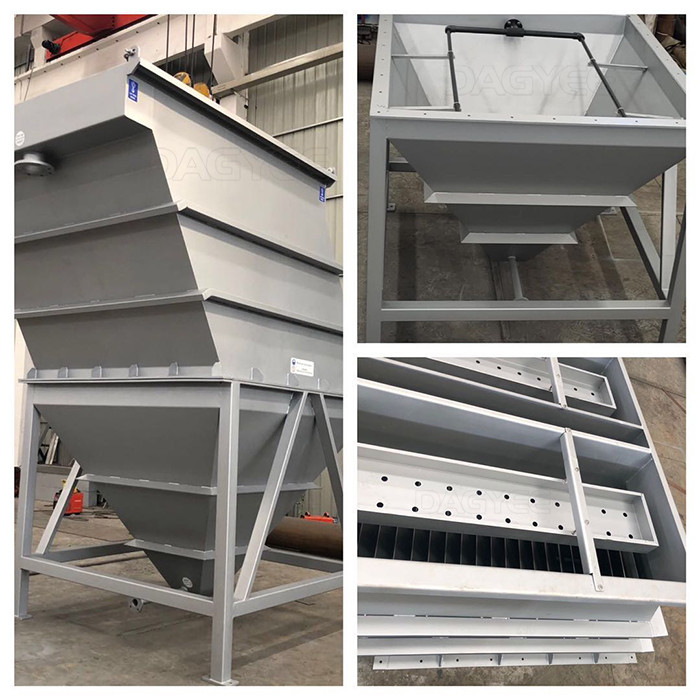
For applications that tend to clog, we recommend PP or stainless steel. Their smooth surfaces do not hold onto sludge the way rougher materials do.
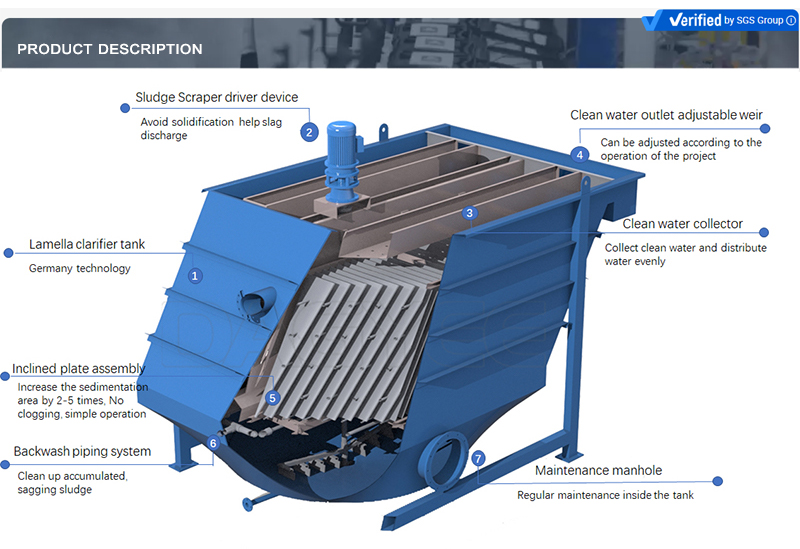
We put a lot of thought into how water enters the tank. Our inlet distribution system spreads the flow evenly across all the plates. No high speed jets. No dead zones.
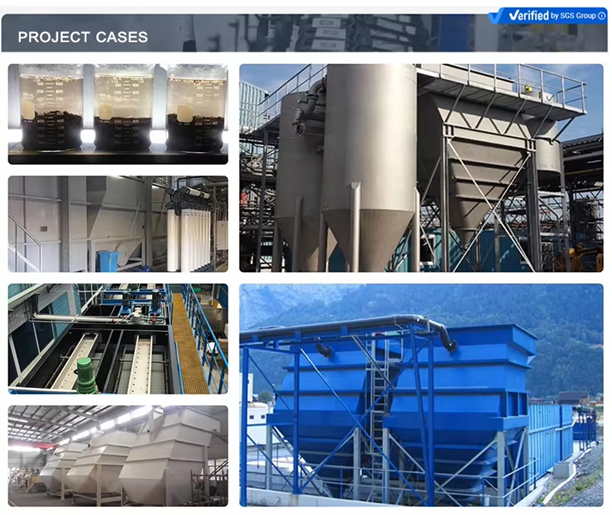
We have installed DAGYEE lamella clarifiers in plants where the old units had obvious dead zones — you could see the sludge building up in the corners. After switching to our design, the sludge layer remained flat across the whole tank.
Our plates are assembled into modular packs. Each pack is independent. If one pack gets damaged or needs cleaning, you can lift it out without disturbing the others.
This is a big advantage when something does go wrong. You do not have to drain the whole tank and crawl inside. You just pull the pack and work on it outside.
3. How to Keep Your DAGYEE Lamella Clarifier Running Smoothly
Even the best designed unit needs some attention. Here is what we recommend.
• If solids concentration spikes, add some pretreatment upstream — a screen, a grit chamber, or a small settling tank.
• If flow varies a lot, install an equalization tank to smooth out the peaks.
• Do not run the unit above its design capacity for long periods.
Coagulants and flocculants are your friends. But they need to be dosed correctly.
• Too little, and the flocs are too small to settle.
• Too much, and the flocs are large and sticky and can clog the plates.
Do not guess. Run a simple jar test every few weeks to check your doses. It takes 30 minutes and can save you days of cleaning.
For most industrial applications, we recommend discharging sludge every 4 to 8 hours. If your solids load is very high, do it more often.
Check the discharge valves once a week to make sure they are not blocked. Look at the sludge that comes out. If it is very watery, you may be discharging too often. If it is very thick and dry, you are not discharging often enough.
Even with good operation, plates will eventually need cleaning. Biofilm grows. Scale builds up.
• Use a pressure washer with a wide fan nozzle. Keep the pressure below 6 bar to avoid bending the plates.
• For chemical cleaning, mild acid or alkaline solutions work well. Remove the plate packs and soak them if needed.
Once a week, take a few minutes to look at your clarifier.
• Is the effluent clear?
• Is the flow even across the outlet weirs?
• Are any of the plates showing signs of bending or damage?
Catching small problems early is much easier than fixing big ones later.
Even with good design and operation, things can sometimes go wrong. Here is a simple troubleshooting guide.
| Problem | Likely Cause | What to Do |
|---|---|---|
| Cloudy effluent | Too much flow | Slow down the incoming water, or add a tank to hold peaks |
| Cloudy effluent | Chemicals not right | Run a jar test, adjust PAC/PAM doses |
| Sludge building up on plates | Not discharging often enough | Shorten the discharge interval |
| Sludge building up on plates | Hopper slope too shallow | Contact us about a hopper modification |
| Plates bent or collapsed | Sludge got too heavy | Remove sludge, order replacement plates |
| Water not spreading evenly | Inlet blocked or worn | Clean or repair the inlet distribution |
| Discharge pipe blocked | Pipe too small | Clear the pipe, consider larger diameter |
5. DAGYEE Lamella Clarifier Technical Specifications
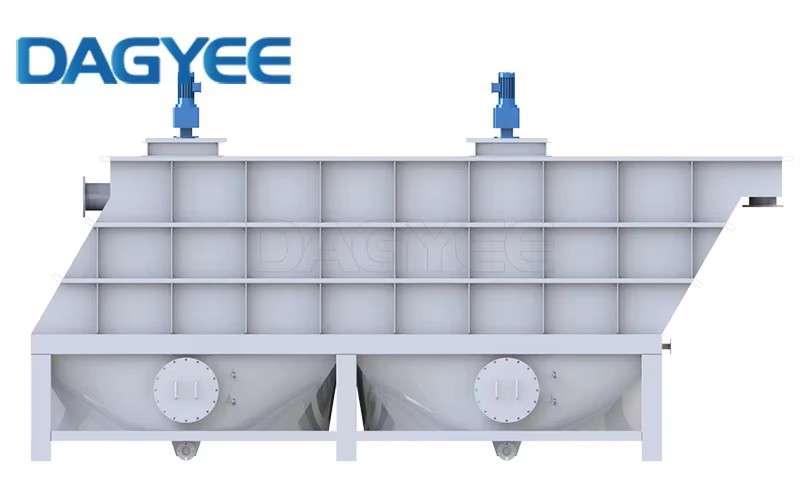
| Model | Capacities (m³/h) | Piping Connections (mm) | Physical Dimensions (m) | |||||
|---|---|---|---|---|---|---|---|---|
| Inlet (a) | Effluent (b) | Sludge (c) | Backwash (d) | L | W | H | ||
| DCL-5 | 5 | 80 | 80 | 50 | 50 | 2.55 | 1.60 | 2.90 |
| DCL-10 | 10 | 100 | 100 | 50 | 50 | 3.35 | 1.82 | 3.00 |
| DCL-15 | 15 | 100 | 100 | 50 | 50 | 3.35 | 2.02 | 3.00 |
| DCL-20 | 20 | 100 | 100 | 50 | 50 | 3.35 | 2.02 | 3.00 |
| DCL-30 | 30 | 150 | 150 | 50 | 50 | 4.20 | 2.22 | 3.00 |
| DCL-40 | 40 | 150 | 150 | 50 | 50 | 4.00 | 2.80 | 3.00 |
| DCL-50 | 50 | 200 | 200 | 50 | 50 | 4.65 | 2.82 | 3.00 |
| DCL-60 | 60 | 200 | 200 | 50 | 50 | 4.70 | 3.00 | 3.00 |
| DCL-70 | 70 | 250 | 200 | 50 | 50 | 6.40 | 2.60 | 3.00 |
| DCL-80 | 80 | 250 | 200 | 50 | 50 | 6.80 | 2.82 | 3.00 |
| DCL-100 | 100 | 250 | 250 | 50 | 50 | 7.05 | 3.02 | 3.00 |
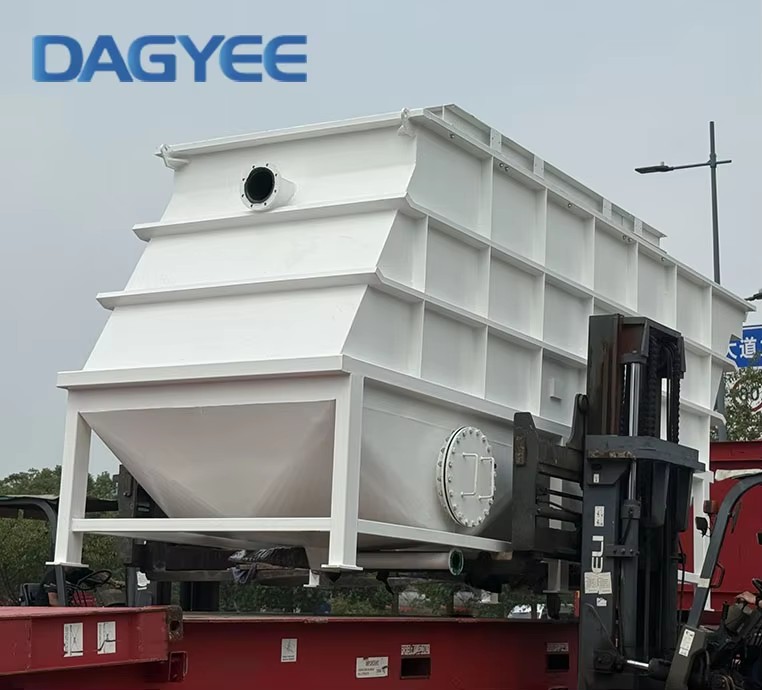
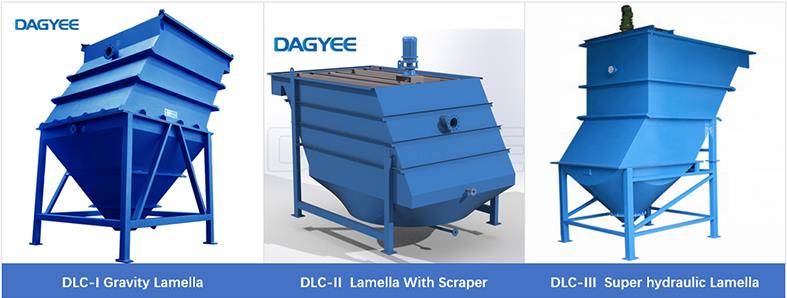
• Modular plate packs — easy removal for cleaning or replacement
• Heavy duty support frame — stainless steel construction, rated for high sludge loads
• Adjustable overflow weirs — fine tune effluent flow balance
• Sludge hopper — 60 degree slope, sludge slides freely
• Inlet distribution box — even flow across all plates
• Optional automatic discharge — timer or sludge level control
6. What DAGYEE Customers Say
— Plant Manager, Food Processing Plant
"The automatic sludge discharge system pays for itself. Before, our operators would forget to discharge, and we would have to shut down to clean the plates. Now the system just runs. We have not had a clog in 18 months."
— Operations Supervisor, Mining Site
"What I like most is how easy it is to work on. When we needed to replace a few damaged plates, we just lifted out the pack and did it outside the tank. No confined space entry. No breathing fumes. That alone was worth the switch."
— Maintenance Manager, Chemical Plant
7. A Few Tips from Our Field Experience
After hundreds of installations, here are a few things we have learned.
Tip 1: Start with a wider spacing than you think you need.
If you are not sure about your solids load, go with 80mm. You can always add more plates later if you need more efficiency. But if you start with 35mm and it clogs, you are stuck.
Tip 2: Do not skimp on the hopper.
A good hopper with a steep slope and a big valve is worth every dollar. The best plates in the world are useless if the sludge cannot get out.
Tip 3: Train your operators.
Show them what a clean clarifier looks like. Show them what to look for. A few minutes of training can prevent months of trouble.
Tip 4: Keep a record.
Write down when you discharge sludge, when you clean the plates, what the effluent looks like. Over time, you will see patterns. That helps you head off problems before they start.
8. When to Call DAGYEE
We offer:
• Free phone consultation — describe your problem, and we will give you our best guess
• On site inspection — we will come look at your unit and your process
• Lab testing — send us a water sample, and we will run it through a pilot unit
• Replacement parts — plates, valves, hoppers, complete assemblies