Automatic Polymer Preparation Unit: From Selection to Application, Everything You Need to Know
How to Size and Select the Right polymer preparation unit for Your Plant
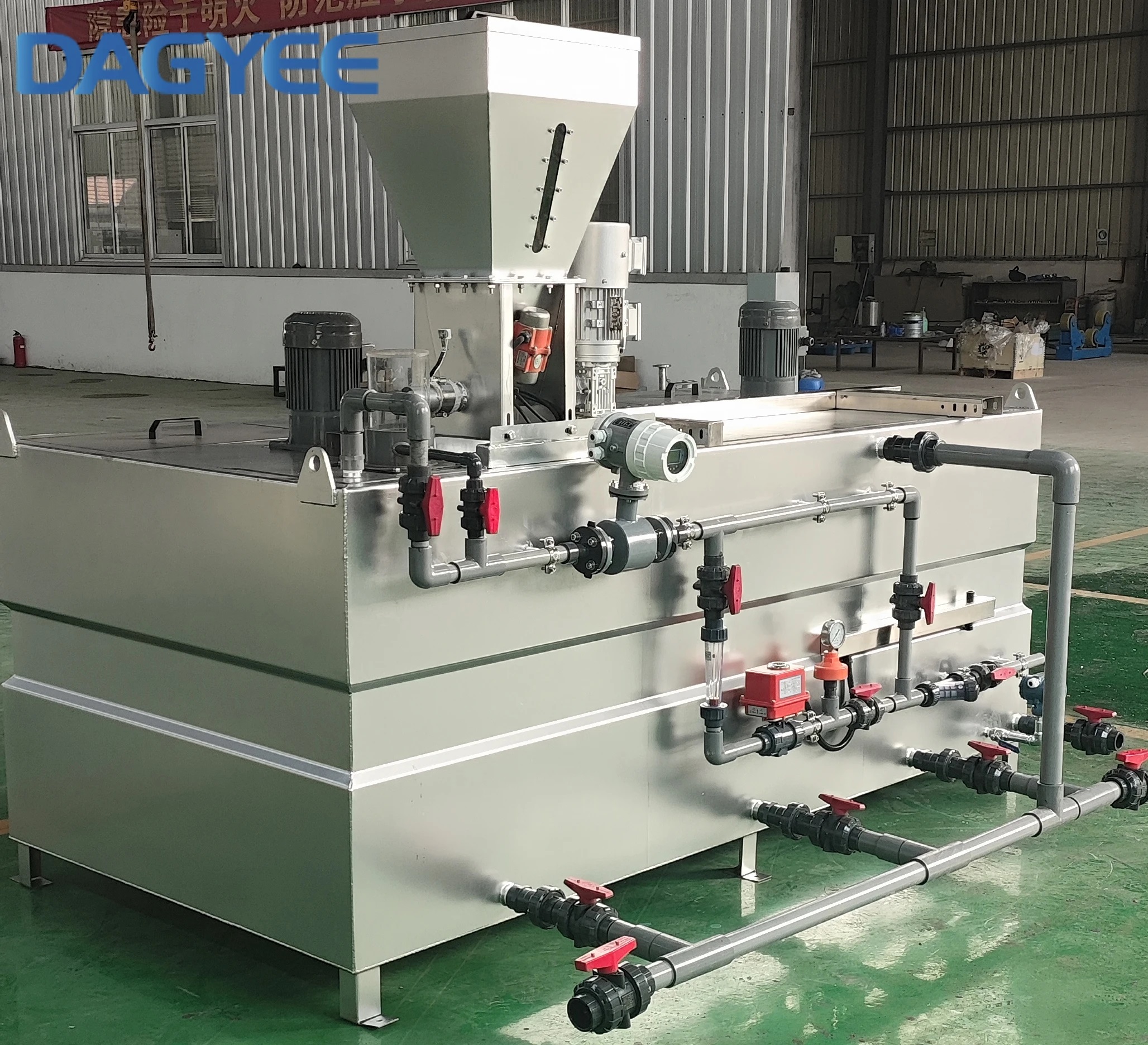
Introduction: What Exactly Is a Polymer Preparation Unit
The unit looks simple, but there is a lot going on under the hood.
Some people think it is just a tank with a mixer. Some think any old unit will do the job. Then they buy one, install it, and spend the next year fighting with it. The powder bridges in the hopper. The solution comes out weak one hour and too strong the next. The screw press downstream never gets a consistent floc.
This article covers everything: how it works, how to size it, what configurations matter, where to use it, how to maintain it, and what to do when it breaks. Whether you are shopping for a new unit or struggling with an old one, you will find answers here.
1. What Does a Polymer Preparation Unit
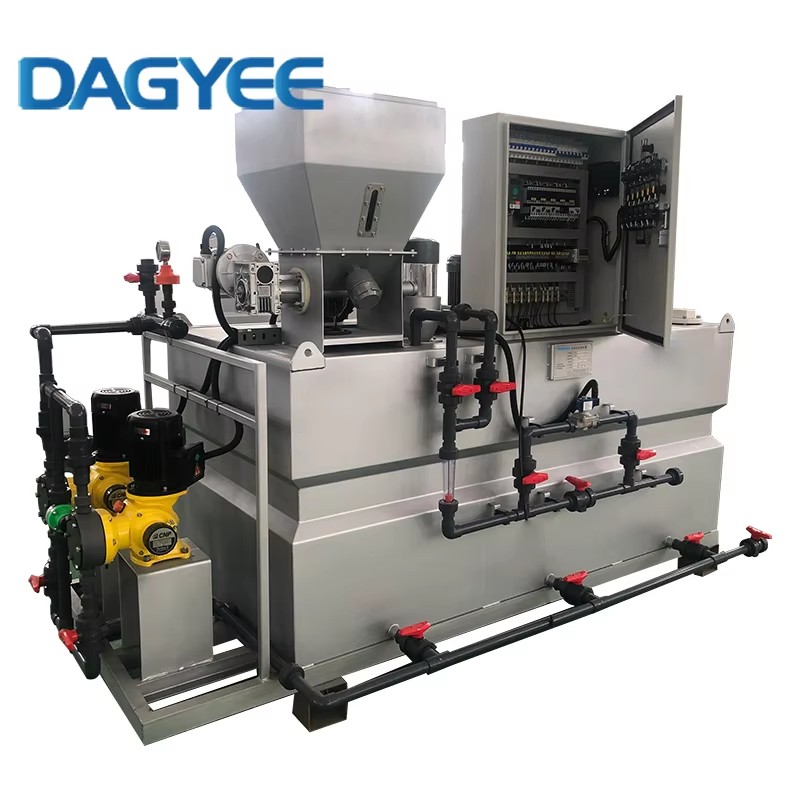
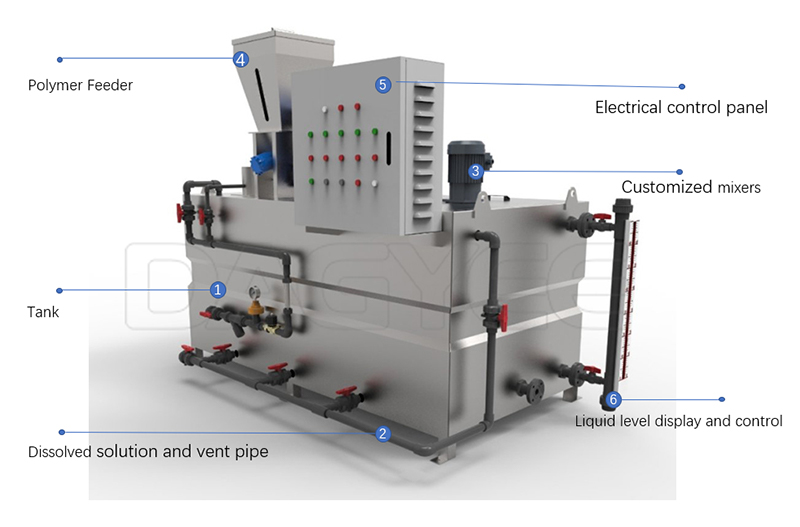
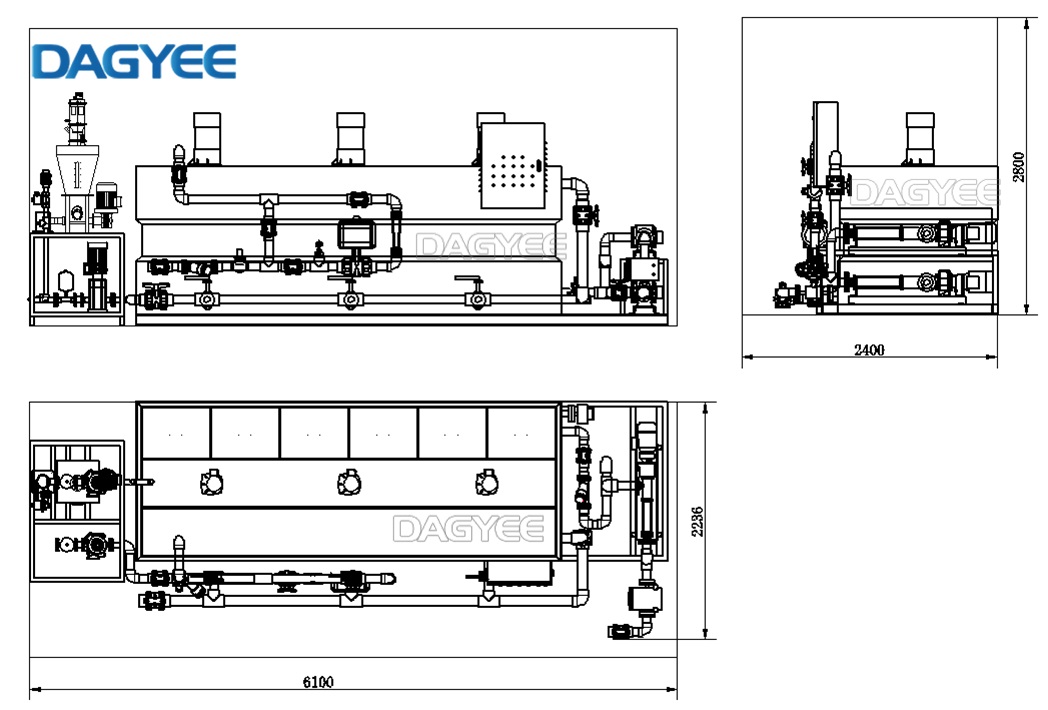
A complete unit has six parts:
• Wetting system: A device that soaks powder before it hits the tank
• Preparation tank: Where powder and water first mix
• Aging tank: Slow stirring that lets polymer chains fully open up
• Storage tank: Holds ready solution so your dewatering equipment never runs dry
• Control system: PLC and touchscreen that runs everything automatically
A well designed unit runs by itself day after day. You set the concentration once, and it stays there. The operator does not have to babysit it. The polymer is always ready when the dewatering equipment needs it. That is what a good unit does.
2. How Does It Work
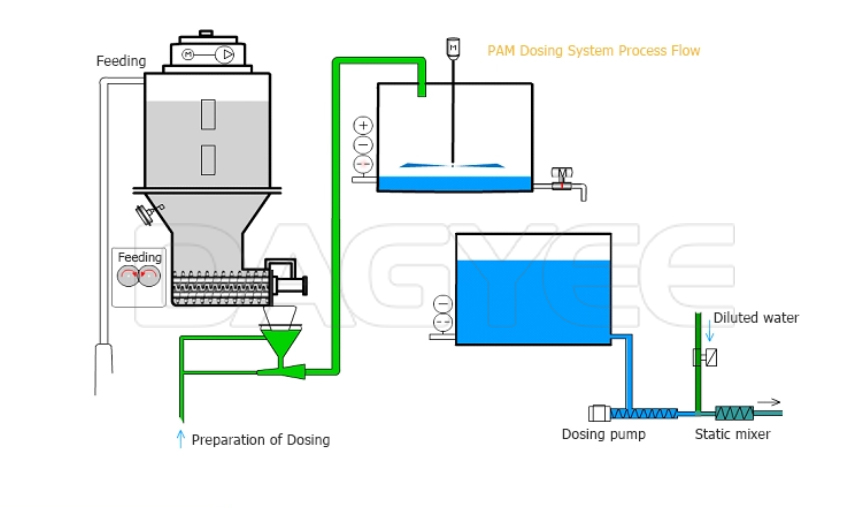
PAM is a high molecular weight polymer. It does not dissolve like sugar in coffee. It goes through three distinct stages.
When dry PAM hits water, it forms a gel layer on the surface almost instantly. Without good wetting, that layer seals off the inside of the particle. You end up with "fish eyes" — wet on the outside, dry on the inside.
Once those fish eyes form, they are very hard to break up. They will pass through the system and end up in your dewatering equipment. They will clog nozzles, plug filters, and show up as white specks in your cake.
That is why a good unit needs an efficient wetting system. The best designs use a venturi eductor that pulls powder into a high speed water stream. Every particle gets soaked before it ever touches the tank.
Stage 2: Dissolving and Aging
Once wetted, the powder goes into the preparation tank and then overflows into the aging tank. The aging tank stirs slowly for 45 to 60 minutes. That gives the polymer chains time to fully uncoil. That step is called aging.
Why does aging take so long? PAM molecules start out tightly coiled like a ball of yarn. Until they uncoil, they cannot do their job. Uncoiling takes time and gentle mixing. If you stir too hard, you break the chains. If you do not stir enough, they do not uncoil.
If you cut the aging time short, the chains do not open up. Flocculation suffers. You end up using more polymer to get the same result. If you let it go too long, constant stirring breaks the chains down. Either way, you waste money.
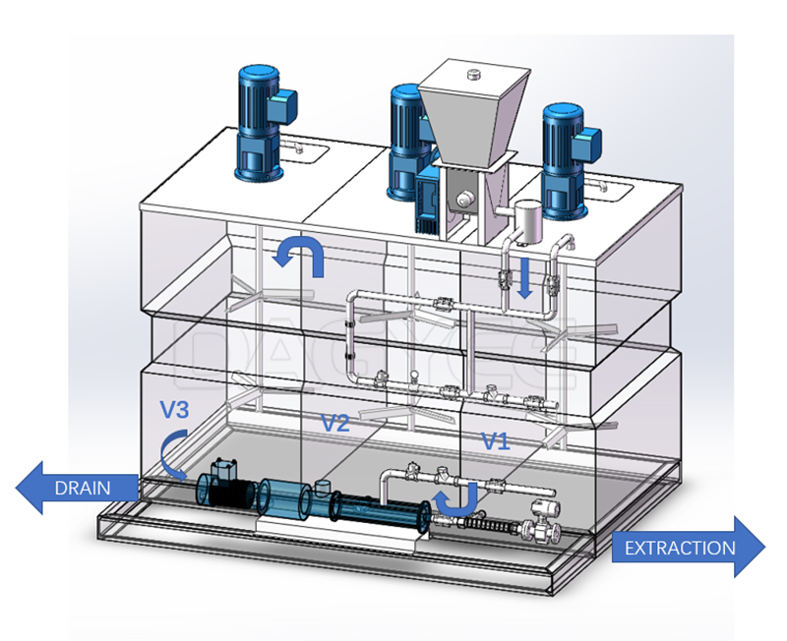
That is why the three tank design (prep plus aging plus storage) is what most people use. Each tank has its own job. The prep tank mixes. The aging tank holds the solution for the right amount of time. The storage tank keeps ready solution on hand.
The aged solution overflows into the storage tank. From there, dosing pumps feed it to your dewatering equipment. The storage tank acts as a buffer so your screw press or belt press never runs dry.
A good storage tank has a low level alarm. When the tank gets down to about 20 percent, the alarm goes off. That gives you time to check the unit before it runs dry. Some systems automatically start a second unit at that point.
3. How to Choose the Right Configuration
Bottom line: Unless your budget is very tight or your flow is tiny, go with triple tank. If you skip proper aging, your polymer loses effectiveness. The money you save on equipment will be lost on wasted chemicals within a year.
I have seen plants try to save money with a double tank unit. Six months later, they are buying a triple tank anyway. The double tank ends up sitting in a corner as a spare. Buy once, buy right.
3.2 Material: Stainless Steel, PP, or FRP
Bottom line: If your budget allows, pick stainless steel. Pay once and use it for 15 years. You will not have to think about it again.
I have seen too many plants buy a PP tank to save money. Three years later, the tank is cracked and leaking. The fittings are brittle. They end up buying a stainless steel unit anyway. The cheap one ends up being the expensive one.
The feeding screw is one of the parts that gives people the most trouble. Pay attention to three things:
• Anti caking: The screw end should have heating to stop powder from caking up from moisture. Without heating, the powder can harden right at the discharge point. The screw turns but nothing comes out.
• VFD control: Adjustable screw speed lets you match changing polymer demand. When your sludge flow drops, the screw slows down. When it picks up, the screw speeds up. You do not waste polymer.
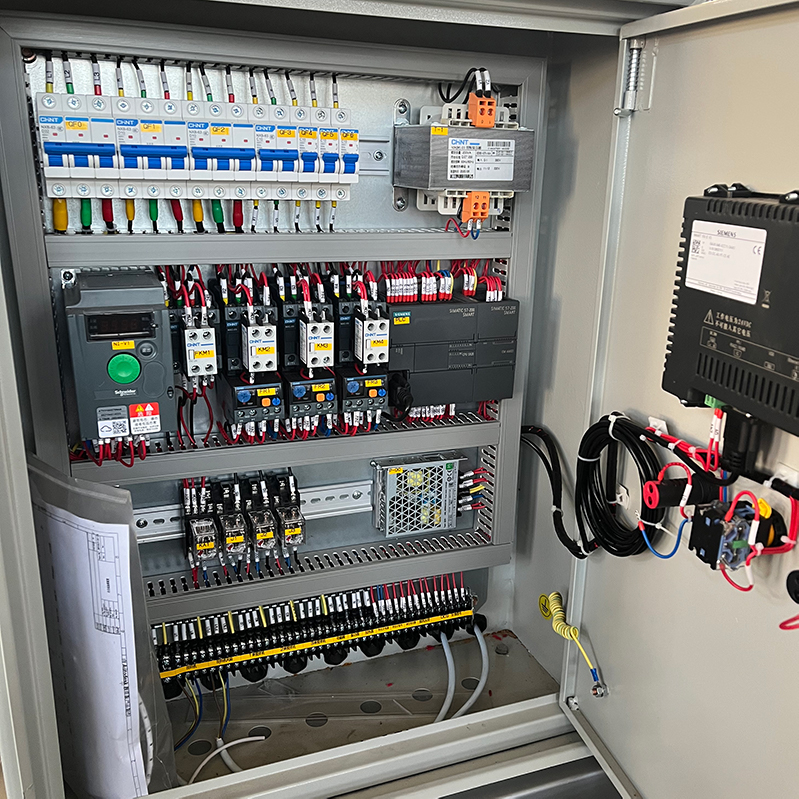
A good unit should have PLC control with a touchscreen. Look for these features:
• Concentration control (feed rate and water flow work together)
• Low level alarm (warns you before the storage tank runs dry)
• Fault alarms (feeder jam, water supply failure, and so on)
• Remote communication ready (so you can hook it up to your SCADA system)
4. How to Size a Polymer Preparation Unit
Three steps.
Step 1: Figure out how many kg of dry PAM powder you need per hour
PAM powder (kg/h) = Dry solids (kg/h) × Polymer dose (kg per ton dry solids)
Step 2: Decide your target concentration
Typical range is 0.2% to 0.3%. Most plants start at 0.2% and adjust from there.
Step 3: Calculate the solution volume you need per hour
Solution (L/h) = PAM powder (kg/h) ÷ Target concentration (%)
Here is an example.
Say your dry solids flow is 400 kg/h. Your polymer dose is 5 kg per ton of dry solids. Your target concentration is 0.2%.
PAM powder = 400 × 5 ÷ 1000 = 2 kg/h
Solution = 2 ÷ 0.2% = 1000 L/h
So you need a unit with around 1000 L/h capacity.
4.2 Then Determine Tank Size
The total tank volume decides how long the unit can run without stopping.
Total volume = Prep tank volume + Aging tank volume + Storage tank volume
A good rule of thumb: the storage tank should hold at least 2 to 4 hours of solution. That gives you a buffer so your dewatering equipment never runs dry if the unit has a brief problem.
If your unit makes 1000 L/h and you want 4 hours of buffer, your storage tank needs to hold 4000 liters. The prep and aging tanks add more volume on top of that.
5. Where Are Polymer Preparation Units Used
Anywhere that uses PAM needs a polymer preparation unit.
Food processing: Slaughterhouses, dairies, beverage plants, starch processing. Food plant wastewater often has high organic loads and variable flow. The polymer unit has to keep up with changing conditions.
Chemical industry: Various chemical wastewater streams that need precise polymer dosing. Chemical plants often need special materials like SS316 or FRP to handle aggressive wastewater.
Textile and dyeing: Color removal and suspended solids reduction. Textile wastewater can change quickly from one batch to the next. A good unit with automatic controls handles those changes without missing a beat.
Pulp and paper: Fiber recovery, white water treatment, sludge dewatering. Paper mills use a lot of polymer. Their units run hard and need to be reliable.
Electroplating and metal finishing: Heavy metal wastewater treatment. These plants often need precise dosing to meet strict discharge limits.
Pharmaceutical industry: Pre treatment of complex pharmaceutical wastewater. Pharma plants often need cleanable designs and documentation for audits.
Mining and mineral processing: Tailings thickening and dewatering. Mining sites are often remote. The polymer unit has to be reliable because getting a service technician out there takes days.
Other industries: Any process that uses PAM needs a reliable way to prepare it.
Polymer preparation units are not just for municipal plants. If your process uses PAM, you need one.
6. Daily Maintenance Checklist
| Task | How Often | What to Do |
|---|---|---|
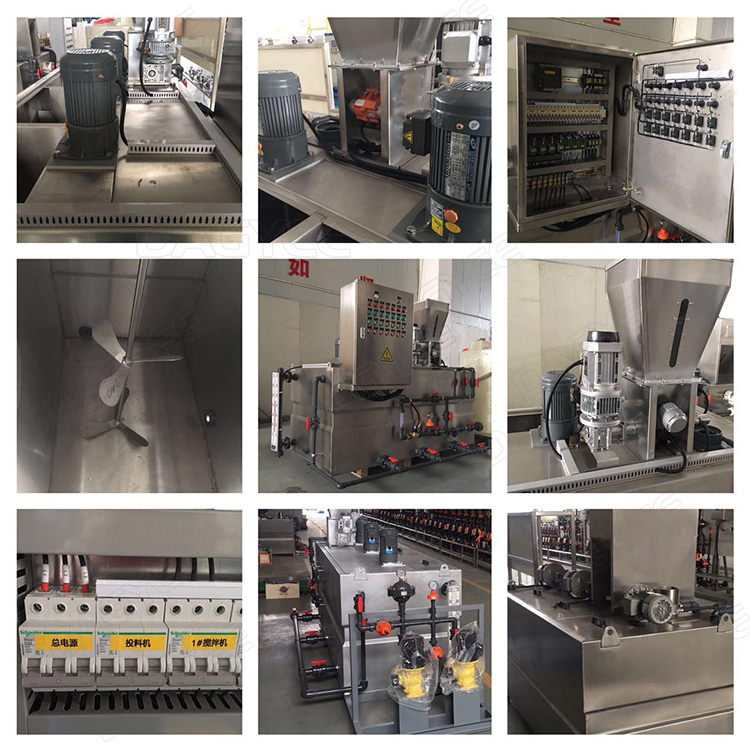
| Check hopper | Daily | Look for caked powder; clean inside walls |
| Inspect feeder | Weekly | Take apart and clean the screw; remove buildup |
| Inspect wetting system | Weekly | Check spray nozzles for blockages |
| Check agitators | Monthly | Make sure they run smoothly |
| Clean tanks | Every three months | Drain and clean to stop scale from building up |
| Calibrate instruments | Every six months | Flow meters, level sensors |
| If offline for more than 3 days | At shutdown | Empty all powder from the hopper |
| Problem | Likely Cause | Fix |
|---|---|---|
| Feeder not delivering powder | Powder caked or bridged in hopper | Clean hopper, check screw, check the heater |
| Unstable solution concentration | Feed rate or water pressure keeps changing | Check feeder, stabilize water supply, check the VFD settings |
| Fish eyes in solution | Poor wetting, not enough aging time | Check wetting system, confirm aging time, check water temperature |
| Motor overload alarm | Screw jammed, agitator stuck | Stop, inspect, clear whatever is blocking it |
| Storage tank low level alarm | Prep rate too slow | Check feed and water supply, check for clogs in the transfer line |
| Cloudy solution | Polymer overdosed or wrong grade | Reduce dose, check polymer type, run a jar test |
Do not ignore small problems.
That low level alarm that goes off once a week? Something is wrong. That occasional fish eye in the solution? Something is wrong. Fix it now before it gets worse.
8. What Makes DAGYEE Units Different
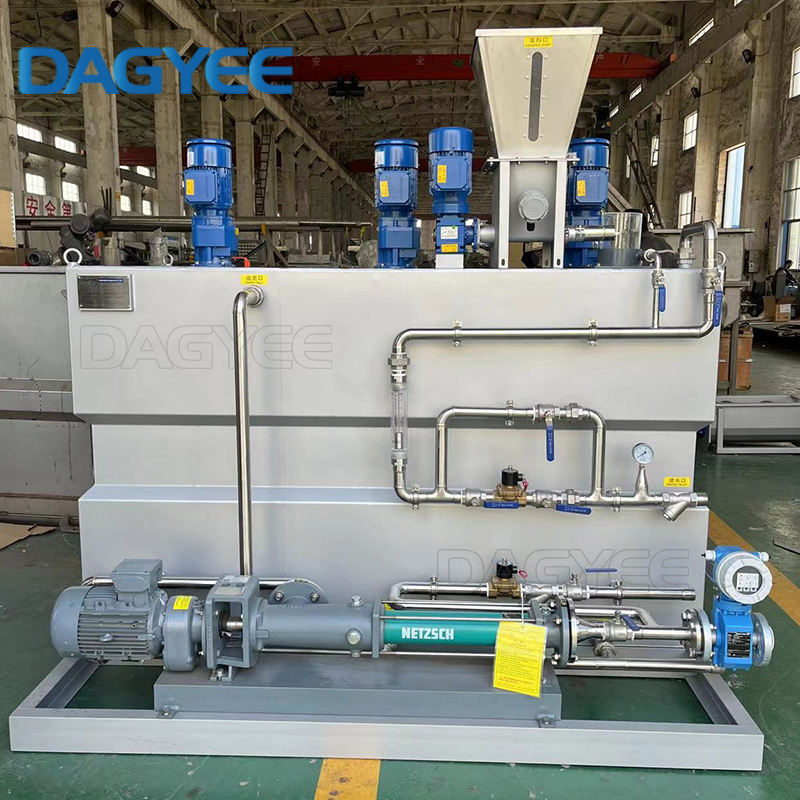
• Material options: SS304, SS316, PP, or FRP depending on your conditions. We help you pick the right one for your wastewater.
• Anti caking feeding: Heated screw end, tapered hopper with smooth walls. No bridging, no caking, no surprises.
• Fully automatic PLC control: Touchscreen operation, remote communication ready. Your operator does not have to stand there and watch it.
• Precise concentration: Feed rate and water flow are tied together. Concentration stays within plus or minus 5 percent.
• Works with dry powder and emulsion: One unit handles both. Just change the settings.
• Easy maintenance: Everything you need to check or clean is right where you can reach it. No special tools required.
9. Summary
A few rules of thumb for selection:
• Pick stainless steel if your budget allows. Avoid plastic if you want it to last.
• Leave yourself 20% to 30% margin. Not too much, not too little.
• Make sure the feeding system has anti caking features.
• Higher automation saves you more money in the long run.
Still not sure what size or configuration you need?
Get in Touch:
Free Application Assessment – We'll look at your wastewater and suggest what fits
Customized Design – Built around your flow, space, and treatment goals
Fast Quotation – Detailed estimate within 48 hours
Project References – We'll share examples of similar installations
Factory Tour – Come see our facility

Related News