Space Running Out? DAF vs. Sedimentation – Which Cuts Costs and Footprint?
DAF vs. Traditional Sedimentation: Which One Saves More Space and Money?
By DAGYEE – Water Treatment Specialist
Introduction
The old way of doing things has always been sedimentation. Big concrete tanks. Solids sink to the bottom. It works, but it takes up a lot of room, it's slow, and it doesn't do much for oil, grease, or fine particles.
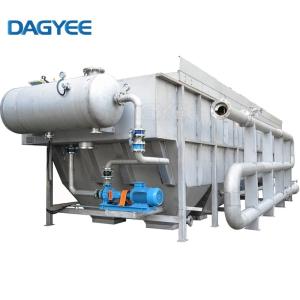
Then there's DAF. Instead of letting solids sink, it floats them up with tiny bubbles.
So which one actually makes more sense for your plant? Which one saves space? And over the long haul, which one saves money?
Let's walk through the differences and see what fits your situation.
1. What Is Traditional Sedimentation?
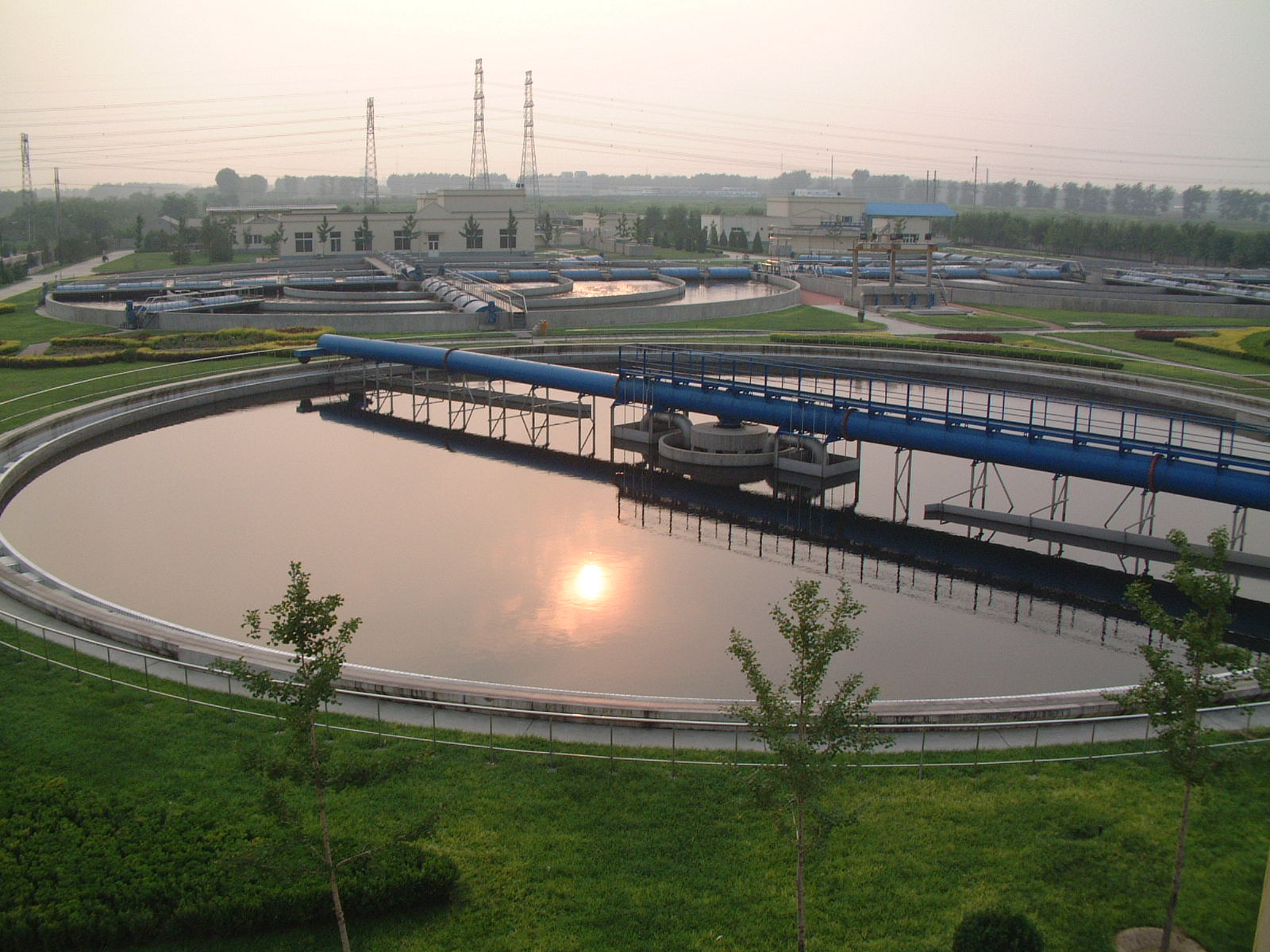
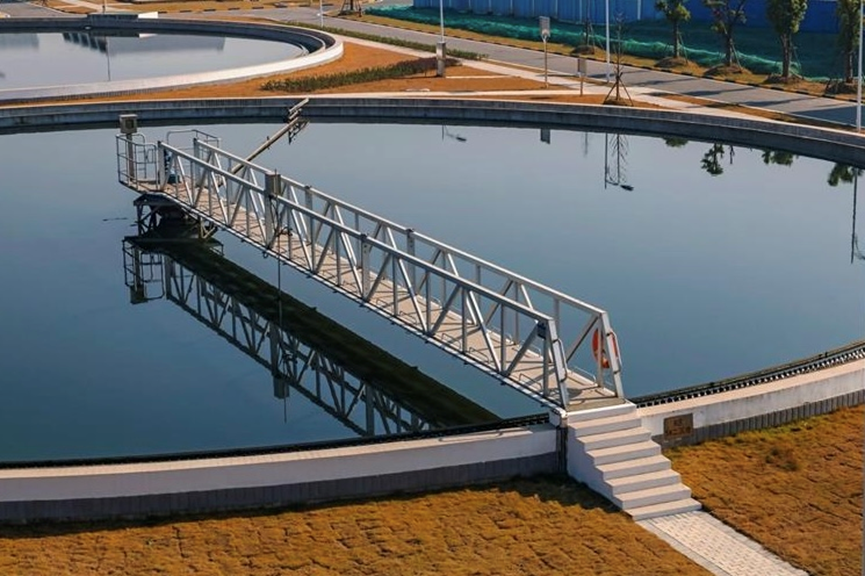
You've probably seen them — those big round or rectangular concrete tanks at wastewater plants. They're called primary clarifiers, secondary clarifiers, or just settling tanks. The idea hasn't changed in over a hundred years.
What You Get with Sedimentation
- COD removal: about 25-30%
- Suspended solids removal: 40-60%
- Oil and grease removal: under 30%
The Problems
Sedimentation is simple. No chemicals needed. But it's got real issues.First, it eats up space. If you're tight on land, that's a problem. A primary clarifier for a decent-sized plant can cover as much ground as a basketball court.
Second, it's slow. Water sits there for hours. That means a lot of water is always tied up in the tank, and when you need to expand, you're building another big tank.
Third, it only catches heavy stuff. Oils, grease, algae, fine particles — they just float right through. That's why plants with oil or grease problems often struggle to meet discharge limits.
Fourth, it's expensive to build. Concrete tanks take months. You dig, you pour, you wait for it to cure. Weather can mess things up. And once it's built, it's there forever. You can't move it. You can't easily change it.
Fifth, it doesn't handle surprises well. A sudden rush of water or a spike in solids can wash everything out. You end up with cloudy effluent and a headache.
I've seen plants spend years trying to fix their sedimentation tanks — adding baffles, adjusting weirs, upgrading scrapers. Sometimes it helps. But the fundamental limits stay the same. Gravity only does so much.
2. What Is Dissolved air flotation (DAF)?
Here's how it goes.
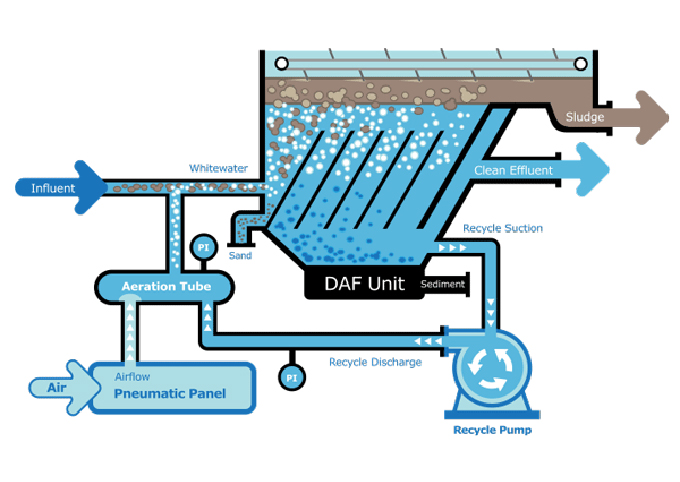
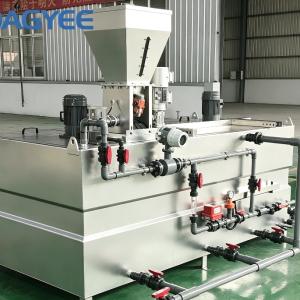
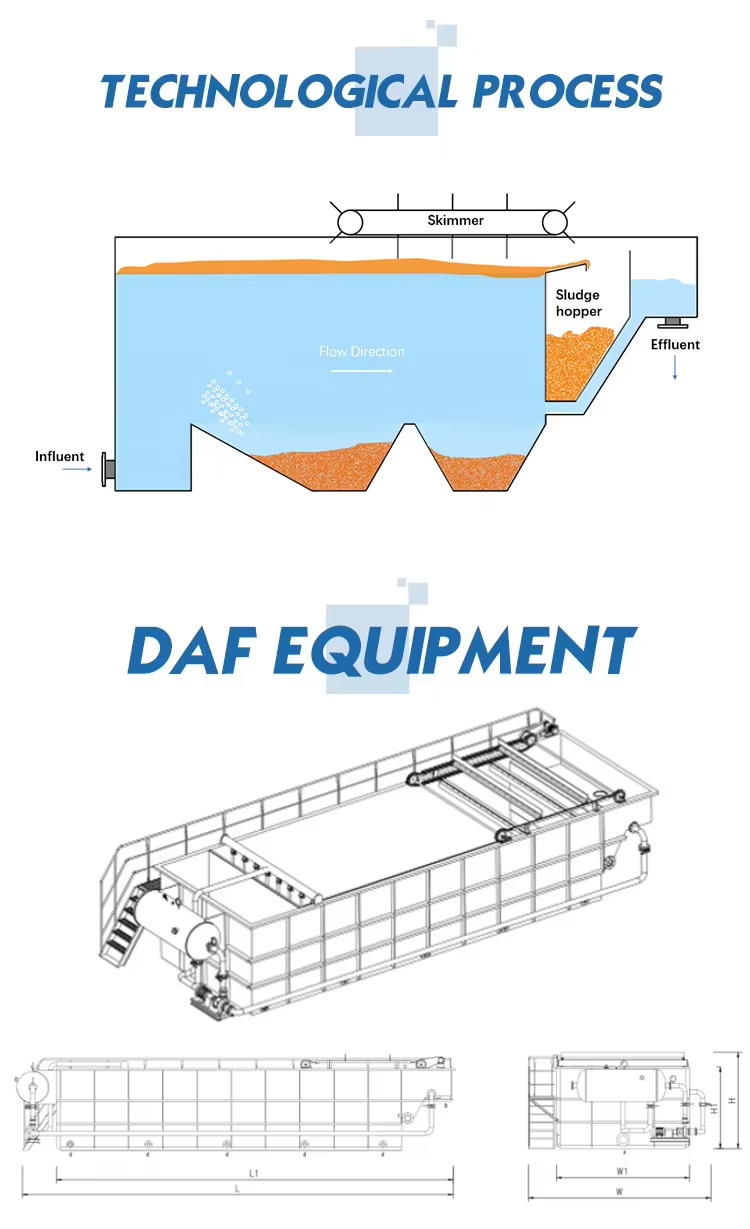
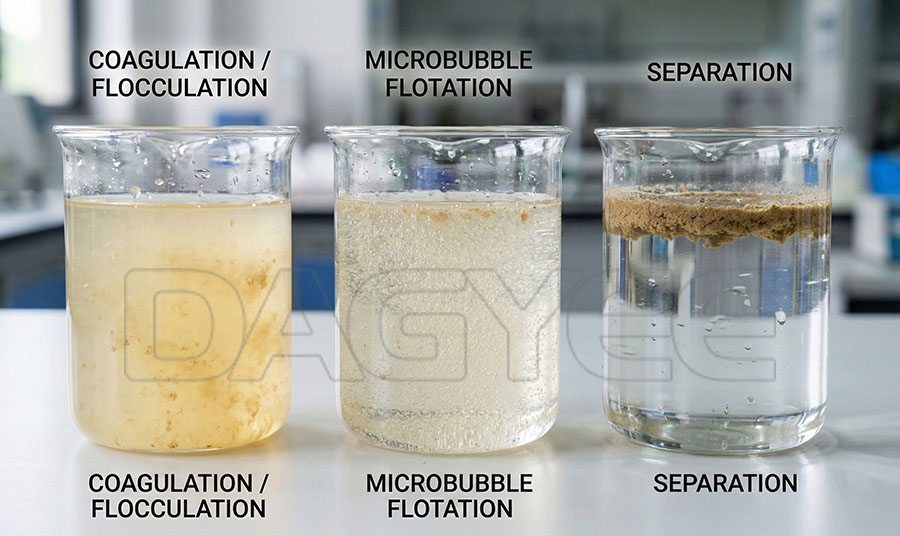
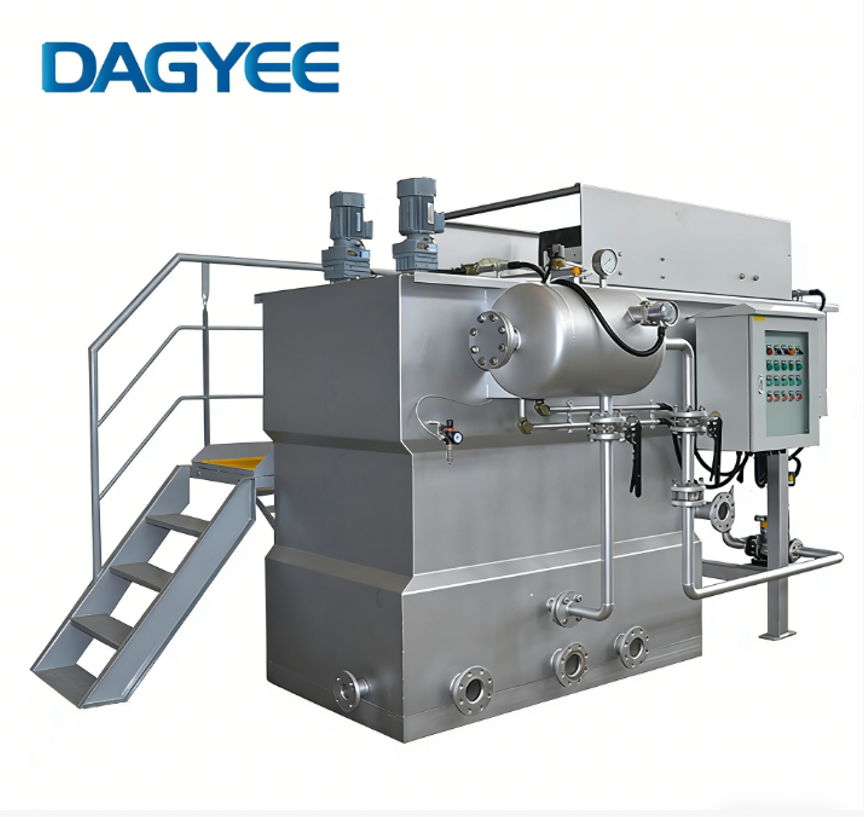
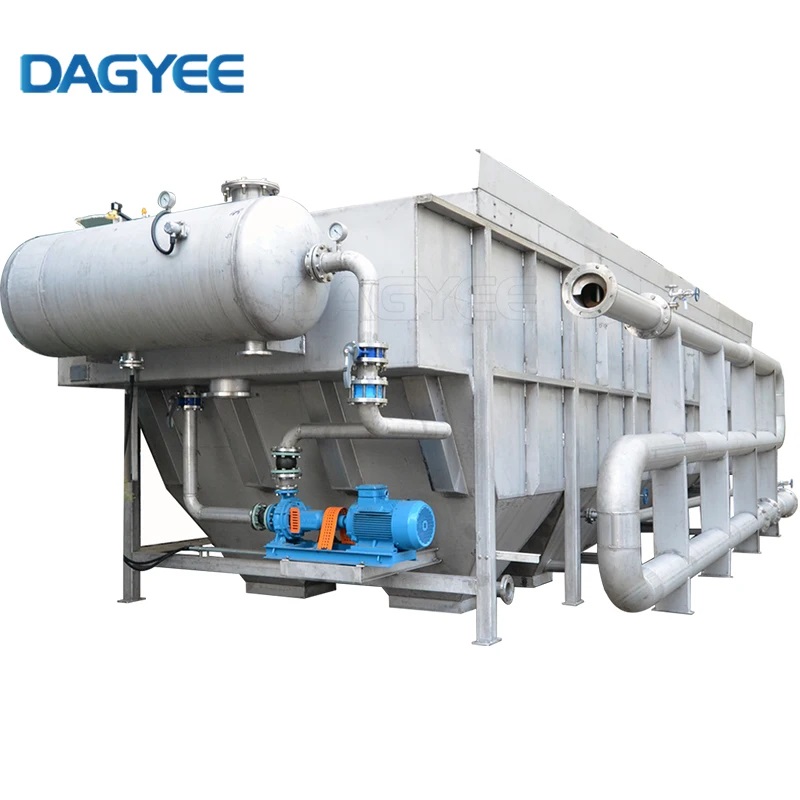
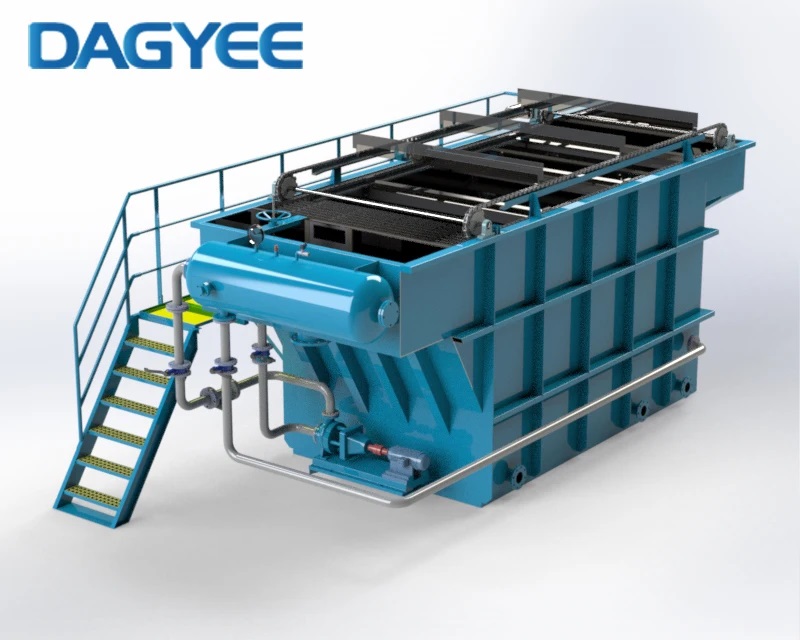
Wastewater goes into a mixing tank first. You add chemicals like PAC and PAM. They stick fine particles together into bigger clumps. This step is important — without it, the smallest particles would just slip through.
Then some of the clean water gets recycled. It goes through a pressure tank where air dissolves into it at 4-6 bar. Think of it like opening a soda bottle — the pressure keeps the bubbles dissolved until you're ready.
That pressurized water goes into the flotation tank through a special valve. Suddenly the pressure drops, and the dissolved air comes out as millions of tiny bubbles — 30 to 50 microns across. You can't see them individually, but together they turn the water milky.
Those bubbles attach to the clumps and carry them up to the surface. In a few minutes, you get a thick layer of floating sludge on top. A scraper pushes it into a collection hopper. The clean water comes out from the bottom.
What You Get with DAF
• Space needed: for the same 100 m³/h, about 15-30 square meters
• COD removal: 50-70%
• Solids removal: 85-95%
• Oil and grease removal: 90-95%
Why People Are Switching
A food processor we worked with had been struggling with oil and grease for years. Their clarifier just couldn't get the levels down. After switching to DAF, their oil and grease went from 150 ppm to under 15 ppm. They stopped worrying about compliance.
Another plant had no room to expand. Their clarifier took up 200 square meters. A DAF unit took 18. They freed up space for production without building a new treatment system.
And then there's the speed. When you're running a plant, waiting hours for water to settle isn't ideal. With DAF, you're in and out in minutes. That matters when you've got production schedules to meet.
3. Head-to-Head: Space, Efficiency, and Cost
Let's look at how these two stack up against each other.
Space Savings
This is where DAF really shines. Because DAF uses shallow depth settling with bubble help, you get much more treatment per square meter.| Metric | Sedimentation | DAF |
|---|---|---|
| Footprint (100 m³/h) | 150-200 m² | 15-30 m² |
That's not a small difference. A plant that replaces a clarifier with DAF can free up space equivalent to a tennis court. For plants in cities where land costs real money, that's huge. For plants that need to expand but have no room, that's the difference between being able to grow and being stuck.
Removal Efficiency
Sedimentation relies entirely on gravity. If a particle isn't heavier than water, it doesn't sink. Light stuff, emulsified oils, fine particles — they ride right out the exit.DAF actively lifts things up. With the right chemicals, even particles that are almost the same density as water can be floated off. That's why DAF consistently beats sedimentation on almost every contaminant — from oil and grease to fine solids to COD.
Cost Considerations
Here's where things get interesting. DAF equipment costs more upfront than sedimentation equipment. But you save big on construction.
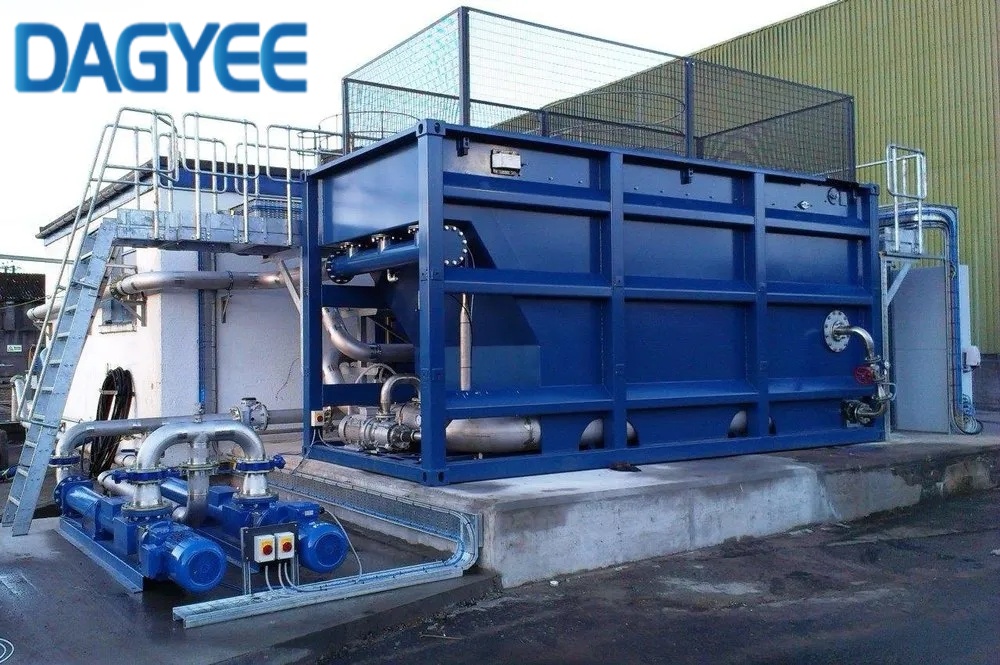
A concrete clarifier requires excavation, forming, rebar, pouring, curing. That's months of work and a lot of money. A DAF unit comes from a factory on a steel skid. You pour a small concrete pad, set the unit on it, connect pipes and power. Done.
When you run the numbers over 10 years, DAF often comes out ahead. The higher upfront cost gets offset by lower civil costs, and the operating costs — while different — tend to favor DAF in many applications.
Where DAF Saves Money
• Less concrete work means lower construction costs• Smaller footprint means you don't have to buy extra land
• Thicker sludge means fewer truckloads to haul away
• Automation means less time spent watching the equipment
Where Sedimentation Saves Money
• No chemical costs
• Lower energy bills
• Simpler mechanical components
4. A Real Example: Food Plant Switches to DAF
First, their primary clarifier took up 200 square meters. They wanted to expand production, but there was no room to build more treatment capacity. Every square meter was already used.
Second, their aeration energy was running high. Too much organic load was getting through to the biological system. They were paying to treat waste that should have been caught earlier.
We suggested replacing the clarifier with a DAF. They put in one of our units sized for 60 m³/h, with a fine screen ahead of it.
The results surprised even us.
The footprint dropped from 200 square meters to 18. That's 91% less space. They freed up enough room to add a new production line without building anything new.
COD removal went from 25% to 55%. That meant the biological system wasn't working as hard. Aeration energy dropped by 28%, saving them over $1,200 a month.
And the solids they captured? Clean enough to sell as animal feed. What used to be a disposal cost turned into a revenue stream.
The whole thing paid for itself in about 14 months.
The plant manager told us later: "Switching to DAF was the best decision we made. We got our space back, cut our energy bill, and even found a way to make money from our waste."
5. When to Pick DAF vs. Sedimentation
There's no one-size-fits-all answer. It depends on what you're dealing with.
Pick DAF When:
• You have oil or grease. Sedimentation won't catch it. DAF will get 90-95% of it.
• You have fine solids or colloids. Gravity can't touch them. DAF with chemicals can.
• You need to protect downstream equipment like MBR membranes. Fine screen plus DAF is the standard for a reason.
• Your flow varies. DAF handles surges better than sedimentation. When a storm hits or production spikes, DAF keeps working.
• You have tight discharge limits. Higher removal helps you meet them without constantly tweaking things.
• You're retrofitting an existing plant. DAF can fit into spaces where you can't pour a new concrete tank.
Pick Sedimentation When:
• You have plenty of space and land is cheap. The footprint penalty doesn't hurt as much.
• You really want to avoid chemical costs. Some operations can't justify the polymer expense.
• Your flow is steady and predictable. Sedimentation works best when nothing changes.
The Hybrid Approach
I've seen this work well in meat processing and rendering plants where the wastewater has both heavy solids and lots of grease. The DAF takes the grease, the clarifier takes the heavy stuff. Together, they handle what neither could do alone.
6. Why DAF Is Becoming More Common
The DAF market is expected to hit $158 million by 2030. A few things are driving that growth.
Regulations Are Getting Stricter
Limits on oil, grease, and solids are tightening everywhere. Sedimentation alone often can't meet them. DAF gives you the higher removal you need. I've talked to plant managers who spent years tweaking their clarifiers, trying to meet new limits, only to finally switch to DAF and realize they should have done it sooner.
Land Is Getting Expensive
In cities, space costs real money. A DAF unit that takes 30 square meters instead of 200 square meters can save you hundreds of thousands in land costs. For plants that are landlocked and can't expand, DAF might be the only way to increase capacity.
People Want to Reuse Water
More industries are recycling water. DAF produces better quality effluent for reuse. If you're thinking about closing the loop on your water, DAF gives you a cleaner stream to work with.
Energy Balance
Yes, DAF uses power for pressurization. But when you factor in the lower aeration load downstream, the overall energy picture often favors DAF. In the food plant example earlier, aeration energy dropped by 28% — far more than the energy the DAF used.
Concrete tanks take months. Factory-built DAF units go in days. When you need capacity now, that matters. I've seen plants wait through a whole construction season for a clarifier while a DAF would have been running in a week.
Modern DAF systems come with PLCs and touchscreens. You can set it and forget it, or adjust things on the fly. Operators spend less time watching the tank and more time on other work.
7. So Which One Should You Pick?
Go with DAF if:
• Space is tight
• You're upgrading an existing plant
• You have strict discharge limits to meet
• You want to protect downstream equipment like MBR
Stick with sedimentation if:
• Your solids are heavy and easy to settle
• You have plenty of space
• You want to avoid chemical costs
• Your flow is steady and predictable
That said, the trend is clear. More plants are moving to DAF. Regulations aren't getting looser. Land isn't getting cheaper. And the economics of DAF keep looking better.
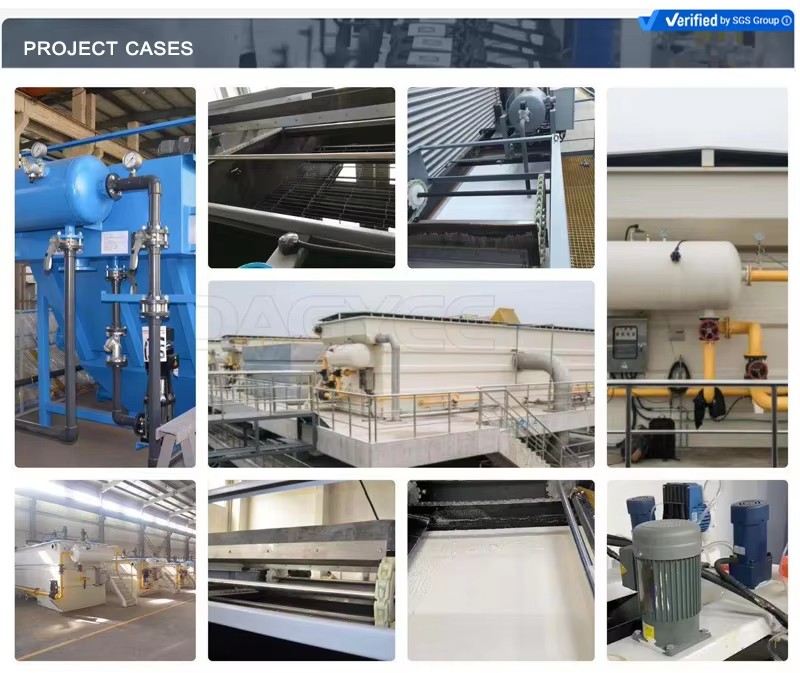
At DAGYEE, we've helped hundreds of facilities make this call — food plants, breweries, municipal plants, petrochemical sites. We've seen how the right choice can change a plant's numbers. Sometimes it's DAF. Sometimes it's sedimentation. Sometimes it's both.
The key is knowing what you're dealing with and doing the math for your specific situation.
We offer free technical consultations. We can look at your wastewater, run the numbers, and help you figure out what makes sense. No obligation. Just a conversation about what you're dealing with and what might work best.
Related News