How to Pick the Right Drum Screen Without Wasting Money
Externally Fed Rotary Drum Screen: What to Look for When You Buy One
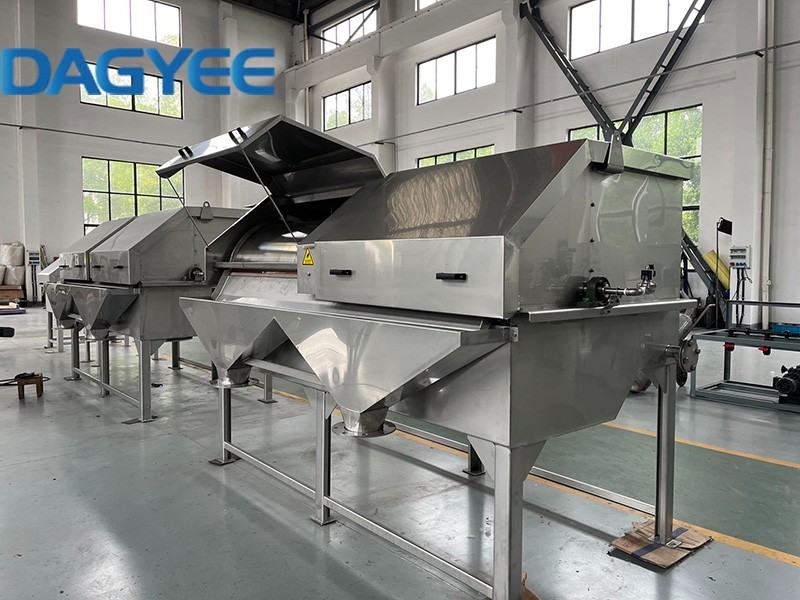
Turns out, pretty different. And the wrong choice will cost you in ways you don't expect.
Here's what I wish someone had told me before I picked my first externally fed rotary drum screen.
Why the Feeding Direction Matters More Than You Think
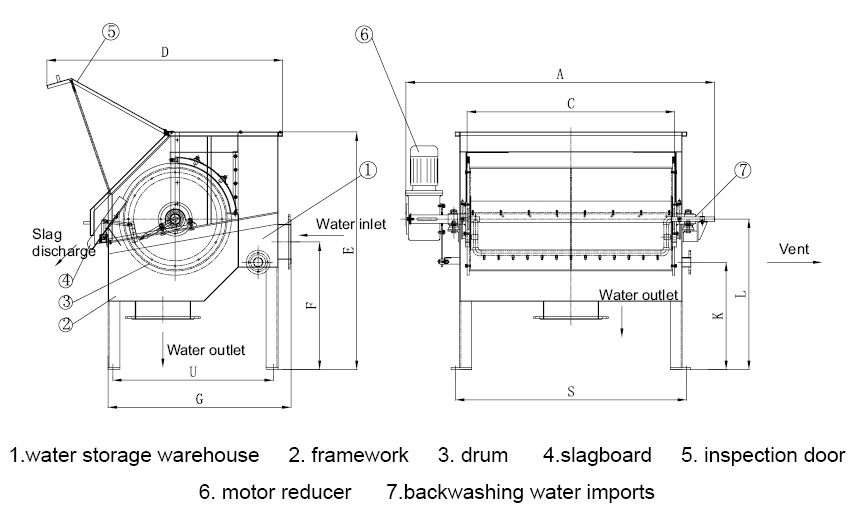
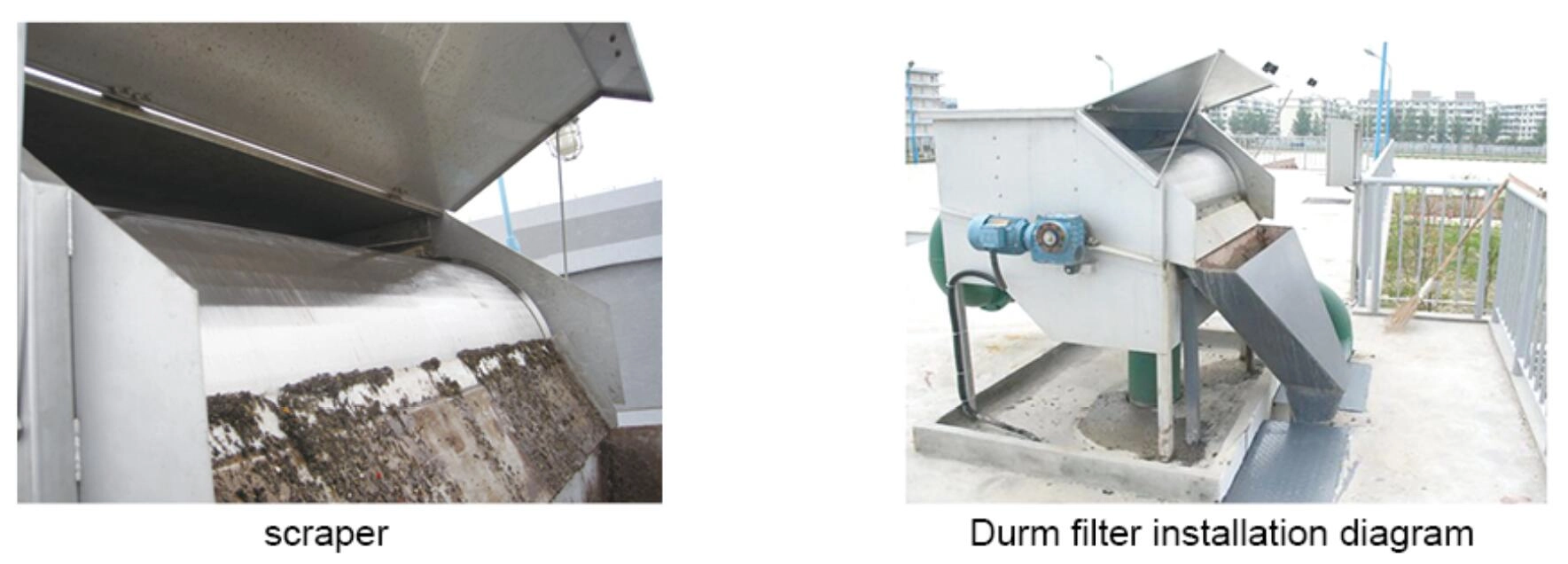
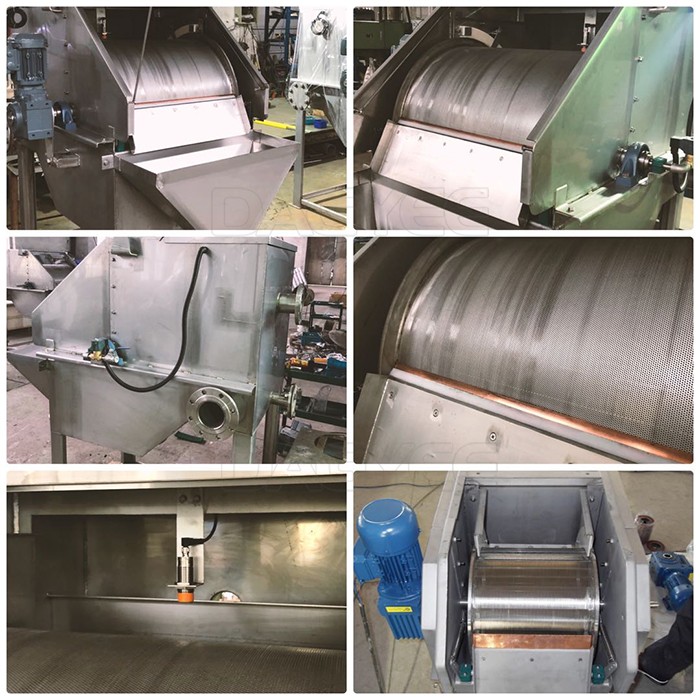
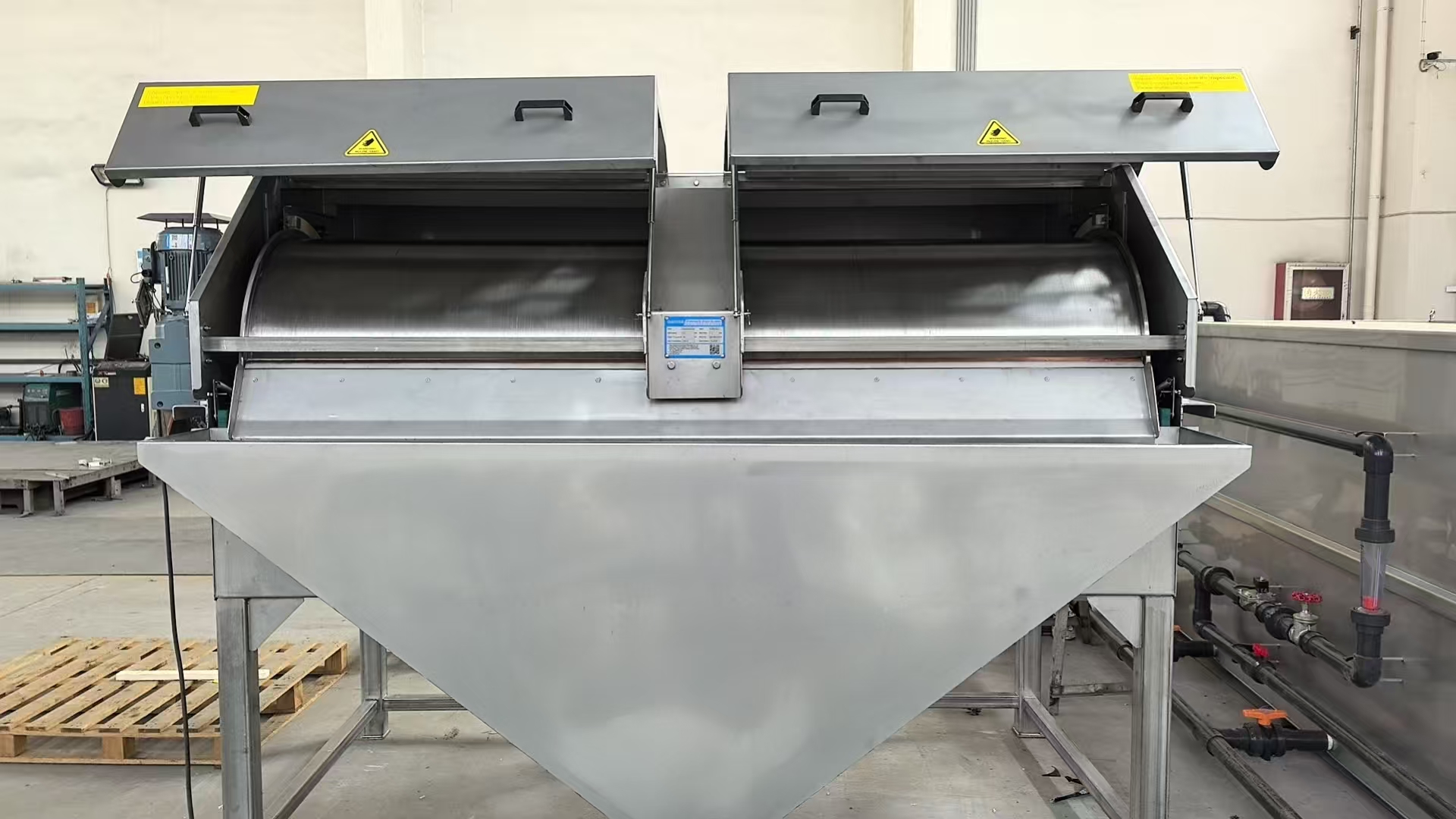
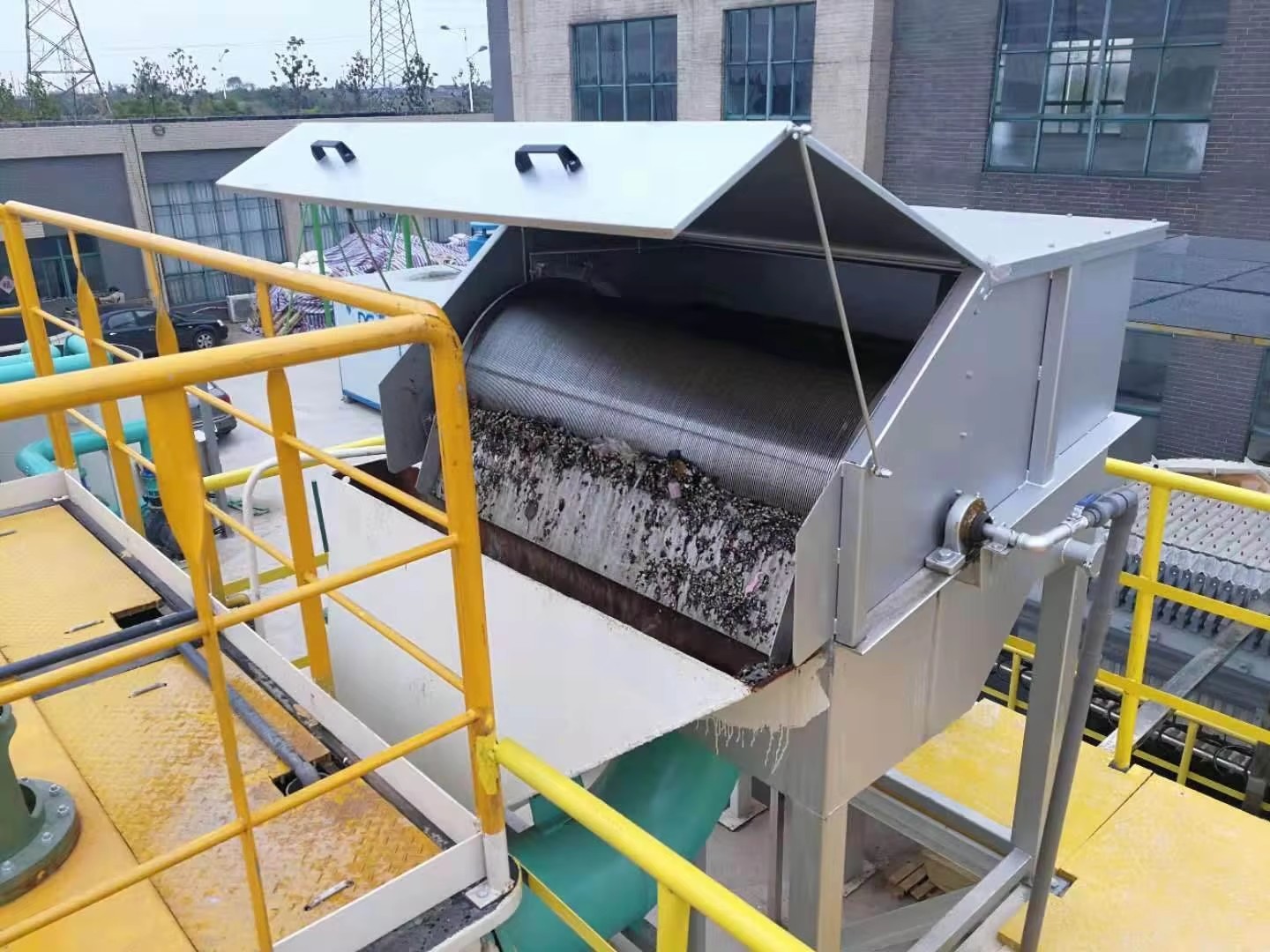
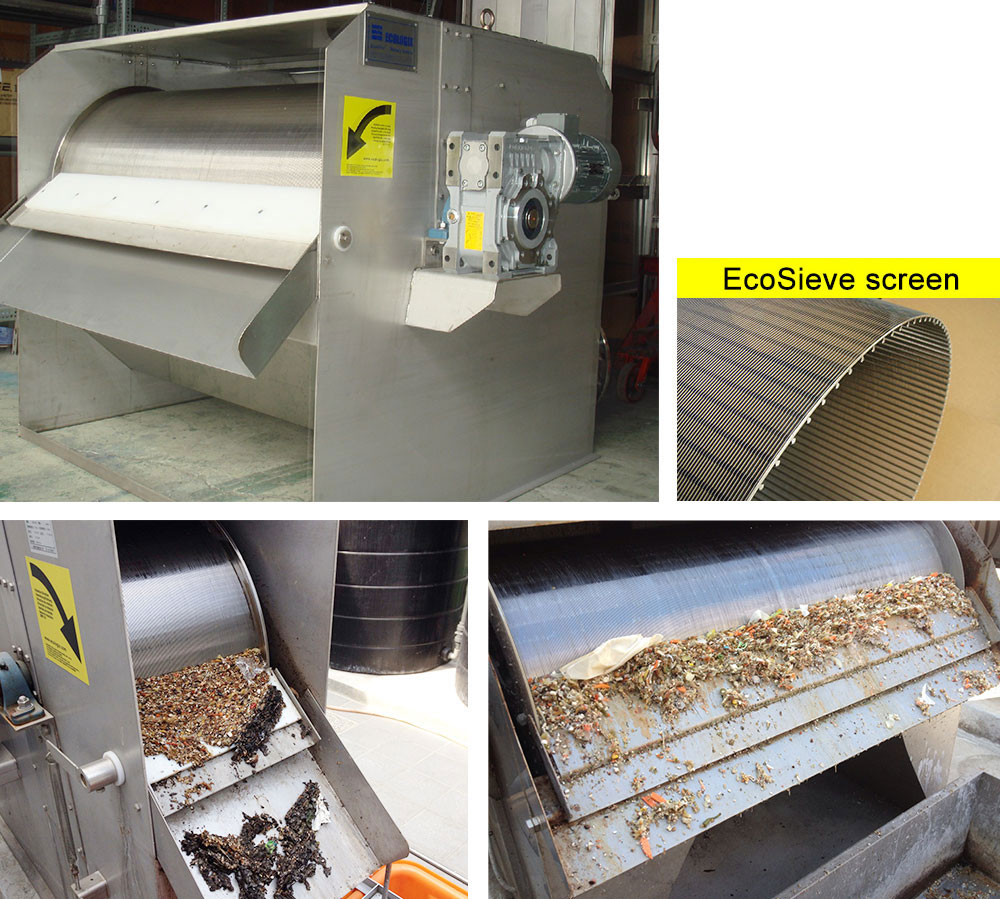
On an externally fed screen, the water flows over the outside of the drum. Solids get trapped on the outer surface, and a spray system cleans them off. Since the solids are on the outside, they're easy to remove, and the drum stays relatively clear.
Internally fed screens push water into the drum. Solids collect on the inside surface, and you need a different cleaning mechanism to get them out.
So which one do you need?
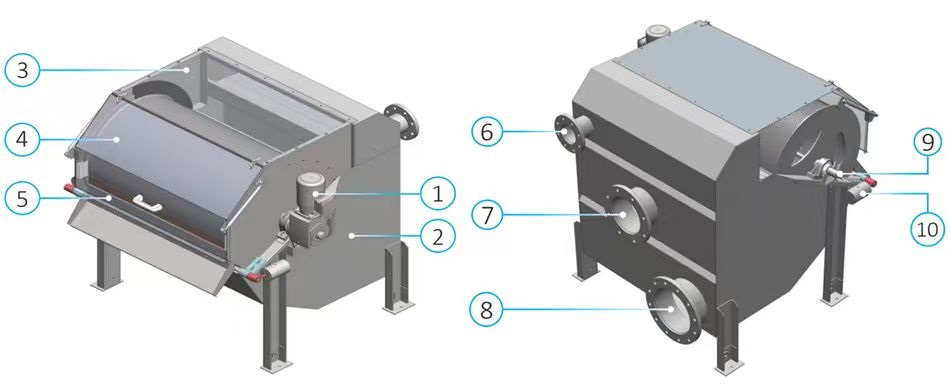
External feed screens work best when the solids are relatively uniform — think food processing, dairy, beverage, vegetable washing. The solids are predictable, not too fibrous, and they don't wrap around everything.
Internal feed screens handle the nasty stuff — textile fibers, slaughterhouse waste, hair, fish scales, leather trimmings. These materials are stringy and clingy. They'll wrap around an external drum and turn it into a solid ball of mess.
If you're dealing with fibrous wastewater and you buy an external feed screen, you're going to spend a lot of time with a pressure washer. Trust me on this one.
The Slot Size Trap
You want clean effluent, so you pick the smallest slot size available. 0.25mm sounds great, right? Captures everything. Water comes out crystal clear.
Then you start running it, and the problems begin.
The finer the slot, the more often it clogs. You're pushing water through tiny openings, and every solid particle that's even slightly larger than that slot is going to get stuck. The screen blinks — that's the term for when the mesh gets covered in solids and water stops passing through.
And here's the thing about external feed screens: they rely on the spray system to stay clean. If the spray pressure drops, if a nozzle gets clogged, if the pump isn't sized right — the screen blinks, and you lose capacity.
A 0.25mm slot might only give you a third of the flow of a 1.0mm slot on the same drum. Same machine, same motor, just different mesh. You pay for the bigger drum but only get a fraction of the capacity because you went too fine.
Slot Size Selection Guide
Externally fed rotary drum screen — match the slot to your application
| Slot Size | Best Application | Flow Capacity | Cleaning Requirement | Typical Industries |
|---|---|---|---|---|
| 0.25 – 0.5 mm | Fine solids removal, high effluent quality | Low | Frequent | Chemical, textile, paper (final polishing) |
| 0.75 – 1.0 mm | General solids removal | Medium | Moderate | Food processing, beverage, dairy, vegetable washing |
| 1.5 – 2.0 mm | Coarse solids removal | High | Low | Municipal primary treatment, fruit processing |
| 2.5 – 3.0 mm | Heavy solids removal, pre-screening | Very high | Minimal | Meat processing, slaughterhouse, heavy industrial |
Rule of thumb: Pick the coarsest slot that still meets your effluent quality requirement. Finer slots capture more solids but reduce flow capacity and require more frequent cleaning. If you don't need to remove particles below 1.0mm, don't spec a 0.25mm screen.
You pick the coarsest slot that still meets your effluent quality requirement. Not the finest. The coarsest.
If you need to remove particles down to 0.5mm, and a 0.75mm slot gets you there, don't go to 0.25mm. You're just buying trouble.
The only exception is if you have an aggressive cleaning system — high pressure, automatic cycling, good nozzles — and you're willing to spend the time maintaining it. Even then, ask yourself if the extra cleanup is worth it.
Material Choice: 304 vs. 316L
Not really.
304 is the standard. It's what most manufacturers use for municipal wastewater and general industrial applications. It holds up fine in normal conditions.
316L has molybdenum added to the alloy. That gives it better resistance to chlorides and acids. If you're near the coast, if your wastewater has high salt content, if you're dealing with chemical effluent — you want 316L.
Here's why it matters: A 304 screen in a chloride-rich environment will start pitting within a few years. Small holes appear in the metal, they grow, and eventually the screen fails. Not because it wore out, but because it corroded from the inside.
316L costs more upfront. But replacing a 304 screen every three years costs more in the long run than buying 316L once and running it for ten.
Material Selection Guide
304 vs. 316L — choose the right stainless steel for your environment
| Application Type | Recommended Material | Why |
|---|---|---|
| Municipal wastewater, normal conditions | SS304 | Good corrosion resistance, cost-effective |
| Food and beverage processing | SS304 | Standard option for non-acidic streams |
| Food processing with acidic streams (citrus, dairy) | SS316L | Molybdenum resists acid corrosion |
| Coastal plants, brackish water, high salinity | SS316L | Superior chloride resistance |
| Chemical, textile, dyeing wastewater | SS316L | Handles aggressive chemicals |
| Slaughterhouse, meat processing | SS304 or SS316L | Depends on wash-down chemicals used |
Important: If the drum is 316L, make sure the frame, shaft, and fasteners are also 316L. A 316L drum with 304 bolts creates a weak point — the bolts will corrode first and cause problems down the line.
If the drum is 316L, everything that touches the water should be 316L. Don't compromise on the small parts.
Capacity and the "Peak Flow" Problem
Average flow is 50 m³/h, so they buy a screen that handles 50 m³/h. Then a rainstorm hits, or a batch process dumps a large volume, and the screen can't keep up.
Water backs up. Solids bypass the screen. Your effluent quality goes out the window.
Always size for the peak flow, not the average. Look at your maximum expected flow, add 20-30% on top of that, and size the screen accordingly.
The other factor is solids loading. A screen that handles 50 m³/h of clean water won't handle 50 m³/h of sludge. Solids take up space on the mesh, they reduce the open area, and they slow down the flow.
If your solids loading is high, go up one size. The extra cost is nothing compared to the cost of a screen that's constantly overloaded.
Typical flow capacity by application
Externally fed rotary drum screen — slot size and flow ranges
| Industry | Typical Slot Size | Typical Flow Range (m³/h) |
|---|---|---|
| Vegetable processing | 1.0 mm | 40 – 200 |
| Paper industry | 0.5 – 1.0 mm | 20 – 225 |
| Slaughterhouse | 0.75 – 1.5 mm | 15 – 160 |
| Seafood processing | 0.75 – 1.0 mm | 17 – 170 |
| Meat processing | 1.0 – 1.5 mm | 20 – 240 |
| Municipal wastewater | 1.0 – 3.0 mm | 20 – 400+ |
Note: Actual capacity depends on drum size, solids loading, and cleaning system effectiveness. These are typical ranges — always verify with the manufacturer's capacity chart for your specific model.
What the Spray System Actually Does
External feed screens use high-pressure water jets to blast solids off the mesh. If the spray system fails, the screen fails. It's that simple.
What to check:
- Pressure: You need enough pressure to dislodge solids. Most screens run at 1-3 bar. Anything less and you're just wetting the screen, not cleaning it.
- Nozzle type: Flat spray nozzles cover more area. Some manufacturers use round nozzles that miss spots.
- Coverage: The spray should hit the entire width of the drum. If there are gaps, solids will build up on those spots.
- Frequency: How often does the spray cycle? Continuous spray uses more water but keeps the screen cleaner. Intermittent spray saves water but depends on the timer settings being right.
- Water quality: If you're using dirty water to clean the screen, you're just adding more solids. Use clean water for the spray system.
Cleaning and Maintenance: What You're Signing Up For
Daily checks:
- Look at the spray nozzles. Are they clogged?
- Listen to the drum. Any unusual noise?
- Check the discharge. Is solids removal working properly?
- Inspect the spray nozzles. Replace worn ones.
- Check the drum drive. Chain tension, motor coupling, belt wear.
- Look at the mesh for tears or damage.
Monthly:
- Test the spray pressure.
- Check the drum bearing for play.
- Inspect the frame for corrosion.
If you're running a 1.5mm slot, you can relax a bit. The maintenance intervals are longer.
Cost: Where the Money Actually Goes
A cheap screen with 304 material and a basic spray system will cost less upfront. But you'll pay for it in maintenance, downtime, and replacement parts.
A better screen with 316L material, a good spray system, and solid construction will cost more to buy. But it'll run longer, break down less, and give you better effluent quality.
The other cost to consider is downtime. If your screen goes down, you lose processing capacity. In a municipal plant, that can mean regulatory violations. In a factory, that can mean production stops. In food processing, that can mean product loss.
The cost of downtime is usually higher than the cost of the screen itself.
The Bottom Line on Selection
Start with the solids. What are you removing? What size are they? Are they fibrous or granular? That tells you the slot size and whether you should be looking at external feed or internal feed.
Look at the environment. Is the water corrosive? Coastal? Chemical? That tells you the material spec.
Know your peak flow. Not the average. The maximum. Size for that, add a buffer, and round up to the next model size.
Check the cleaning system. The drum is just the drum. The spray system is what keeps it working. If the spray system is undersized, the screen won't perform.
Think about maintenance. Are you willing to clean fine mesh every day? If not, go coarser.
Look at the total cost. Not just the purchase price, but the maintenance cost, the downtime cost, and the replacement cost over the life of the equipment.
And if you're not sure, ask someone who's installed and run these screens before. They'll tell you what works and what doesn't.
One Last Thought
You don't have to make those mistakes.
Get the slot right. Get the material right. Size for the peak flow. Make sure the spray system is up to the job. Think about maintenance before you buy.
The right screen will run for years with minimal attention. The wrong screen will be a constant source of frustration.
Pick carefully, and you'll save yourself a lot of trouble.
DAGYEE — Externally Fed Rotary Drum Screens
Need help picking the right screen? Send us your flow data, solids type, and application details. We'll help you choose the model that fits your process — no sales pressure, just practical advice.

Related News