Two-Phase or Three-Phase Decanter Centrifuge? How to Choose Without Wasting Money
Two-Phase vs. Three-Phase Decanter Centrifuges: A 2026 Selection Guide
Introduction
His plant bought a decanter centrifuge to process kitchen waste. But the machine was not separating oil and water well. The solids came out too wet. They recovered almost no oil. He thought the equipment was defective.
I went to take a look. The problem was not the equipment quality. He bought the wrong type — a two-phase machine for oily material.
A two-phase decanter can only separate solids from liquid. It cannot separate oil from water. The oil and water came out mixed together. No clean oil to recover.
He switched to a three-phase decanter later. The problem went away. But he lost six months of production time.
That is the cost of picking the wrong equipment.
This article explains the difference between two-phase and three-phase decanter centrifuges. After reading, you will know which one you need.
1. Two-Phase Decanter Centrifuges
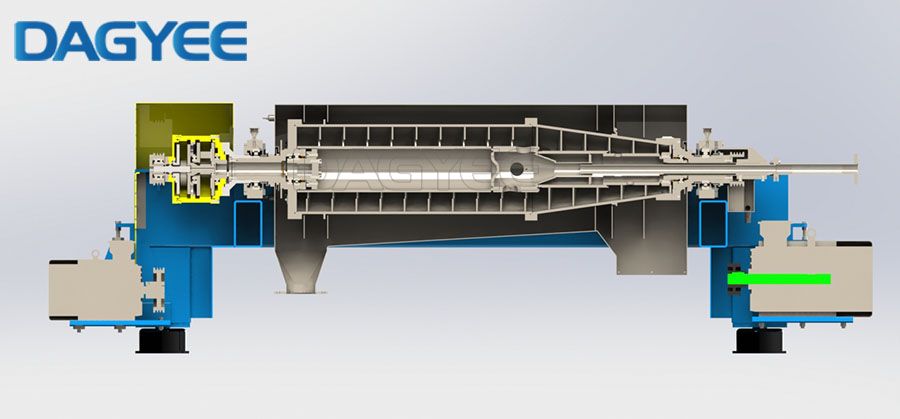
Feed goes into the rotating bowl. Centrifugal force throws solids against the bowl wall. A screw conveyor pushes the solids toward the discharge end. Liquid flows out the other end.
That is it. One solid outlet. One liquid outlet.
When do you use two-phase?
If your material is solids plus one liquid, two-phase is enough. Do not overthink it.
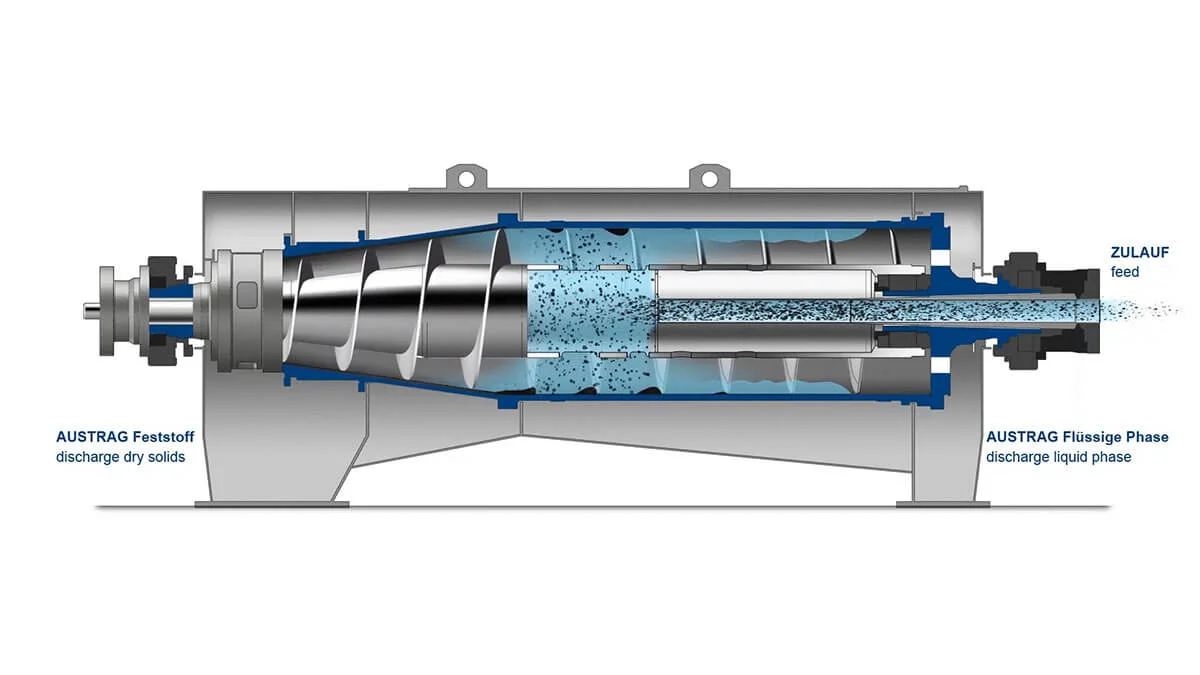
Where two-phase decanters are used
| Industry | What It Does |
|---|---|
| Municipal sludge | Dewatering, lowers moisture |
| Coal washing | Treats slurry, recovers coal fines |
| Chemical plants | Separates solids from liquids |
| Food processing | Juice clarification, grain dewatering |
| Fermentation | Separates broth, recovers biomass |
I have seen plants run two-phase decanters for years with very little trouble. They are simple, reliable, and easy to maintain. That is why so many people choose them.
2. Three-Phase Decanter Centrifuges
A three-phase decanter centrifuge separates three things: solids, light liquid, and heavy liquid.
The working principle is similar, but the design is different. Inside the rotating bowl, materials separate into three layers. Solids settle on the outside. Heavy liquid, like water, stays in the middle. Light liquid, like oil, stays at the center. Three outlets, each discharging its own stream.When do you use three-phase?
You need two liquids that do not mix and have different densities. The classic example is oil, water, and solids.
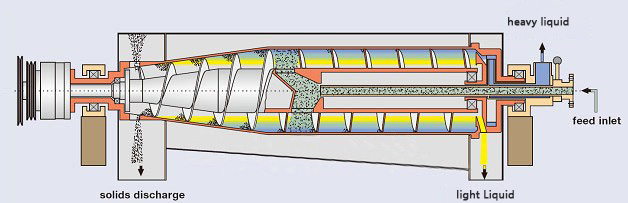
Where three-phase decanters are used
| Industry | What It Does |
|---|---|
| Kitchen waste | Separates oil, water, and food solids |
| Refinery sludge | Recovers oil, treats water, produces dry cake |
| Vegetable oil refining | Separates oil, soap stock, and water |
| Wheat starch | Separates starch, gluten, and water |
| Waste oil recovery | Processes used cooking oil and trap grease |
I visited a kitchen waste plant last year. They were using a three-phase decanter. The operator showed me the oil coming out of one pipe, water out of another, and dry solids out of a third. He said the oil alone paid for the machine in two years.
3. Main Differences
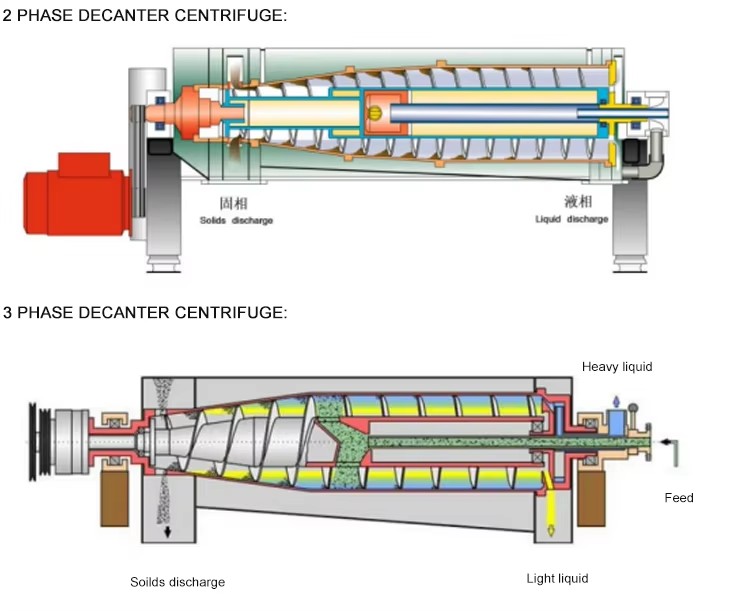
| Comparison | Two-Phase | Three-Phase |
|---|---|---|
| What it separates | Solids + liquid | Solids + light liquid + heavy liquid |
| Liquid outlets | 1 | 2 (light + heavy) |
| Typical material | Sludge, coal slurry | Kitchen waste, oily sludge |
| Main purpose | Volume reduction, compliance | Recovery, resource reuse |
| Design complexity | Simpler | More complex |
| Price | Lower | Higher |
A simple way to think about it: two-phase is for disposal. Three-phase is for recovery.
If you just need to get rid of solids and make water clean enough to discharge, two-phase is fine. But if you have oil in your material and you want to get that oil out and sell it, you need three-phase.
4. How to Decide
Ask yourself three questions.
Question 1: How many liquids are in your material?
One liquid → Two-phase decanter.
Two liquids that do not mix → Go to question 2.
No, you just need to meet discharge standards → Two-phase can work, but three-phase does it better.
Yes, you need to recover oil or another light liquid → You need three-phase.
High solids, like sludge or coal slurry → Two-phase is the better choice. It handles high solids well and runs steadily.
Medium solids with oil → Three-phase is the better choice.
| Material Type | Solids Content | Contains Oil | Recommended |
|---|---|---|---|
| Municipal sludge | High | No | Two-phase |
| Coal washing water | High | No | Two-phase |
| Kitchen waste | Medium | Yes | Three-phase |
| Refinery sludge | Medium | Yes | Three-phase |
| Juice clarification | Low | No | Two-phase |
| Vegetable oil refining | Low | Yes | Three-phase |
5. Common Mistakes
This is the most common mistake I see. A two-phase decanter has only one liquid outlet. Oil and water come out mixed together. You will not recover clean oil. The water will not meet discharge standards. You end up with two waste streams instead of one.
If your solids content is too high, the discharge port of a three-phase decanter can clog. The machine will stop frequently for cleaning. You will spend more time unclogging it than running it. For high solids, stick with two-phase.
For three-phase separation to work, the two liquids must have different densities. If the density difference is too small, the separation is not clean. The oil will have too much water. The water will have too much oil. Run a lab test before you buy. Do not guess.
Three-phase decanters cost more than two-phase. Some buyers go for the cheapest option. They end up with poor materials, no wear protection, and machines that break down within months. I have seen it happen more than once. The cheap one becomes the expensive one.
6. Selection Comparison
| Factor | Two-Phase | Three-Phase |
|---|---|---|
| Material contains oil | Not suitable | Suitable |
| High solids content | Suitable | Not ideal |
| Need to recover oil | Cannot do | Can do |
| Initial investment | Lower | Higher |
| Operating cost | Lower | Medium |
| Maintenance | Simple | Medium |
| Market maturity | High | Medium |
7. Market Trends for 2026
The decanter centrifuge market is growing. A few trends are worth watching.
Two-phase decanters hold about 67 percent of the market. They are the workhorses for municipal sludge, coal washing, and chemical plants. That will not change anytime soon. These industries need reliable, simple machines that run all day every day.
Kitchen waste treatment, waste oil recovery, and biodiesel are growing quickly. Three-phase decanters recover oil, water, and solids at the same time. That fits perfectly with the circular economy trend. More cities are building kitchen waste plants. More factories are looking to recover value from their waste streams.
Decanter centrifuges are no longer just spin and dump. Variable frequency drives, online monitoring, automatic differential speed adjustment — these are now common. Touchscreen controls and remote monitoring let operators do other work. One operator can watch several machines from a control room.
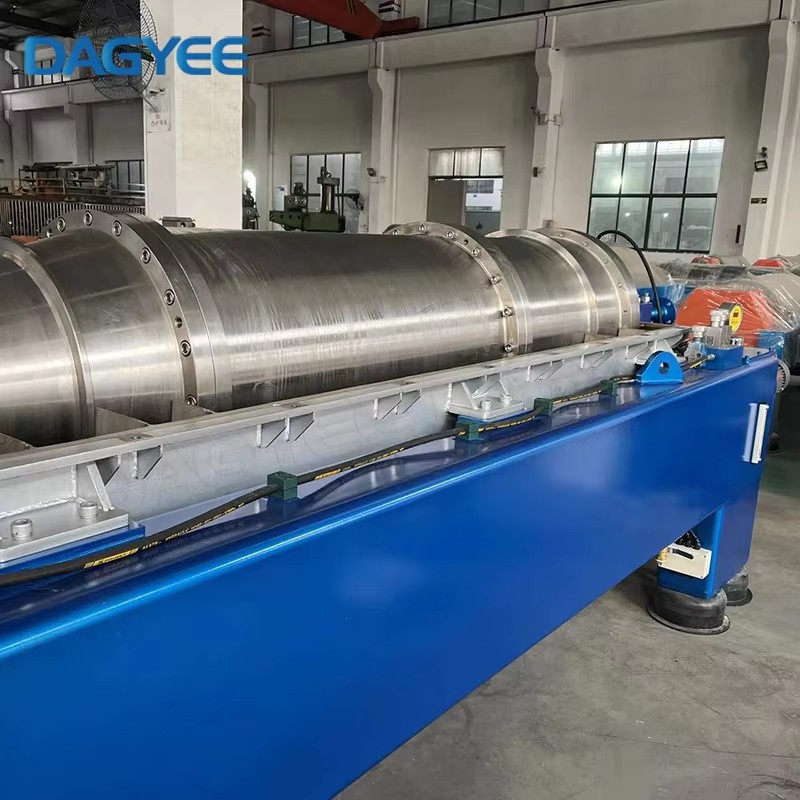
For abrasive materials, wear is a major problem. Tungsten carbide coatings and ceramic tiles are becoming more common. Equipment life is getting longer. I have seen DAGYEE machines with tungsten carbide coatings run for years on abrasive materials with very little wear.
8. DAGYEE Decanter Centrifuges
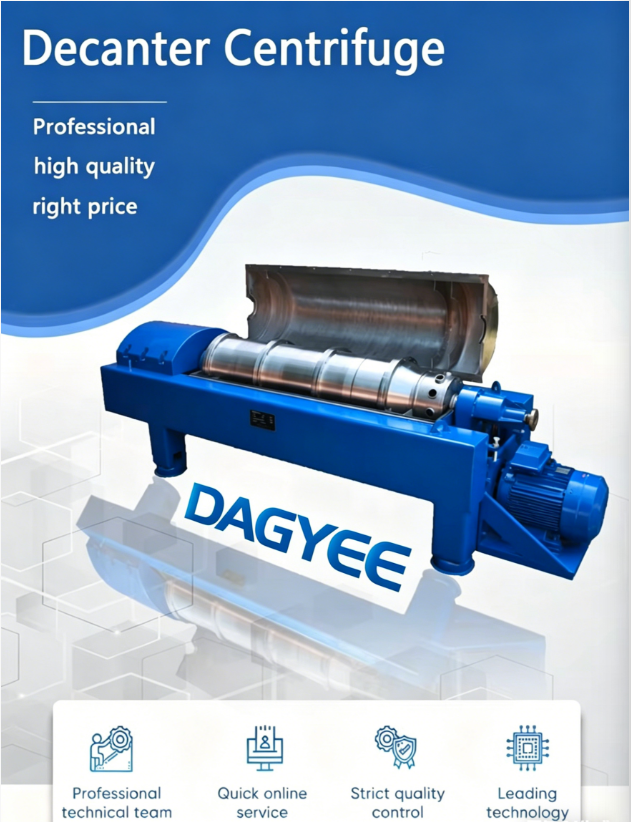
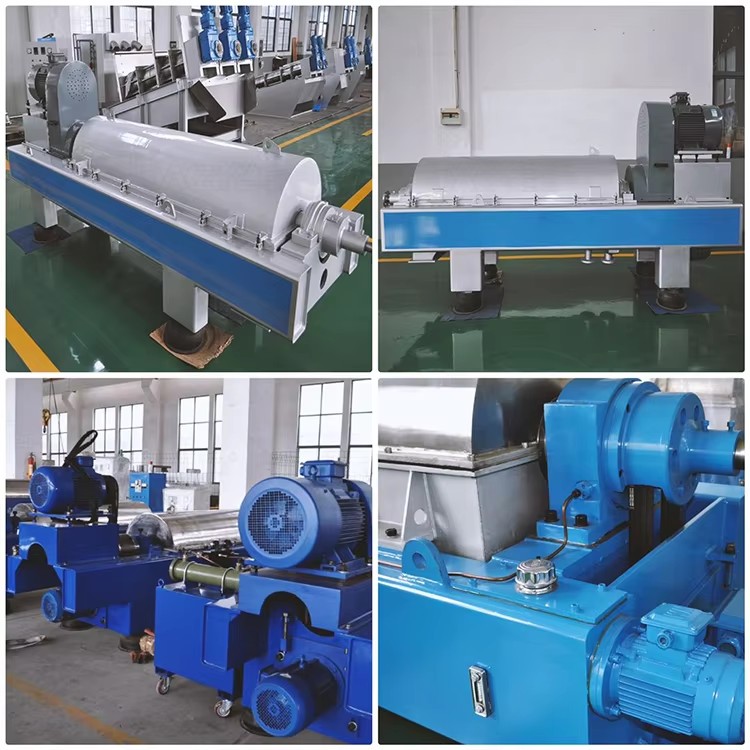
DAGYEE has been building decanter centrifuges for over 20 years. We offer both two-phase and three-phase models. All our machines are built with high-quality materials and precision machining.
What we put into our machines
• Bowl and screw conveyor made from duplex stainless steel. They last a long time.• Tungsten carbide wear protection on all critical areas. No shortcuts.
• Siemens PLC control with touchscreen. Easy to use.
• Variable frequency drive. You can adjust the speed.
• Dynamic balancing to G2.5 grade. The machine runs smooth.
• CE certified. You can sell into European markets.
We have delivered over 5,000 units to more than 30 countries. Our machines are used in municipal wastewater plants, food factories, chemical plants, oil refineries, and kitchen waste treatment facilities.
Why people buy from us
• We listen. We do not just sell you a standard machine.• We build to last. No cheap materials, no shortcuts.
• We support you. Spare parts, technical support, field service — we are there when you need us.
9. DAGYEE Decanter Centrifuge Technical Specifications
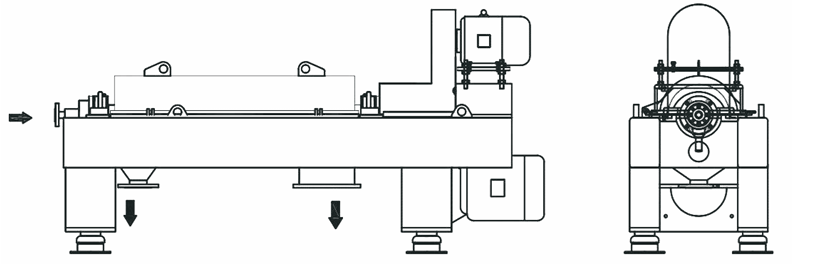
| Model | Drum diameter (mm) | Length (mm) | Maximum speed (rpm) | Highest separation factor | Mixture capacity (m³/h) | Motor Power (kW) |
|---|---|---|---|---|---|---|
| LW250-900 | 250 | 900 | 5000 | 3500 | 0.5-3 | 11/5.5 |
| LW350-1500 | 350 | 1500 | 3800 | 2850 | 1-5 | 18.5/5.5 |
| LW400-1200 | 400 | 1200 | 3400 | 2581 | 1-8 | 22/7.5 |
| LW400-1600 | 400 | 1600 | 3400 | 2581 | 2-10 | 22/7.5 |
| LW450-2000 | 450 | 2000 | 3200 | 2572 | 5-25 | 30/7.5 |
| LW450-1800 | 450 | 1800 | 3200 | 2572 | 5-20 | 30/7.5 |
| LW530-2280 | 530 | 2280 | 2800 | 2350 | 10-50 | 45/15 |
| LW600-2400 | 600 | 2400 | 2600 | 2265 | 15-65 | 55/18.5 |
| LW650-2600 | 650 | 2600 | 2400 | 2100 | 20-80 | 55/90 |
| LW720-2500 | 720 | 2500 | 2200 | 1950 | 25-90 | 75/90 |
| LW800-2560 | 800 | 2560 | 2000 | 1800 | 30-110 | 90/132 |
| LW800-3200 | 800 | 3200 | 2000 | 1800 | 30-110 | 90/132 |
| LW900-3200 | 900 | 3200 | 1800 | 1650 | 30-150 | 132/200 |
What comes standard
• Bowl and screw: Duplex stainless steel (2205)
• Wear protection: Tungsten carbide tiles on feed zone, discharge ports, and screw flight tips• Main bearings: SKF or FAG
• Gearbox: Planetary or hydraulic differential
• Control system: Siemens PLC with 7-inch touchscreen
• Vibration monitoring: Continuous with automatic shutdown
• Temperature monitoring: On main bearings and gearbox
What you can add
• Explosion-proof design for hazardous areas
• Stainless steel 316 for extra corrosion resistance• Hard facing welding instead of tungsten carbide tiles
• Remote monitoring and data logging
• Custom paint colors
10. How We Help You Choose
We have seen customers use two-phase decanters for kitchen waste when they did not need oil recovery. We have also seen three-phase decanters for chemical materials when they needed to recover a solvent. It all depends on your specific needs.
Here is what we recommend
Step 2: Know your goal. Do you just need to dispose of the solids? Or do you want to recover oil and reuse water?
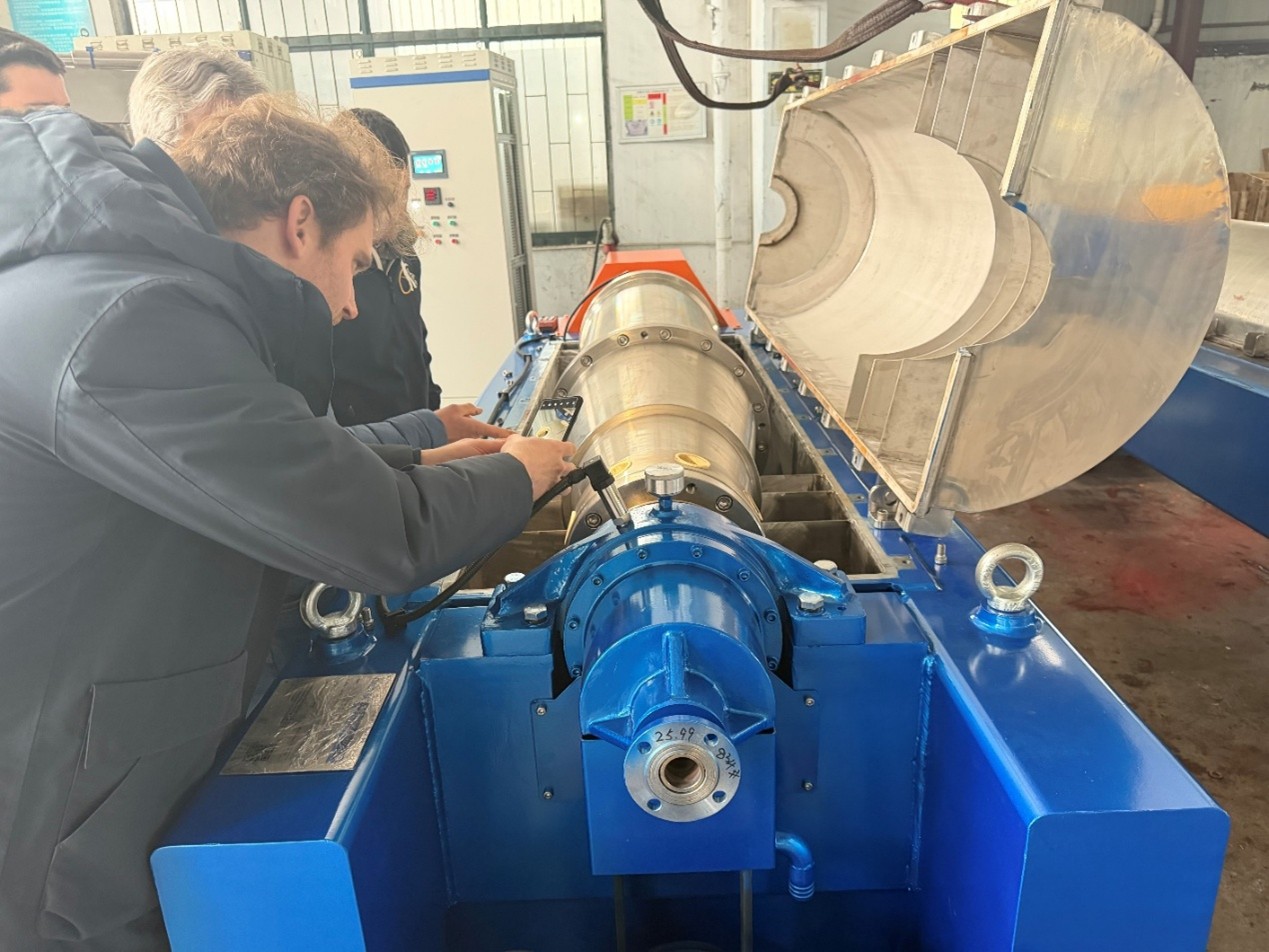
Step 3: Run a test. Send us a sample. We will run it in our lab and tell you which machine works best.
Step 4: Get the right machine. Not too big, not too small. With the right materials and wear protection for your specific material.
If you are not sure whether you need two-phase or three-phase, send us a material sample. We can run a lab test to help you choose the right machine.