Sludge Dewatering Water Costs Killing Your Budget? Try the DAGYEE Screw Press
Save Thousands of Tons of Water Every Year! Why the DAGYEE Screw Press Is Called the "Most Water-Efficient" Sludge Dewatering Machine
Introduction: The Overlooked "Water Cost"
A conventional sludge dewatering machine running 24 hours a day can use tens of tons of water every day — thousands or even tens of thousands of tons per year. Many plants have never calculated this cost. Then the water bill comes, and it's a shock.
The DAGYEE screw press sludge dewatering machine is different. It's not just a little more water-efficient — it's an order of magnitude more efficient.
This article shows you how much water you can save with the DAGYEE screw press, and what else it saves beyond water.
1. Why Is the DAGYEE Screw Press So Water-Efficient?
Conventional dewatering machines rely on filter cloths. Particles get stuck in the cloth pores and must be washed away continuously with large amounts of water. If the cloth clogs, water can't pass through, and the machine stops working. That's why belt presses run wash water 24/7 — the tap never turns off, year after year.
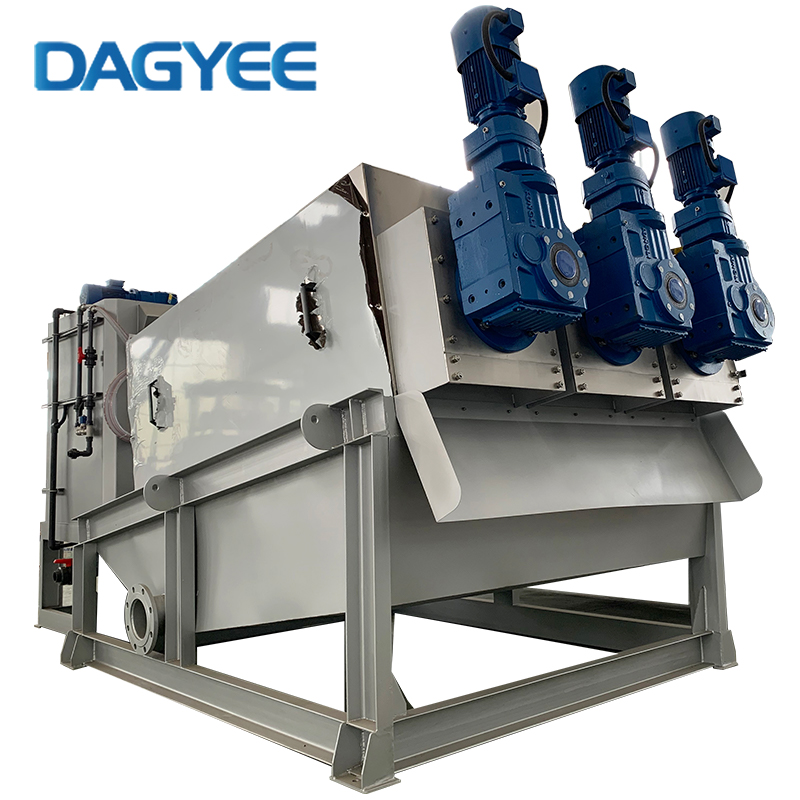
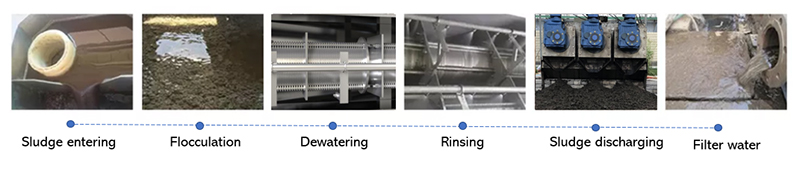
The DAGYEE screw press is completely different. It has no filter cloth.
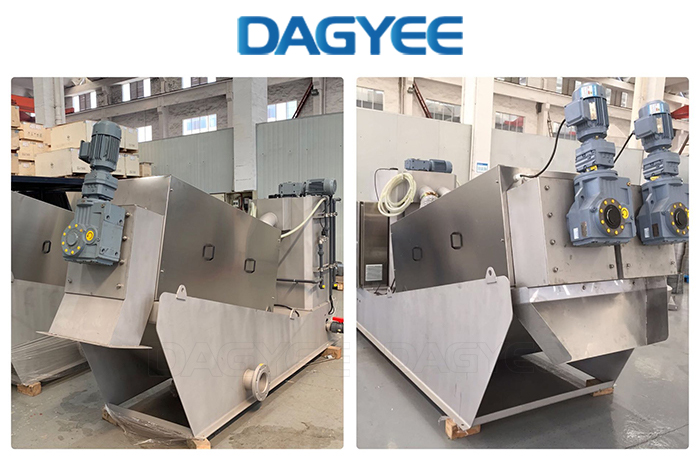
In simple terms: Conventional machines run water continuously to wash. The DAGYEE screw press only needs a quick rinse occasionally.
DAGYEE Screw Press Wash Water Usage
• Wash method: Intermittent (not continuous)• Each wash cycle: 1-2 minutes
• Wash cycles per day: 4-8 times (adjustable based on sludge load)
• Total water usage: 0.5-2 m³/day
• Daily water cost: $0.30-$1.20
• Monthly water cost: $9-$36
• Annual water cost: $108-$432
Compare that to a conventional belt press: daily water cost $60-$120, monthly $1,800-$3,600, annual $21,600-$43,200.
The difference is staggering. A full year of water for the DAGYEE screw press costs less than one day of water for a belt press.
2. DAGYEE Screw Press Technical Specifications
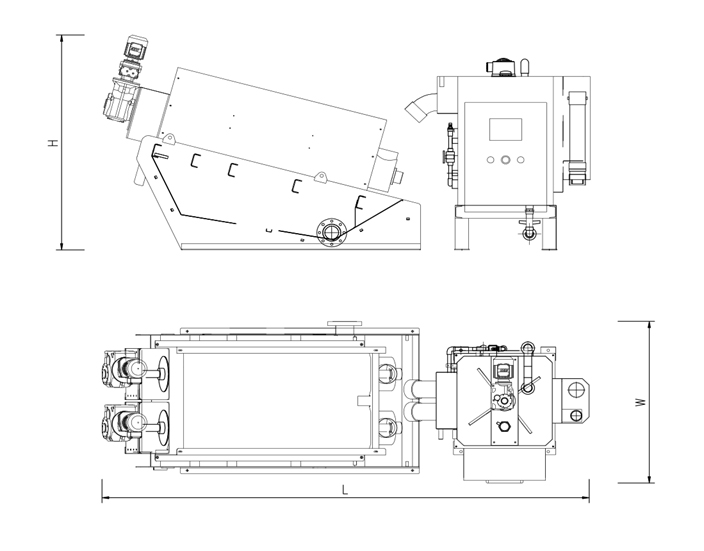
| Model | DS Capacity (kg/h) | Sludge Capacity (m³/h) | Power (kW) | Wash Water (L/h) | |||
|---|---|---|---|---|---|---|---|
| Min | Max | 2g/L | 10g/L | 20g/L | |||
| DL101 | 3 | 5 | 1.5 | 0.6 | 0.25 | 0.2 | 24 |
| DL131 | 6 | 10 | 3.0 | 1.2 | 0.5 | 0.36 | 24 |
| DL202 | 18 | 30 | 9.0 | 3.6 | 1.5 | 1.1 | 64 |
| DL301 | 30 | 50 | 15.0 | 6.0 | 2.5 | 0.74 | 40 |
| DL302 | 60 | 100 | 30.0 | 12.0 | 5.0 | 1.1 | 80 |
| DL352 | 120 | 200 | 60.0 | 24.0 | 10.0 | 6.0 | 216 |
| DL403 | 180 | 300 | 90.0 | 36.0 | 15.0 | 6.0 | 216 |
Specifications Notes:
• DS Capacity: Dry solids processed per hour — the core capacity metric• Sludge Capacity: Based on inlet concentration (2g/L, 10g/L, 20g/L) — lower concentration requires higher flow
• Wash Water: Only 24-216 liters per hour — 1/50 to 1/100 of conventional equipment
• Cake Moisture: 75-85% (depending on sludge characteristics and conditioning)
• Solid Recovery Rate: ≥95% — minimal solids lost to filtrate
• Material: SUS304 stainless steel (SUS316L available for corrosive applications)
• Screw Speed: 2-5 rpm, adjustable via VFD
3. DAGYEE Screw Press Core Advantages
| Advantage | Description |
|---|---|
| No Clogging | Moving and fixed rings create self-cleaning action, ideal for oily and fibrous sludge |
| Low Energy | Only 2-5 rpm, consumes 1/3 the energy of belt presses, 1/5 of centrifuges |
| Automatic Operation | PLC control with programmable cycles, unattended operation |
| Compact Footprint | Only half the space of conventional equipment — perfect for retrofits |
| Minimal Wash Water | Only 24-216 liters per hour — 1/50 of a belt press |
| Wide Application | Handles low-concentration sludge down to 2000mg/L, no thickening tank needed |
| No Filter Cloth | No replacement costs, no downtime for cloth changes, no inventory |
| Low Maintenance | Only annual gearbox oil change and occasional ring inspection |
| Long Service Life | SUS304 stainless steel, corrosion-resistant, designed for 10+ years |
| Safe Operation | Low speed (2-5 rpm), no pinch points, quiet (<65 dB) |
4. Designed for Water Efficiency
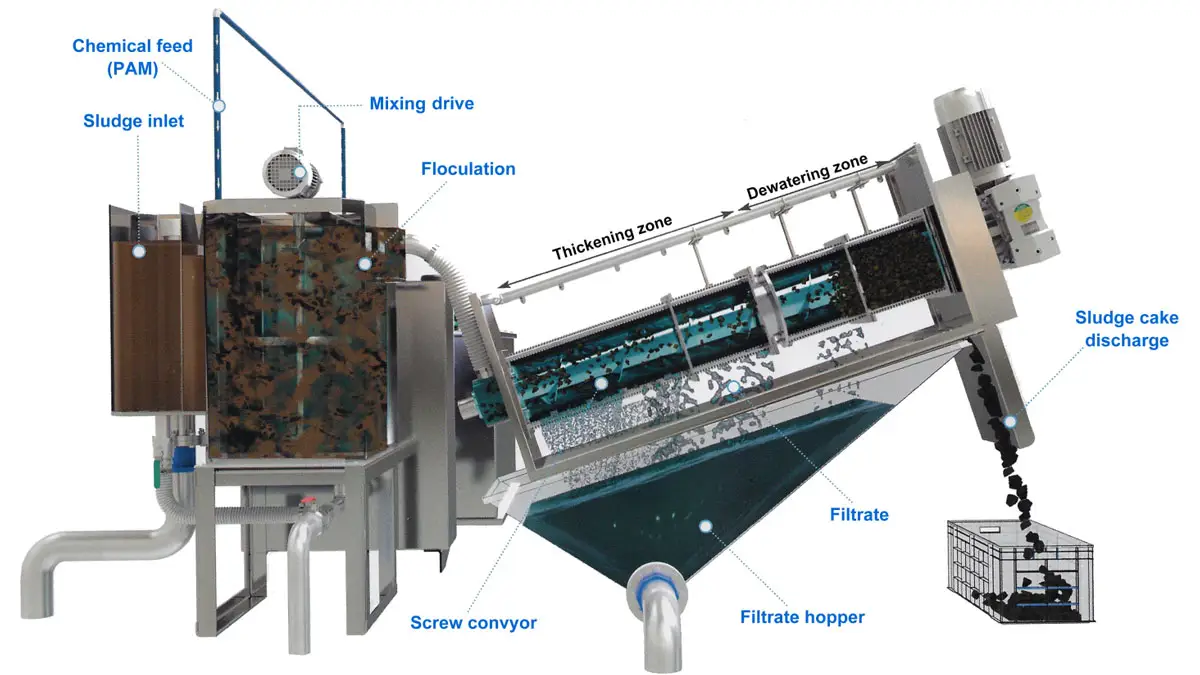
Self-Cleaning Moving Ring System
Conventional machines rely on water to wash. The DAGYEE screw press uses mechanical motion to clean itself. With every rotation of the screw, the moving rings shift, and particles trapped in the gaps are "squeezed" out — not "washed" out. This is why only minimal intermittent wash water is needed.
Intermittent Wash Control
The DAGYEE screw press doesn't wash continuously. The PLC automatically controls wash frequency based on sludge load — more washes when the load is high, fewer when it's low. Unlike conventional machines that run water 24/7 regardless of whether there's sludge or not.
The screw shaft rotates at only 2-5 rpm. This means less wear, less energy consumption, and smoother operation. It also means less need for wash water — because the machine doesn't get dirty as quickly.
All Stainless Steel Construction
SUS304/SUS316L stainless steel — no paint, no peeling, no hidden rust. Many conventional machines use painted carbon steel. When the paint peels, rust starts. When rust starts, replacement is coming. A DAGYEE screw press lasts 10+ years without corrosion issues.
5. Beyond Water: What Else Does the DAGYEE Screw Press Save?
Many customers come for the water savings, but stay for everything else.
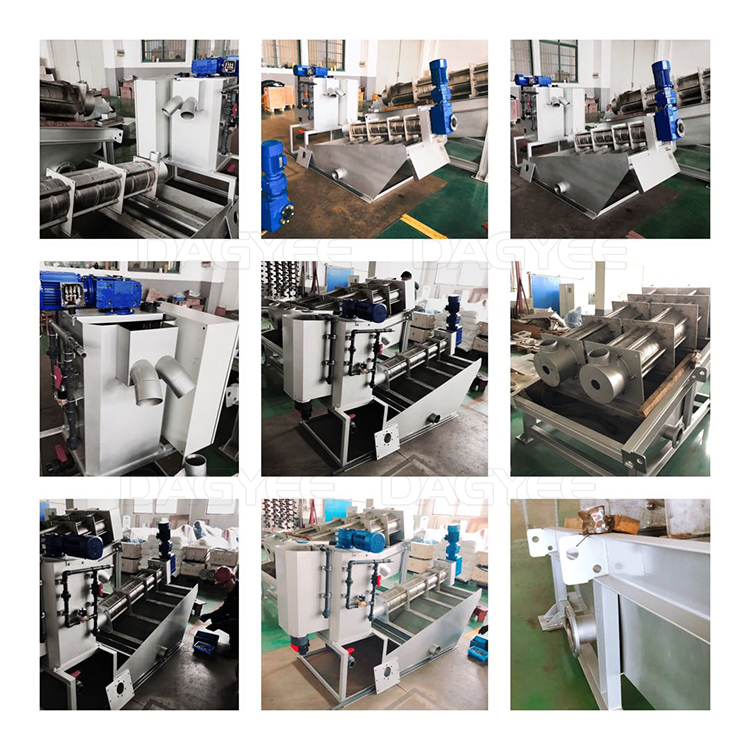
Electricity
The screw press runs at low speed with a small motor. For the same throughput, electricity costs are 1/3 of a belt press and 1/5 of a centrifuge. Saving thousands of dollars a year on power is common.
Labor
Conventional belt presses need constant attention — belts drift off track, wash nozzles clog, cake moisture changes. The DAGYEE screw press, once set up, can run for days without operator intervention. One operator can monitor several machines.
Filter Cloth Replacement
The DAGYEE screw press has no filter cloth. No filter cloth means: no cloth purchase costs, no cloth inventory taking up space, no downtime for cloth changes, no labor for washing cloths.
Conventional belt press filter cloths last a few months at best, a couple of years at most. Replacing them costs money for materials, labor, and lost production — not a small amount.
Sludge Disposal
The DAGYEE screw press produces cake at 75-85% moisture — similar to a belt press. But because it has an integrated screw press, screenings and sludge are dewatered to higher solids content, reducing volume and weight, which lowers hauling and disposal costs.
Maintenance
Conventional machines have many moving parts, high speeds, and high wear. The DAGYEE screw press runs at low speed. Besides regular gearbox oil changes, there are almost no wear parts. Maintenance costs are far lower than conventional equipment.
6. Real Case Study: One Food Plant's Bill
Before (Belt Press)
| Water | $58,000/year |
| Electricity | $4,500/year |
| Filter cloth replacement | $2,500/year |
| Labor | 1 full-time operator |
| Annual operating cost | $70,000+ |
After (DAGYEE Screw Press)
| Water | $300/year |
| Electricity | $2,000/year |
| Filter cloth replacement | $0 (no cloth) |
| Labor | Part-time, weekly checks |
| Annual operating cost | $3,500 |
Results
Annual water savings: $57,700
Annual total operating cost dropped from $70,000 to $3,500
Equipment paid for itself in just over a year
"I never calculated this before. The numbers shocked me. The equipment paid for itself in just over a year. And the best part — I don't have to babysit the machine anymore."
— Plant Manager
— Plant Manager
7. When Should You Choose the DAGYEE Screw Press?
| Your Situation | Why Choose DAGYEE Screw Press |
|---|---|
| Water is expensive | Uses 1/50 the water of conventional equipment — huge water bill savings |
| Water is scarce | No access to large-volume wash water; DAGYEE screw press only needs small intermittent supply |
| Remote projects | Temporary or remote sites with limited water supply — ideal application |
| Oily or fibrous sludge | Self-cleaning design handles what clogs conventional machines |
| Tight on space | Compact footprint fits into existing buildings — no expansion needed |
| High automation required | PLC automatic control — set it and forget it |
| Lowest total cost of ownership | Water, electricity, labor, cloths, maintenance — everything is lower |
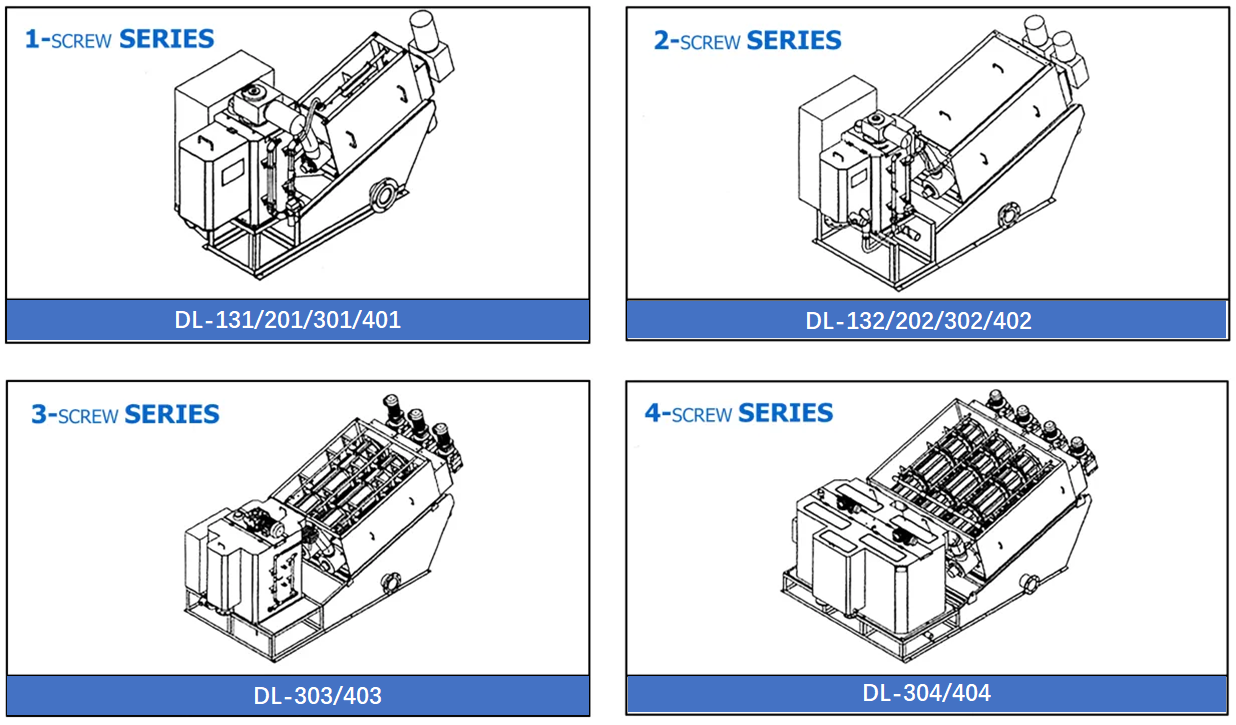
8. Selection Guide
Choose the right model based on your daily dry solids volume:
Daily DS Volume (kg-DS/day)
Recommended Model
Typical Applications
< 120
DL101 / DL131
Small farms, food plants, labs
120-300
DL202
Medium slaughterhouses, food plants, small WWTPs
300-800
DL301 / DL302
Municipal WWTPs, large food plants
800-1500
DL302 / DL303
Large municipal WWTPs, industrial parks
> 1500
DL352 / DL403 or multiple units
Mega-scale WWTPs
Selection Notes:
• Lower inlet concentration requires larger capacity models
• For oily sludge, consider a mixing tank with heating to prevent grease solidification
• For uncertain sludge types, provide a sample for DAGYEE lab testing
9. Conclusion
The DAGYEE screw press doesn't depend on large volumes of wash water. Its self-cleaning design makes it the most water-efficient sludge dewatering machine on the market.
But water is just the beginning. Electricity, labor, filter cloths, maintenance — everything costs less. When you add it all up, the DAGYEE screw press delivers the lowest total cost of ownership.
Less water. Less power. Less labor. Less maintenance. Less disposal cost. That's why it's called the "most efficient" sludge dewatering machine.
Is your equipment costing too much in water? Want to know how much a DAGYEE screw press could save you?
DAGYEE offers free operating cost assessments. Tell us your current equipment and operating data, and we'll calculate your potential savings.
Note: Water consumption data are typical values for reference. Final selection should be confirmed with technical staff.
Related News