Sludge Dewatering Cost Reduction: 4 Ways to Cut Chemical, Labor, and Energy Expenses
How to Solve High Chemical Consumption, Labor Costs, and Energy Use in Sludge DewateringAnyone in the sludge dewatering business knows that buying the equipment is just the first step. The real headache starts when you watch chemicals flow non-stop, electricity meters spin fast, and labor costs stay high — while operating costs keep climbing.
These "three highs" are common problems in most wastewater treatment plants and industrial wastewater stations. But the good news is, while the problems are widespread, there are ways to solve them.
The "Three Highs" — What Are They?
High chemical consumption: Feed concentration can drop from 3% to 0.8% within a single day, but the chemical dose stays fixed. When concentration is low, chemicals are wasted; when it's high, insufficient dosing leads to wetter cake. Research shows that without proper chemical conditioning, sludge cake moisture content can be as high as 82.7%. With optimized dosing, this can drop significantly.
High labor costs: Traditional belt presses and plate-and-frame units can't run 24/7 without operators. Someone has to monitor tension, wash filter cloths, discharge cake, and clean filter plates. DAGYEE screw presses with automatic controls can run 24/7 unattended. The labor requirement difference is substantial.
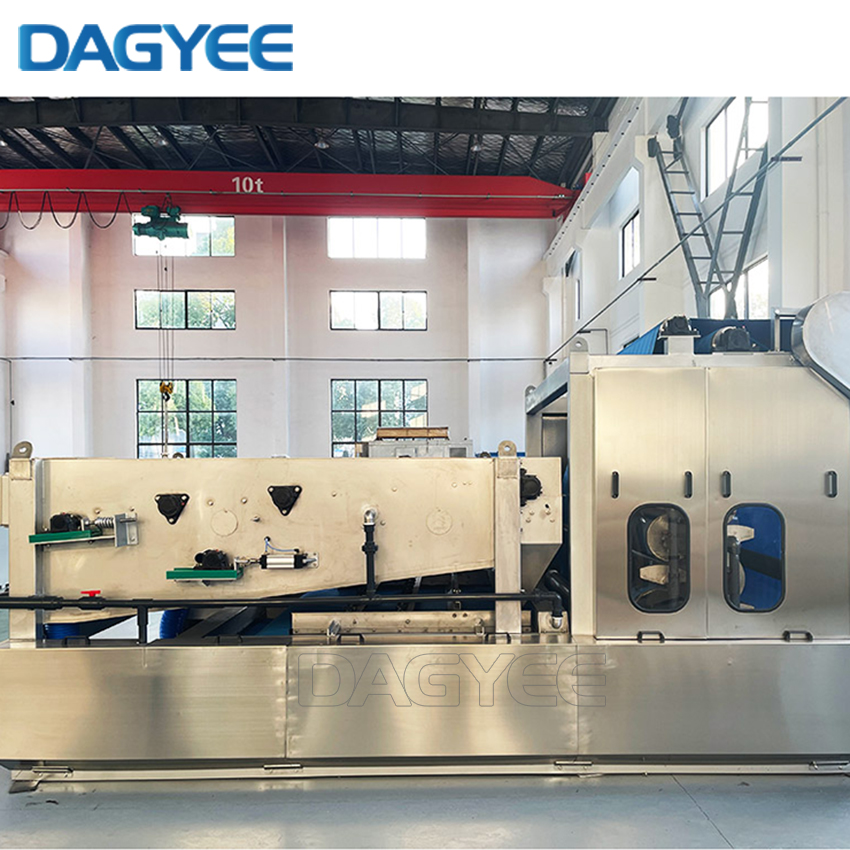
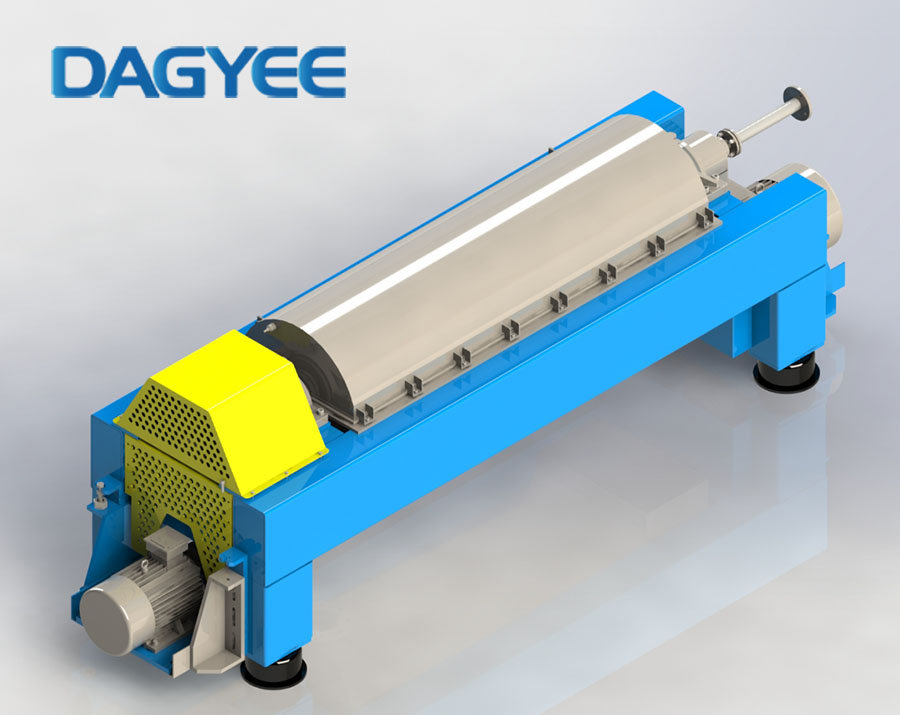
High energy consumption: Centrifuges run at 3000-4000 RPM, consuming the most power. Belt presses need high-pressure pumps for filter cloth washing, using large amounts of water. DAGYEE screw presses run at only 2-4 RPM, using very little electricity and almost no extra wash water — thanks to the self-cleaning ring design. Electricity costs are roughly one-twelfth those of a centrifuge.
How to Solve It — Start with These Approaches
Approach 1: Optimize Chemicals — Find the Right Recipe, Reduce Consumption
Chemical costs are the largest component of operating expenses and offer the biggest opportunity for savings.
Research shows that sludge dewaterability can be dramatically improved with proper chemical conditioning. In one study, untreated sludge filter-press cake had a moisture content of 82.7%. With low-dose cationic polyacrylamide (CPAM) conditioning, this was reduced to 22.7%. The key is finding the right polymer type and dosage for your specific sludge.
One treatment plant replaced its traditional "lime + ferric chloride + CPAM" program with "PAC + CPAM," optimized conditioning time (80 minutes) and secondary pressing time (90 minutes), and achieved stable cake moisture below 60% while reducing chemical consumption. Operating costs dropped 12.14%, saving 877 yuan per day.
In another project using a fully automatic filter press, PAM consumption was kept below 0.6 kg per ton of dry sludge, PAC below 0.1 ton per ton of dry sludge, and power consumption below 20 kWh per ton of sludge — all below industry averages.
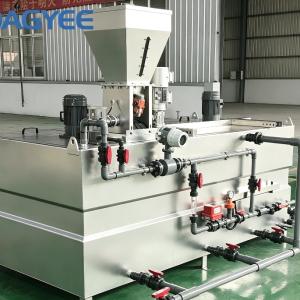
DAGYEE screw presses are designed with this exact issue in mind. With a fully automatic control system, they adjust operating parameters based on feed concentration and flow rate, ensuring chemical dosage always matches sludge characteristics — eliminating waste from fixed dosing.
Approach 2: Automate Controls — Let the Equipment Run Itself
Many plants can't reduce labor costs because their equipment isn't automated enough.
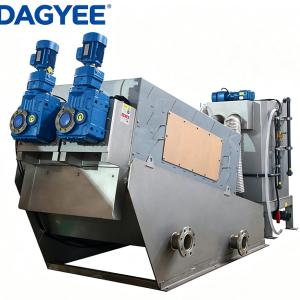
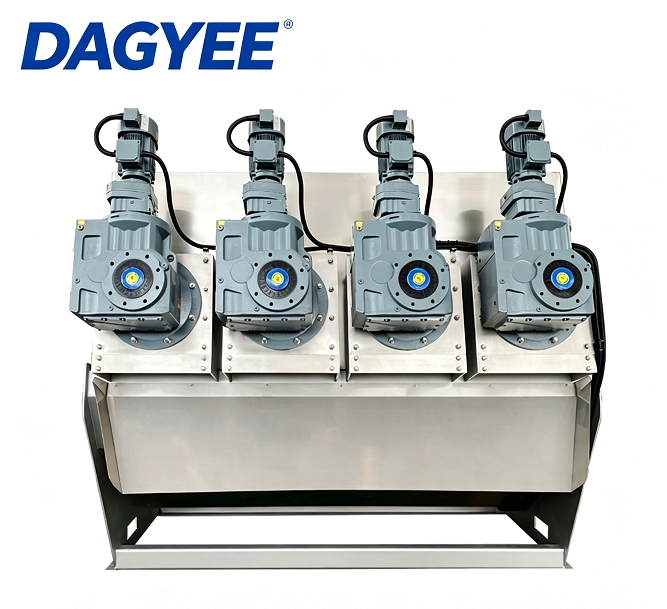
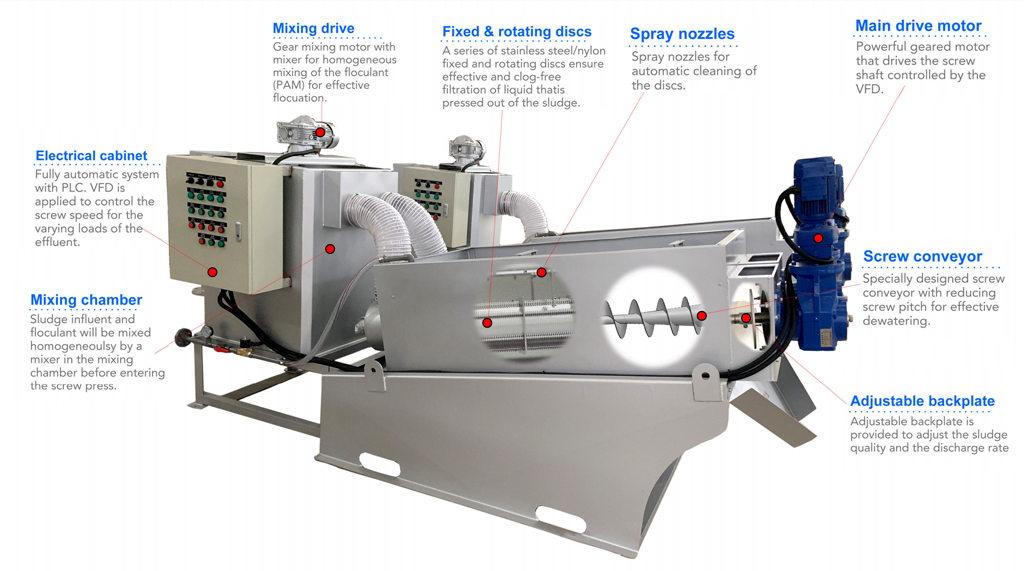
DAGYEE screw presses use PLC + touchscreen controls for 24/7 continuous operation with minimal human intervention. The unit includes an automatic cleaning cycle that runs after shutdown.
Industry research confirms that plants using automated screw press systems can achieve polymer savings of up to 50%, power savings of up to 80%, and six-fold maintenance savings compared to centrifuges. At one UK plant, the existing centrifuge was using 8-10 kg/tDS of polymer to produce cake at around 23% solids. The screw press trial used only 4.7-4.8 kg/tDS while producing cake at 33% solids.
Approach 3: Choose the Right Equipment — Lower Energy Consumption by Design
Energy consumption varies significantly across different equipment types.
| Parameter | Belt Press | Plate‑and‑Frame | Centrifuge | Screw Press |
|---|---|---|---|---|
| Energy consumption | High | High | Highest | Lowest |
| Floor space | Large | Large | Medium | Small |
| Clogging risk | High | High | Medium | Very low |
| Wash water usage | High | Medium | Low | Very low |
| Suitable feed concentration | ≥ 5000 mg/L | ≥ 10000 mg/L | ≥ 3000 mg/L | ≥ 2000 mg/L |
| Self‑cleaning | No | No | No | Yes |
DAGYEE screw presses operate at low speed (2-4 RPM), consuming far less energy than other types. Electricity costs are roughly one-twelfth those of a centrifuge. The self-cleaning dynamic and static ring design eliminates the need for additional wash water — water consumption is only about 1/80 that of a belt press. The unit handles viscous sludge reliably without clogging — a major advantage over belt and plate-and-frame presses.
Approach 4: Direct Low-Concentration Treatment — Skip the Middle Step
A unique advantage of screw presses is the ability to treat low-concentration sludge directly without a pre-thickening tank. The applicable concentration range is 2000-50,000 mg/L. None of the other three equipment types can do this. Eliminating the thickener saves investment, floor space, and process steps — which means less trouble and lower costs.
Screw presses also feature built-in sludge thickening capability, eliminating the need for separate thickening and storage units — reducing overall footprint and civil construction costs. Additionally, dewatering occurs under aerobic conditions, preventing phosphorus release that typically happens in anaerobic sludge storage, which can improve the overall phosphorus removal efficiency of the treatment system.
Key Cost Questions
Can chemical dosing follow sludge concentration in real time?Feed concentration fluctuates constantly. Fixed dosing inevitably leads to waste or poor performance. DAGYEE screw presses come with an automatic control system that adjusts operating parameters based on feed concentration and flow rate — chemical dosage always matches the sludge.
Can the equipment run 24/7 unattended?
Yes. Screw presses with automatic controls can run 24/7 unattended. DAGYEE screw presses use PLC + touchscreen control and require minimal operator intervention. The process — from sludge pumping and chemical dosing to cake discharge — is fully automatic.
Is cake moisture consistent?
Cake moisture directly affects disposal costs. Every 1% reduction in moisture content lowers disposal costs. Dropping moisture from 85% to 80% reduces sludge volume by nearly one-third. Studies show that properly conditioned sludge can achieve cake solids content of 33% or higher.
DAGYEE DL Series — Technical Specifications
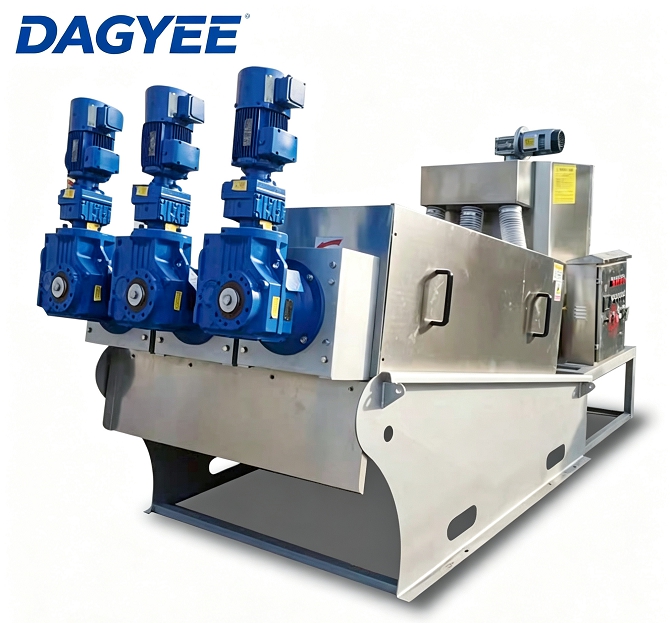
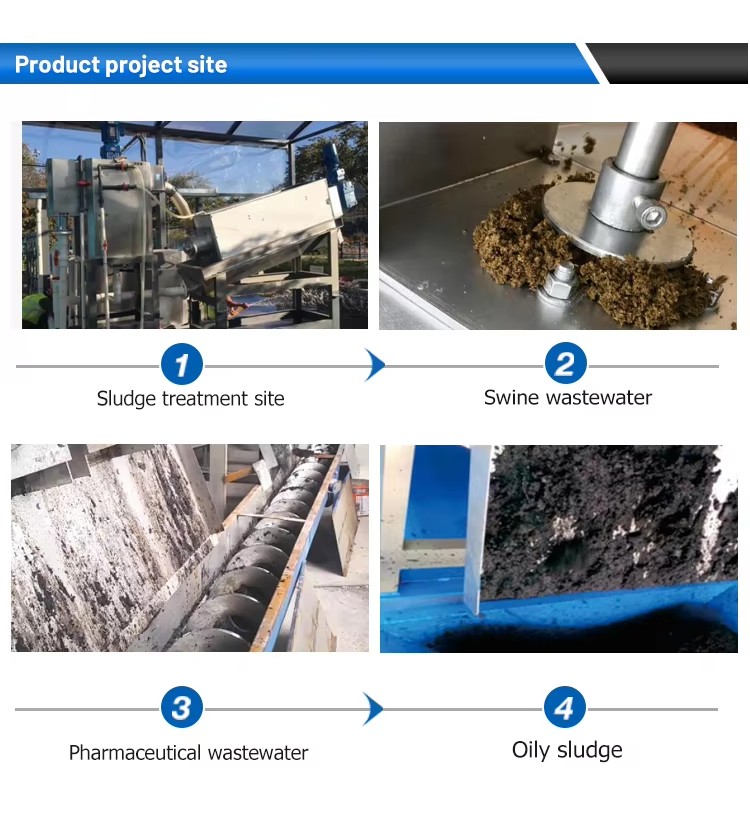
DAGYEE screw presses are suitable for sludge concentrations from 2,000 mg/L to 50,000 mg/L, particularly well-suited for oily sludge treatment. The unique dynamic and static ring filter structure effectively solves clogging problems that plague other equipment when treating oily sludge.Below are some commonly used models:
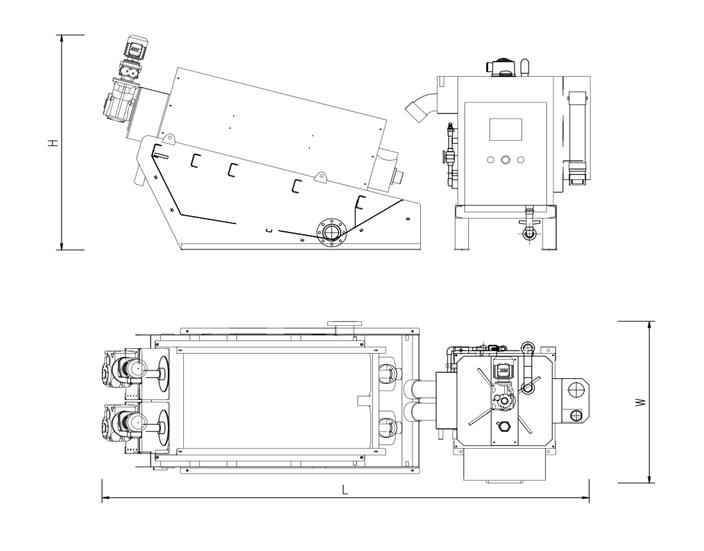
| Model | DS Capacity (kg/h) | Sludge Capacity (m³/h) at Different Concentrations | Screw Diameter (mm) | Dimensions L×W×H (mm) | Net Weight (kg) | Running Weight (kg) | Power (kW) | Wash Water (L/h) | |||
|---|---|---|---|---|---|---|---|---|---|---|---|
| 10,000 mg/L | 20,000 mg/L | 30,000 mg/L | 50,000 mg/L | ||||||||
| DL202 | 30-40 | 3 | 1.5 | 1.2 | 0.8 | 200×2 | 2500×935×1270 | 550 | 730 | 0.8 | 64 |
| DL301 | 50-70 | 5 | 2.5 | 2 | 1.4 | 310×1 | 3255×985×1600 | 850 | 1320 | 0.8 | 40 |
| DL302 | 100-140 | 10 | 5 | 4 | 2.8 | 310×2 | 3455×1295×1600 | 1400 | 2230 | 1.2 | 80 |
| DL303 | 150-210 | 15 | 7.5 | 6 | 4.2 | 310×3 | 3605×1690×1600 | 1520 | 3080 | 1.95 | 120 |
| Source: DAGYEE product specifications. | |||||||||||
Material configuration: Standard configuration is SS304 stainless steel (moving rings, fixed rings, screw shaft, flocculation mixing tank, control panel, housing, and frame). Upgrades to SS316L are available for high-salinity or chemical wastewater.
Key features: 24/7 unattended operation, clog-resistant, handles oily sludge, no pre-thickening tank required, low energy consumption, low noise.
At a Glance — How DAGYEE Screw Presses Reduce the "Three Highs"
| Cost Type | Pain Points with Traditional Equipment | DAGYEE Screw Press Solution | Savings Potential |
|---|---|---|---|
| Chemical costs | Fixed dosing with fluctuating feed concentration causes waste | Auto-adjusts parameters — chemical dosage follows concentration changes | Up to 50% polymer savings |
| Labor costs | Requires operators to monitor, adjust tension, discharge cake, wash cloths | PLC automatic control — 24/7 unattended operation | Fully automated |
| Electricity costs | Centrifuges at 3000-4000 RPM consume huge power | 2-4 RPM low-speed operation | ~1/12 of centrifuge |
| Wash water | Belt presses require large volumes of water | Self-cleaning rings — almost no extra wash water | ~1/80 of belt press |
| Disposal costs | Cake moisture inconsistent | Stable cake moisture — lowers disposal costs | Six-fold maintenance savings |
| Floor space | Large equipment footprint | Compact design — only 1/3 to 1/2 of traditional equipment | Lower civil construction costs |
High chemical consumption, labor costs, and energy use don't have to be permanent problems. The key is getting three things right: "chemical dosing follows concentration, equipment runs itself, and choose the right low-energy type."
DAGYEE screw press sludge dewatering machines offer these combined advantages:
- Direct low-concentration sludge treatment — no thickener required
- 24/7 unattended operation
- Electricity cost ~1/12 that of a centrifuge
- Wash water ~1/80 that of a belt press
- Clog-resistant — handles oily sludge with unique ring design
- Compact footprint — ideal for retrofit projects
DAGYEE — Sludge Dewatering Solutions
Need help selecting dewatering equipment? Tell us your sludge type, daily production, and disposal requirements. We'll recommend the right solution.