Sludge Dewatering Machine Selection Guide: Why Cake Moisture Matters More Than Price
Sludge Dewatering Machine Selection Guide: Don’t Chase Low Price Only — Poor Cake Moisture Will Cost You Dearly LaterHaving worked in this wastewater and sludge‑handling field for years, I’ve seen one common mistake repeat itself across many projects. When factories start sourcing sludge dewatering equipment, most buyers jump straight to price comparison. The lower the quotation, the more attractive it seems.
Yet six months or one year after commissioning, hidden troubles begin to surface.
It is not always sudden mechanical breakdowns. Quite often, real‑world operational expenses end up far higher than initially budgeted.
A Key Factor Easily Ignored: Cake Moisture Controls Your Actual Disposal Cost
Your spending on trucking, landfill disposal and incineration is largely paying to move water instead of solid sludge.
Cutting cake moisture from 85% down to 80% looks like merely a 5‑percentage‑point change, but sludge volume drops by nearly one‑third in practice. Every 1‑percent drop in moisture brings tangible savings on disposal fees.
Even for the exact same incoming sludge, final operating costs can vary hugely depending on how dry your dewatered cake is.
Four Main Dewatering Equipment Types: Practical Performance Differences
Below is a practical side‑by‑side comparison for reference:
| Comparison | Screw Press | Belt Filter Press | Plate‑and‑Frame Filter Press | Decanter Centrifuge |
|---|---|---|---|---|
| Direct treatment for low‑concentration sludge | Yes | No | No | No |
| Requires sludge thickening tank | No | Yes | Yes | Yes |
| Power consumption | Very low | High | Moderate | Very high |
| Wash water consumption | Very low | Very high | Low | Low |
| Noise & vibration | Low | High | High | Very high |
| 24‑hour unattended running | Yes | No | No | Yes |
| Tolerance for viscous sludge | Good | Poor | Poor | Poor |
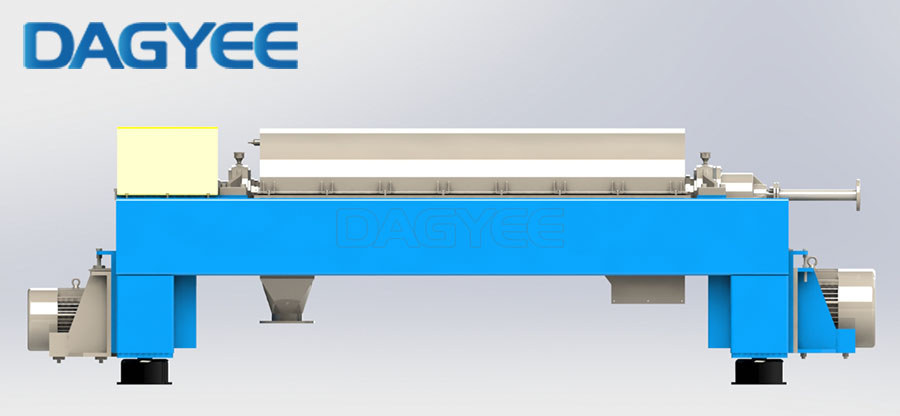
Decanter centrifuges rely on high‑speed rotation (3000‑4000 RPM) to separate solids. They can handle large throughput and run continuously. Downsides include high power bills, obvious noise and vibration, plus complicated maintenance work.
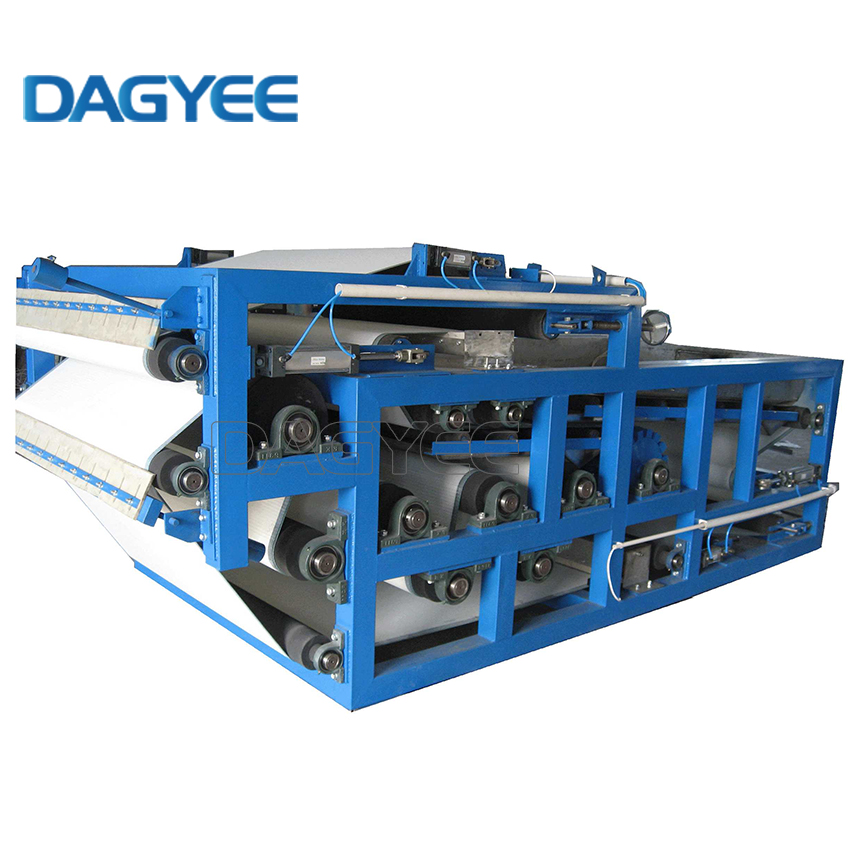
Belt filter presses come with low upfront equipment cost and proven technology. However, filter cloths get blocked frequently; massive wash water is required, which may create secondary pollution. Round‑the‑clock unattended operation is not feasible.
Plate‑and‑frame filter presses can produce relatively dry cake (moisture below 60%), yet they work in batch cycles. Operators are needed for cake discharging and cloth cleaning, leading to heavy manual workload and low automation level.
Why Cheap Upfront Purchase Leads to Higher Long‑term Expense
Lots of purchasers fixate on equipment purchase price and overlook ongoing running costs over the equipment service life.
Money saved at the buying stage often gets eaten up — and even exceeded — by later operational outlays, mainly covering chemical consumption, labor and sludge disposal.
On site, sludge solid content can fluctuate sharply within one single day, for instance dropping from 3% to 0.8%. If chemical dosing stays fixed while incoming sludge concentration changes, excessive flocculant will flow away as waste. When sludge gets thicker but dosing amount is insufficient, flocculation effect deteriorates and you end up with wetter sludge cake.
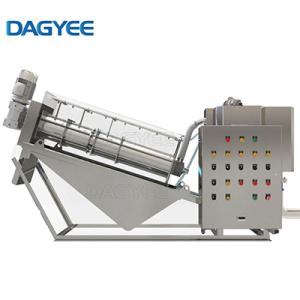
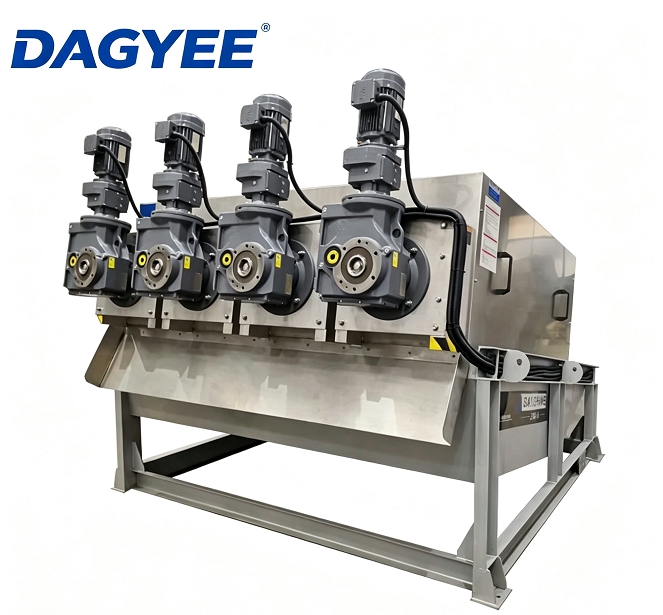
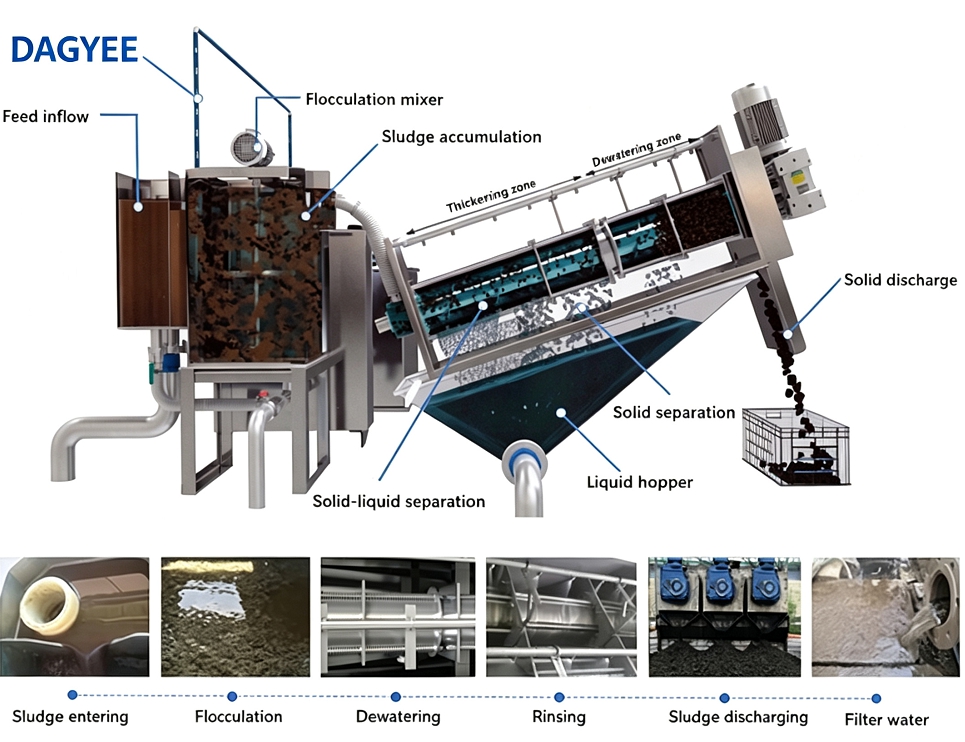
DAGYEE screw presses are fitted with complete automatic control systems. The unit adjusts working parameters according to real‑time sludge concentration and inflow volume. Flocculant dosage matches incoming sludge conditions automatically and avoids unnecessary chemical waste.
Labor cost: Gap between full‑auto and semi‑auto operation
As shown in the comparison table, screw presses support non‑stop unattended operation. Belt filter presses and plate‑and‑frame units cannot. Our automated screw presses can run day and night with almost no manual supervision. Belt presses need staff on‑site to check belt tension and clean filter cloths. Plate‑and‑frame machines require manual cake removal and cloth washing. Labor expenses alone can add up to tens of thousands yuan every year.
Power & water consumption: Where screw presses gain advantages
Low‑speed operation keeps power consumption very low. Thanks to self‑cleaning ring design, extra wash water demand is minimal. Belt presses consume huge volumes of high‑pressure wash water, while centrifuges rank highest in electricity usage.
Core Strengths of DAGYEE Screw Press Sludge Dewatering Machine
1. **Low energy, low‑speed operation**
Working speed stays at 2‑4 RPM, power consumption is far lower than alternative types. Unlike belt presses needing high‑pressure washing pumps, dynamic‑static self‑cleaning rings greatly cut down wash‑water demand.
2. **Strong anti‑clogging performance**
Oily sludge easily blinds filter cloths on belt presses, and sticky sludge creates trouble for plate‑and‑frame equipment. Moving rings on DAGYEE screw press keep scraping and cleaning gaps between ring plates during operation, so clogging rarely happens. Oily sludge treatment is well supported.
3. **Direct processing for low‑concentration sludge**
This is one standout feature. No sludge thickening tank is required, helping you save both capital investment and workshop floor space.
4. **Robust corrosion‑resistant build**
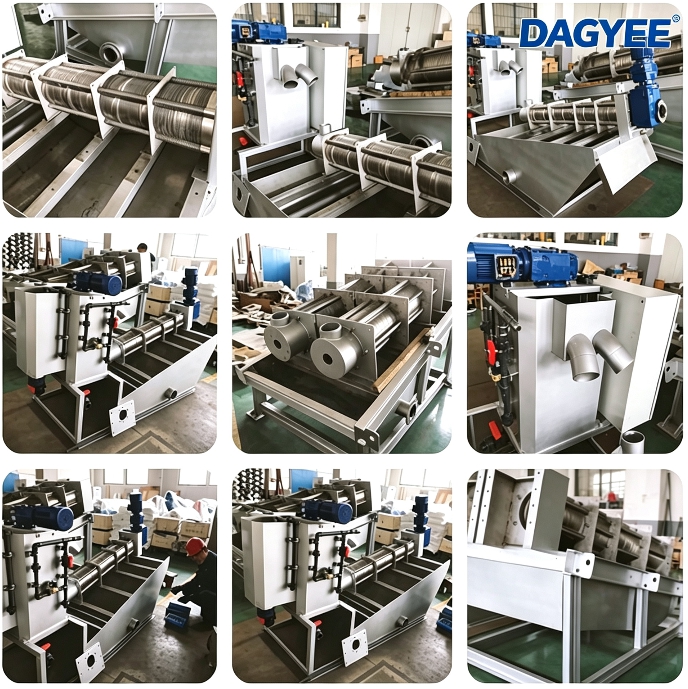
Main components including screw shaft, ring plates, flocculation tank, control cabinet and machine frame adopt SS304 stainless steel as standard. For high‑salinity or corrosive wastewater scenarios, SS316L or duplex 2205 material upgrade is available.
5. **Full‑auto 24‑hour continuous operation**
PLC plus touch‑screen control enables stable unattended running. Auto‑cleaning cycle will trigger automatically after equipment shutdown.
6. **Small footprint**
It only occupies 1/3‑1/2 floor area compared with traditional dewatering machines, making it perfect for renovation and retrofit projects.
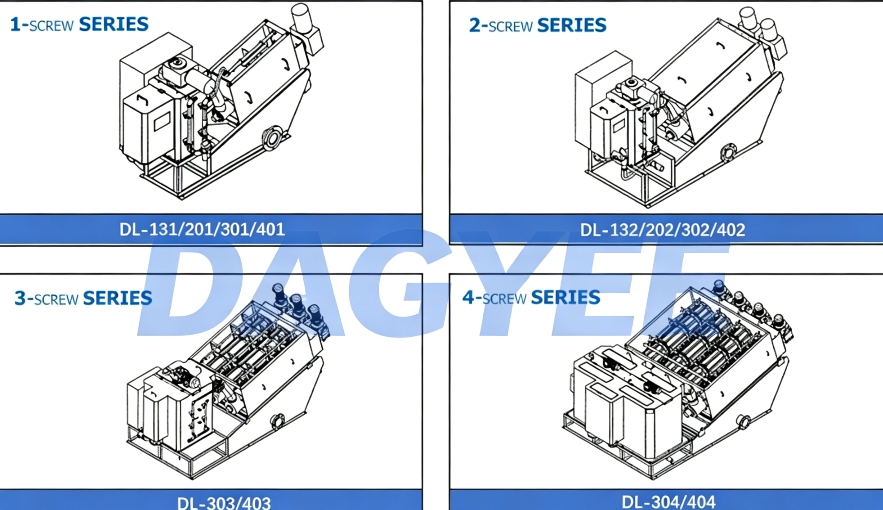
DAGYEE DL Series Screw Press Main Technical Parameters
| Model | DS Capacity (kg/h) | Hydraulic Capacity (m³/h) under different feed concentration | Dimensions L×W×H (mm) | Net Weight (kg) | Running Weight (kg) | Power (kW) | Wash Water (L/h) | ||||||
|---|---|---|---|---|---|---|---|---|---|---|---|---|---|
| Min | Max | 2 g/L | 5 g/L | 10 g/L | 20 g/L | 25 g/L | 50 g/L | ||||||
| DL202 | 18 | 30 | 9 | 3.6 | 3 | 1.5 | 1.2 | 0.6 | 2500×935×1270 | 470 | 730 | 1.11 | 64 |
| DL301 | 30 | 50 | 15 | 6 | 5 | 2.5 | 2 | 1 | 3255×985×1600 | 850 | 1320 | 0.74 | 40 |
| DL302 | 60 | 100 | 30 | 12 | 10 | 5 | 4 | 2 | 3455×1295×1600 | 1200 | 2230 | 1.11 | 80 |
| DL303 | 90 | 150 | 45 | 18 | 15 | 7.5 | 6 | 3 | 3605×1690×1600 | 1520 | 3080 | 1.86 | 120 |
| DL352 | 120 | 200 | 60 | 24 | 20 | 10 | 8 | 4 | 4240×1550×2190 | 1950 | 3400 | 3.75 | 144 |
| DL353 | 180 | 300 | 90 | 36 | 30 | 15 | 12 | 6 | 4460×2100×2190 | 2600 | 4850 | 6 | 216 |
| DL402 | 120 | 200 | 60 | 24 | 20 | 10 | 8 | 4 | 4140×1550×2250 | 2450 | 3400 | 3.75 | 144 |
| DL403 | 180 | 300 | 90 | 36 | 30 | 15 | 12 | 6 | 4420×2100×2250 | 3350 | 4850 | 6 | 216 |
| Note: DS = Dry Solids. Model selection shall be based on actual sludge concentration and processing capacity. It is recommended to reserve 20% design margin. | |||||||||||||
1. Focus on **stable working cake moisture**, not merely lab‑test minimum value. Peak‑lab‑achieved data and real‑site continuous running performance are two different concepts. Our screw presses deliver stable moisture output; final results still depend on your sludge characteristics.
2. Carry out sludge test using your own onsite sludge. Sludge properties vary widely from site to site. Copying reference data from other projects may lead to wrong selection. DAGYEE can adjust equipment configuration matching your actual sludge samples.
3. Clarify material grades for key wearing parts. Write material grade and thickness requirements into sales contract. SS304 is standard; SS316L upgrade option is available.
4. Confirm automation configuration. Verify whether it supports real 24‑hour unattended running and auto‑cleaning function. DAGYEE screw presses adopt PLC‑touchscreen solution for near‑unattended operation.
Selecting sludge dewatering equipment is far more than comparing several price offers.
You need to evaluate total‑cost‑of‑ownership and match equipment performance to your working conditions. Ask targeted questions during communication. Cake moisture, chemical dosage demand, labor input and energy consumption will influence your operational expenditure for many years ahead.
DAGYEE screw press sludge dewatering machines: low energy use, anti‑clogging, high automation and long service life. Every investment brings real‑site value.
DAGYEE — Customized Sludge Dewatering Solutions
If you need dewatering equipment selection advice, feel free to share your sludge type, daily processing volume and onsite disposal requirements. We will work out a suitable solution for you.