Two-Tank vs Three-Tank: Which Polymer Preparation System Saves You More Chemical?
polymer preparation unit Selection Guide: Two-Tank or Three-Tank? These 3 Details Determine Chemical UtilizationIn the water treatment industry, the polymer preparation unit is an "unassuming but essential" piece of equipment. Sludge dewatering needs it. DAF systems need it. Flocculation and sedimentation can't run without it. But many people don't pay enough attention when selecting one. They either buy whatever is cheap, or they look only at the price tag and ignore the configuration. Then they get the equipment and find out: the polymer doesn't dissolve properly, it jams constantly, it runs unstable, and chemical is wasted.
Today we'll talk about the three most common pitfalls in polymer preparation unit selection, and how DAGYEE helps customers avoid them.
What Does a Polymer Preparation Unit Actually Do?
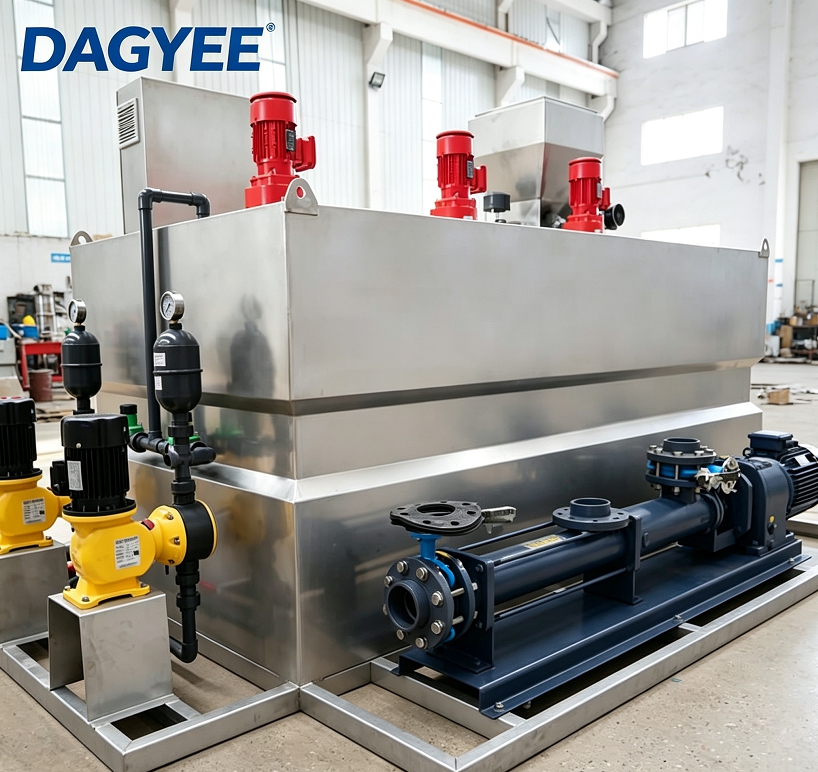
A polymer preparation unit (also called a polymer make-down system or flocculant preparation unit) does one core job: it dissolves dry or liquid polymer flocculants (most commonly PAM) into a uniform solution at a set concentration, and delivers it steadily to the dosing point.Sounds simple, but PAM has a "quirk"—it's hard to dissolve. If you dump dry PAM powder directly into water, the outer layer swells into a gel as soon as it touches water, trapping dry powder inside. That forms what operators call "fish eyes"—gel-like particles that look transparent but are actually undissolved polymer. These undissolved clumps clog pipes and dosing pumps, and that portion of chemical is basically wasted.
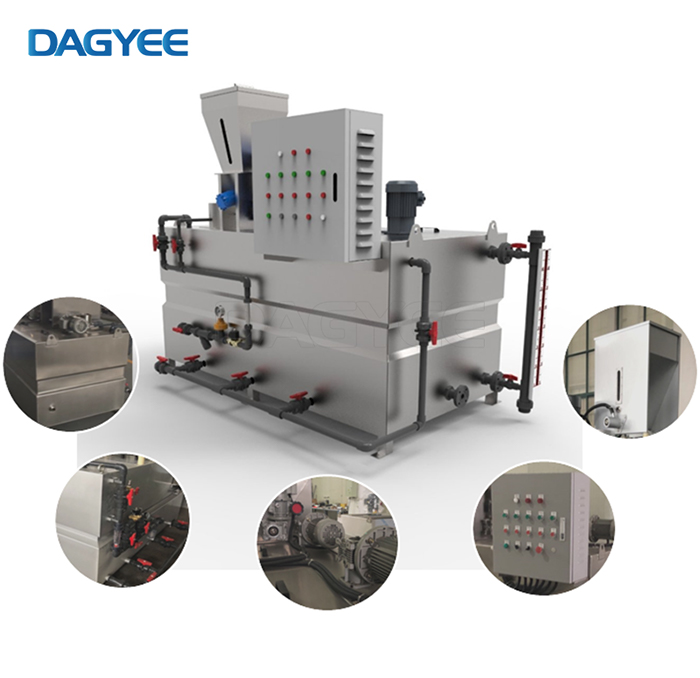
DAGYEE's polymer preparation units are designed to solve exactly this problem. Through fully automatic powder feeding, precise water-to-powder ratio control, and staged mixing and aging, we produce uniform, lump-free, and fully active polymer solutions that deliver the full value of every gram of chemical.
Two-Tank vs. Three-Tank: Not as Simple as You Think
This is the most common question during selection. Many people think a three-tank system is just one extra tank and a bit more money—but that's not the whole story.
Two-tank design combines dissolving and storage, with aging done in the dissolving tank. There's no separate aging zone. Simple design, lower cost, suitable for small flows or intermittent operation.
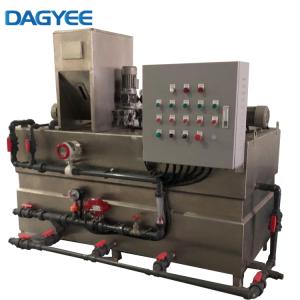
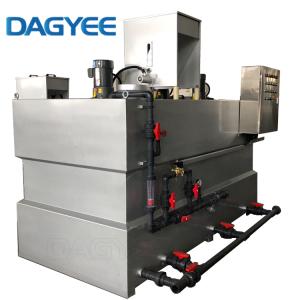
Three-tank continuous design is considered the "standard" in the industry. DAGYEE's polymer preparation units use a three-tank integrated design—dissolving tank, aging tank, and storage tank each have their own job, connected by overflow channels and fully isolated from each other.
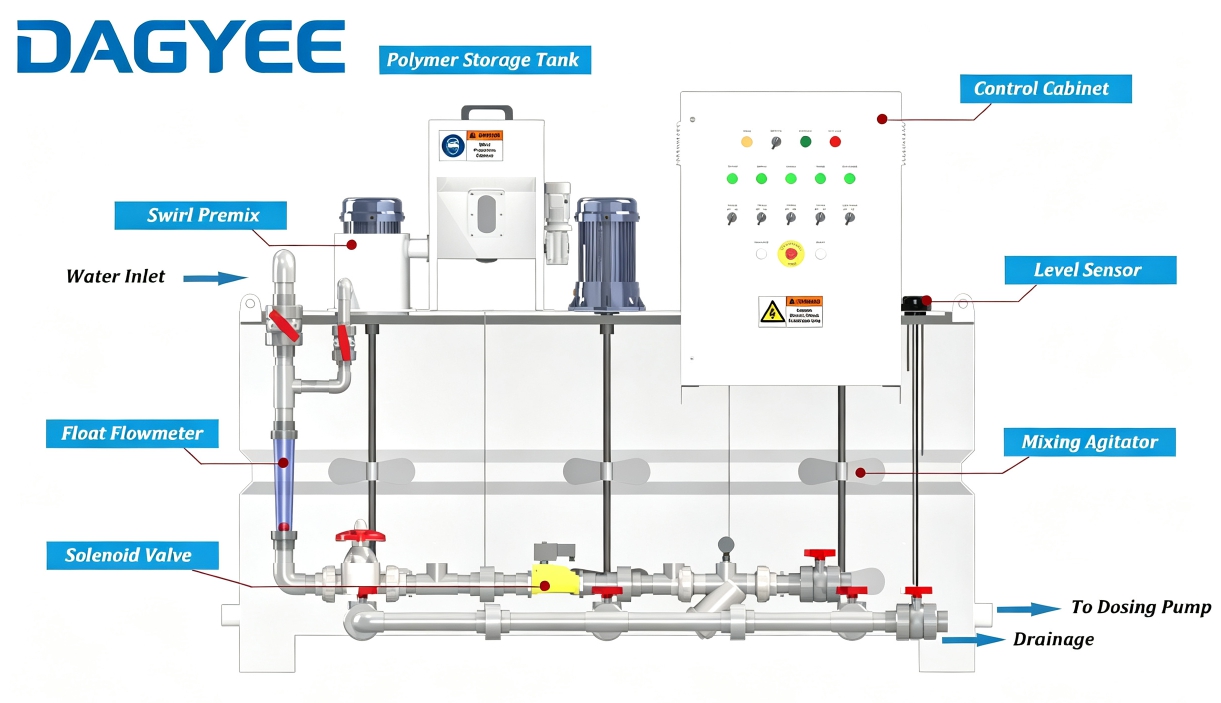
The key difference is the independence of the aging stage.
Dry polymer flocculants (especially PAM) need time after dissolving to let the polymer chains "unfold." This is called aging. PAM typically needs 45 to 60 minutes of aging time. If aging is cut short or the aging solution gets diluted by fresh incoming chemical, the polymer chains don't fully stretch, and flocculation performance suffers. Lower chemical efficiency means you need to feed more, and chemical costs go up.
The three-tank system puts aging in a dedicated tank. The solution ages for the full required time before slowly moving into the storage tank. The two-tank system doesn't have this isolation. Fresh solution mixes with aging solution, aging time becomes inconsistent, and performance suffers.
When to choose two-tank? Small capacity, intermittent operation, tight budget. When to choose three-tank? 24/7 continuous operation, dewatering performance matters, you want to save on chemical costs. Most municipal wastewater plants and industrial wastewater stations should choose three-tank.
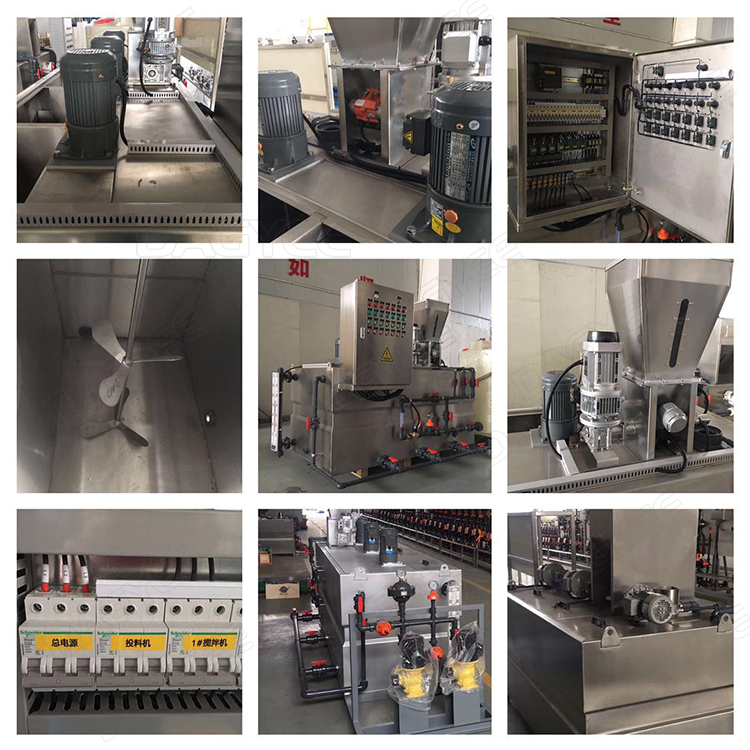
DAGYEE's advantage: Our three-tank system uses an overflow cascade design—pre-mix dissolving tank → aging tank → storage/dosing tank. Each stage handles wetting, dissolving, and aging separately. The dissolving tank uses a fast mixer (double impeller); the aging tank uses a slow mixer (single impeller) to ensure adequate retention time. The three tanks are fully isolated, preventing short-circuiting or mixing that would affect concentration and activity.
The Mixing Cone: Where "Fish Eyes" Are Born or Prevented
Many people stare at stainless steel grades during selection but overlook the most critical component in the system.
The mixing cone sits at the powder feed point and determines the quality of the polymer solution. Its job is to disperse dry powder evenly into water. A good mixing cone uses a "water curtain" to separate powder particles and spread them out evenly, preventing clumping. A poor mixing cone lets powder hit the water in clumps—the outside wets and swells, trapping dry powder inside, forming "fish eyes."
Once fish eyes form, they're essentially undissolvable. They clog pipes and pumps, and that portion of chemical is wasted. So the mixing cone design directly determines whether you'll be dealing with problems downstream.
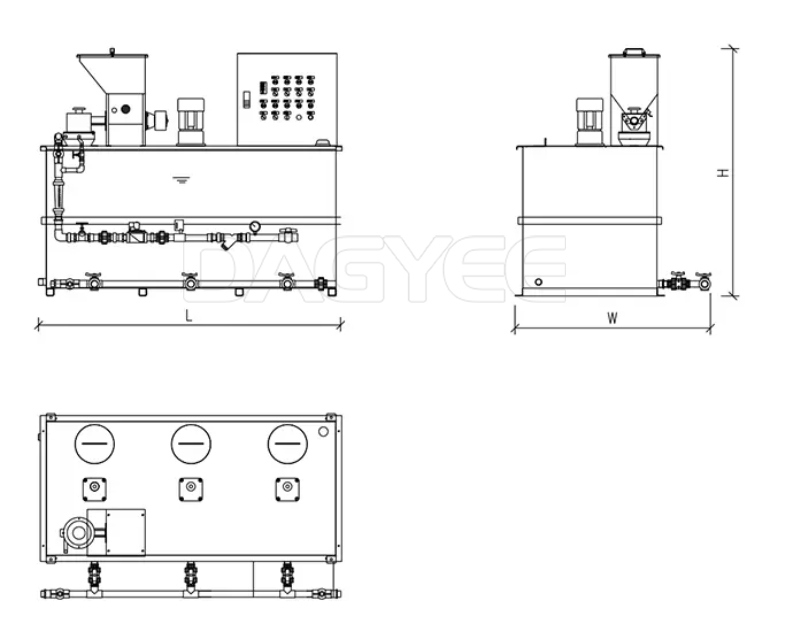
How DAGYEE solves this: Our powder feed unit uses a conical water-curtain pre-wetting chamber. As powder enters, a water film wraps around each particle, fully wetting it before it hits the main tank. This prevents dry powder from clumping. The screw feeder runs at variable frequency with a vibrating hopper to prevent bridging, achieving ±1% feeding accuracy. Simply put, we stop fish eyes at the source.
Hopper Bridging: The Detail That Gets Overlooked
The powder hopper looks simple, but many operational problems start here.
PAM powder is hygroscopic—it absorbs moisture from the air and forms lumps. These lumps get stuck in the hopper and won't feed. The motor runs, the screw turns, but no powder comes out. The operator ends up banging on the hopper by hand—dirty, tiring work.
Why bridging happens: Two main reasons. First, PAM absorbs moisture and clumps. Second, the hopper discharge design may create an "arch" that blocks flow.
How DAGYEE solves this: Our dry powder hopper has built-in anti-caking heating elements at the discharge point to prevent moisture absorption and clogging. The discharge is designed to prevent bridging, with a variable-frequency screw feeder for precise control. The hopper also has a vibrator to further break up any bridging. In northern winters or southern monsoon seasons, these details matter.
To further reduce manual handling and dust, DAGYEE offers an optional vacuum loading system that pulls powder directly from bags into the hopper—eliminating dust and reducing labor.
DAGYEE DT Series Technical Specifications
The table below shows standard models in the DAGYEE DT Series, covering capacities from 200 L/h to 10,000 L/h:
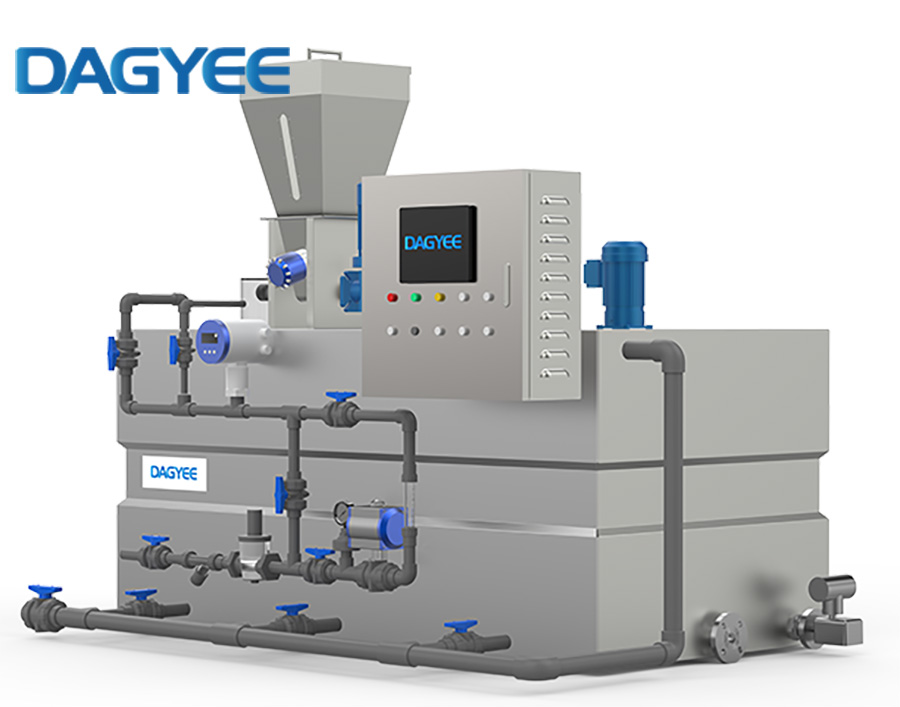
DAGYEE DT Series — Technical Specifications
Polymer preparation units — standard models
| Model | Capacity (L/h) | Dimensions L×W×H (mm) | Weight (kg) | Power (kW) |
|---|---|---|---|---|
| DT200 | 200 | 940×520×1450 | 250 | 0.54 |
| DT500 | 500 | 1370×730×1450 | 350 | 0.92 |
| DT1000 | 1000 | 1800×950×1620 | 480 | 1.3 |
| DT1500 | 1500 | 2130×1120×1620 | 560 | 1.7 |
| DT3000 | 3000 | 2450×1270×2000 | 790 | 2.4 |
| DT4000 | 4000 | 2780×1440×2250 | 1050 | 3.2 |
| DT6000 | 6000 | 3100×1600×2650 | 1200 | 4.8 |
| DT10000 | 10000 | 3970×2040×2650 | 1450 | 6.4 |
Note: Custom capacities, materials (SUS304/SUS316L/PP/FRP), and control configurations are available upon request. Contact DAGYEE for models outside this range.
Selection guide: For example, DT1000 prepares 1,000 liters of solution per hour and measures 1800mm × 950mm × 1620mm. It runs on 1.3kW and suits medium-size municipal or industrial plants. DT3000 and larger models are for large municipal plants and centralized industrial treatment facilities.
The Control System: A Good Unit Runs Itself
The value of a fully automatic polymer preparation unit is in the word "automatic." A good unit should do this: after you set the parameters, it feeds water, feeds powder, mixes, and stops on its own. The operator only needs to check periodically.
DAGYEE's PLC control system: We use Siemens or Schneider PLC with a touchscreen HMI. The operator sets the concentration on the screen, and the unit runs fully automatically.
Core control logic: Level sensors (or electrode-type level switches) monitor the storage tank level. When the level drops to "low," the PLC opens the water inlet solenoid valve and starts the powder screw feeder. The flow meter and VFD work together to maintain the set water-to-powder ratio, keeping concentration consistent. When the level reaches "high," the system stops water and powder feed and goes into standby. It's a "set and forget" system—the unit automatically replenishes, stops, and alarms as needed.
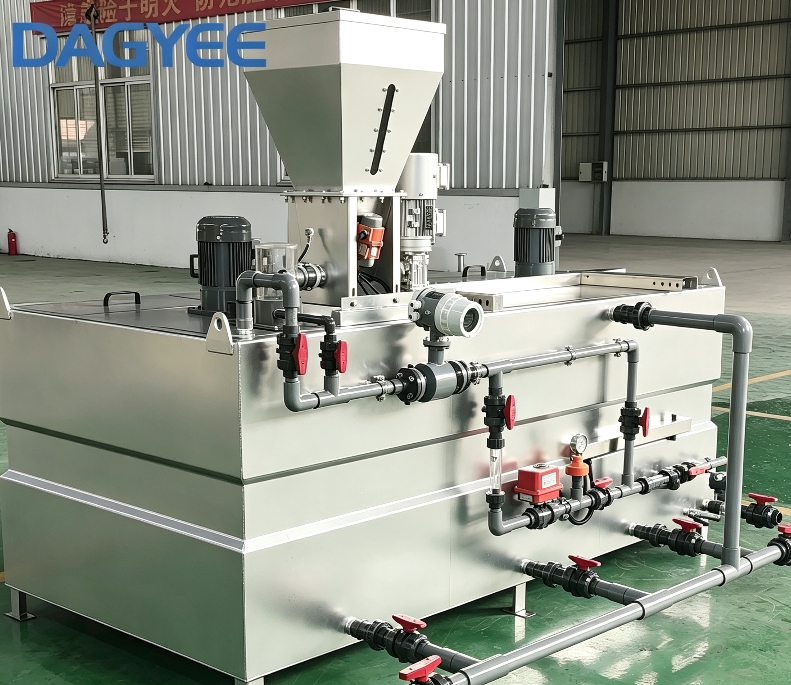
DAGYEE also includes a capacitive level sensor that alerts when powder runs low, preventing the system from diluting the solution with water only. Water shortage protection, motor overload protection, and alarm logging are all standard.
Material Selection: SUS304, SUS316L, or PP?
The material of the polymer preparation unit directly affects equipment life and operational stability.
SUS304 stainless steel is the standard choice for most municipal and general industrial wastewater applications. Corrosion resistance is sufficient for most conditions, and it's cost-effective.
SUS316L stainless steel suits high-salinity environments (like desalination plants) or aggressive chemical wastewater where chloride resistance is critical.
PP (polypropylene) is for highly corrosive media like strong acids and alkalis that stainless steel can't handle.
DAGYEE offers custom material solutions based on your specific operating conditions, ensuring the equipment runs reliably for the long term.
Selection Summary
Selecting a polymer preparation unit isn't complicated, but you need to get the key points right.
First, determine capacity. Calculate your daily polymer solution requirement divided by intended run time. Add 20% margin for fluctuations. DAGYEE DT Series covers everything from 200 L/h to 10,000 L/h.
Second, choose the right tank configuration. For continuous operation, choose three-tank. For intermittent, two-tank may suffice. Most municipal and industrial applications should choose three-tank.
Third, check the mixing cone design. Look for designs that pre-wet and disperse powder effectively. DAGYEE's conical water-curtain chamber prevents fish eyes at the source.
Fourth, evaluate hopper bridging prevention. Heating elements, hopper vibration, and variable-speed screw feeding are essential for reliable powder feed.
Fifth, assess the control system. Look for PLC+HMI with level-based auto-start/stop, alarms, and protection features. The more complete the automation, the less operator attention required.
The polymer preparation unit serves the whole water treatment system. Choose right, and you get high chemical efficiency, stable operation, and peace of mind. Choose wrong, and you'll be fighting fish eyes and bridging every day—the time and frustration cost more than the money you saved on the equipment.
DAGYEE — Polymer Preparation Solutions
Need selection advice for your polymer preparation unit? Tell us your capacity requirement, polymer type, and operating conditions, and we'll recommend the right configuration.

Related News