DAGYEE UF Membrane Technical Specifications & Selection Guide
How to Choose UF Membrane Material? PVDF, PES, PS — Pros and Cons Explained
PVDF, PES, PS… Every manufacturer claims their material is the best. Look at the spec sheets and they all seem to say the same thing. But get it wrong on a real project, and the consequences add up fast: rapid fouling, more frequent cleaning, shorter membrane life, or even a whole skid of membranes failing well before their expected service life.
This article cuts through the marketing noise. We'll compare the mainstream UF membrane materials side by side, lay out their strengths, weaknesses, and spell out which one makes sense for which application.
There are three common UF membrane materials on the market: PVDF (Polyvinylidene Fluoride), PES (Polyethersulfone), and PS (Polysulfone). They have different chemical structures, and that determines where each one works best and where it falls short.
PVDF is a crystalline polymer. It has a relative density of 1.75-1.78, a glass transition temperature around 39°C, a melting point of 170°C, and thermal decomposition temperature exceeding 316°C. It offers solid mechanical properties — good impact resistance, abrasion resistance, and weatherability. Research from Harbin Institute of Technology shows that PVDF membranes have the highest fouling resistance among common materials, with an irreversible threshold flux greater than 30 L/(m²·h). Toray's PVDF hollow fiber membranes, manufactured using the thermally induced phase separation (TIPS) process, are considered some of the strongest fibers in the industry.
PES and PS are rigid materials with high glass transition temperatures — PES around 230°C and PS around 190°C. Polysulfone-type materials deliver high mechanical strength, wide pH tolerance, and resistance to bacterial attack, which is why they've been widely adopted in the membrane industry. Their weak point? Both have poor inherent hydrophilicity, which leads to low flux and fouling issues when treating oily wastewater or high-organic streams.
Chemical tolerance differs as well. PSF and PES offer the broadest chemical resistance, covering a pH range of 1.5 to 13. PVDF resists acids but only holds up to about pH 11 in caustic environments.PVDF also has lower transmembrane pressure — which makes cleaning easier. One trade-off worth noting: PVDF's transmembrane pressure is significantly higher than PAN, making it more prone to fouling compared to PAN. PAN also cannot be used with chlorine or acid cleaners, making it less versatile in industrial wastewater applications that require chemical cleaning. Each material has its sweet spot — and its limitations.
A research team from Harbin Institute of Technology compared PVC, PVDF, PES, and PS membranes filtering raw water to analyze their threshold flux behavior. The results were clear: PVDF membranes showed the highest fouling resistance, with an irreversible threshold flux greater than 30 L/(m²·h). PS membranes, with their smaller molecular weight cut-off, suffered the worst fouling and registered the smallest irreversible threshold flux.
What does this mean in real-world operation? For the same feed water quality and operating conditions, PVDF membranes need less frequent cleaning and experience slower flux decline. In high-fouling applications like industrial wastewater, fouling resistance directly impacts operating costs and maintenance workload.
A separate study filtered pig manure digestate through PES, PS, PVDF, and PAN membranes for 630 minutes of continuous operation. The flux maintenance ranking shifted depending on the feed characteristics. But when it came to flux recovery after cleaning, PVDF came out on top.
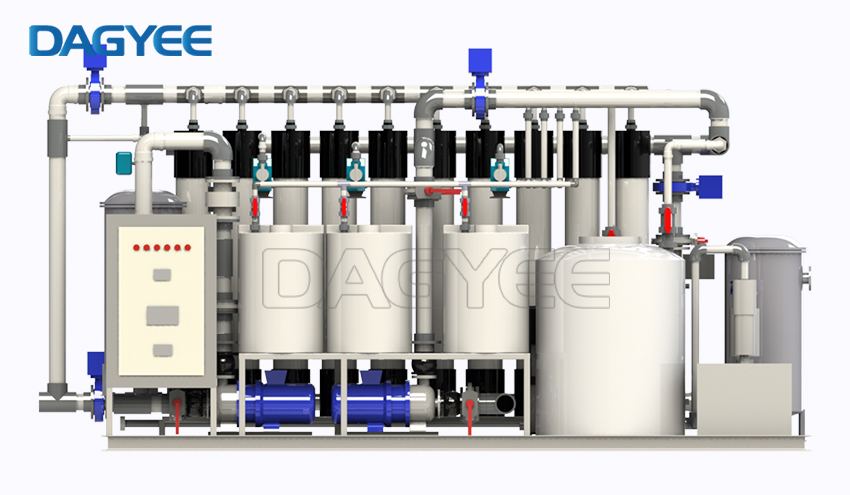
DAGYEE UF membranes use PVDF material with proprietary fiber-reinforced composite membrane technology, achieving a fiber breaking strength of over 150N and a service life of over 5 years. Permeate turbidity stays consistently ≤0.1 NTU, and SDI ≤2.5, meeting RO feed water requirements without issue.
PVDF has a clear edge in oxidation resistance.
PVDF can handle high-concentration sodium hypochlorite cleaning — a critical advantage for applications that require aggressive chemical cleaning. In industrial wastewater, textile dyeing wastewater, and other demanding scenarios, PVDF's resistance to chemical attack makes it more durable than PES and PS over the long haul. DAGYEE UF membranes tolerate over 2,000 ppm of chlorine during cleaning.
PS/PES offer broader acid and alkali tolerance.
PSF and PES families handle a pH range of 1.5 to 13 — about the widest you'll find among UF materials. For industrial wastewater with wide pH swings or high acid/alkali content, PES or PS may be the safer, more reliable choice. PVDF only holds up to about pH 11 in caustic environments.
Material modification can improve performance.
Through "alloying" — blending polymers to take advantage of complementary properties — you can improve performance. For example, introducing hydrophilic substances into PSF is an effective way to improve the hydrophilicity of polysulfone-type membranes, reducing their fouling tendency.
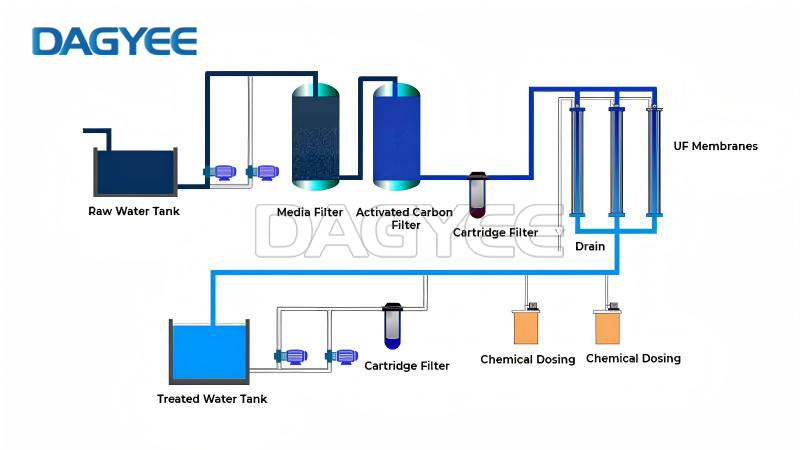
Literature comparing the physical stability of multiple membrane materials shows that PSF and PVDF are the strongest polymers, and PVDF is more flexible than PS. That flexibility matters: PVDF holds up better to repeated bending and backwashing in hollow fiber membrane applications, with a lower risk of fiber breakage.
PES and PS, being rigid materials, are more prone to damage and fiber breakage. That's why they're typically designed in inside-out configuration. In inside-out mode, water flows from the inner surface of the fiber to the outer surface, and the fiber experiences expansion rather than compression — reducing the risk of breakage.
DAGYEE UF membranes use an outside-in configuration, which offers high dirt-loading capacity and strong adaptability to fluctuating feed water quality. Combined with air-water dual backwash, cleaning is simpler, more thorough, and cleaning intervals are extended.
5. DAGYEE UF Membrane Technical Specifications
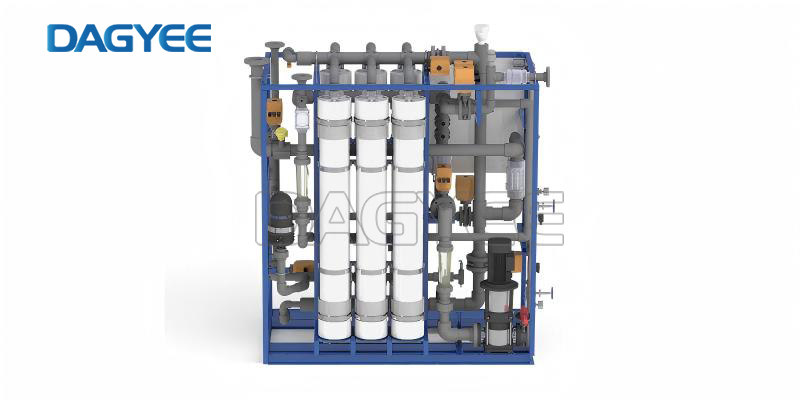
PVDF hollow fiber ultrafiltration membrane modules
| Parameter | Specification |
|---|---|
| Membrane Material | PVDF (Polyvinylidene Fluoride) |
| Nominal Pore Size | 0.01-0.03 μm |
| Fiber ID/OD | 0.7 / 1.3 mm |
| Effective Membrane Area | 40 / 80 / 100 m² (optional) |
| Operation Mode | Outside-in, cross-flow or dead-end |
| Permeate Turbidity | ≤ 0.1 NTU |
| Permeate SDI | ≤ 2.5 |
| Flux Range | 40-120 LMH |
| Feed pH Range | 2-11 |
| Operating Temperature | 1-40°C |
| Max Feed Pressure | 0.30 MPa |
| Max Transmembrane Pressure | 0.20 MPa |
| Max Backwash Pressure | 0.25 MPa |
| Max Chlorine Tolerance | 2,000 ppm |
| Max Feed Turbidity | 100 NTU |
| Housing Material | UPVC |
| Potting Material | Epoxy resin |
| Fiber Breaking Strength | ≥ 150 N |
Key Features: PVDF material with strong chemical resistance, high fiber strength (≥150N), stable permeate quality (turbidity ≤0.1 NTU, SDI ≤2.5). Suitable for drinking water, industrial wastewater, water reuse, and RO/NF pretreatment applications.
6. Selection Guide Summary
| Material | Core Advantages | Key Limitations | Best Applications |
|---|---|---|---|
| PVDF | High fouling resistance, oxidation resistance, high mechanical strength, good cleaning recovery | Higher cost, hydrophobic | Industrial wastewater, municipal wastewater, frequent cleaning scenarios |
| PES | Wide pH range (1.5-13), high heat resistance (230°C) | Rigid, prone to breakage, hydrophobic | High-precision filtration, industrial water with pH swings |
| PS | High mechanical strength, heat resistance (190°C), acid/alkali resistance | Susceptible to fouling, hydrophobic | Drinking water purification, general industrial water treatment |
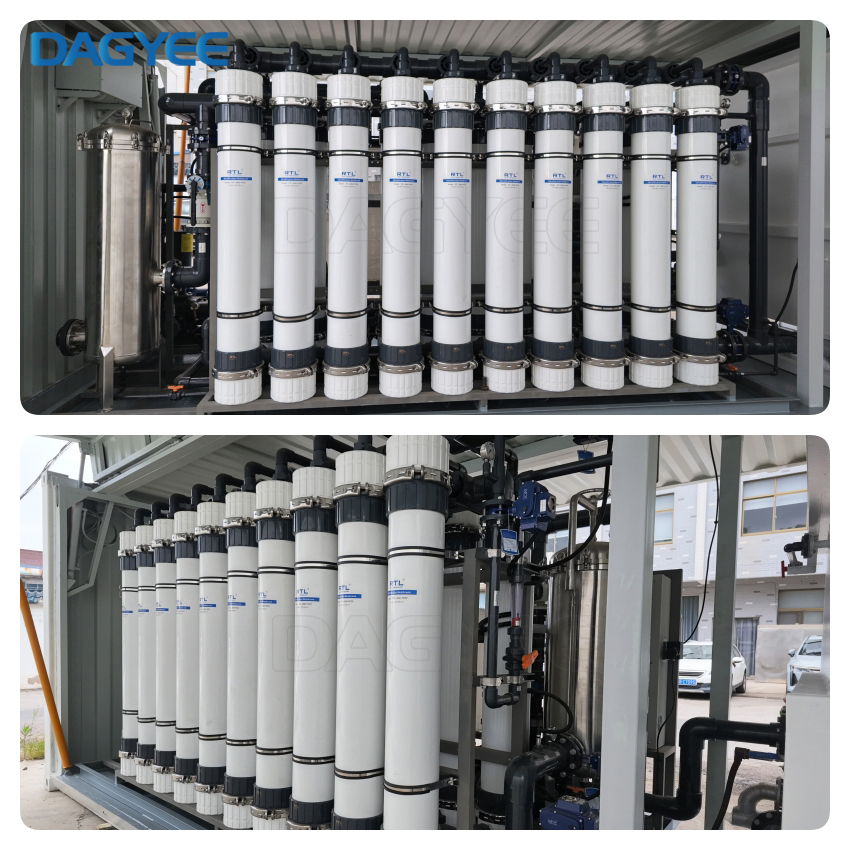
Summary
There's no such thing as a single "best" membrane material — only the material that fits your specific application.For industrial wastewater and municipal wastewater with high fouling loads and frequent cleaning requirements, PVDF delivers real advantages in fouling resistance and oxidation tolerance, saving you trouble and money in the long run.
For high-precision filtration and industrial water with wide pH swings, PES and PS offer broader chemical tolerance and better heat resistance.
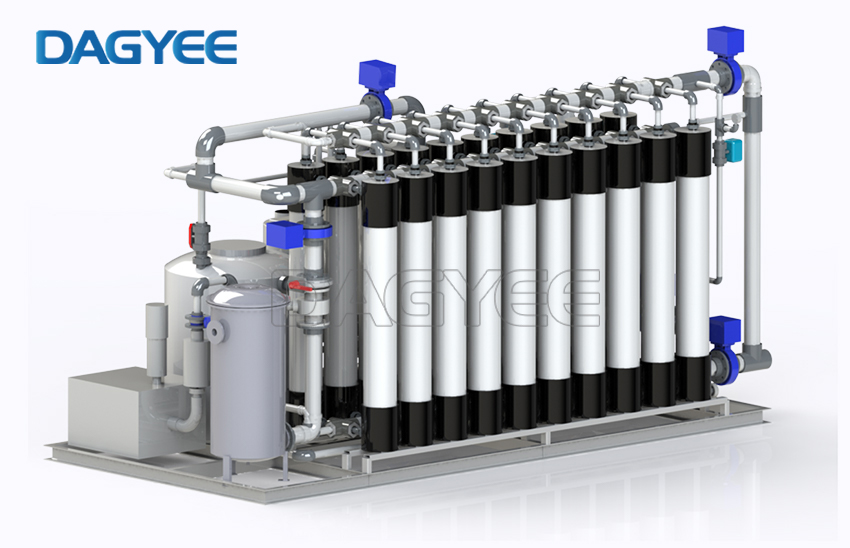
DAGYEE UF membrane modules feature high-strength PVDF hollow fiber membranes, delivering permeate turbidity ≤0.1 NTU, SDI ≤2.5, and a service life of over 5 years. They tolerate over 2,000 ppm chlorine during cleaning and are suitable for municipal drinking water, industrial wastewater, water reuse, and RO/NF pretreatment applications.
Need UF membrane selection advice? Send us your water quality data and operating conditions. We'll recommend the right membrane material and system configuration for your application.
Related News