Rotary Drum Screen Selection Guide: How to Choose the Right Model for Your Industry
Externally Fed Rotary Drum Screen: A Reliable Choice for Solid-Liquid Separation
What Is an Externally Fed Rotary Drum Screen?
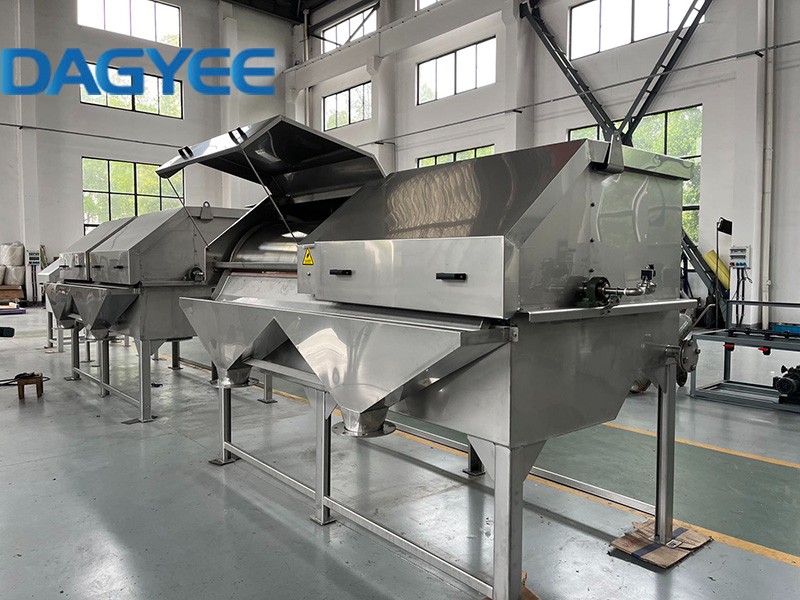
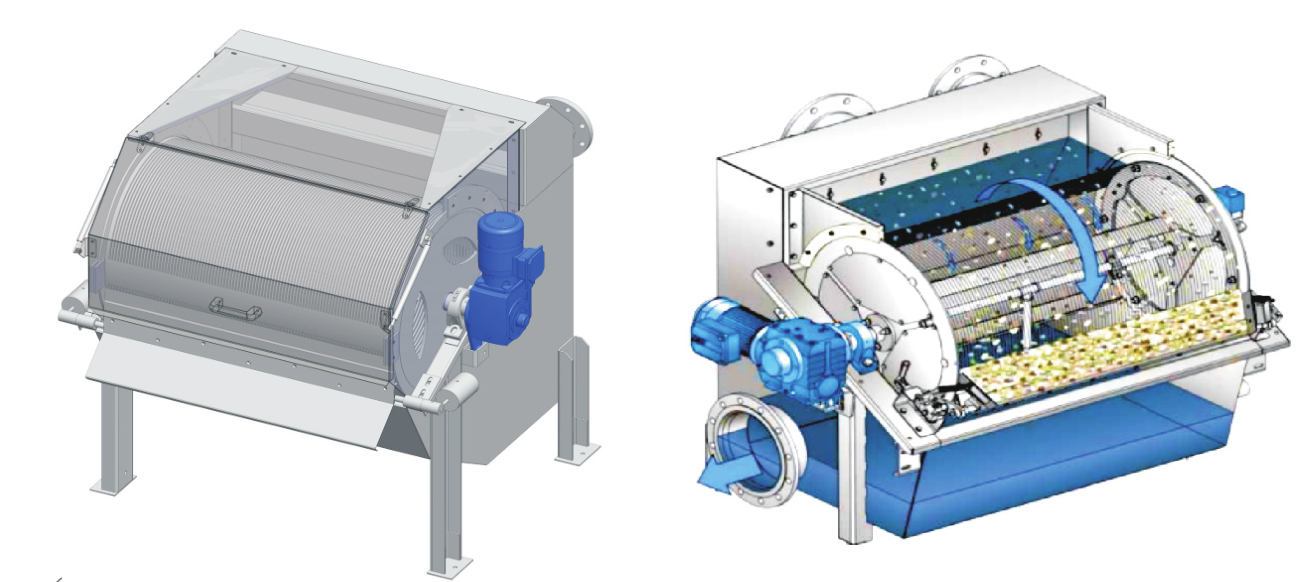
As the drum rotates at a slow speed, liquid passes through the screen mesh, while solids are retained on the outer surface. The rotational motion carries these captured solids toward the discharge end, where they are removed by a scraper, brush, or spray system—ensuring continuous, automated operation with minimal manual attention.
The key advantage of the external feed design is unobstructed solids discharge and reduced clogging risk. Since solids accumulate on the outside, they are easily removed without building up inside the drum, making this wastewater drum screen ideal for high-solids streams such as municipal sewage, food processing effluent, and industrial wastewater.
Key Design Features of DAGYEE's Externally Fed Rotary Drum Screen
DAGYEE's externally fed rotary drum screen is engineered to address the common pain points of traditional screening equipment—frequent clogging, high maintenance costs, and inconsistent separation performance. Below are the features that set our externally fed drum screen apart:
1. Stainless Steel Construction for Corrosion Resistance
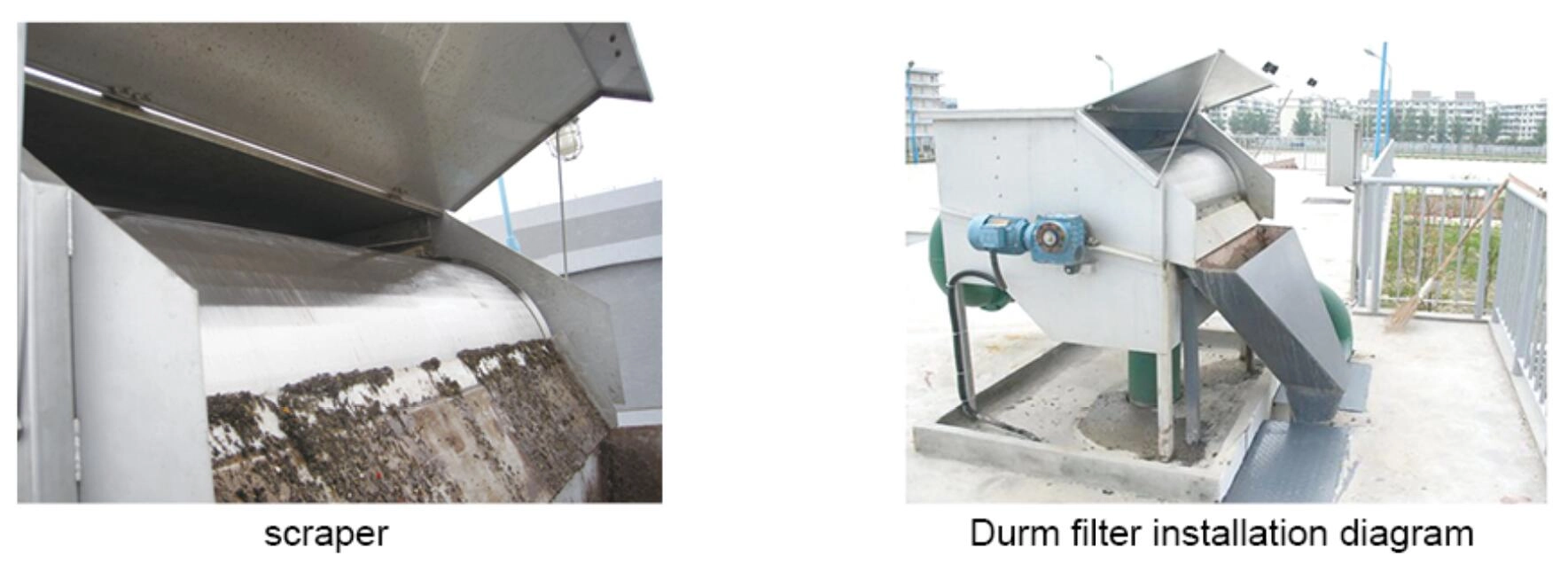
All critical components—including the drum body, frame, and internal parts—are constructed from 304 or 316L stainless steel (customizable based on application). This material choice provides excellent resistance to corrosion, abrasion, and chemical attack, making the stainless steel rotary drum screen suitable for harsh wastewater environments such as acidic or alkaline industrial effluent and saltwater treatment. The smooth, polished surface also prevents solids from adhering to the drum, reducing cleaning frequency and extending service life.
2. Customizable Screen Mesh for Versatile Separation
The screen mesh is the heart of the separation process. DAGYEE offers customizable mesh sizes ranging from 20 to 500 microns (or perforated plate openings from 0.5 to 10 mm) to meet specific application requirements. Mesh size directly impacts capture efficiency—smaller meshes capture finer solids but require more frequent cleaning, while larger meshes handle high flow rates with less maintenance.
Typical mesh selection examples:
- Municipal wastewater: 1–3 mm mesh for removing rags, plastics, and large suspended solids
- Food processing (juice, dairy): 50–100 micron mesh for separating pulp and food residues
- Industrial wastewater (textile, paper): 200–300 micron mesh for capturing fibers and particulates
3. Low-Speed Rotation for Energy Efficiency and Quiet Operation
DAGYEE's externally fed rotary drum screen operates at a rotational speed of 0.5–5 rpm—significantly lower than conventional screening equipment. This low-speed design offers two key benefits:
- Energy savings: The small, high-efficiency motor consumes only 0.75–5.5 kW, reducing operating costs by up to 30% compared to high-speed alternatives.
- Quiet operation: Low rotation minimizes mechanical noise (below 65 dB), making the equipment suitable for installation in urban or noise-sensitive areas.
To prevent mesh clogging and maintain separation efficiency, DAGYEE's externally fed rotary drum screen is equipped with an integrated high-pressure spray system (optional) or a mechanical brush system.
- The spray system uses pressurized water (1–3 bar) to wash the screen from the inside out, dislodging trapped solids into a collection hopper.
- The brush system features a nylon or stainless steel brush that rotates in contact with the drum surface, scraping off solids continuously.
5. Modular and Compact Design for Easy Installation
DAGYEE's externally fed rotary drum screen features a modular, skid-mounted design that simplifies transportation, installation, and maintenance. The compact footprint allows installation in tight spaces, such as existing treatment plants or mobile water treatment units. Equipment is pre-assembled and factory-tested, reducing on-site installation time to as little as 24 hours. Flanged connections for influent, effluent, and solids discharge ensure seamless integration with existing piping systems.
Applications & Flow Capability by Industry
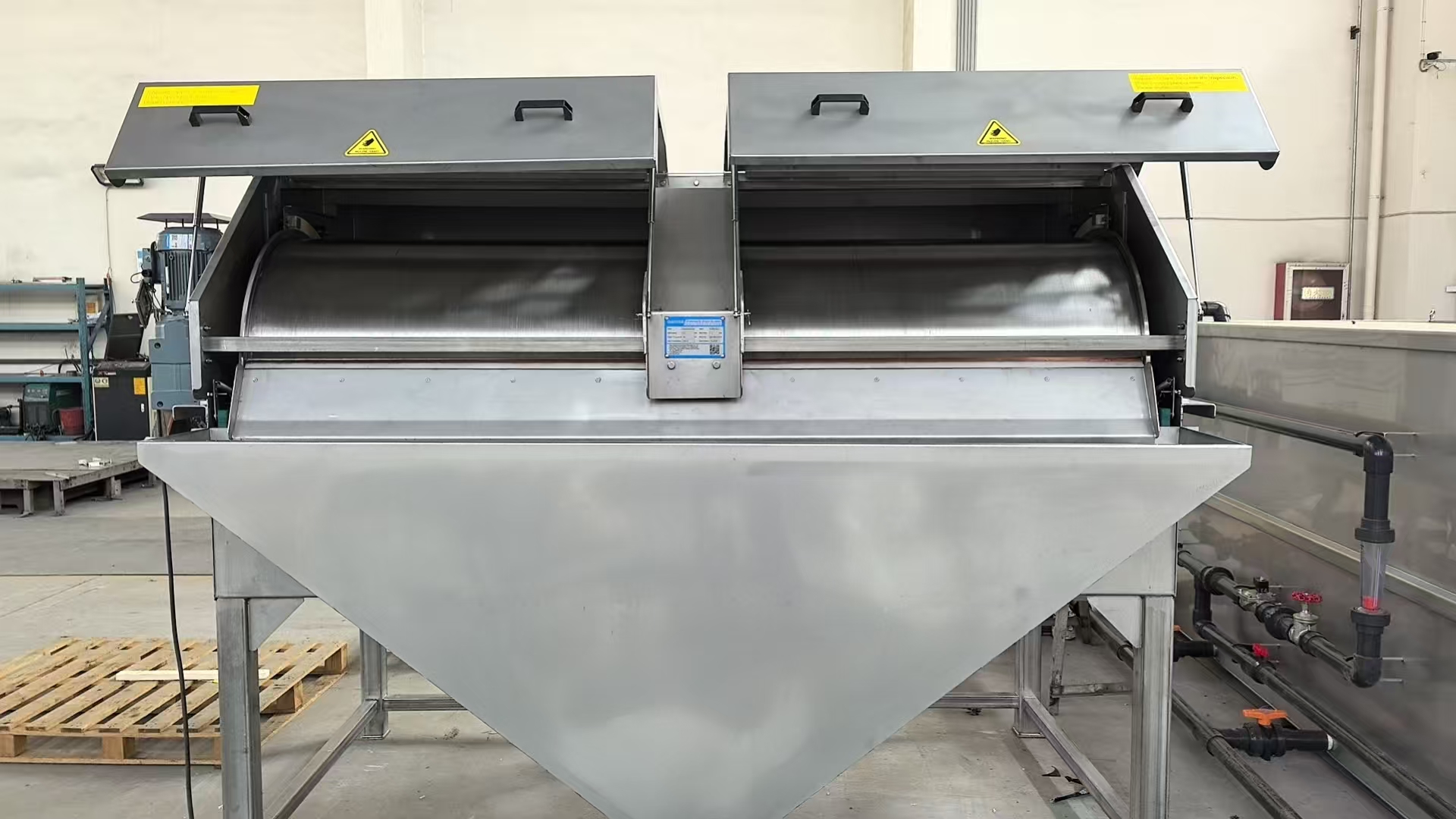
The versatility of DAGYEE's externally fed rotary drum screen makes it suitable for a wide range of water and wastewater treatment applications across various industries. The table below shows typical flow capabilities for different slot openings and model sizes:
Standard Flow Rate Table
Externally Fed Rotary Drum Screen — Flow capacity by industry and model
| Industry Type | Slot (mm) | Flow (m³/h) by Model | ||||||||
|---|---|---|---|---|---|---|---|---|---|---|
| 03/300 | 06/400 | 06/700 | 06/1000 | 06/1300 | 06/1600 | 06/2000 | 08/2000 | 08/2500 | ||
| Paper Industry | 0.5 | 6 | 20 | 40 | 60 | 80 | 100 | 130 | 190 | 225 |
| Slaughter House | 0.75 | 4 | 15 | 30 | 45 | 60 | 75 | 95 | 130 | 160 |
| Seafood Industry | 0.75 | 5 | 17 | 35 | 50 | 70 | 90 | 110 | 140 | 170 |
| Meat Industry | 1.0 | 6 | 20 | 40 | 60 | 80 | 100 | 130 | 190 | 240 |
| Meat Industry | 1.5 | 8 | 25 | 50 | 75 | 100 | 125 | 150 | 220 | 240 |
| Vegetable Industry | 1.0 | 12 | 40 | 75 | 110 | 150 | 180 | 220 | 330 | 400 |
Note: Flow rates are typical values based on clean water testing. Actual capacity may vary depending on solids loading, particle size distribution, and operating conditions. Contact DAGYEE for application-specific sizing.
Model Selection Guide
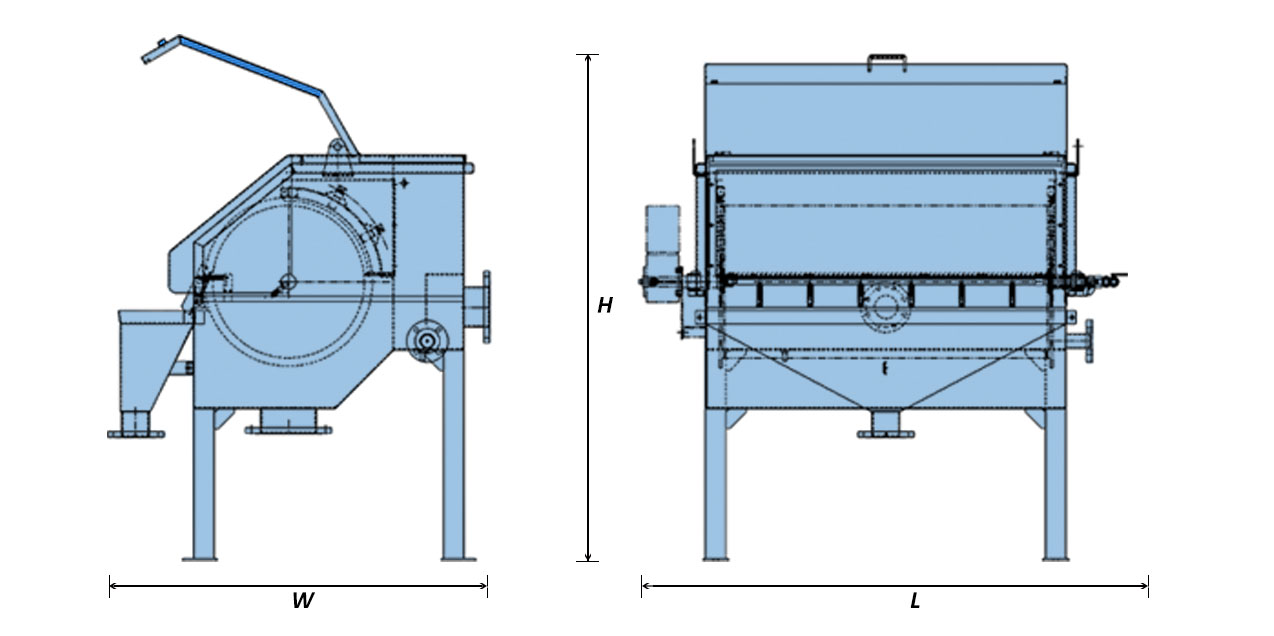
Externally Fed Rotary Drum Screen — Choose the right model for your application
| Model | Drum Dia. (mm) | Drum Length (mm) | Recommended Flow Range (m³/h) | Best For |
|---|---|---|---|---|
| 03/300 | 300 | 500 | 4 – 12 | Small-scale operations, pilot plants, low-flow applications |
| 06/400 | 600 | 700 | 15 – 25 | Medium-flow municipal and light industrial |
| 06/700 | 600 | 1100 | 30 – 50 | Food processing, slaughterhouse, seafood |
| 06/1000 | 600 | 1500 | 45 – 75 | Larger food processing, paper mill pre-treatment |
| 06/1300 | 600 | 1900 | 60 – 100 | High-flow municipal, heavy industrial |
| 06/1600 | 600 | 2300 | 75 – 125 | Industrial wastewater, paper industry |
| 06/2000 | 600 | 2800 | 95 – 150 | Large-scale municipal, high-solids applications |
| 08/2000 | 800 | 2800 | 130 – 220 | Extra-heavy-duty, high-capacity plants |
| 08/2500 | 800 | 3500 | 160 – 400 | Large municipal WWTP, major industrial facilities |
Selection Tip: Choose the smallest model that meets your peak flow requirement while accounting for solids loading. For applications with high solids content (>500 mg/L), select one model size larger to allow for reduced capacity due to solids buildup. Contact DAGYEE for application-specific sizing assistance.
Quick Selection by Application
Externally Fed Rotary Drum Screen — Recommended models for common applications
| Application | Recommended Slot | Recommended Model | Expected Flow |
|---|---|---|---|
| Paper industry – fiber recovery | 0.5 mm | 06/1600 or 08/2000 | 100 – 190 m³/h |
| Slaughterhouse – solids removal | 0.75 mm | 06/1000 or 06/1300 | 45 – 75 m³/h |
| Seafood processing – effluent screening | 0.75 mm | 06/1000 or 06/1300 | 50 – 90 m³/h |
| Meat processing – fat & solids capture | 1.0 – 1.5 mm | 06/1300 or 06/1600 | 80 – 125 m³/h |
| Vegetable processing – pulp & peel removal | 1.0 mm | 06/1600 or 08/2000 | 100 – 220 m³/h |
Selection Tip: Expected flow ranges are based on typical operating conditions. For applications with high solids loading (>500 mg/L) or variable flow rates, we recommend selecting the larger model option and contacting DAGYEE for engineering support to confirm final sizing.
Industry Application Overview
Externally Fed Rotary Drum Screen — Key contaminants and benefits by sector
| Industry | Key Contaminants | Recommended Slot | Primary Benefit |
|---|---|---|---|
| Pulp & Paper | Fibers, pulp particles, ash | 0.5 – 1.0 mm | Fiber recovery, reduced BOD/COD loading |
| Slaughterhouse | Fat, tissue, blood clots, hair | 0.75 – 1.5 mm | High solids capture, reduced disposal costs |
| Seafood Processing | Fish scales, flesh particles, offal | 0.75 – 1.0 mm | Protects downstream treatment, odor control |
| Meat Processing | Fat, bone fragments, meat trimmings | 1.0 – 1.5 mm | Solids recovery for by-products, reduced fat load |
| Vegetable Processing | Pulp, peels, seeds, fibrous material | 0.5 – 1.0 mm | High organic solids removal, biogas feed preparation |
| Municipal Wastewater | Rags, plastics, grit, organic solids | 1.0 – 3.0 mm | Downstream equipment protection, primary treatment |
| Textile Industry | Fibers, dye particles, sludge | 0.2 – 0.5 mm | Fiber capture, improved effluent quality |
| Aquaculture | Uneaten feed, fish waste, algae | 0.2 – 0.5 mm | Water reuse, disease prevention |
Selection Note: Slot size selection should be based on the target particle size for removal. Finer slots (0.2–0.5 mm) provide higher capture efficiency but may require more frequent cleaning. Coarser slots (1.0–3.0 mm) handle higher flow rates with less maintenance. Contact DAGYEE for application-specific recommendations.
Why Choose DAGYEE's Externally Fed Rotary Drum Screen?
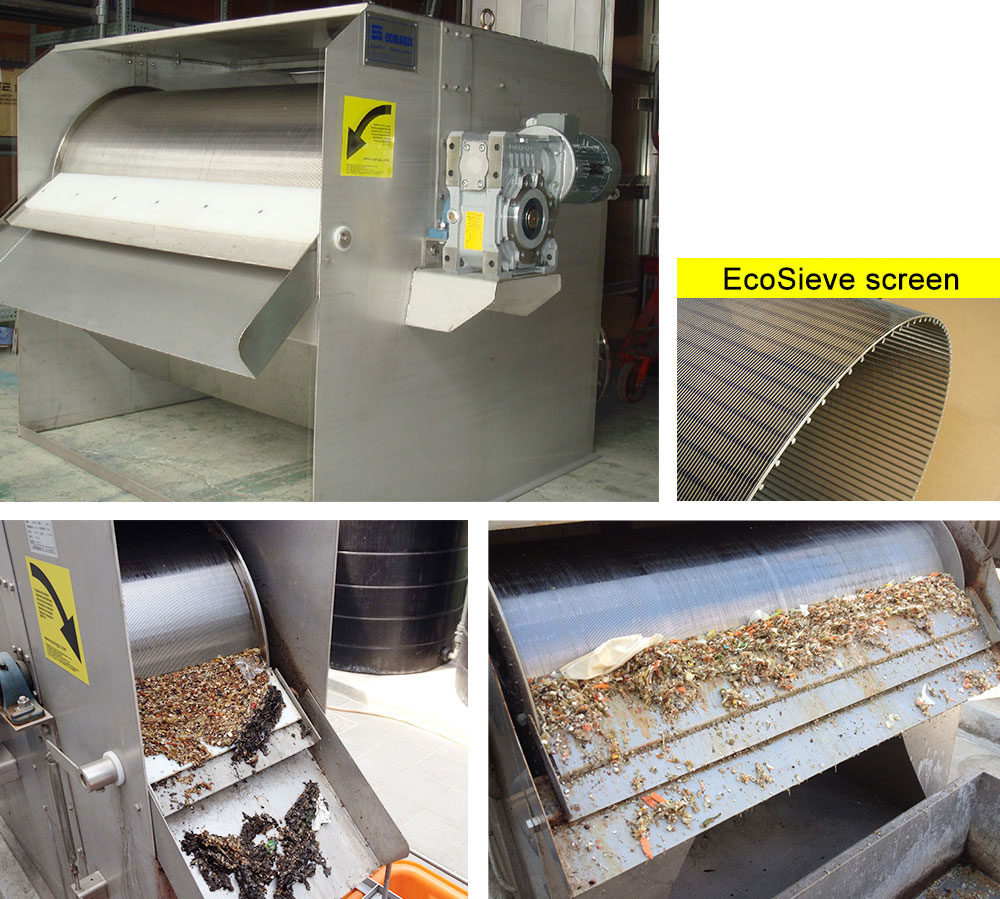
Our externally fed rotary drum screen achieves solids capture efficiency of up to 90% for particles larger than the mesh size, ensuring treated water meets quality standards for subsequent treatment stages. The external feed design and tight mesh tensioning minimize bypass, delivering consistent and reliable performance.
2. Low Maintenance and Operating Costs
Stainless steel construction, low-speed rotation, and automated cleaning reduce the need for frequent maintenance and replacement parts. DAGYEE's drum screen has an average service life of 10–15 years with proper maintenance, and low power consumption translates to significant energy savings over the equipment's lifetime.
3. Customizable Solutions
Every water treatment project is unique. DAGYEE offers fully customizable solutions—from drum size and mesh size to material selection and auxiliary systems (spray cleaning, solids collection). We work closely with clients to design an externally fed drum screen that aligns with project requirements and budget.
4. Compliance with International Standards
DAGYEE's externally fed rotary drum screen is designed and manufactured in compliance with ISO 9001, CE, and other international standards, ensuring equipment meets the highest quality and safety requirements for global markets.
Case Study: Food Processing Plant in Spain
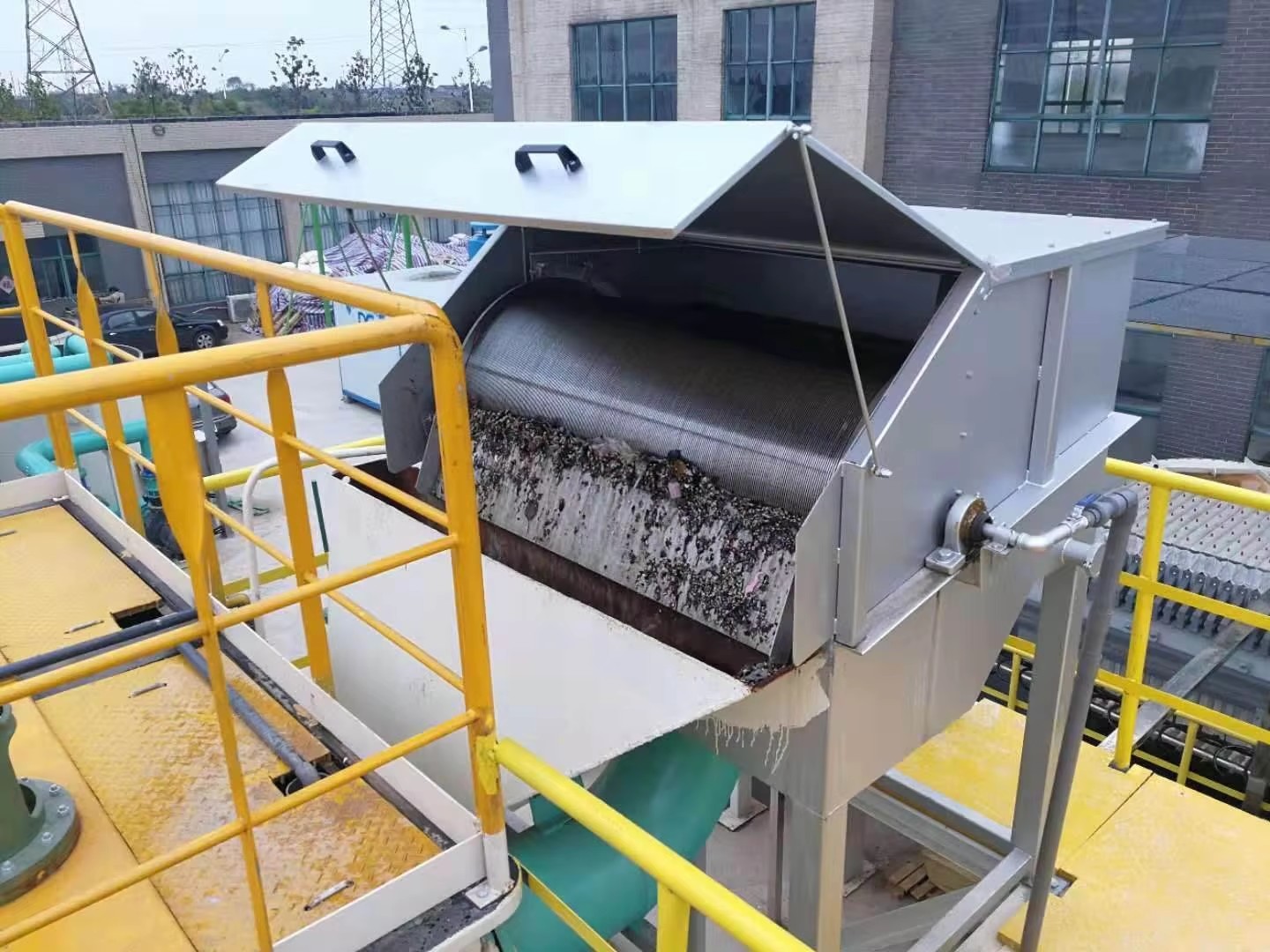
Solution: DAGYEE recommended the DY-ES800 externally fed rotary drum screen with a 100-micron mesh size and high-pressure spray cleaning system. The equipment was customized with 316L stainless steel to resist corrosion from acidic fruit juice wastewater.
Results:
- Eliminated manual cleaning: Automated spray system reduced labor costs by 70%
- Increased uptime: 24/7 continuous operation with no unplanned downtime—production efficiency improved by 15%
- High separation efficiency: 98% of fruit solids captured and recovered as animal feed, creating additional revenue
- Reduced maintenance costs: 50% reduction compared to the previous vibrating screen
Conclusion
Whether you are upgrading an existing treatment plant or designing a new system, DAGYEE's externally fed rotary drum screen delivers consistent performance with minimal maintenance and downtime.
Contact DAGYEE for Customized Drum Screen Solutions

Related News