DAF or Lamella Clarifier? How to Choose the Right System for Your Plant
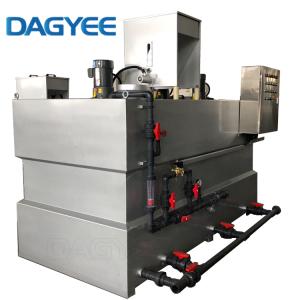
lamella clarifier vs DAF: Which One Should You Pick?Choosing between a lamella clarifier and a DAF system is never easy. Both are widely used solid-liquid separation units for wastewater treatment, yet they operate on different principles and fit different working scenarios.
Quick takeaway: A lamella clarifier lets heavy solids sink down, while a DAF system lifts solids up by flotation. Almost all other differences come from this basic working principle.
This article compares real-world performance of both units, helping you select the right solution for your wastewater.
How They Work
These two devices rely on totally different physical principles.
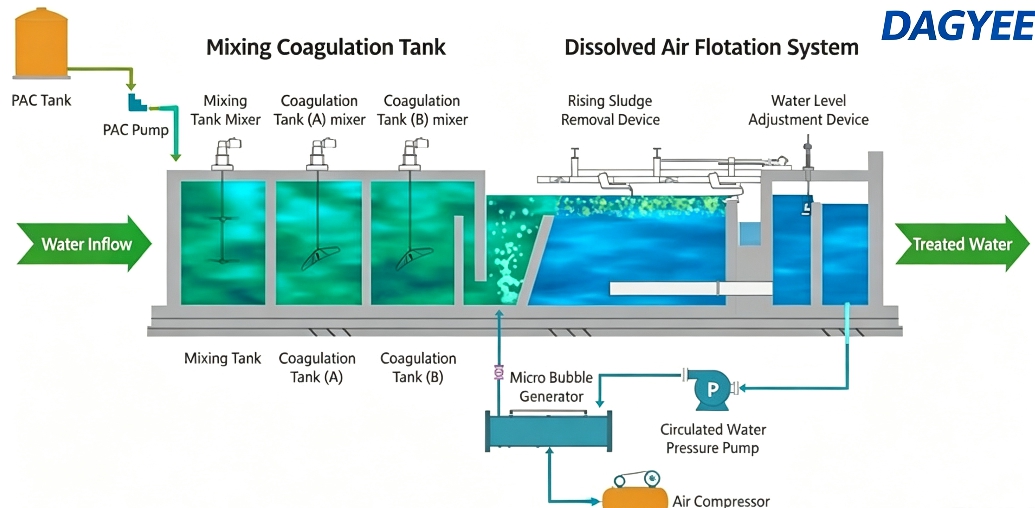
Lamella clarifiers work by gravity settling. Inside are stacked inclined plates set at 55-60 degrees. Compared with a conventional tank of the same size, these plates expand the effective settling area 5-8 times. Solids heavier than water settle onto plate surfaces, slide down into the sludge hopper, and treated clean water flows upward through plate gaps.
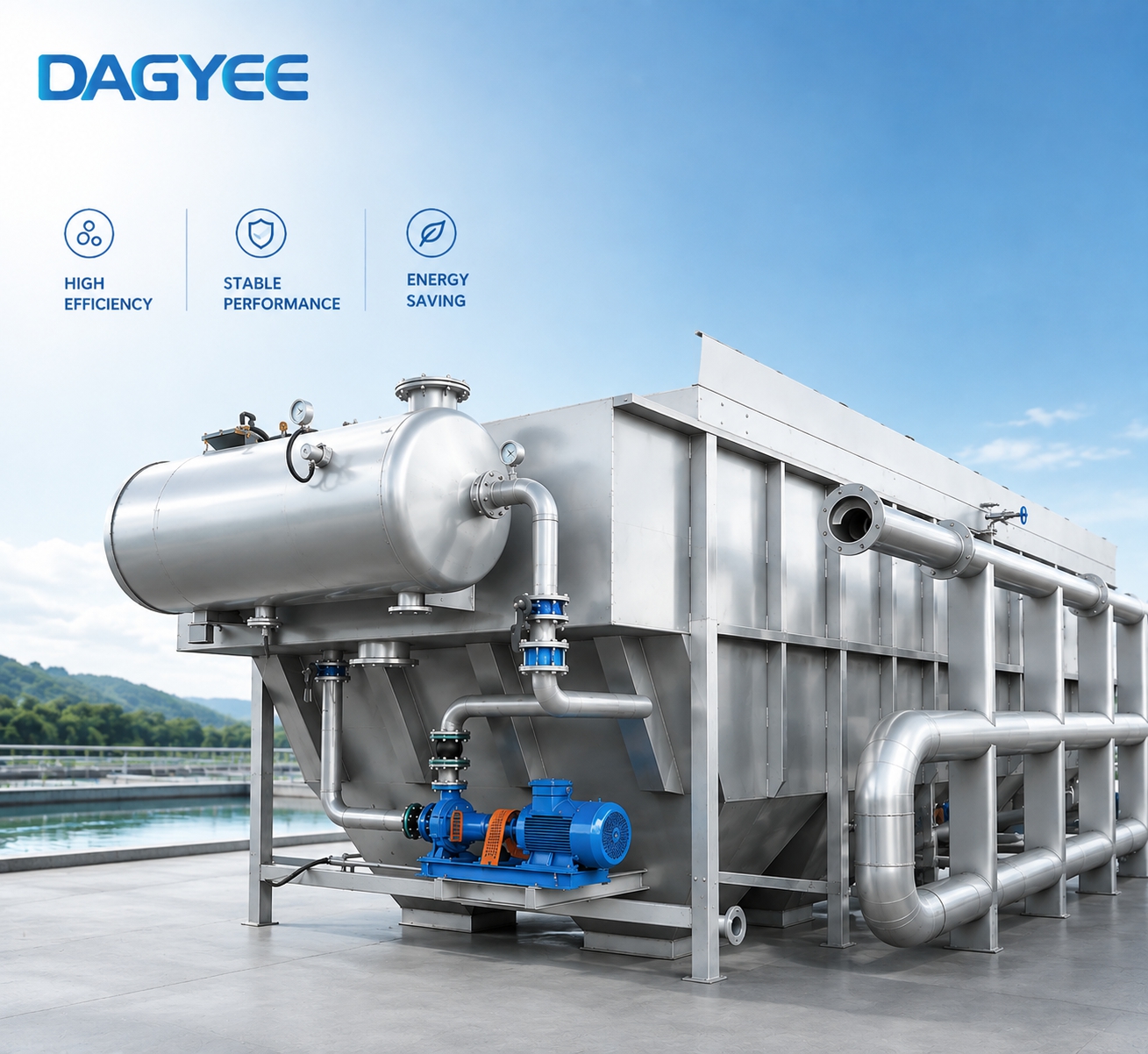
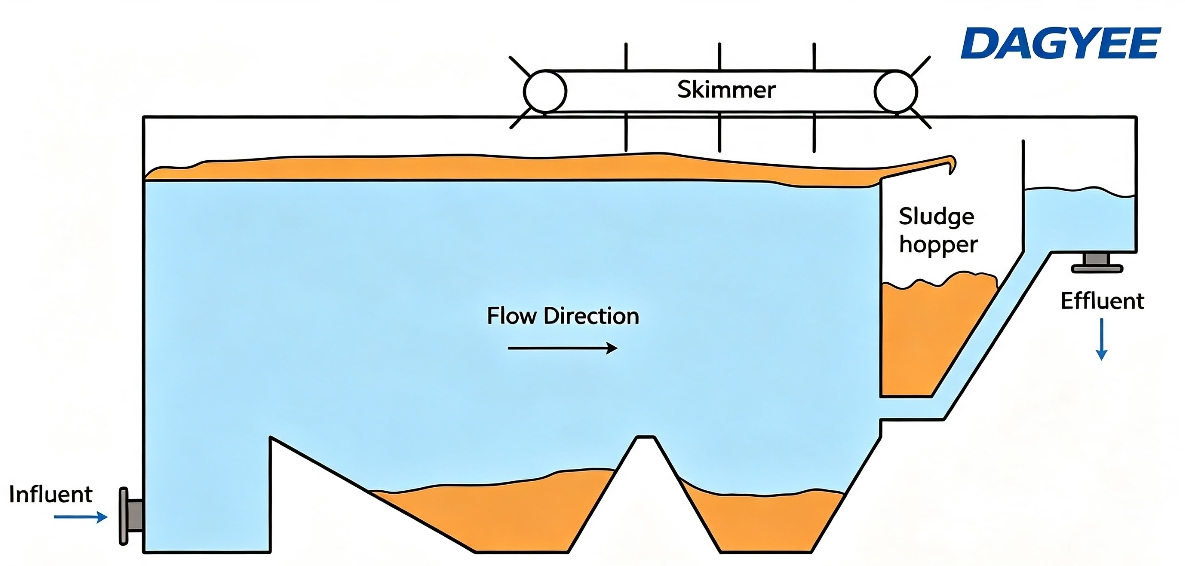
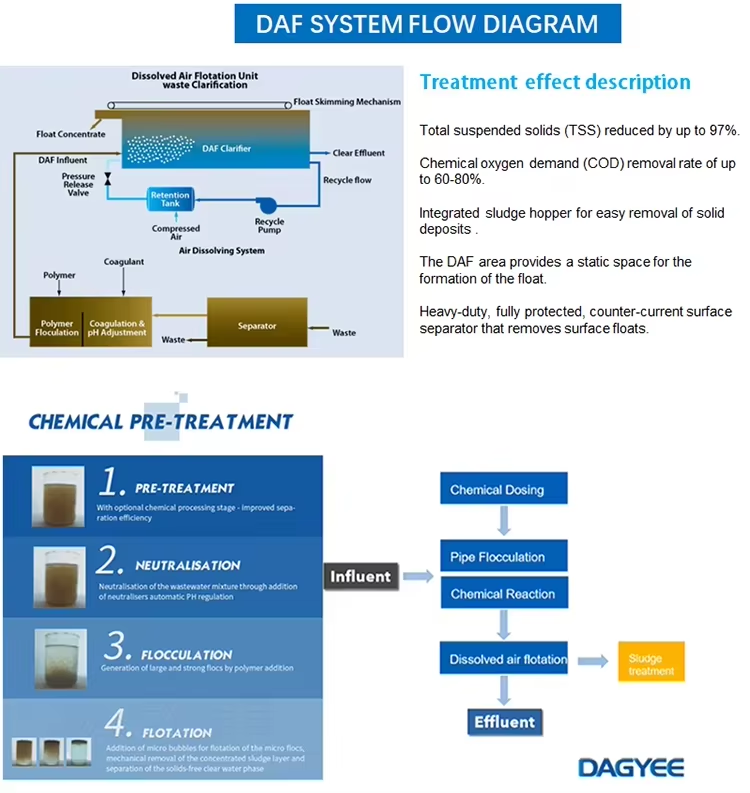
DAF works the other way around. Air is dissolved into water under pressure, then pressure is suddenly released. Tiny micro-bubbles form and stick onto solid particles. The combined bubble-particle aggregates become lighter than water and float to the top. A surface scraper then skims off the floated sludge.
One relies on settling, the other on flotation. That is their core difference.
Side-by-Side Comparison
Key performance and design differences
| Parameter | DAF | Lamella Clarifier |
|---|---|---|
| Hydraulic loading rate | 5-15 m/h | 3-8 m/h |
| Footprint for 500 m³/h flow | ~35-50 m² | ~60-100 m² |
| Sludge solids content | 3-8% | 1-3% |
| Low-density / emulsified solids | Excellent | Moderate |
| Oil & grease removal | Excellent | Moderate |
| Algae removal | Excellent | Moderate |
| Heavy dense solids | Moderate | Excellent |
| Resistance to hydraulic shock | Moderate | Low |
| Coagulation needed | Yes | Yes |
| Capital investment | Higher | Lower |
| Power consumption | Higher | Lower |
| Maintenance workload | More components | Simple structure |
| Effluent suspended solids | <10 mg/L | 20-30 mg/L |
Key insight: DAF is better for light, oily, or algae-laden wastewater where solids won't settle. Lamella clarifiers are better for heavy, dense solids that settle readily. The choice depends on your specific wastewater characteristics.
When DAF Is the Better Choice
Pick DAF when your wastewater contains substances that cannot settle naturally.Oily wastewater is the typical application. Food factories, dairies, edible-oil refineries and slaughterhouses generate wastewater full of fats, oils and grease. Such contaminants have density close to or even lower than water, so they will not sink. With proper chemical dosing, DAF can remove 85-95% oil and grease. A lamella clarifier struggles here: oil sticks onto plate surfaces and particles keep floating in water.
DAF also performs better under low water temperature. When water temperature drops below 15°C, settling speed goes down by 30-40%, and clarifier output gets worse. DAF is far less affected, since bubble rising speed barely changes with temperature.
For emulsified oil, DAF shows obvious advantages. Tiny emulsified oil droplets stay suspended and easily pass through clarifiers. With correct chemical treatment, DAF can lift these droplets out of water.
Many water plants run DAF for algae control. Algae cells are light and hardly settle. DAF captures algae effectively, so it is widely used during algae bloom seasons for raw water treatment.
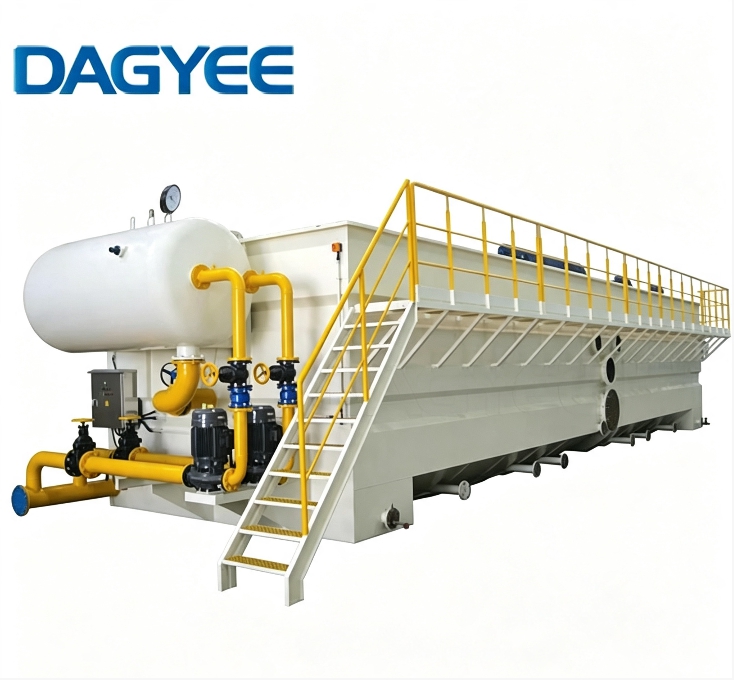
If you have limited floor space, choose DAF. For the same flow rate, DAF only takes around 60% of the area required by a lamella clarifier. This is valuable for retrofit projects or sites with limited space.
Thicker sludge is another plus. DAF produces sludge with 3-8% solids, cutting sludge transportation cost and making further dewatering easier. Lamella clarifier sludge only hits 1-3% solids and normally needs extra thickening before disposal.
When Lamella Clarifier Is the Better Choice
Lamella clarifiers shine when incoming solids are heavy and settle readily.
Mining and mineral-processing wastewater is a typical case. Heavy-metal hydroxide precipitates and mineral-based particles settle fast. A lamella clarifier handles these loads without the high power consumption of DAF. Stacked plates provide large settling area within compact equipment dimensions.
It also suits heavy-metal precipitation streams. Metal-hydroxide flocs are dense and settle well. Thanks to its simple structure and low power use, the clarifier becomes a cost-effective option.
For high-solid-content influent (above 1000 mg/L suspended solids), clarifiers run more stably. DAF can cope with high-solid conditions too, yet it consumes more chemicals and becomes more sensitive to operating fluctuations.
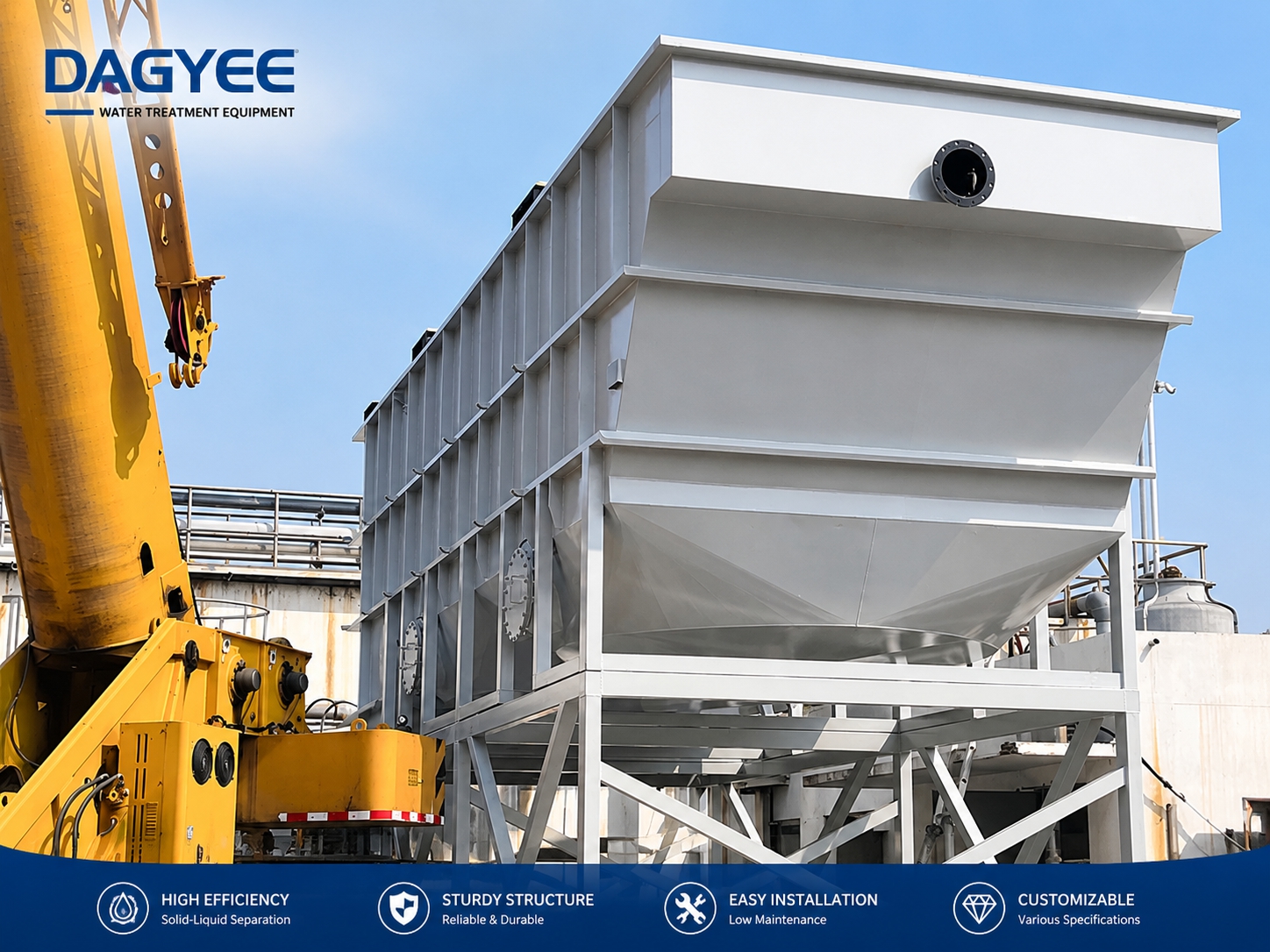
Flow-rate fluctuation is well tolerated by lamella clarifiers. Their simple design copes with flow spikes. DAF needs stricter flow control.
Low-cost operation is a major strength. Clarifiers have no high-energy recycle pumps or air compressors. Main power-consuming parts are just slow-speed mixers and sludge-transfer pumps. Maintenance work is minimal.
Operation is straightforward. Basically it is a tank fitted with plate packs. Few adjustment points and few failure-prone parts. DAF has more moving components and demands more operator attention.
For existing-site upgrading, lamella clarifiers are easy to integrate. They can tolerate unexpected water-quality upsets better.
Application Selection Table
Which technology fits your application best?
| Application | Better Choice |
|---|---|
| Oily wastewater | DAF |
| Food-processing wastewater | DAF |
| Low-temperature water | DAF |
| Algae removal | DAF |
| Limited installation space | DAF |
| Emulsified oil removal | DAF |
| Heavy-metal precipitation | Lamella Clarifier |
| Mine-site wastewater | Lamella Clarifier |
| High-solids-loading wastewater | Lamella Clarifier |
| Priority on low running-cost | Lamella Clarifier |
| Limited operator experience | Lamella Clarifier |
Selection tip: If your wastewater contains oil, emulsions, or fine particles that won't settle, choose DAF. If you have heavy solids that settle readily and low operating cost is a priority, choose Lamella Clarifier.
Typical Treatment Performance
Typical removal efficiency and key operating parameters
| Parameter | DAF | Lamella Clarifier |
|---|---|---|
| Oil & Grease Removal | 85-95% | 40-70% |
| Emulsified Oil Removal | 80-95% | Poor |
| Suspended Solids Removal | 85-95% | 80-90% |
| Algae Removal | 90-95% | 30-50% |
| COD Removal | 50-75% | 30-50% |
| Low-temperature performance | Good | Poor |
| Sludge solid content | 3-8% | 1-3% |
Key takeaway: DAF consistently outperforms lamella clarifiers on oil, grease, emulsified oil and algae removal. It also handles cold water better and produces thicker sludge. Lamella clarifiers work best for heavy settleable solids where high removal of oil is not required.
Key Questions to Help You Decide
If you remain unsure, work through these practical questions.
- What is your main pollutant? Oil, emulsified oil, algae or fine floating particles → go for DAF. Heavy fast-settling particles → choose lamella clarifier.
- What is your operation-cost budget? If energy cost is tight and moderate effluent quality is acceptable, pick clarifier. If you need stable high-quality output, accept higher power cost for DAF.
- How much installation space do you have? DAF saves floor area; lamella clarifiers need more space.
- Who will run the equipment? Clarifiers are user-friendly. DAF requires more routine monitoring.
- What are your downstream process requirements? If you need very clean effluent, DAF delivers steady results. Lamella clarifiers normally output 20-30 mg/L SS. For downstream membrane systems like RO or UF, DAF is preferred, as it removes more particles that cause membrane fouling.
- What is the wastewater temperature? For cold-water conditions, DAF performs far better. Clarifier capacity drops under low temperature.
Sludge properties differ greatly between the two systems, which directly affects sludge-disposal expenditure.
DAF sludge reaches 3-8% solids. It is thick and easy to handle. In many cases it can go directly to Belt filter presses without prior thickening.
Lamella clarifier sludge sits at only 1-3% solids. It is watery and normally needs extra thickening equipment before dewatering, adding capital and operating expense.
For plants with limited sludge-processing capacity, DAF sludge brings easier management. If you already have sludge-thickening facilities, lamella clarifier sludge works fine.
Combined-Process Layout
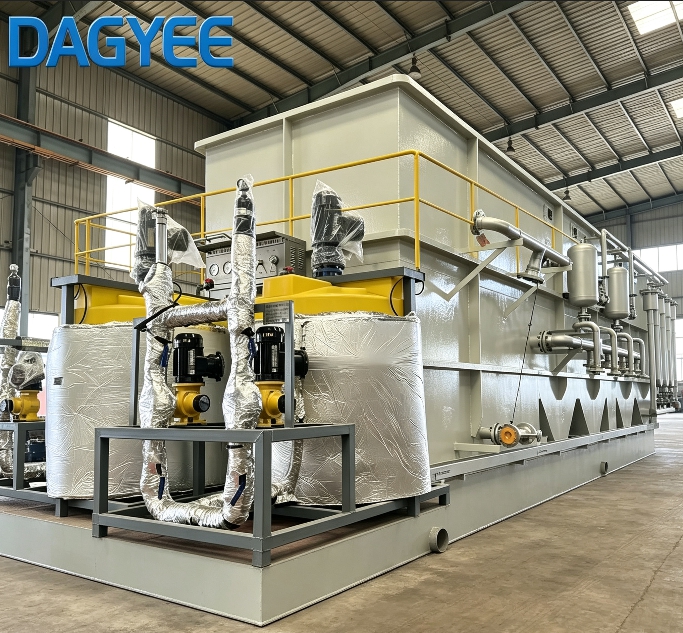
Many real-world wastewater plants deploy both units in series.A common layout: lamella clarifier as primary treatment to knock down heavy settleable solids and lower the load for downstream units. DAF comes afterwards as polishing stage to remove oil and fine particles.
Other set-ups put DAF first for oil removal, followed by lamella clarifier to capture heavy settled solids.
Optimal sequence depends on your raw-wastewater characteristics and target removal goals.
Final Thoughts
Both DAF and lamella clarifiers have their own application scenarios in wastewater treatment. Your final decision depends on wastewater characteristics, site space, budget and actual operating conditions.
Choose DAF for oily wastewater, emulsified oil, low-temperature influent, algae and fine floating particles. It produces cleaner effluent and thicker sludge, yet runs at higher energy cost.
Choose lamella clarifier for heavy settleable solids, high-solids-loading wastewater and low-operation-cost requirements. It is simple and fault-tolerant, but generates watery sludge and cannot handle oil or emulsions well.
When you cannot make a final call, run lab tests using your real wastewater sample. Jar-test results tell you which technology fits better. Actual test data beats theoretical comparison.
DAGYEE — Water Treatment Solutions
Related News