Traditional Sedimentation Tanks vs. Lamella Clarifiers: Which One Fits Your Plant?
Space Running Out?
Costs Too High? Why Modern Factories Are Switching to DAGYEE Lamella Clarifiers
By DAGYEE Company- Water Treatment Specialist
Introduction
But there is a better way.
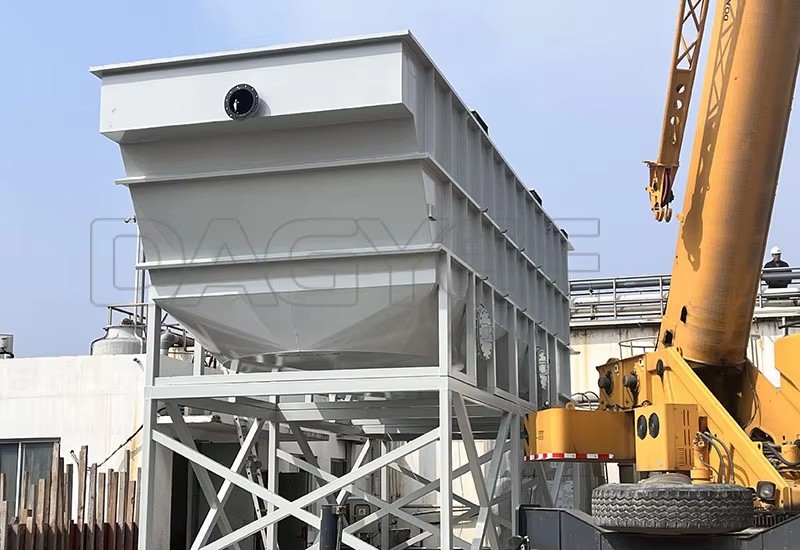
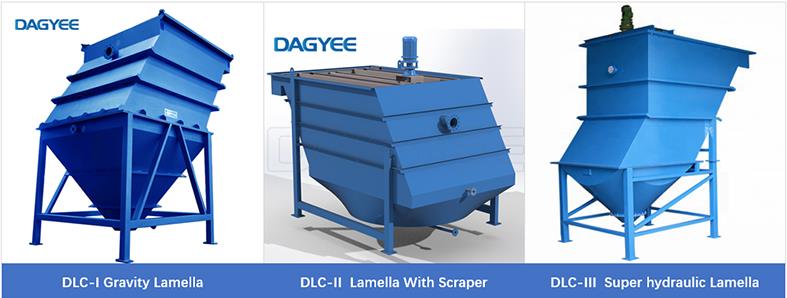
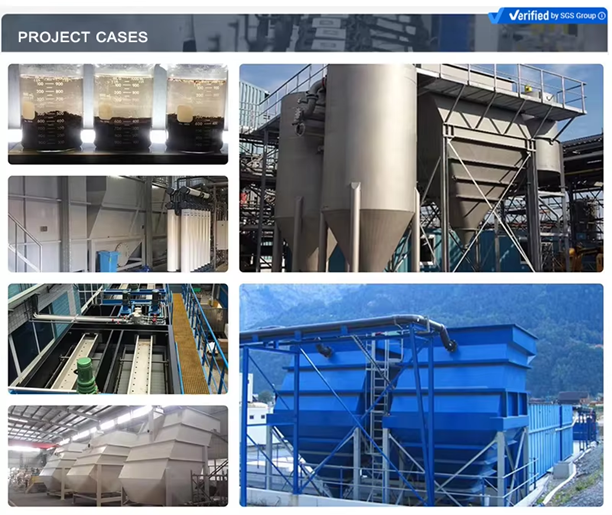
A technology based on the "shallow depth settling theory" is rapidly replacing conventional clarifiers across the globe—from Australian soil remediation projects to mining operations in Africa and chemical plants in Europe. It's called the DAGYEE lamella clarifier (also known as an Inclined Plate Settler, Plate Clarifier, or Lamella Separator).
This article explores why modern facilities are making the switch and how this technology solves the dual challenges of spatial constraints and rising operational costs—with a detailed real-world case study fromSydney, Australia.
The Problem with Conventional Clarifiers: A Real Cost Example
Conventional clarifiers rely on gravity. You pump wastewater into a large tank, wait for particles to sink to the bottom, and then skim the clean water off the top. While this method works, it comes with significant drawbacks that translate directly to your bottom line:
Challenge Conventional Clarifier Business Impact
Footprint Requires 15-20m diameter tank for 100m³/h flow Land costs: $50,000-$200,000+ for extra space
Retention Time 2-4 hours settling time Large tank volume required = higher material costs
Construction On-site concrete pouring, curing, rebar 3-6 months construction time, weather delays
Flexibility Permanent structure, cannot be relocated Zero adaptability to changing production lines
The Hidden Cost: For a food processing plant we recently consulted, expanding their conventional clarifier would have required purchasing adjacent land at $180,000—more than the treatment system itself. They chose a Lamella solution instead, fitting the entire upgrade into their existing facility footprint.
For factories located in urban industrial parks, facilities with indoor treatment areas, or remote sites where concrete work is challenging, these drawbacks can make expansion prohibitively expensive or technically impossible.
The "Shallow Depth" Solution: How DAGYEE DAGYEE Lamella Clarifier Works
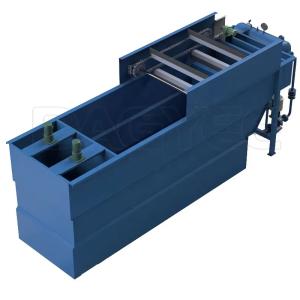
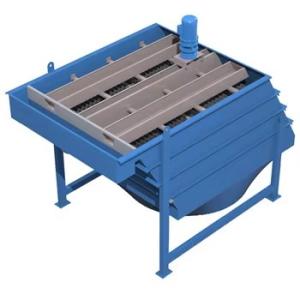
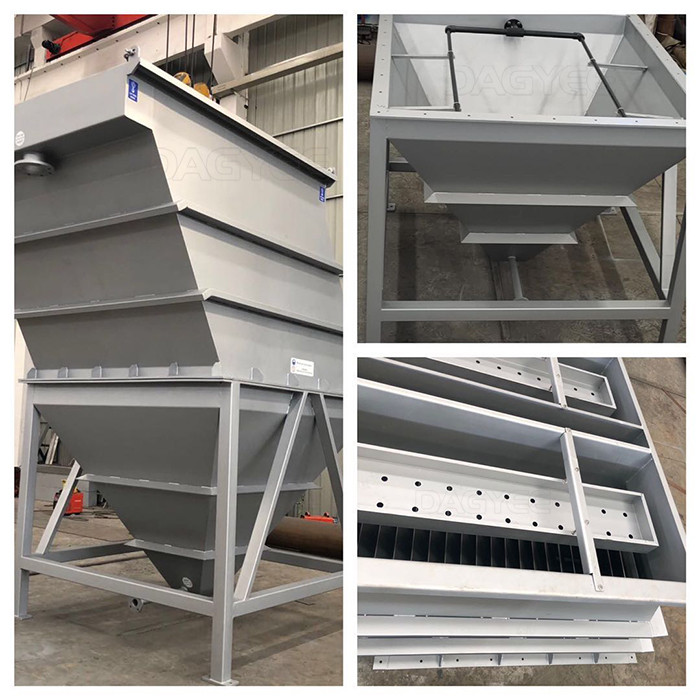
The DAGYEE Lamella Clarifier solves these problems by completely reimagining the settling process. Instead of one deep tank, it uses a series of inclined plates stacked closely together.
The Principle: Think of a Library, Not a LakeImagine a 10-meter deep lake. A particle must fall 10 meters to reach the bottom. Now, imagine that same lake divided by horizontal shelves placed 5cm apart. A particle now only falls 5cm before hitting a shelf and sliding down.
This is the essence of "shallow depth settling." By stacking inclined plates, the Lamella Clarifier creates up to 10 square meters of effective settling area for every 1 square meter of floor space it occupies.
How It Works (Step-by-Step):
2. Upward Flow: Water flows upward through the inclined plates at a controlled velocity.
3. Settling onto Plates: Solid particles settle onto the plate surfaces due to gravity—the effective settling distance is now just the vertical gap between plates (typically 25-50mm).
4. Counter-Flow Sliding: Plates are angled at 55-60 degrees—steep enough that settled solids slide down the plates in the opposite direction of the rising water, dropping into a sludge hopper at the bottom.
5. Overflow Collection: Clarified water continues to rise, spills over an outlet weir at the top, and exits the system.
Key Insight: In a conventional tank, a particle might travel 3-4 meters vertically to settle. In a Lamella, that same particle travels only 2-5 centimeters. This 100x reduction in settling distance is what enables the dramatic space savings.
Featured Case Study: Mobile PFAS Wastewater Treatment Plant for Sydney Soil Remediation Project
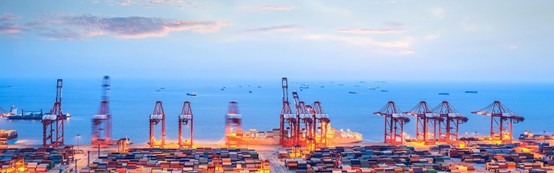
Destination Port: Sydney Harbour, Australia
Project Overview
- Project Element Details
- Client Soil remediation contractor, Sydney, Australia
- Destination Port Sydney Harbour, NSW
- Application Mobile PFAS wastewater treatment for soil remediation
- Flow Rate 20 m³/h
- Key Challenge Space constraints + Australian road transport regulations
- Delivery Status Successfully engineered and delivered
The Challenge: PFAS Treatment in a Tight Sydney Site
When a Sydney-based soil remediation contractor secured a project to treat PFAS-contaminated groundwater from a former industrial site, they faced a familiar dilemma: the site had no space for a permanent treatment plant, but the project required robust, reliable PFAS wastewater treatment capable of handling 20 m³/h.Client Requirements:
- Requirement Specification
- Wastewater Source PFAS-impacted groundwater from soil remediation
- Flow Rate 20 m³/h
- Influent SS (Average) 90 mg/L
- Influent SS (Peak) <200 mg/L (equalized in storage tank)
- Temperature 20°C
- Oil & Grease Very low (negligible impact)
- Material SUS304 Stainless Steel, no painting
- Weld Treatment Passivation & pickling
- Electrical 415V / 3-phase / 50Hz
- Optional Coagulation/flocculation mixer (separately quoted)
- Clarifier Type Lamella without automatic sludge scraper
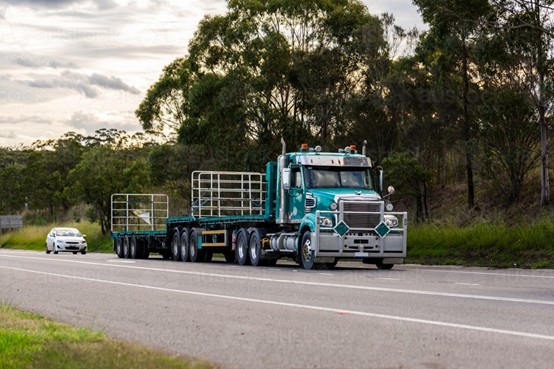
The Transport Challenge: NSW Road Regulations
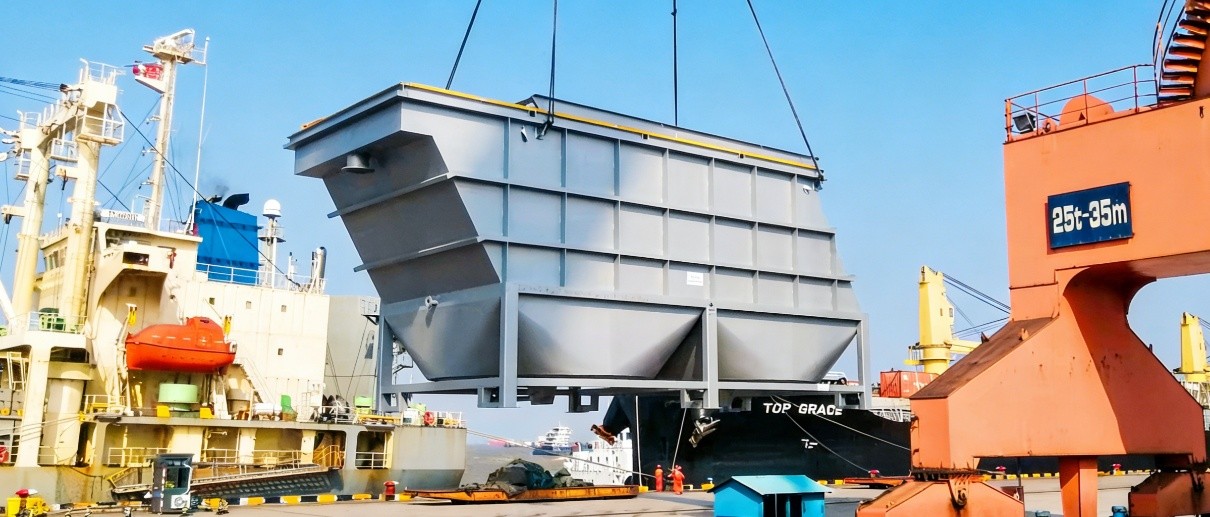
Any equipment shipped to Australia must comply with New South Wales (NSW) heavy vehicle regulations. The standard maximum width for a vehicle carrying a load is 2.5 meters. Our standard integrated design—with flocculation tank mounted directly above the lamella—
Our Solution: Split-Body, Transport-Optimized Design
To meet the client's unique requirements, we designed a custom-engineered solution:
Key Design FeaturesRequirement Our Solution
- Space Constraints Compact lamella design: 80% footprint reduction vs. conventional tank
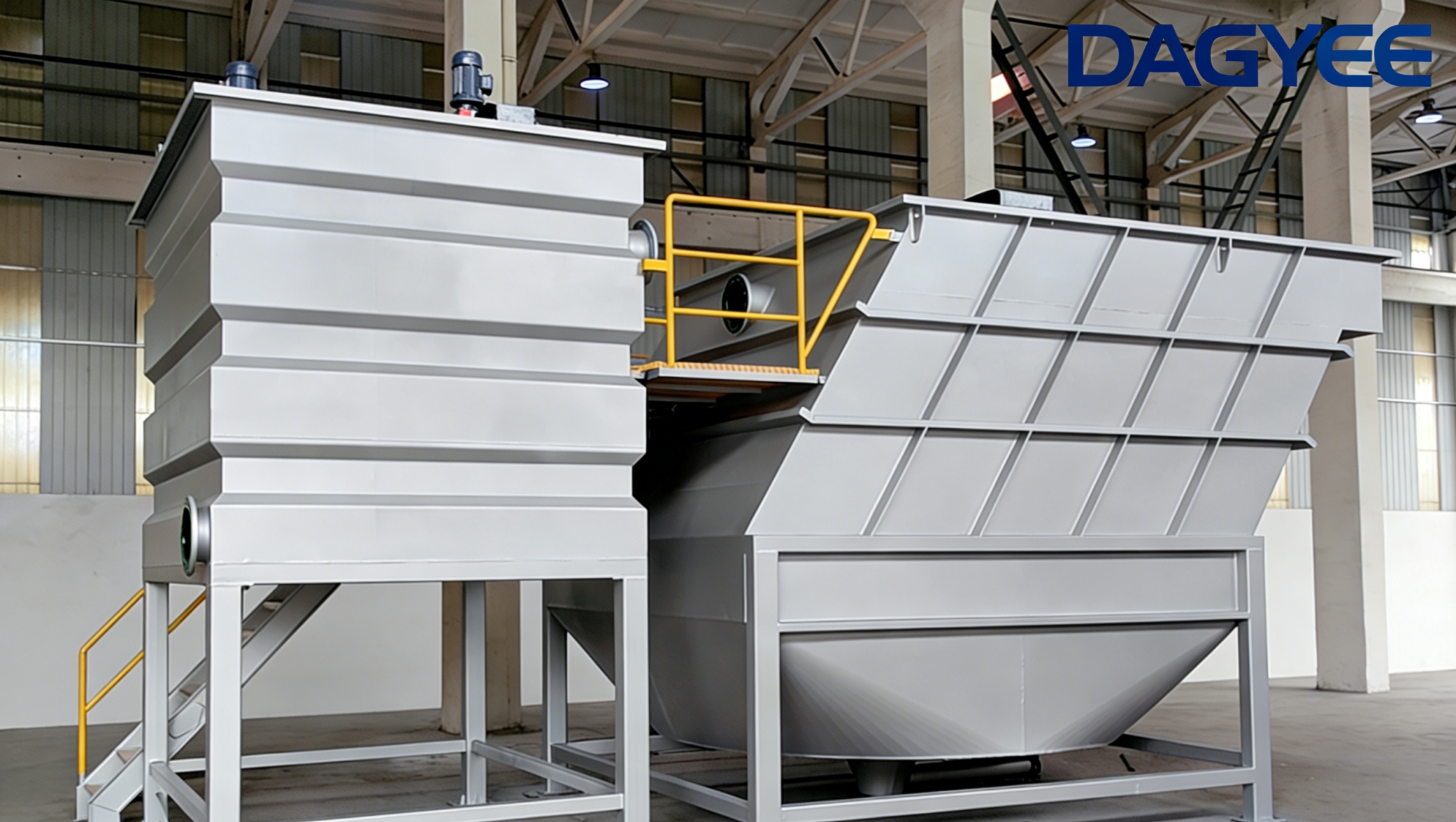
- Transport Width <2.5m Split-body design: Flocculation tank ships separately from lamella clarifier
- On-Site Assembly Bolted/flanged connections for quick reassembly
- Material SUS304 stainless steel throughout, no paint
- Weld Treatment Full passivation and pickling of all welds
- Mobility Skid-mounted for future relocation
- PFAS Readiness Pre-treatment ahead of client's GAC/IX systems
- Split-Body Transport Modules
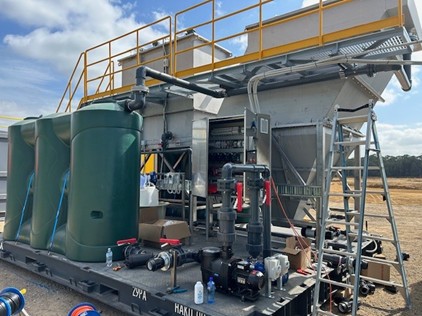
Key Innovation:
The flocculation/reactor tank was designed to be completely separable from the supporting frame and lamella section. This allowed:
• ✅ Compliance with NSW width regulations• ✅ Easier handling at port
• ✅ Flexibility for future relocation
• ✅ Simplified maintenance access
Why DAGYEE Lamella Clarifiers for PFAS Pre-Treatment?
For PFAS-impacted water, proper pre-treatment is critical to protect downstream polishing media (granular activated carbon or ion exchange resins). Suspended solids can quickly foul GAC beds, increasing operating costs and reducing media life.
Stage Function Our Solution1. Coagulation/Flocculation Bind fine particles and PFAS-associated solids Optional mixer in reactor tank
2. Lamella Clarification Remove >90% of suspended solids Compact Lamella Plates (no scraper)
3. Polishing Remove dissolved PFAS Client's existing GAC/IX system
Note: While the lamella clarifier removes suspended solids (including PFAS adsorbed to particles), dissolved PFAS requires downstream treatment with GAC or ion exchange. Our system was designed as the essential pre-treatment step to protect the client's existing polishing media.
Project Results
- Treatment Capacity ✅ 20 m³/h achieved
- Space Savings ✅ 80% less footprint vs. conventional tank
- Transport Compliance ✅ Fully compliant with NSW width regulations
- On-Site Assembly Time ✅ < 8 hours
- Material Compliance ✅ SUS304, no paint, welds passivated/pickled
- PFAS Readiness ✅ Pre-treatment ready for GAC/IX systems
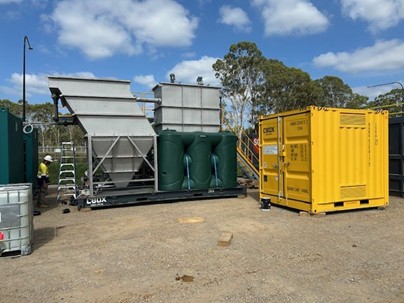
Client Feedback
— Project Manager, Sydney Soil Remediation Contractor
Why This Case Matters for Your Project
This Sydney project demonstrates our ability to:
- Capability What It Means For You
- Engineer for local regulations We handle NSW transport width limits, import requirements, etc.
- Solve space constraints Lamella technology reduces footprint by 80%
- Deliver custom materials SUS304 with passivated welds, no paint—or your specification
- Design for mobility Split-body configuration for road transport anywhere
- Support PFAS treatment As the essential pre-treatment step
Key Advantages: Why Modern Factories Are Switching
The most immediate and obvious benefit is the reduction in footprint. A traditional tank requiring 100m² of space can be replaced by a Lamella unit occupying only 10-20m².
System Type Area for 100 m³/h Capacity Equivalent To
Conventional Clarifier 150-200 m² Basketball court
Lamella Clarifier 20-30 m² Two parking spaces
Savings 80-85% less space Free up valuable real estate
Because the unit is smaller and often pre-fabricated from steel, you save money in multiple areas:
• Civil Works: Minimal foundation required—no extensive concrete pouring
• Installation: Arrives on a truck, craned into place, connected in days
• Indoor Installation: Can be placed inside existing buildings
Cost Factor Conventional Lamella Annual Savings
Maintenance Mechanical scrapers, rake mechanisms No moving parts in settling zone $5,000-15,000
Energy 5-15 kW for sludge rakes <0.5 kW $3,000-8,000
Labor Daily operator attention Weekly inspection $10,000-20,000
4. Superior Efficiency
| Parameter | DAGYEE Lamella Clarifier | Conventional |
ClarifierImprovement |
|
Surface Overflow Rate |
10-25 m³/m²/h |
1-3 m³/m²/h |
5-8x higher loading |
|
Retention Time |
1-3 hours |
2-4 hours |
50% faster treatment |
|
Solids Removal |
90-95% |
80-90% |
5-15% better |
Applications Across Industries
- Industry Application Typical Pollutants
- Soil Remediation PFAS groundwater treatment Suspended solids, PFAS-associated particles
- Metal Finishing Electroplating wastewater Heavy metals (Ni, Cr, Zn), phosphating slag
- Food & Beverage Vegetable washing, dairy processing Starches, fats, oils, grease
- Mining Tailings dewatering, process water recovery Suspended solids, metals, slimes
- Municipal Water Small package plants, tertiary polishing Algae, floc from coagulation
Frequently Asked Questions
A: Not at all. With no moving parts inside the plate packs, most operators spend less than 30 minutes per week on the Lamella system.
Q2: What if my particles are very fine?
A: For fine or colloidal particles, a coagulation/flocculation pre-treatment stage is recommended. This binds small particles into larger, settleable "flocs."
Q3: Can the plates get clogged?
A: Modern designs incorporate anti-clogging features: steep plate angles (55-60°), smooth materials (polypropylene or stainless steel), and proper flocculation.
Q4: Can I install it outdoors?
A: Yes. Units are weather-resistant (epoxy-coated carbon steel or stainless steel). Options include covers, insulation, and heat tracing for cold climates.
Q5: Can I retrofit a Lamella into my existing tank?
A: Yes! Lamella plate packs can be installed inside existing clarifiers to increase capacity by 2-5x without new construction.
Selection Guide: Choosing Your Lamella Clarifier
|
Flow Rate |
Recommended Model |
Typical Footprint |
Applications |
|
1-10 m³/h |
Compact package unit |
2-5 m² |
Small workshops, pilot plants |
|
10-50 m³/h |
Standard Lamella |
5-15 m² |
Medium manufacturing, soil remediation |
|
50-200 m³/h |
Multi-plate pack |
15-40 m² |
Large industrial, central treatment |
|
200+ m³/h |
Custom engineered |
40-100 m² |
Mining, municipal, major industry |
Conclusion: The New Industry Standard
In an era where industrial real estate is expensive, environmental compliance is non-negotiable, and operational efficiency determines competitiveness, the Lamella Clarifier offers a clear path forward.
Whether you are:Planning a new facility in a tight urban space
Upgrading an existing plant to meet stricter discharge limits
Dealing with rising sludge disposal costs
Shipping to Australia and need to comply with transport regulations
Treating PFAS-impacted water and need reliable pre-treatment
The Lamella Clarifier is no longer just an alternative—it is quickly becoming the new industry standard for efficient, compact, and cost-effective solids separation.
Ready to Save Space and Money?
Contact us today for:
Service Availability
✅ Free preliminary sizing based on your flow rate Within 24-48 hours
✅ Transport compliance review For Australia, NZ, or your destination
✅ Custom material specifications SUS304, SUS316, with passivated welds
✅ Split-body designs For road transport anywhere
✅ PFAS pre-treatment consultation For soil remediation projects